Last updated: July 31, 2026

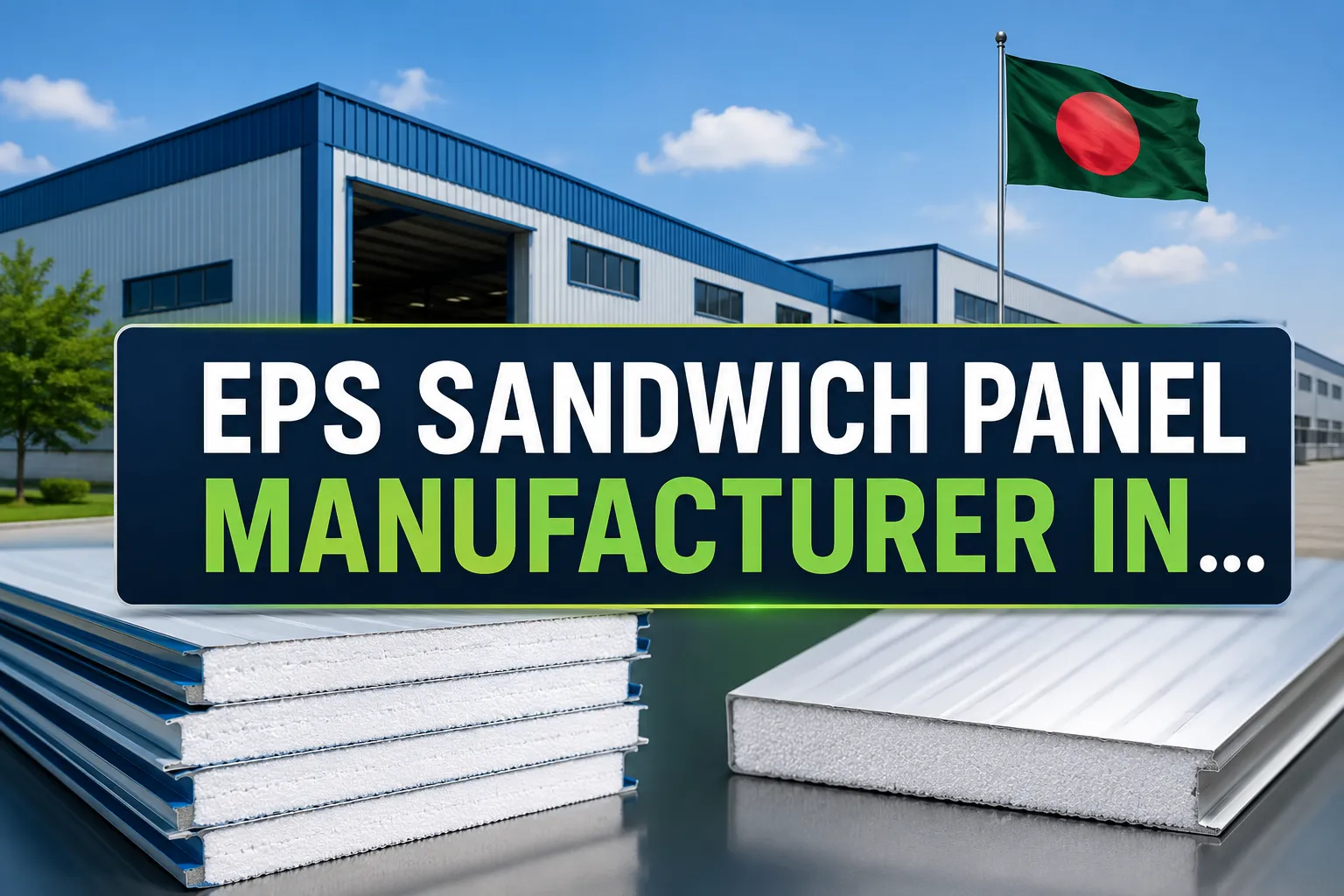
Bangladesh's construction industry consumes over 2.5 million square meters of EPS sandwich panels annually, with local manufacturers now producing panels that meet international standards at 30-40% lower costs than imported alternatives. An EPS sandwich panel manufacturer in Bangladesh produces lightweight, insulated building panels using expanded polystyrene cores between metal facings, primarily serving the industrial, commercial, and cold storage sectors across South Asia.
Key Takeaways
- EPS sandwich panels offer superior thermal insulation with R-values ranging from 3.6 to 7.2 per inch of thickness
- Leading manufacturers in Bangladesh produce panels in thicknesses from 50mm to 200mm for various applications
- Prices range from BDT 450-850 per square meter depending on thickness, core density, and facing materials
- EPS panels are 60-70% lighter than traditional concrete walls while providing better insulation performance
- Fire-rated EPS panels with Class B1 certification are available from certified manufacturers
- Installation costs are 25-35% lower than conventional wall systems due to faster assembly
- Quality manufacturers provide 10-15 year warranties on panel structural integrity and thermal performance
What Are EPS Sandwich Panels and How Do They Work
EPS sandwich panels consist of an expanded polystyrene foam core laminated between two metal facings, typically galvanized steel or aluminum sheets. The panels work by combining the structural strength of metal outer layers with the thermal insulation properties of the EPS core, creating a lightweight yet durable building component.
The manufacturing process involves injecting expanded polystyrene beads between pre-coated metal sheets under controlled pressure and temperature. This creates a continuous bond between the core and facings, eliminating thermal bridges and ensuring consistent insulation performance across the entire panel surface.
Key structural components:
- Outer facings: 0.4-0.7mm thick galvanized steel or aluminum sheets with protective coatings
- EPS core: Density ranges from 10-25 kg/m³ depending on application requirements
- Adhesive system: Polyurethane or modified acrylic bonding agents for permanent lamination
- Edge sealing: Weather-resistant sealants to prevent moisture infiltration
The panels achieve their insulation performance through the closed-cell structure of EPS, which traps air in millions of tiny cells. This structure provides consistent R-values while remaining lightweight and easy to handle during installation.
Leading EPS Sandwich Panel Manufacturers in Bangladesh
The Bangladesh market features several established EPS sandwich panel manufacturers serving both domestic and export markets. These manufacturers have invested in modern production lines and quality control systems to compete with international suppliers.
Top-tier manufacturers include:
- PRAN-RFL Group: Operates advanced production facilities in Dhaka and Chittagong with annual capacity exceeding 500,000 square meters
- Akij Group: Specializes in cold storage and industrial applications with German-imported machinery
- Square Group: Focuses on architectural panels for commercial buildings with custom color options
- PHP Group: Produces fire-rated panels for pharmaceutical and food processing facilities
Selection criteria for manufacturers:
- Production capacity and delivery timelines for your project size
- Quality certifications including ISO 9001 and fire safety standards
- Technical support for design and installation guidance
- Warranty terms and after-sales service availability
- Geographic location relative to your project site for transportation efficiency
Most established manufacturers maintain quality control labs for testing thermal performance, fire resistance, and structural integrity. Choose manufacturers who can provide third-party test certificates and have experience with projects similar to your application requirements.
EPS Sandwich Panel Pricing in Bangladesh 2026
EPS sandwich panel prices in Bangladesh vary significantly based on panel specifications, order quantity, and manufacturer positioning. Current market rates reflect both raw material costs and competitive pressures from imported panels.
Standard pricing structure (per square meter):
- 50mm thickness: BDT 450-550 for standard density (12-15 kg/m³)
- 75mm thickness: BDT 580-680 for medium density applications
- 100mm thickness: BDT 720-820 for high-performance insulation
- 150mm thickness: BDT 950-1,150 for cold storage and specialized applications
Price factors that affect final costs:
- Core density: Higher density EPS (20+ kg/m³) adds BDT 80-120 per square meter
- Facing materials: Aluminum facings cost 15-25% more than galvanized steel
- Custom colors: Non-standard colors add BDT 25-45 per square meter
- Fire rating: Class B1 fire-rated cores increase costs by 20-30%
- Order quantity: Orders below 500 square meters typically carry 10-15% price premiums
For accurate pricing on your specific project, request quotes from multiple manufacturers with detailed specifications including panel dimensions, performance requirements, and delivery timeline. Most manufacturers offer volume discounts for orders exceeding 1,000 square meters.
EPS vs Fiberglass Sandwich Panel Comparison
EPS and fiberglass sandwich panels serve similar applications but differ significantly in performance characteristics, cost, and installation requirements. Understanding these differences helps select the optimal panel type for specific project needs.
| Characteristic | EPS Panels | Fiberglass Panels |
|---|---|---|
| Thermal Performance | R-3.6 to R-4.2 per inch | R-3.1 to R-3.8 per inch |
| Weight | 8-12 kg/m² (100mm) | 12-18 kg/m² (100mm) |
| Fire Rating | Class B1-B2 (treated) | Class A2-B (naturally) |
| Moisture Resistance | Excellent (closed cell) | Good (requires vapor barrier) |
| Cost (Bangladesh) | BDT 720-820/m² (100mm) | BDT 950-1,200/m² (100mm) |
Choose EPS panels when: Your project prioritizes cost efficiency, requires superior moisture resistance, or involves cold storage applications where thermal bridging must be minimized.
Choose fiberglass panels when: Fire safety is the primary concern, you need maximum structural strength, or local building codes specifically require non-combustible insulation materials.
The decision often comes down to balancing initial cost against long-term performance requirements and regulatory compliance needs for your specific application.
Selecting the Best EPS Sandwich Panel Manufacturer in Bangladesh
Choosing the right EPS sandwich panel manufacturer in Bangladesh requires evaluating multiple factors beyond price to ensure project success and long-term performance. Quality manufacturers distinguish themselves through consistent production standards, technical expertise, and comprehensive support services.
Essential evaluation criteria:
- Production capacity: Verify the manufacturer can meet your timeline without compromising quality during peak demand periods
- Quality certifications: Look for ISO 9001, fire safety certifications, and thermal performance test reports from accredited laboratories
- Technical support: Assess their ability to provide design assistance, installation guidance, and troubleshooting support
- Financial stability: Review company background and project references to ensure they can fulfill large orders and warranty commitments
Red flags to avoid:
- Manufacturers who cannot provide third-party test certificates for thermal and fire performance claims
- Companies offering prices significantly below market rates without clear explanations for cost advantages
- Suppliers with limited technical staff or inability to answer detailed specification questions
- Manufacturers without established quality control procedures or inspection protocols
Request plant visits when possible to observe production processes, quality control measures, and inventory management systems. The best manufacturers welcome customer inspections and provide detailed documentation of their quality assurance procedures.
For critical applications like cold storage or pharmaceutical facilities, prioritize manufacturers with specific experience in your industry and relevant regulatory compliance history.
EPS Sandwich Panel Specifications and Thickness Options
EPS sandwich panels are available in multiple thickness configurations and specifications to match diverse application requirements. Understanding available options helps optimize panel selection for specific performance and cost targets.
Standard thickness options:
- 50mm: Suitable for interior partitions and mild climate applications (R-7 to R-8)
- 75mm: General-purpose walls and roofing in moderate climates (R-11 to R-13)
- 100mm: High-performance applications requiring superior insulation (R-14 to R-17)
- 150mm: Cold storage and specialized industrial applications (R-21 to R-25)
- 200mm: Ultra-high performance for extreme temperature differentials (R-28 to R-34)
Core density specifications:
- 10-12 kg/m³: Economy grade for non-critical applications
- 15-18 kg/m³: Standard grade balancing performance and cost
- 20-25 kg/m³: Premium grade for demanding structural and thermal requirements
Facing material options:
- Galvanized steel: 0.4-0.7mm thickness with polyester or PVDF coatings
- Aluminum: 0.5-0.8mm thickness for enhanced corrosion resistance
- Stainless steel: Specialized applications requiring superior hygiene standards
Panel dimensions:
- Width: Typically 1000mm or 1200mm for efficient installation
- Length: Up to 12 meters depending on transportation and handling constraints
- Edge profiles: Tongue-and-groove, ship-lap, or square edge configurations
Choose specifications based on your specific thermal performance targets, structural load requirements, and environmental conditions. Thicker panels provide better insulation but increase material costs and structural loads on the building frame.
EPS Sandwich Panel Applications and Uses
EPS sandwich panels serve diverse applications across Bangladesh's construction industry, with each use case requiring specific performance characteristics and installation considerations. Understanding typical applications helps identify the most suitable panel specifications for your project.
Primary applications include:
Cold storage facilities: 150-200mm thick panels with high-density EPS cores provide the thermal performance needed for maintaining consistent temperatures while minimizing energy consumption. Vapor barriers and specialized joint sealing prevent moisture infiltration.
Industrial buildings: 75-100mm panels offer cost-effective insulation for warehouses, manufacturing facilities, and distribution centers. The lightweight construction reduces structural requirements while providing comfortable interior environments.
Commercial buildings: Architectural panels with custom colors and finishes create attractive facades while delivering energy efficiency. Fire-rated options meet building code requirements for occupied structures.
Agricultural facilities: Poultry houses, dairy barns, and livestock facilities benefit from the moisture resistance and easy cleaning properties of EPS panels. Proper ventilation design prevents condensation issues.
Clean rooms and pharmaceutical facilities: Smooth, non-porous surfaces support strict hygiene requirements while providing precise temperature and humidity control through superior insulation performance.
Modular construction: Prefabricated buildings and temporary structures utilize the lightweight, easy-to-install characteristics of EPS panels for rapid deployment and future relocation flexibility.
Each application requires careful consideration of panel thickness, core density, facing materials, and joint sealing systems to achieve optimal performance and regulatory compliance. Work with experienced manufacturers who understand the specific requirements of your intended use case.
EPS Sandwich Panel Installation Process and Requirements
Proper installation is critical for achieving the thermal performance, structural integrity, and longevity that EPS sandwich panels are designed to provide. The installation process involves specific techniques and quality control measures that differ from traditional construction methods.
Pre-installation requirements:
- Structural verification: Confirm that the building frame can support panel loads and wind/seismic forces
- Surface preparation: Ensure mounting surfaces are level, clean, and properly aligned within tolerance specifications
- Material inspection: Check panels for damage, verify dimensions, and confirm specifications match project requirements
- Weather conditions: Plan installation during suitable weather to prevent moisture infiltration during assembly
Step-by-step installation process:
- Layout and marking: Establish reference lines and mark panel positions according to approved shop drawings
- Base installation: Install base flashing and starter strips to ensure proper water management
- Panel positioning: Lift panels into position using appropriate equipment to prevent damage to facings or core
- Joint sealing: Apply structural sealants and weatherproofing materials according to manufacturer specifications
- Fastening: Secure panels with appropriate fasteners at specified spacing and torque requirements
- Quality inspection: Verify alignment, joint integrity, and overall installation quality before proceeding
Common installation mistakes to avoid:
- Over-tightening fasteners which can compress the EPS core and create thermal bridges
- Inadequate joint sealing leading to air leakage and moisture infiltration
- Improper handling causing damage to panel edges or facings
- Insufficient structural support resulting in panel deflection or failure
Professional installation typically reduces overall project costs despite higher labor rates because experienced crews work faster and avoid costly mistakes that require rework or panel replacement.
EPS Sandwich Panel Durability and Lifespan Expectations
EPS sandwich panels provide excellent durability when properly manufactured, installed, and maintained, with typical service lives exceeding 25-30 years in most applications. Understanding factors that affect longevity helps optimize panel selection and maintenance planning.
Durability factors:
- UV protection: Quality facing materials with UV-resistant coatings prevent degradation of both metal and EPS components
- Moisture management: Proper installation and joint sealing prevent water infiltration that can compromise core performance
- Thermal cycling: EPS maintains dimensional stability through repeated heating and cooling cycles without performance loss
- Mechanical stress: Proper structural design prevents excessive deflection that could damage panel joints or facings
Expected lifespan by application:
- Interior applications: 30+ years with minimal maintenance requirements
- Exterior walls: 25-30 years depending on climate exposure and coating quality
- Roofing applications: 20-25 years with proper drainage and membrane systems
- Harsh environments: 15-20 years in coastal or industrial areas with aggressive atmospheric conditions
Maintenance requirements:
- Annual inspection of joint sealants and fasteners
- Cleaning of panel surfaces to maintain appearance and prevent buildup of corrosive materials
- Prompt repair of any damage to prevent moisture infiltration
- Periodic recoating of exposed metal surfaces in aggressive environments
Quality manufacturers provide detailed maintenance guidelines and warranty coverage that reflects realistic performance expectations. Choose panels with proven track records in similar applications and environmental conditions to your project.
Fire Safety Standards and Ratings for EPS Panels
Fire safety represents a critical consideration for EPS sandwich panel selection, particularly in occupied buildings and industrial facilities. Modern EPS panels incorporate fire-retardant additives and design features that significantly improve their fire performance compared to standard EPS materials.
Fire rating classifications:
- Class B1: Self-extinguishing materials that meet European standards for limited combustibility
- Class B2: Normal flammability rating suitable for many industrial applications
- Class E: Standard EPS without fire retardants, limited to specific low-risk applications
Fire-retardant EPS characteristics:
- Contains brominated or phosphorus-based flame retardants that inhibit ignition and flame spread
- Self-extinguishing properties cause flames to die out when ignition source is removed
- Reduced smoke generation compared to standard EPS materials
- Maintains structural integrity longer during fire exposure
Building code compliance:
Most Bangladesh building codes require Class B1 fire-rated panels for:
- Occupied commercial and institutional buildings
- High-rise construction above specified heights
- Buildings with large occupant loads or limited egress options
- Facilities storing hazardous materials or processes
Testing standards and certification:
Reputable manufacturers provide test reports from accredited laboratories demonstrating compliance with relevant fire safety standards. These tests evaluate ignition resistance, flame spread rates, smoke generation, and toxic gas emissions under controlled conditions.
When fire safety is critical, specify panels from manufacturers who can provide comprehensive fire test documentation and have experience with similar high-risk applications. Consider additional fire protection measures like sprinkler systems and fire-resistant barriers for maximum safety.
Cost Analysis: EPS Sandwich Panel Installation Per Square Foot
Understanding the complete cost structure for EPS sandwich panel installation helps compare options and budget accurately for your project. Total costs include materials, labor, and ancillary components required for a complete installation.
Material costs (per square meter):
- Panel cost: BDT 450-850 depending on thickness and specifications
- Fasteners and hardware: BDT 25-40 for screws, washers, and structural connections
- Sealants and gaskets: BDT 15-25 for weatherproofing and joint sealing
- Flashing and trim: BDT 20-35 for perimeter and penetration details
Labor costs:
- Installation crew: BDT 120-180 per square meter for experienced panel installers
- Crane or lift equipment: BDT 15,000-25,000 per day depending on project size and access
- Supervision and quality control: 5-8% of total labor costs for complex projects
Total installed costs typically range:
- Basic installation: BDT 650-950 per square meter for straightforward applications
- Complex projects: BDT 850-1,200 per square meter with multiple penetrations, custom details, or difficult access
- Premium specifications: BDT 1,000-1,400 per square meter for fire-rated panels with specialized coatings
Cost comparison with alternatives:
- Traditional masonry walls: 40-60% higher total cost including insulation and finishes
- Precast concrete panels: 25-35% higher cost with longer installation time
- Metal building systems: Comparable material costs but 15-25% higher labor requirements
Factor in long-term energy savings from superior insulation performance when evaluating total project costs. EPS panels typically provide payback periods of 3-5 years through reduced heating and cooling expenses.
Common Problems and Solutions with EPS Sandwich Panels
While EPS sandwich panels offer excellent performance when properly specified and installed, certain issues can arise that affect their effectiveness or longevity. Understanding common problems and their solutions helps prevent costly mistakes and ensures optimal performance.
Thermal bridging issues:
- Problem: Metal fasteners or structural elements create paths for heat transfer, reducing insulation effectiveness
- Solution: Use thermal break fasteners, minimize penetrations, and design continuous insulation layers
- Prevention: Work with experienced designers who understand thermal bridging mitigation techniques
Moisture infiltration:
- Problem: Poor joint sealing allows water entry, potentially damaging EPS core and creating mold conditions
- Solution: Remove affected panels, address water source, and reinstall with proper sealing systems
- Prevention: Specify high-quality sealants and ensure proper installation training for crews
Panel deflection and joint opening:
- Problem: Inadequate structural support causes panels to bow, opening joints and compromising weather sealing
- Solution: Add intermediate structural support and re-seal opened joints with appropriate materials
- Prevention: Proper structural design considering wind loads, thermal expansion, and building movement
Fire performance concerns:
- Problem: Standard EPS panels may not meet fire safety requirements for specific applications
- Solution: Upgrade to fire-retardant EPS panels or add additional fire protection systems
- Prevention: Verify fire rating requirements during design phase and specify appropriate panel grades
Edge damage during handling:
- Problem: Improper lifting or storage damages panel edges, affecting installation quality and weather sealing
- Solution: Trim damaged areas and use compatible repair materials or replace severely damaged panels
- Prevention: Train installation crews on proper handling techniques and provide appropriate lifting equipment
Most problems result from inadequate planning, poor installation practices, or inappropriate panel selection for the specific application. Working with experienced manufacturers and installers significantly reduces the likelihood of these issues occurring.
EPS Panels for Roofing vs Wall Applications
EPS sandwich panels perform differently in roofing versus wall applications due to varying structural loads, weather exposure, and thermal requirements. Understanding these differences helps optimize panel selection and installation details for each application.
Roofing applications require:
- Enhanced structural capacity: Roof panels must support snow loads, equipment loads, and foot traffic while spanning between structural supports
- Superior weather resistance: Direct exposure to rain, UV radiation, and temperature extremes demands high-quality facings and joint sealing
- Drainage considerations: Panel profiles and joint details must prevent water accumulation and ensure positive drainage
- Thermal expansion accommodation: Large roof areas experience significant thermal movement requiring flexible joint systems
Wall applications focus on:
- Wind load resistance: Panels must resist both positive and negative wind pressures without deflection or joint failure
- Thermal performance: Continuous insulation minimizes thermal bridging while maintaining structural integrity
- Architectural appearance: Visible wall panels require attractive finishes and precise alignment for professional appearance
- Penetration management: Windows, doors, and utility penetrations require careful detailing to maintain thermal and weather barriers
Specification differences:
- Roof panels: Typically 75-150mm thick with high-density cores (18-25 kg/m³) for structural performance
- Wall panels: Usually 50-100mm thick with standard density cores (12-18 kg/m³) optimized for thermal performance
- Facing materials: Roof panels often use thicker steel facings (0.6-0.7mm) while walls may use thinner facings (0.4-0.5mm)
Installation variations:
Roof installations require specialized equipment for material handling and worker safety, while wall installations focus on precise alignment and joint sealing. Both applications benefit from experienced crews familiar with panel-specific techniques and safety requirements.
Choose panel specifications based on the specific performance requirements, structural loads, and environmental exposure conditions for each application rather than using identical panels for both roofing and wall systems.
Frequently Asked Questions
What is the typical delivery time for EPS sandwich panels in Bangladesh?
Most established manufacturers can deliver standard panels within 2-3 weeks for orders up to 1,000 square meters. Custom specifications, special colors, or fire-rated panels may require 4-6 weeks. Large projects exceeding 5,000 square meters typically need 6-8 weeks for complete delivery.
How do EPS panels perform in Bangladesh's humid climate?
EPS panels excel in humid conditions due to their closed-cell structure that resists moisture absorption. Proper installation with quality sealants prevents condensation issues. The panels maintain their insulation properties even in high humidity environments unlike some fibrous insulation materials.
Can EPS sandwich panels be recycled at end of life?
Yes, both the metal facings and EPS core are recyclable. Steel facings have high scrap value, while EPS can be recycled into new products or used as lightweight fill material. Some manufacturers offer take-back programs for panel recycling.
What structural support is required for EPS panel installation?
EPS panels require structural support at maximum 6-meter spans for walls and 4-meter spans for roofs under typical loading conditions. Support structure must be designed for wind loads, seismic forces, and thermal expansion. Consult structural engineers for specific load calculations.
Do EPS panels require special maintenance procedures?
Maintenance is minimal but should include annual inspection of joint sealants, cleaning of panel surfaces, and prompt repair of any damage. Avoid using harsh chemicals or abrasive cleaning methods that could damage protective coatings on metal facings.
How do EPS panels compare to rockwool panels for fire safety?
Rockwool panels offer superior fire resistance as a naturally non-combustible material, while EPS panels require fire-retardant additives to achieve similar ratings. For critical fire safety applications, rockwool may be preferred despite higher costs.
Can EPS panels be installed in freezing temperatures?
Installation is possible in cold weather but requires special considerations for sealant application and thermal expansion. Most sealants have minimum temperature requirements for proper curing. Plan installation during suitable weather conditions when possible.
What warranty coverage is typical for EPS sandwich panels?
Quality manufacturers provide 10-15 year warranties covering structural integrity and thermal performance. Warranties typically exclude damage from improper installation, extreme weather events, or normal wear of protective coatings. Review warranty terms carefully before purchase.
Are building permits required for EPS panel construction?
Yes, most construction projects using EPS panels require building permits and must comply with local building codes. Submit detailed drawings and specifications showing compliance with fire safety, structural, and energy code requirements.
How do transportation costs affect EPS panel pricing?
Transportation typically adds BDT 25-50 per square meter depending on distance and access conditions. Local manufacturers offer significant advantages for transportation costs compared to imported panels. Consider manufacturer location when evaluating total project costs.
Conclusion
Selecting the right EPS sandwich panel manufacturer in Bangladesh requires careful evaluation of production capabilities, quality standards, and technical support services beyond simple price comparisons. The country's established manufacturers now produce panels that meet international standards while offering significant cost advantages over imported alternatives.
Focus on manufacturers with proven track records, comprehensive quality certifications, and experience in applications similar to your project requirements. Proper panel specification, professional installation, and regular maintenance ensure optimal performance and longevity from your EPS sandwich panel investment.
For your next project, request detailed quotes from multiple manufacturers, visit production facilities when possible, and verify all performance claims through third-party test reports. The investment in quality panels and professional installation pays dividends through superior energy efficiency, reduced maintenance requirements, and extended service life.
To explore specific options for your project, review our comprehensive guides on EPS sandwich panel pricing and installation costs. For specialized applications, consider our resources on fire-rated panels and cold storage solutions. Additional guidance on manufacturer selection and quality standards can help ensure project success.
SEO Meta Title: EPS Sandwich Panel Manufacturer Bangladesh: Complete 2026 Guide