Last updated: July 31, 2026

Quick Answer
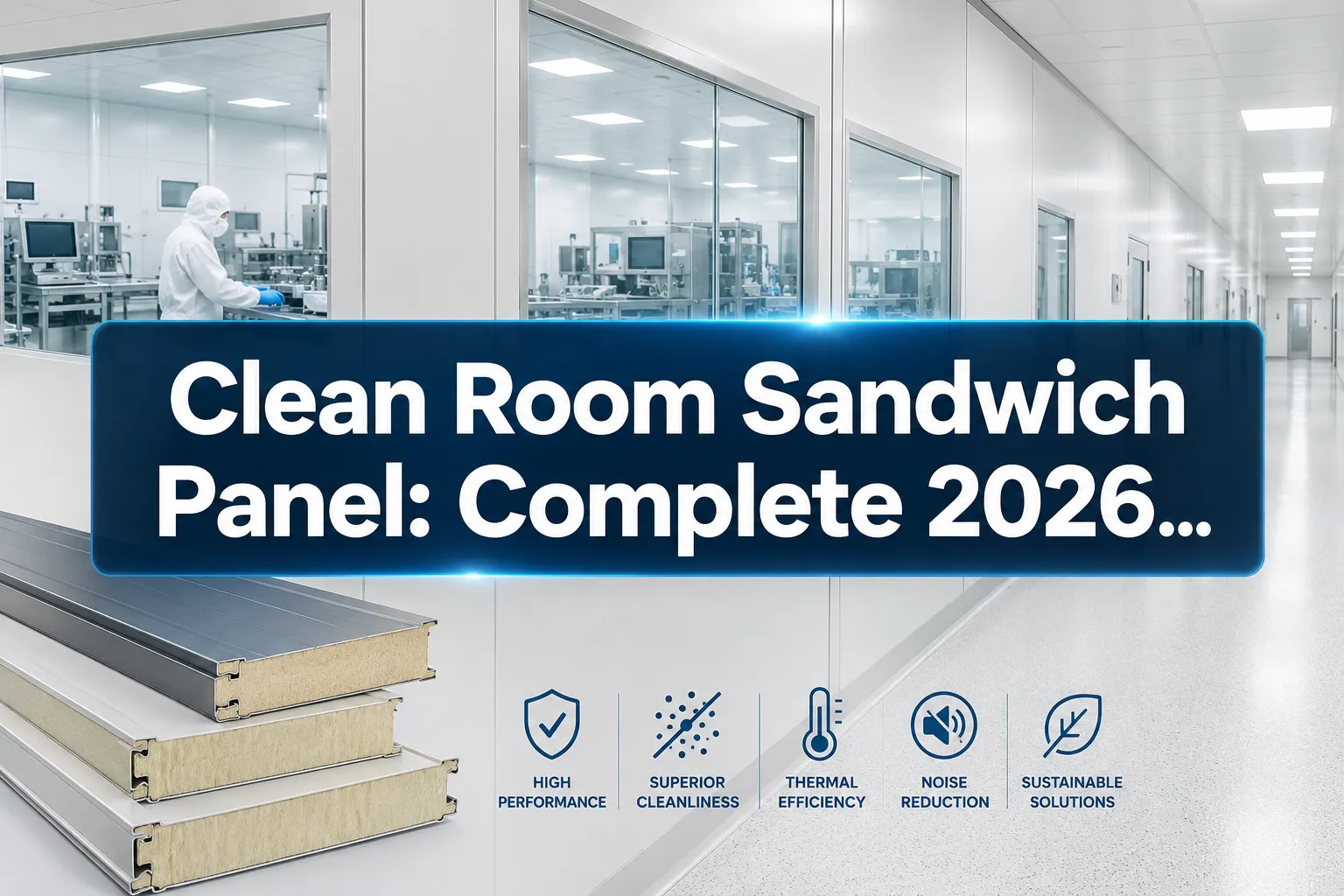
Clean room sandwich panels are specialized multi-layer construction materials featuring two metal face sheets bonded to an insulating core, designed specifically for controlled environments that require strict contamination control. These panels provide seamless, non-porous surfaces that prevent particle accumulation while maintaining thermal insulation and structural integrity in pharmaceutical facilities, hospitals, electronics manufacturing, and food processing plants.
Key Takeaways
- Clean room sandwich panels feature seamless construction that eliminates crevices where contaminants can accumulate
- Standard thickness ranges from 50mm to 150mm depending on insulation requirements and structural loads
- Cost typically ranges from $25-60 per square foot including materials and installation
- Panels must meet specific fire ratings (typically Class A or Class 1) for most clean room applications
- Installation requires specialized techniques to maintain airtight seals between panel joints
- Regular maintenance involves approved cleaning protocols using compatible disinfectants
- Lifespan exceeds 20 years with proper installation and maintenance
- Not suitable for all applications – requires professional assessment for ISO classification requirements
What Is a Clean Room Sandwich Panel
Clean room sandwich panels are composite building materials specifically engineered for controlled environments that demand strict contamination control and environmental stability. These panels consist of two outer metal sheets (typically pre-painted steel, stainless steel, or aluminum) bonded to an insulating core material such as polyurethane foam, mineral wool, or polyisocyanurate.
The key differentiator from standard construction panels lies in their seamless design and non-porous surface finish. Clean room panels feature:
- Smooth, continuous surfaces without visible joints or fasteners on the interior face
- Chemical-resistant coatings that withstand repeated cleaning with industrial disinfectants
- Airtight construction that prevents air infiltration and particle penetration
- Rounded corners and edges that eliminate dust collection points
These panels serve as both structural elements and environmental barriers in facilities requiring ISO 14644 clean room classifications, from ISO Class 3 (ultra-clean) to ISO Class 8 (moderately controlled environments).
Choose clean room sandwich panels when your facility requires particle counts below 100,000 particles per cubic meter (ISO Class 8) or when regulatory compliance demands validated cleaning protocols.
How Do Clean Room Sandwich Panels Work
Clean room sandwich panels function by creating a continuous, sealed envelope that prevents contamination while providing thermal and acoustic insulation. The multi-layer construction works through three primary mechanisms: barrier protection, environmental control, and structural support.
Contamination Control Mechanism
The smooth, non-porous outer surface prevents particle adhesion and allows for effective decontamination. Unlike traditional drywall with paint, clean room panels eliminate microscopic surface irregularities where bacteria and particles can lodge.
Thermal Performance
The insulating core maintains stable temperatures essential for clean room operations:
- Polyurethane cores provide R-values of 6-8 per inch of thickness
- Mineral wool cores offer fire resistance while maintaining R-values of 4-6 per inch
- Continuous insulation eliminates thermal bridging common in conventional construction
Structural Integration
Panels connect through specialized joining systems that maintain both structural integrity and environmental sealing:
- Tongue-and-groove edges with gasket seals prevent air infiltration
- Hidden fastening systems eliminate penetrations in the clean surface
- Load-bearing capacity supports equipment mounting without compromising the clean envelope
The system works best in facilities with consistent HVAC pressure differentials and regular cleaning schedules using compatible chemicals.
Clean Room Sandwich Panel vs Regular Drywall
Clean room sandwich panels provide superior contamination control, durability, and maintenance efficiency compared to regular drywall systems, but at significantly higher initial cost. The choice depends on your facility's contamination control requirements and long-term operational needs.
Performance Comparison
| Feature | Clean Room Panels | Regular Drywall |
|---|---|---|
| Surface smoothness | Seamless, non-porous | Textured, joints visible |
| Cleaning compatibility | Chemical resistant | Limited chemical tolerance |
| Installation time | 2-3 days typical room | 5-7 days with finishing |
| Particle generation | Minimal shedding | Continuous dust generation |
| Lifespan | 20+ years | 10-15 years in clean environments |
Cost Analysis
Regular drywall costs $3-8 per square foot installed, while clean room panels range from $25-60 per square foot. However, clean room panels eliminate ongoing costs for:
- Frequent repainting due to chemical damage
- Particle testing failures from surface degradation
- Extended downtime during maintenance
- Replacement due to contamination issues
When to Choose Each Option
Choose clean room panels for ISO Class 3-8 environments, pharmaceutical manufacturing, medical device production, or food processing requiring HACCP compliance.
Choose regular drywall for office areas, non-critical storage spaces, or facilities without particle count requirements.
Regular drywall cannot achieve the surface cleanliness or chemical resistance required for validated clean room operations, making it unsuitable for regulated industries.
Clean Room Sandwich Panel Cost Per Square Foot
Clean room sandwich panel costs range from $25-60 per square foot installed, with material costs representing 60-70% of the total project expense. Pricing varies significantly based on panel specifications, project size, and installation complexity.
Material Cost Breakdown
- Standard panels (50-75mm): $15-25 per square foot
- Thick panels (100-150mm): $20-35 per square foot
- Stainless steel face sheets: Add $8-15 per square foot
- Fire-rated cores: Add $3-8 per square foot
Installation Cost Factors
Installation typically adds $10-25 per square foot depending on:
- Project size: Larger projects achieve economies of scale
- Ceiling height: Standard 8-10 foot ceilings cost less than high-bay installations
- Complexity: Curved walls, equipment penetrations, and tight tolerances increase labor costs
- Location: Urban areas with higher labor rates increase installation costs
Cost Comparison by Application
- Pharmaceutical clean rooms: $45-60 per square foot (highest specifications)
- Electronics manufacturing: $35-50 per square foot (moderate requirements)
- Food processing: $25-40 per square foot (basic contamination control)
- Research laboratories: $40-55 per square foot (variable requirements)
Budget an additional 10-15% for contingencies, as clean room projects often encounter unforeseen complications during installation that require specialized solutions.
For detailed pricing in your region, consult our clean room sandwich panel Bangladesh buyer's guide for local market insights.
Best Clean Room Sandwich Panel Manufacturers
Leading clean room sandwich panel manufacturers include Kingspan, Metecno, Isopan, and Tata Steel, each offering specialized products for different contamination control requirements. Manufacturer selection should prioritize certifications, technical support, and regional availability over price alone.
Top Global Manufacturers
Kingspan leads in pharmaceutical applications with panels certified for FDA and EMA facilities. Their QuadCore technology provides superior thermal performance while maintaining smooth surfaces required for USP 797 compliance.
Metecno specializes in food-grade applications with panels meeting USDA and HACCP requirements. Their mineral wool cores offer excellent fire resistance for facilities requiring FM Global approval.
Tata Steel provides cost-effective solutions for electronics manufacturing with panels designed for ESD control and particle minimization in semiconductor fabrication.
Regional Considerations
Choose manufacturers with local technical support and installation training programs. International manufacturers often partner with regional fabricators who understand local building codes and installation practices.
Key selection criteria include:
- Certification compliance with your industry requirements (FDA, USDA, ISO 14644)
- Technical support for design assistance and installation training
- Warranty coverage typically 10-15 years for material defects
- Lead times which can extend 8-16 weeks for specialized configurations
Quality Verification
Request test reports for thermal performance, fire ratings, and chemical resistance. Reputable manufacturers provide third-party validation of performance claims and maintain quality certifications such as ISO 9001.
Avoid manufacturers who cannot provide detailed technical specifications or installation guidelines, as clean room panel performance depends heavily on proper installation techniques.
Clean Room Sandwich Panel Installation Process
Clean room sandwich panel installation follows a systematic process requiring specialized tools, trained installers, and strict quality control to achieve required contamination control performance. Proper installation typically takes 2-4 days for a standard clean room, depending on size and complexity.
Pre-Installation Requirements
Before panel installation begins, ensure:
- Structural framework is complete and verified for dimensional accuracy
- HVAC rough-in is positioned to avoid conflicts with panel placement
- Electrical and plumbing penetrations are planned and coordinated
- Environmental conditions maintain temperature between 60-80°F and humidity below 60%
Step-by-Step Installation Process
- Layout and measurement verification – Confirm all dimensions and mark panel positions
- Corner and edge trim installation – Install specialized clean room trim pieces
- Panel lifting and positioning – Use vacuum lifts to avoid surface damage
- Joint sealing – Apply structural sealants at all panel connections
- Penetration sealing – Install grommets and seals for utilities
- Surface cleaning – Remove installation residue using approved cleaners
- Pressure testing – Verify airtightness meets design specifications
Critical Installation Details
Joint sealing represents the most critical aspect of installation. Use only manufacturer-approved sealants compatible with cleaning chemicals. Typical sealants include structural silicone or polyurethane formulations designed for clean room applications.
Surface protection during installation prevents contamination that can be impossible to remove later. Maintain clean installation practices and use lint-free materials throughout the process.
Common installation mistakes include inadequate joint sealing, surface damage during handling, and improper fastener placement that creates cleaning difficulties.
For professional installation services in Bangladesh, explore our sandwich panel installation service guide for qualified contractor recommendations.
Do Clean Room Sandwich Panels Reduce Contamination
Yes, clean room sandwich panels significantly reduce contamination compared to conventional construction materials through their seamless surfaces, chemical resistance, and minimal particle generation. Studies show properly installed clean room panels can reduce airborne particle counts by 70-90% compared to painted drywall systems.
Contamination Reduction Mechanisms
Clean room panels reduce contamination through multiple pathways:
- Surface smoothness prevents particle adhesion and allows complete cleaning
- Chemical resistance eliminates surface degradation that generates particles
- Sealed construction prevents microbial growth in wall cavities
- Easy cleaning enables frequent decontamination without surface damage
Performance Data
Independent testing demonstrates clean room panels maintain particle counts below:
- ISO Class 5: Less than 3,520 particles ≥0.5 microns per cubic meter
- ISO Class 6: Less than 35,200 particles ≥0.5 microns per cubic meter
- ISO Class 7: Less than 352,000 particles ≥0.5 microns per cubic meter
Limitations and Requirements
Clean room panels alone cannot achieve contamination control without:
- Proper HVAC systems providing adequate air changes and filtration
- Validated cleaning procedures using compatible chemicals and techniques
- Personnel protocols including appropriate gowning and behavior
- Regular monitoring to verify continued performance
Panels work most effectively in facilities with positive pressure differentials of 0.03-0.05 inches of water column and air change rates appropriate for the target ISO classification.
The contamination reduction benefits justify the higher initial cost in regulated industries where product contamination can result in batch losses, regulatory citations, or product recalls.
Clean Room Sandwich Panel Thickness Options
Clean room sandwich panel thickness typically ranges from 50mm to 150mm, with selection based on thermal requirements, structural loads, and space constraints. Thicker panels provide better insulation and acoustic performance but require more structural support and reduce interior space.
Standard Thickness Options
50mm panels suit basic contamination control applications with minimal thermal requirements. Common in electronics assembly areas and packaging rooms where temperature control is less critical.
75mm panels represent the most popular choice for general clean room applications, providing good thermal performance while maintaining reasonable structural requirements.
100mm panels work well for temperature-critical applications such as pharmaceutical storage or food processing where thermal stability is essential.
150mm panels are reserved for extreme thermal requirements or facilities requiring superior acoustic isolation, such as research laboratories with sensitive equipment.
Selection Criteria
Choose panel thickness based on:
- Thermal requirements: Calculate based on internal heat loads and external climate conditions
- Structural capacity: Verify building frame can support panel weight and wind loads
- Space efficiency: Consider impact on usable interior dimensions
- Budget constraints: Thicker panels cost 15-25% more per 25mm of additional thickness
Performance Implications
Thicker panels provide:
- Better insulation: R-values increase proportionally with thickness
- Improved acoustics: Sound transmission class ratings improve with thickness
- Enhanced fire resistance: Thicker cores provide longer fire ratings
- Reduced thermal bridging: More insulation reduces energy loss
However, thicker panels also require larger structural members and more robust attachment systems, potentially increasing overall project costs beyond the panel premium.
For specific thickness recommendations based on your clean room classification, review our clean room panel thickness guide for detailed selection criteria.
Common Problems with Clean Room Sandwich Panels
The most frequent clean room sandwich panel problems include joint seal failure, surface damage during installation, and incompatible cleaning chemical reactions. These issues typically stem from improper installation techniques or inadequate maintenance procedures rather than panel defects.
Joint Seal Failures
Symptoms: Visible gaps, air leakage, or contamination infiltration at panel connections.
Causes: Inadequate sealant application, wrong sealant type, or building movement exceeding design limits.
Solutions: Remove failed sealant completely and reapply using manufacturer-approved materials. Ensure proper surface preparation and cure time before facility operation.
Surface Contamination and Staining
Symptoms: Discoloration, chemical staining, or particle adhesion that cannot be removed through normal cleaning.
Causes: Use of incompatible cleaning chemicals, inadequate cleaning frequency, or surface damage during installation.
Solutions: Test all cleaning chemicals in inconspicuous areas before general use. Establish validated cleaning procedures with appropriate contact times and rinse protocols.
Thermal Performance Issues
Symptoms: Condensation on panel surfaces, temperature variations, or higher than expected energy costs.
Causes: Thermal bridging at connections, inadequate panel thickness for application, or air infiltration through unsealed joints.
Solutions: Add thermal breaks at structural connections, upgrade to thicker panels if necessary, and improve air sealing throughout the envelope.
Prevention Strategies
Avoid common problems by:
- Using qualified installers with clean room experience and manufacturer training
- Following manufacturer specifications for sealants, fasteners, and installation procedures
- Establishing maintenance protocols before facility startup
- Regular inspection schedules to identify issues before they affect operations
Most problems occur within the first year of operation and can be prevented through proper installation oversight and commissioning procedures.
Clean Room Sandwich Panel Fire Rating Requirements
Clean room sandwich panels must typically achieve Class A fire ratings (flame spread index ≤25, smoke developed index ≤450) for most pharmaceutical and healthcare applications, with some facilities requiring more stringent Class 1 ratings. Fire rating requirements vary by occupancy type, building height, and local building codes.
Standard Fire Rating Classifications
Class A (Class 1) ratings are required for:
- Pharmaceutical manufacturing facilities
- Hospital clean rooms and operating theaters
- High-rise buildings over 75 feet
- Facilities with high occupant loads
Class B (Class 2) ratings may be acceptable for:
- Electronics manufacturing with automatic sprinkler systems
- Food processing facilities under 3 stories
- Research laboratories with limited combustible materials
Core Material Impact on Fire Ratings
Mineral wool cores provide the best fire performance, often achieving Class A ratings without additional fire retardants. These cores maintain structural integrity during fire exposure and produce minimal smoke.
Polyurethane cores require fire retardant additives to achieve acceptable ratings and may produce more smoke during combustion. However, they offer superior thermal performance for energy-sensitive applications.
Polyisocyanurate cores provide a balance between fire performance and thermal efficiency, making them suitable for most clean room applications.
Testing and Certification Requirements
Fire ratings must be verified through testing per ASTM E84 (Steiner Tunnel Test) or equivalent international standards. Request certified test reports from panel manufacturers showing:
- Flame spread index for surface burning characteristics
- Smoke developed index for visibility during evacuation
- Core material composition and fire retardant additives used
Code Compliance Considerations
Consult with local fire marshals and building officials early in design, as clean room facilities often require special considerations for:
- Egress requirements from windowless spaces
- Smoke evacuation systems in sealed environments
- Sprinkler system integration with clean room operations
- Emergency power for life safety systems
Fire-rated panels typically cost 10-20% more than standard panels but are essential for code compliance and occupant safety in most clean room applications.
Who Needs Clean Room Sandwich Panels
Organizations requiring strict contamination control for product quality, regulatory compliance, or process reliability need clean room sandwich panels. These include pharmaceutical manufacturers, medical device companies, electronics producers, food processors, and research institutions operating under validated environmental conditions.
Pharmaceutical and Biotechnology
FDA-regulated facilities must maintain validated clean environments for drug manufacturing, requiring surfaces that can withstand frequent cleaning with harsh disinfectants while preventing contamination.
Specific applications include:
- Sterile drug manufacturing (ISO Class 5-7)
- Biotechnology production facilities
- Compounding pharmacies meeting USP 797 requirements
- Clinical trial material manufacturing
Healthcare Facilities
Hospitals and surgical centers use clean room panels in operating theaters, sterile processing departments, and pharmacy clean rooms where patient safety depends on contamination control.
Critical areas include:
- Operating room construction and renovation
- Central sterile supply departments
- Hospital pharmacy clean rooms
- Isolation rooms for immunocompromised patients
Electronics and Semiconductor Manufacturing
Technology companies require ultra-clean environments to prevent particle contamination that can destroy sensitive electronic components during manufacturing.
Applications include:
- Semiconductor fabrication facilities (ISO Class 3-5)
- Circuit board assembly areas
- Data center construction in sensitive environments
- Research and development laboratories
Food and Beverage Processing
Food manufacturers use clean room panels in processing areas requiring HACCP compliance and FDA food safety regulations.
Suitable applications include:
- Dairy processing facilities
- Pharmaceutical-grade supplement manufacturing
- Baby food and infant formula production
- High-value food packaging operations
Choose clean room panels when your facility requires documented contamination control, regular regulatory inspections, or when product contamination could result in significant financial or safety consequences.
For healthcare applications specifically, explore our hospital clean room panel guide for detailed specifications and compliance requirements.
Can You Use Regular Panels in a Clean Room
No, regular sandwich panels cannot achieve the surface cleanliness, chemical resistance, or contamination control required for validated clean room operations. While regular panels may appear similar, they lack the specialized features necessary for maintaining controlled environments.
Critical Differences
Regular panels fail clean room requirements due to:
- Surface porosity that allows particle and microbial accumulation
- Chemical incompatibility with industrial disinfectants and cleaning agents
- Joint design that creates crevices where contaminants can lodge
- Coating systems that degrade under repeated cleaning cycles
Performance Limitations
Standard panels cannot maintain:
- Particle count specifications required for ISO classifications
- Surface cleanliness needed for regulatory validation
- Chemical resistance for approved cleaning protocols
- Documentation requirements for pharmaceutical or medical device manufacturing
Regulatory Compliance Issues
Using regular panels in clean room applications creates compliance risks:
- FDA inspections may cite inadequate facility design
- ISO certification audits will identify non-conforming construction
- Product recalls may result from contamination traced to inadequate facilities
- Insurance claims may be denied due to non-compliant construction
Cost Implications of Substitution
While regular panels cost 60-70% less initially, using them in clean room applications typically results in:
- Frequent recoating due to chemical damage
- Failed inspections requiring facility remediation
- Product losses from contamination events
- Regulatory penalties and potential facility shutdown
Acceptable Alternative Applications
Regular panels may be suitable for:
- Non-critical support areas such as offices and break rooms
- Mechanical rooms and utility spaces outside the clean envelope
- Warehouse areas with basic cleanliness requirements
- Staging areas that don't require validated cleaning
For applications requiring any level of contamination control or regulatory compliance, invest in proper clean room panels designed for the intended use rather than attempting to modify regular panels.
Clean Room Sandwich Panel Maintenance and Cleaning
Clean room sandwich panel maintenance requires validated cleaning procedures using approved chemicals, documented protocols, and trained personnel to maintain contamination control performance. Proper maintenance extends panel life to 20+ years while ensuring continued regulatory compliance.
Daily Cleaning Protocols
Routine cleaning should occur at the end of each production shift using:
- Pre-approved disinfectants such as 70% isopropyl alcohol or quaternary ammonium compounds
- Lint-free cleaning materials to prevent particle generation
- Systematic cleaning patterns working from top to bottom, clean to dirty areas
- Documented procedures with cleaning times, chemical concentrations, and contact times
Weekly Deep Cleaning
Comprehensive cleaning involves:
- Complete surface disinfection with rotation of chemical types to prevent resistance
- Joint and corner attention using appropriate tools to reach all surfaces
- Equipment and fixture cleaning including light fixtures and HVAC components
- Environmental monitoring to verify cleaning effectiveness
Chemical Compatibility
Approved cleaning agents for clean room panels include:
- Alcohols: Isopropyl alcohol (70%), ethanol solutions
- Quaternary ammonium compounds: Benzalkonium chloride solutions
- Oxidizing agents: Hydrogen peroxide, peracetic acid (diluted)
- Phenolic compounds: Hospital-grade disinfectants
Avoid chemicals that can damage panel surfaces:
- Abrasive cleaners containing particles or pumice
- Strong acids such as hydrochloric or sulfuric acid
- Strong bases like sodium hydroxide above 1% concentration
- Organic solvents including acetone, toluene, or methylene chloride
Preventive Maintenance Schedule
Monthly inspections should verify:
- Joint seal integrity and air tightness
- Surface condition and chemical resistance
- Cleaning equipment functionality
- Documentation completeness and compliance
Annual maintenance includes:
- Professional inspection of all panel systems
- Seal replacement where necessary
- Deep cleaning validation and testing
- Update of cleaning procedures based on performance data
Documentation Requirements
Maintain records of:
- Daily cleaning logs with operator signatures and chemical lot numbers
- Environmental monitoring results showing particle counts and microbial levels
- Maintenance activities including repairs and seal replacements
- Training records for all personnel performing cleaning activities
Proper documentation is essential for regulatory inspections and helps identify trends that may indicate maintenance issues before they affect operations.
How Long Do Clean Room Sandwich Panels Last
Clean room sandwich panels typically last 20-25 years with proper installation and maintenance, significantly longer than conventional drywall systems in similar applications. Panel lifespan depends on cleaning chemical exposure, environmental conditions, and maintenance quality rather than normal wear and tear.
Factors Affecting Lifespan
Chemical exposure represents the primary factor limiting panel life. Facilities using harsh disinfectants or frequent cleaning cycles may see reduced lifespans of 15-20 years, while facilities with gentler cleaning protocols can achieve 25+ years.
Environmental conditions also impact longevity:
- Temperature cycling can stress panel joints and sealants
- Humidity variations may affect adhesive bonds over time
- Pressure differentials can cause fatigue in panel connections
- UV exposure from lighting can degrade surface coatings gradually
Performance Degradation Timeline
Years 1-5: Panels maintain like-new performance with minimal maintenance requirements beyond routine cleaning.
Years 5-15: Surface coatings may show minor wear in high-traffic areas. Joint seals may require occasional replacement due to building movement or aging.
Years 15-20: More frequent seal maintenance becomes necessary. Surface refinishing may be required in areas with heavy chemical exposure.
Years 20+: Major renovation or panel replacement may become cost-effective, particularly if facility requirements have changed.
Extending Panel Life
Proper maintenance can significantly extend panel lifespan:
- Use only manufacturer-approved cleaning chemicals
- Maintain consistent environmental conditions
- Address joint seal issues promptly
- Avoid mechanical damage during equipment installation
Facility upgrades may be more cost-effective than panel replacement:
- Updated HVAC systems can reduce environmental stress
- Improved cleaning procedures can minimize chemical damage
- Better operational controls can reduce contamination and cleaning frequency
Replacement Indicators
Consider panel replacement when:
- Surface degradation cannot be restored through cleaning or refinishing
- Joint failures become frequent despite proper maintenance
- Regulatory requirements change to require different panel specifications
- Facility expansion makes partial replacement cost-prohibitive
Economic Considerations
While clean room panels cost 3-5 times more than drywall initially, their extended lifespan and reduced maintenance requirements often provide better long-term value in controlled environment applications.
Calculate total cost of ownership including cleaning labor, maintenance materials, and facility downtime when comparing panel options for your specific application.
Frequently Asked Questions
What is the difference between clean room panels and regular sandwich panels?
Clean room panels feature seamless surfaces, chemical-resistant coatings, and specialized joint systems designed for contamination control, while regular panels prioritize thermal performance and cost over cleanliness requirements.
How much do clean room sandwich panels cost installed?
Clean room sandwich panels cost $25-60 per square foot installed, depending on thickness, face sheet material, and project complexity. Stainless steel panels and fire-rated cores increase costs significantly.
Can clean room panels be used in food processing facilities?
Yes, clean room panels are excellent for food processing facilities requiring HACCP compliance, providing easy-to-clean surfaces that resist bacterial growth and withstand food-grade sanitizers.
What thickness clean room panel do I need?
Panel thickness depends on thermal requirements and structural loads. Most applications use 75mm panels, while temperature-critical facilities may require 100-150mm thickness for adequate insulation.
How often should clean room panels be cleaned?
Clean room panels require daily cleaning in active production areas and weekly deep cleaning. Specific frequency depends on contamination risk, regulatory requirements, and facility classification.
Do clean room panels require special installation?
Yes, clean room panels require trained installers familiar with sealing techniques, surface protection, and contamination control during installation. Improper installation compromises performance significantly.
What fire rating do clean room panels need?
Most clean room applications require Class A fire ratings (flame spread ≤25). Specific requirements depend on building codes, occupancy type, and facility height.
Can existing walls be converted to clean room standards?
Existing drywall cannot be upgraded to clean room standards. Complete removal and replacement with proper clean room panels is necessary for validated contamination control.
How long do clean room panel installations take?
A typical clean room installation takes 2-4 days for standard rooms, depending on size and complexity. Complex facilities with multiple rooms may require several weeks.
What maintenance is required for clean room panels?
Daily cleaning with approved disinfectants, weekly deep cleaning, monthly inspections, and annual professional maintenance are typical requirements for maintaining clean room panel performance.
Are clean room panels energy efficient?
Yes, clean room panels provide excellent thermal performance with continuous insulation that eliminates thermal bridging, often reducing energy costs compared to conventional construction.
What happens if a clean room panel gets damaged?
Individual panels can be replaced without affecting adjacent panels. However, replacement requires careful sealing and surface preparation to maintain contamination control integrity.
SEO Meta Title: Clean Room Sandwich Panel Guide 2026: Cost, Installation & Specs