Last updated: July 31, 2026

Quick Answer: Mineral wool sandwich panels for fireproof roofs consist of mineral fiber insulation core between two metal facings, providing up to 4-hour fire resistance ratings while delivering superior thermal insulation and structural strength for commercial and industrial buildings.
Key Takeaways
- Mineral wool sandwich panels achieve Class A fire ratings and can withstand temperatures up to 1000°C without structural failure
- These panels cost between $25-45 per square meter installed, depending on thickness and fire rating requirements
- Installation requires specialized fasteners and proper vapor barriers to prevent condensation issues
- Panels typically last 30-50 years with minimal maintenance in roofing applications
- Weight considerations require structural calculations as panels range from 12-25 kg per square meter
- Professional installation is essential for maintaining fire ratings and warranty coverage
- Common thickness options range from 50mm to 200mm for different fire resistance requirements
What Is a Mineral Wool Sandwich Panel and How Does It Work
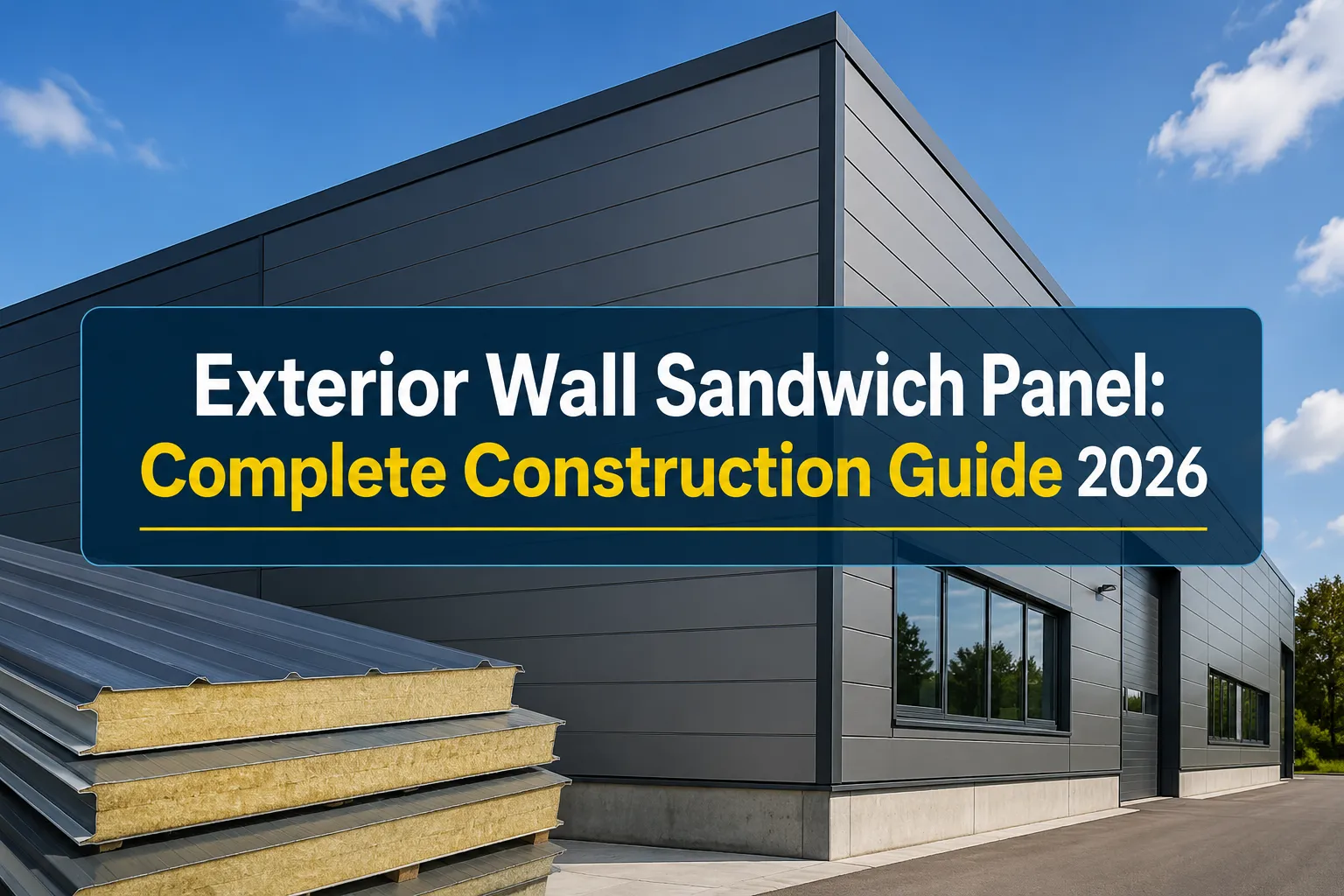
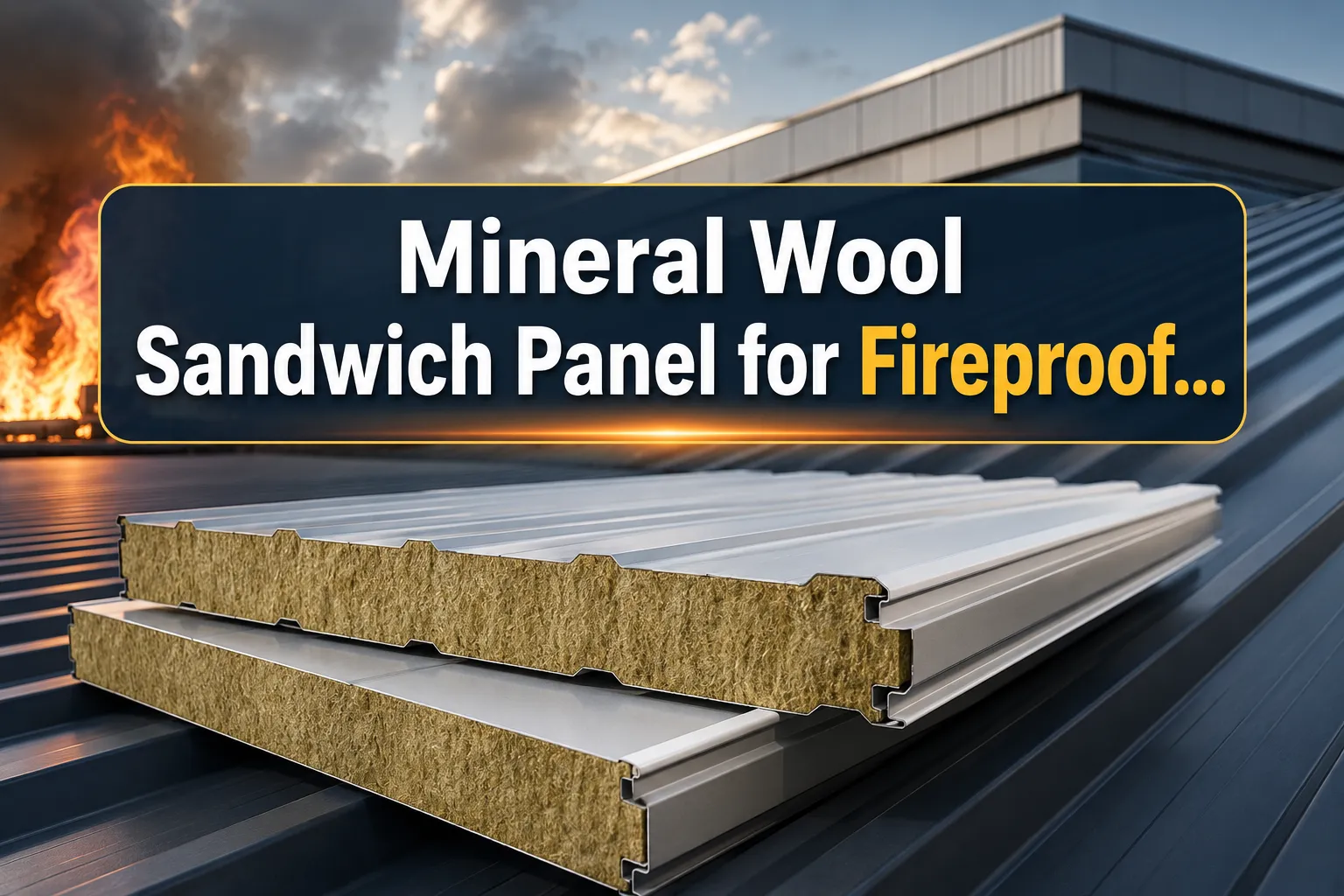
A mineral wool sandwich panel for fireproof roof consists of a mineral fiber insulation core bonded between two metal facings, typically steel or aluminum. The mineral wool core is made from basalt rock or steel slag heated to over 1500°C and spun into fibers, creating a non-combustible insulation material.
The panel works by combining three key performance elements. The outer metal facings provide structural strength and weather protection, while the mineral wool core delivers thermal insulation and fire resistance. The sandwich construction creates a lightweight yet strong building component that can span significant distances without intermediate support.
Fire resistance mechanism: When exposed to fire, mineral wool maintains its structural integrity up to 1000°C. The fibers don't melt or emit toxic gases, instead forming a protective barrier that slows heat transfer through the panel. This allows the panel to maintain load-bearing capacity during fire events, providing crucial time for evacuation and firefighting efforts.
Choose mineral wool over other core materials if fire safety is your primary concern, especially in industrial facilities, warehouses, or buildings with high occupancy loads where fire codes mandate specific fire resistance ratings.
How Fireproof Are Mineral Wool Sandwich Panels Really
Mineral wool sandwich panels achieve genuine fire resistance ratings from 30 minutes to 4 hours depending on panel thickness and construction details. These ratings are tested according to ASTM E119 or EN 13501 standards, measuring the panel's ability to maintain structural integrity, prevent flame penetration, and limit temperature rise on the unexposed surface.
Actual fire performance data:
- 100mm panels: typically achieve 2-hour fire rating
- 150mm panels: commonly rated for 3-4 hours
- Surface spread of flame: Class 0 or Class A ratings
- Smoke development: minimal due to non-combustible core
- Toxic gas emission: none from mineral wool core
The panels maintain load-bearing capacity throughout the fire rating period. Unlike foam-core panels that can melt and collapse rapidly, mineral wool panels continue supporting roof loads even when exposed surfaces reach 800-900°C.
Real-world consideration: Fire ratings apply only when panels are properly installed with approved fasteners, sealants, and junction details. Poor installation can reduce fire performance significantly, making professional installation critical for maintaining rated performance.
For the highest fire safety requirements, specify panels with steel facings rather than aluminum, as steel maintains strength at higher temperatures and doesn't contribute to fire spread.
Mineral Wool Sandwich Panel vs Fiberglass Roof Insulation
Mineral wool sandwich panels outperform fiberglass insulation in fire resistance, structural capacity, and moisture resistance, while fiberglass offers lower initial costs for basic insulation needs. The choice depends on your specific performance requirements and budget constraints.
Fire performance comparison:
- Mineral wool: non-combustible, maintains integrity to 1000°C
- Fiberglass: combustible at 540°C, can melt and drip during fires
- Fire ratings: mineral wool achieves up to 4 hours, fiberglass typically limited to 1 hour
Structural differences:
- Mineral wool panels: self-supporting spans up to 8 meters
- Fiberglass: requires continuous decking support
- Installation speed: panels install 3-5 times faster than fiberglass batts
Cost analysis:
- Initial cost: fiberglass 30-40% less expensive per square meter
- Total installed cost: mineral wool often competitive due to faster installation
- Long-term value: mineral wool lasts 30-50 years vs 15-25 years for fiberglass
Choose mineral wool sandwich panels when fire codes require specific ratings, when you need structural spanning capability, or for buildings requiring long-term durability. Select fiberglass for basic residential applications where fire ratings aren't mandated and initial cost is the primary concern.
Mineral Wool Sandwich Panel Cost Per Square Meter
Mineral wool sandwich panel costs range from $25-45 per square meter installed, with material costs representing 60-70% of the total project expense. Panel thickness, fire rating requirements, and project size significantly impact pricing.
Cost breakdown by thickness:
- 50-75mm panels: $18-25 per square meter (material only)
- 100-150mm panels: $22-32 per square meter (material only)
- 175-200mm panels: $28-38 per square meter (material only)
- Installation labor: $8-15 per square meter additional
Factors affecting cost:
- Project size: Orders over 1000 square meters receive 10-15% volume discounts
- Panel length: Custom lengths increase costs by 15-25%
- Fire rating: Higher ratings add $3-8 per square meter
- Facing material: Aluminum facings cost 20-30% more than steel
Additional costs to budget:
- Fasteners and accessories: $2-4 per square meter
- Vapor barriers: $1-2 per square meter
- Ridge and edge trims: $8-15 per linear meter
For accurate pricing on your specific project, request quotes from multiple suppliers as regional pricing varies significantly. Consider total project costs including crane rental, site access, and weather delays when budgeting installation timelines.
Do Mineral Wool Panels Need Special Installation for Roofs
Yes, mineral wool sandwich panels require specialized installation techniques, fasteners, and sealing methods to maintain fire ratings and prevent moisture infiltration. Standard roofing installation practices don't apply to these engineered building systems.
Critical installation requirements:
- Fasteners: Must use manufacturer-specified screws with EPDM washers rated for panel thickness
- Spacing: Fastener patterns typically require 300-400mm centers along supports
- Vapor barriers: Essential on warm side to prevent condensation within panel core
- Sealants: Fire-rated sealants required at all panel joints and penetrations
Structural considerations:
The roof structure must be designed for panel loads (12-25 kg per square meter) plus additional snow and wind loads. Purlins or structural supports typically space at 1.5-3 meter centers depending on panel thickness and load requirements.
Weather protection during installation:
Mineral wool cores absorb moisture if exposed to rain during installation, reducing thermal performance and potentially causing corrosion of metal facings. Plan installation during dry weather periods and protect partially completed areas.
Common installation mistakes:
- Using incorrect fastener types voids fire ratings
- Inadequate vapor barrier installation causes condensation problems
- Improper joint sealing allows water infiltration
- Insufficient structural support leads to panel deflection and joint failure
For projects requiring fire ratings, use only certified installers trained on the specific panel system to maintain warranty coverage and code compliance.
Mineral Wool Sandwich Panel Fire Rating Explained
Fire ratings for mineral wool sandwich panels indicate the time duration the panel can maintain structural integrity, prevent flame penetration, and limit temperature rise during standardized fire exposure tests. These ratings directly correlate to building code requirements for different occupancy types.
Standard fire rating classifications:
- 30-60 minutes: Light commercial, residential applications
- 1-2 hours: Standard commercial, industrial buildings
- 3-4 hours: High-risk facilities, chemical plants, aircraft hangars
- Special ratings: Custom assemblies for critical infrastructure
Three performance criteria tested:
- Structural adequacy: Panel continues supporting applied loads
- Integrity: No flame or hot gas penetration through panel
- Insulation: Unexposed surface temperature rise limited to 140°C average
Rating factors that affect performance:
- Panel thickness (primary factor)
- Facing material gauge and type
- Fastener spacing and type
- Joint sealing and construction details
- Support structure fire protection
Code compliance requirements:
Building codes specify minimum fire ratings based on occupancy type, building height, and proximity to property lines. For example, warehouses over 15,000 square feet typically require 2-hour roof assemblies, while aircraft maintenance facilities may require 4-hour ratings.
The fire rating applies only to the complete assembly including panels, fasteners, and support structure. Modifications to any component can void the rating, making adherence to tested configurations essential for code compliance.
For detailed fire safety information, refer to our comprehensive rockwool sandwich panel fire safety guide.
Best Brands for Mineral Wool Roof Sandwich Panels
Leading manufacturers of mineral wool sandwich panels include Kingspan, Metecno, ArcelorMittal, and Isopan, each offering different performance characteristics and regional availability. Brand selection should prioritize local support, certification compliance, and project-specific requirements over name recognition alone.
Top-tier manufacturers:
- Kingspan: Premium pricing, extensive fire testing, strong warranty support
- Metecno: Competitive pricing, good availability in developing markets
- ArcelorMittal: Steel industry backing, focus on industrial applications
- Isopan: European engineering, specialized high-performance systems
Evaluation criteria for brand selection:
- Certification compliance: Verify panels meet local building codes and fire standards
- Local support: Consider availability of technical support and replacement parts
- Manufacturing quality: Look for ISO 9001 certification and quality control processes
- Warranty terms: Compare coverage periods and exclusions
Regional considerations:
In Bangladesh and South Asian markets, focus on suppliers with established distribution networks and local technical support. Choosing the right sandwich panel manufacturer involves evaluating both product quality and service capabilities.
Performance over brand preference:
Rather than selecting based on brand reputation alone, specify performance requirements including fire rating, thermal performance, and structural capacity. Multiple manufacturers can typically meet standard requirements, allowing competitive bidding while maintaining quality standards.
Request test certificates and installation manuals from potential suppliers to verify their panels meet your specific project requirements before making final selections.
Mineral Wool Panel Roof Condensation Problems
Condensation in mineral wool panel roofs occurs when warm, humid air contacts cold surfaces within the panel assembly, potentially causing corrosion of metal facings and reduced insulation performance. Proper vapor barrier installation and ventilation design prevent most condensation issues.
Primary condensation causes:
- Missing vapor barriers: Allows humid air to penetrate panel core
- Thermal bridging: Cold spots create condensation surfaces
- Poor joint sealing: Air leaks bypass vapor control systems
- Inadequate ventilation: Trapped moisture can't escape
Prevention strategies:
Install continuous vapor barriers on the warm side (interior) of panels with all joints sealed using compatible tape or sealant. The barrier must have permeance rating below 0.1 perms to effectively control moisture migration.
Ventilation requirements:
Provide adequate ventilation above and below panels to remove any moisture that does penetrate the assembly. Minimum ventilation rates of 1 square foot per 150 square feet of roof area help maintain dry conditions.
Design considerations:
- Climate zones: Hot, humid climates require more robust vapor control
- Building use: High-moisture activities (pools, laundries) need special attention
- Insulation continuity: Avoid gaps that create thermal bridges
Troubleshooting existing problems:
If condensation appears, identify the moisture source and improve vapor barriers or ventilation accordingly. Minor condensation may indicate seasonal conditions, while persistent moisture suggests installation defects requiring professional evaluation.
For comprehensive installation guidance, review our sandwich panel roof installation guide for detailed vapor barrier specifications.
How Long Do Mineral Wool Sandwich Panels Last
Mineral wool sandwich panels typically last 30-50 years in roofing applications when properly installed and maintained, with the mineral wool core maintaining performance indefinitely while metal facings determine overall service life. Panel longevity depends on environmental exposure, maintenance practices, and initial installation quality.
Service life factors:
- Coating system: High-quality paint systems extend facing life to 40-50 years
- Environmental exposure: Coastal or industrial environments reduce life by 20-30%
- Maintenance frequency: Annual inspections and minor repairs prevent major failures
- Installation quality: Poor installation can reduce life to 15-20 years
Component durability:
The mineral wool core doesn't degrade over time, maintaining thermal and fire performance throughout the panel's service life. Metal facings experience gradual coating degradation and potential corrosion, particularly at cut edges and fastener locations.
Maintenance requirements:
- Annual inspections: Check sealants, fasteners, and coating condition
- Sealant renewal: Replace weathered sealants every 10-15 years
- Coating maintenance: Touch up scratches and minor corrosion promptly
- Drainage maintenance: Keep gutters and drains clear to prevent water accumulation
End-of-life indicators:
Replace panels when facing corrosion becomes extensive, when thermal performance degrades significantly, or when fire ratings can no longer be maintained due to deteriorated components.
Warranty coverage:
Most manufacturers provide 15-25 year warranties on coating systems and 10-15 years on structural performance, giving confidence in expected service life under normal conditions.
Plan replacement costs into long-term facility budgets based on 35-40 year average service life for well-maintained installations in moderate climates.
Mineral Wool Roof Panels Weight and Structural Requirements
Mineral wool sandwich panels weigh 12-25 kg per square meter depending on thickness and facing materials, requiring structural design calculations to ensure adequate support capacity for combined dead loads, live loads, and environmental forces. Panel weight significantly exceeds conventional insulation systems.
Weight by panel thickness:
- 50-75mm panels: 12-16 kg per square meter
- 100-150mm panels: 16-22 kg per square meter
- 175-200mm panels: 20-25 kg per square meter
- Additional loads: Snow, wind, and maintenance loads add 50-150 kg per square meter
Structural support requirements:
Roof structures must be designed for total loads including panel weight plus applicable building code loads. Purlin spacing typically ranges from 1.5-3.0 meters depending on panel thickness and load requirements.
Span capabilities:
- 100mm panels: Maximum 4-5 meter spans
- 150mm panels: Maximum 6-7 meter spans
- 200mm panels: Maximum 7-8 meter spans
Foundation considerations:
The additional roof weight may require foundation upgrades in retrofit applications. Structural engineers should evaluate existing capacity before specifying mineral wool panels for roof replacement projects.
Installation equipment:
Panel weight requires appropriate lifting equipment for safe installation. Panels over 6 meters long typically need crane assistance rather than manual handling.
Deflection limits:
Panels must be supported to limit deflection to L/200 under design loads to prevent joint opening and water infiltration. Excessive deflection can also stress fasteners and reduce fire rating performance.
For specific structural requirements, consult with structural engineers familiar with sandwich panel systems and refer to manufacturer's load tables for your specific application.
Mineral Wool Sandwich Panel vs Metal Roof Decking
Mineral wool sandwich panels provide integrated insulation and fire protection in a single component, while metal roof decking requires separate insulation and fire protection systems but offers greater design flexibility and potentially lower costs for basic applications.
Performance comparison:
- Fire resistance: Panels achieve ratings up to 4 hours; metal decking requires additional fire protection for ratings over 1 hour
- Thermal performance: Panels provide continuous insulation; metal decking creates thermal bridges requiring careful insulation design
- Installation speed: Panels install 2-3 times faster than decking plus insulation systems
- Structural spanning: Similar capabilities when properly designed
Cost analysis:
- Initial cost: Metal decking systems cost 15-25% less for basic applications
- Total installed cost: Panels often competitive due to reduced labor requirements
- Long-term costs: Panels require less maintenance over 30-year service life
Design flexibility:
Metal decking accommodates complex roof shapes and penetrations more easily than panels. Decking also allows insulation thickness variations and easier access for maintenance or modifications.
Application suitability:
Choose mineral wool panels for:
- Projects requiring fire ratings above 2 hours
- Fast-track construction schedules
- Buildings with minimal roof penetrations
- Long-term, low-maintenance applications
Select metal decking for:
- Complex roof geometries
- Projects with extensive mechanical equipment
- Applications where initial cost is primary concern
- Buildings requiring frequent roof access
Both systems can achieve excellent performance when properly designed and installed for their intended applications.
Common Mistakes When Installing Mineral Wool Roof Panels
The most frequent installation errors include using incorrect fasteners, inadequate vapor barrier installation, and poor joint sealing, all of which can void fire ratings and cause long-term performance problems. These mistakes are easily preventable with proper training and attention to manufacturer specifications.
Critical fastener mistakes:
- Wrong fastener type: Using standard roofing screws instead of specified fasteners voids fire ratings
- Incorrect spacing: Too few fasteners cause panel movement and joint failure
- Over-tightening: Compresses washers and reduces weather sealing
- Missing washers: Allows water infiltration at fastener locations
Vapor barrier errors:
- Incomplete coverage: Gaps allow moisture penetration and condensation problems
- Wrong material: Using standard plastic instead of specified vapor barriers
- Poor joint sealing: Unsealed laps create air leakage paths
- Puncture damage: Failing to repair installation damage
Joint sealing problems:
- Incompatible sealants: Wrong sealant types fail prematurely or don't adhere properly
- Insufficient sealant: Thin applications don't provide adequate weather protection
- Poor surface preparation: Dirty or wet surfaces prevent proper sealant adhesion
- Missing sealant locations: Overlooking concealed joints allows water infiltration
Structural support issues:
- Inadequate purlin spacing: Causes panel deflection and stress concentration
- Poor alignment: Creates uneven panel surfaces and joint problems
- Insufficient bearing: Panels must bear fully on supports to carry design loads
Prevention strategies:
Use only manufacturer-certified installers for projects requiring fire ratings. Provide detailed installation drawings showing all critical details. Conduct regular inspections during installation to catch problems before they become systemic issues.
For detailed installation procedures, consult our sandwich panel installation guide for step-by-step instructions and quality control checklists.
Are Mineral Wool Panels Safe for Residential Roofs
Mineral wool panels are safe for residential roofs and offer superior fire protection compared to conventional roofing systems, though they're more commonly used in commercial applications due to higher costs and structural requirements. Residential use requires careful consideration of building codes and structural capacity.
Safety advantages:
- Fire resistance: Non-combustible core provides excellent fire protection
- No toxic emissions: Mineral wool doesn't release harmful gases during fires
- Structural integrity: Maintains load-bearing capacity during fire events
- Pest resistance: Inorganic materials don't support insects or rodents
Residential application considerations:
- Building codes: Verify local codes allow sandwich panel construction for residential use
- Structural requirements: Existing framing may need reinforcement for panel weight
- Cost factors: Panels cost 2-3 times more than conventional roofing systems
- Aesthetic options: Limited color and profile choices compared to residential roofing materials
Installation requirements:
Residential installations require the same attention to vapor barriers, fastening, and sealing as commercial projects. Poor installation can create moisture problems in conditioned residential spaces.
Energy performance:
Mineral wool panels provide excellent thermal performance, potentially qualifying for energy efficiency incentives. The continuous insulation eliminates thermal bridging common in residential construction.
Maintenance benefits:
Once installed, panels require minimal maintenance compared to shingle or tile roofing systems, potentially offsetting higher initial costs over the building's lifetime.
Consider mineral wool panels for residential applications when fire safety is paramount, such as homes in wildfire-prone areas or when building codes require specific fire ratings.
Mineral Wool Sandwich Panel Maintenance and Cleaning
Mineral wool sandwich panels require minimal maintenance consisting primarily of annual inspections, sealant renewal every 10-15 years, and prompt repair of any coating damage to maximize service life. The non-degrading mineral wool core means maintenance focuses on protecting metal facings and maintaining weather seals.
Annual maintenance tasks:
- Visual inspection: Check for coating damage, loose fasteners, and sealant deterioration
- Drainage cleaning: Clear gutters and drains to prevent water accumulation
- Sealant inspection: Verify all joints remain properly sealed
- Fastener check: Tighten any loose fasteners and replace missing washers
Cleaning procedures:
Clean panels annually using mild detergent and low-pressure water rinse. Avoid high-pressure washing that can drive water into joints or damage sealants. For industrial environments, more frequent cleaning may be necessary to remove corrosive deposits.
Preventive maintenance:
- Touch-up painting: Address scratches and minor corrosion immediately
- Sealant renewal: Replace weathered sealants before failure occurs
- Drainage maintenance: Ensure proper water runoff to prevent ponding
- Access protection: Use walkway systems to prevent foot traffic damage
Repair procedures:
Minor coating damage can be repaired using manufacturer-approved touch-up systems. Extensive damage may require panel replacement to maintain fire ratings and weather protection.
Professional maintenance:
Consider professional maintenance contracts for large installations or critical facilities. Trained technicians can identify potential problems before they become costly failures.
Maintenance costs:
Budget approximately $0.50-1.00 per square meter annually for routine maintenance, with major sealant renewal adding $2-4 per square meter every 10-15 years.
Proper maintenance extends panel life significantly and maintains warranty coverage, making it a cost-effective investment in building performance.
Frequently Asked Questions
What fire rating can mineral wool sandwich panels achieve?
Mineral wool sandwich panels can achieve fire ratings from 30 minutes up to 4 hours depending on panel thickness and construction details. Typical ratings are 2 hours for 100mm panels and 3-4 hours for 150-200mm panels when tested to ASTM E119 or EN 13501 standards.
How much do mineral wool roof panels cost installed?
Installed costs range from $25-45 per square meter including materials and labor. Thicker panels with higher fire ratings cost more, while larger projects receive volume discounts of 10-15%. Additional costs include fasteners, vapor barriers, and trim components.
Can mineral wool panels be installed over existing roofing?
Yes, but the existing structure must be evaluated for additional weight capacity. Panels add 12-25 kg per square meter depending on thickness. Proper vapor barrier installation becomes critical in retrofit applications to prevent condensation issues.
Do mineral wool panels require special ventilation?
Mineral wool panels don't require ventilation for the core material, but proper building ventilation helps prevent condensation. Vapor barriers on the warm side are more important than ventilation for moisture control in panel assemblies.
How long is the warranty on mineral wool sandwich panels?
Most manufacturers provide 15-25 year warranties on coating systems and 10-15 years on structural performance. Fire ratings and thermal performance are typically warranted for the panel's expected service life when properly installed and maintained.
Are mineral wool panels environmentally friendly?
Yes, mineral wool is made from abundant natural materials (basalt rock) or recycled steel slag. The panels are recyclable at end of life, and their thermal performance reduces building energy consumption throughout their service life.
What happens to mineral wool panels in extreme weather?
Mineral wool panels perform well in extreme weather including high winds, hail, and temperature extremes. The panels maintain structural integrity from -40°C to +80°C and resist impact damage better than many conventional roofing materials.
Can mineral wool panels be cut on site?
Yes, panels can be cut using appropriate tools, but cut edges must be sealed to prevent moisture infiltration and maintain fire ratings. Factory cutting is preferred for complex shapes to ensure proper sealing and warranty compliance.
Do mineral wool panels attract pests or rodents?
No, the inorganic mineral wool core doesn't provide food or nesting material for pests. The sealed panel construction also prevents pest infiltration when properly installed with appropriate sealants at all joints.
What building codes apply to mineral wool sandwich panels?
Panels must comply with local building codes for structural loads, fire ratings, and energy performance. Most codes reference standards like ASTM E119 for fire testing and ASHRAE 90.1 for thermal performance requirements.
How do mineral wool panels perform in earthquakes?
Mineral wool panels perform well in seismic conditions due to their lightweight construction and flexible fastening systems. The panels can accommodate building movement without failure when properly designed for seismic loads.
Are there color and finish options for mineral wool panels?
Yes, panels are available in various colors and finishes including smooth, textured, and woodgrain patterns. Color options depend on the manufacturer but typically include standard architectural colors with custom colors available for large projects.
Conclusion
Mineral wool sandwich panels represent the premium solution for fireproof roof construction, delivering unmatched fire resistance up to 4 hours while providing excellent thermal performance and structural capability. These panels cost more initially than conventional roofing systems but offer superior safety, durability, and long-term value for commercial and industrial applications.
The key to successful mineral wool panel installation lies in proper planning, professional installation, and attention to critical details like vapor barriers and joint sealing. When correctly specified and installed, these panels provide 30-50 years of reliable service with minimal maintenance requirements.
Next steps for your project:
- Determine requirements: Identify fire rating, thermal, and structural requirements for your specific application
- Evaluate costs: Get quotes from multiple suppliers and certified installers for accurate project budgeting
- Select suppliers: Choose manufacturers with local support and proven track records in your market
- Plan installation: Schedule installation during favorable weather with appropriate equipment and trained crews
- Implement maintenance: Establish routine inspection and maintenance programs to maximize panel service life
For detailed pricing information specific to your region, review our comprehensive sandwich panel price guide and connect with certified installers who can ensure proper installation and warranty compliance.
SEO Meta Title: Mineral Wool Sandwich Panel Fireproof Roof Guide 2026
Meta Description: Complete guide to mineral wool sandwich panels for fireproof roofs. Learn costs, installation, fire ratings, and performance comparisons. Expert 2026 advice.