Last updated: July 31, 2026

Quick Answer
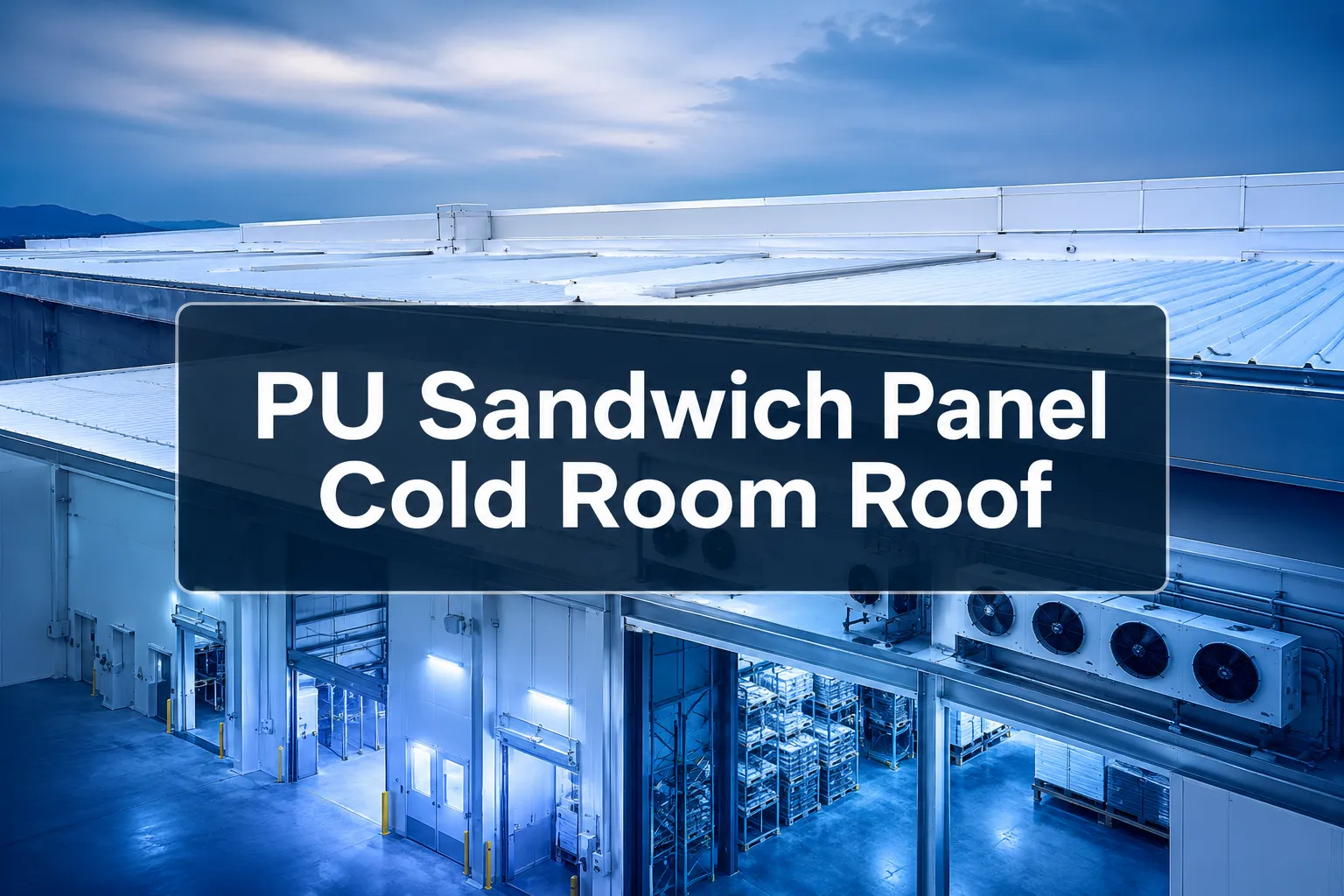
PU sandwich panels for cold room roofs consist of polyurethane foam insulation sandwiched between two metal facings, providing superior thermal performance with R-values of 6-8 per inch. These panels offer excellent insulation efficiency, moisture resistance, and structural strength, making them the preferred choice for cold storage applications requiring temperatures from -30°C to +10°C.
Key Takeaways
- PU sandwich panels deliver exceptional thermal performance with minimal thickness requirements
- Typical thickness ranges from 75mm to 200mm depending on temperature requirements
- Installation costs range from $15-25 per square meter including labor
- Expected lifespan exceeds 20-25 years with proper installation and maintenance
- Fire ratings typically achieve Class B or better with flame-retardant formulations
- Vapor barriers are built into the panel system, eliminating additional membrane needs
- Professional installation is essential for achieving optimal thermal performance
- Common mistakes include inadequate joint sealing and improper fastener selection
- Leading brands include Kingspan, Metecno, and Ruukki for commercial applications
What is a PU Sandwich Panel and How Does It Work
A PU sandwich panel for cold room roof applications is a composite building material consisting of a rigid polyurethane foam core bonded between two metal facings, typically galvanized steel or aluminum. The polyurethane core provides exceptional thermal insulation while the metal facings offer structural strength and weather protection.
The panel works by creating a continuous insulation barrier that minimizes thermal bridging. The closed-cell structure of polyurethane foam contains millions of tiny air pockets filled with low-conductivity gas, typically pentane or CO2. This structure achieves thermal conductivity values as low as 0.022 W/mK, significantly outperforming traditional insulation materials.
Key performance characteristics:
- Thermal conductivity: 0.022-0.028 W/mK
- Compressive strength: 150-300 kPa
- Temperature range: -40°C to +120°C
- Moisture absorption: Less than 2% by volume
The metal facings are typically 0.5-0.7mm thick and can be coated with various finishes including polyester, PVDF, or food-grade coatings for specific applications. The bond between core and facings is achieved through chemical adhesion during the manufacturing process, creating a composite action that enhances structural performance.
Best PU Sandwich Panel Thickness for Cold Room
The optimal thickness for a pu sandwich panel for cold room roof depends on the target temperature, local climate conditions, and energy efficiency requirements. Standard thicknesses range from 75mm to 200mm, with specific recommendations based on cold room operating temperatures.
Thickness recommendations by temperature range:
- +5°C to +10°C (Chilled storage): 75-100mm thickness
- 0°C to +5°C (Fresh produce): 100-120mm thickness
- -5°C to 0°C (Frozen foods): 120-150mm thickness
- -18°C to -5°C (Deep freeze): 150-200mm thickness
- Below -25°C (Ultra-low temperature): 200mm+ thickness
For most commercial cold storage applications operating at -18°C, 150mm thick panels provide the optimal balance of thermal performance and cost-effectiveness. This thickness typically achieves U-values of 0.15-0.18 W/m²K, meeting most energy efficiency standards.
Factors affecting thickness selection:
- Local climate and ambient temperatures
- Energy cost considerations
- Building height and structural limitations
- Specific industry requirements (pharmaceutical, food processing)
Choose thicker panels if energy costs are high or if the facility operates 24/7 with frequent door openings. Thinner panels may suffice for intermittent use facilities or where structural weight is a concern.
PU Sandwich Panel vs Fiberglass Insulation for Cold Rooms
PU sandwich panels significantly outperform traditional fiberglass insulation in cold room roof applications due to superior thermal performance, moisture resistance, and installation efficiency. While fiberglass requires additional vapor barriers and framing systems, PU panels provide an integrated solution.
Thermal performance comparison:
- PU panels: R-6 to R-8 per inch thickness
- Fiberglass batts: R-3 to R-4 per inch thickness
- Required thickness for same performance: PU needs 50% less thickness
Moisture performance:
PU sandwich panels have closed-cell structure with less than 2% moisture absorption, while fiberglass can absorb significant moisture, reducing insulation value by 40-50% when wet. This moisture resistance is critical in cold room applications where condensation is a constant concern.
Installation and labor costs:
PU panels install as single components with integrated structure, vapor barrier, and insulation. Fiberglass systems require separate installation of framing, insulation, vapor barriers, and roofing membrane, typically requiring 3-4x more labor hours.
Long-term performance:
PU panels maintain consistent R-value throughout their lifespan, while fiberglass can settle, compress, or develop moisture issues that degrade performance over time. The integrated panel system also eliminates thermal bridging through framing members common in fiberglass systems.
Choose PU sandwich panels for new construction or major renovations where maximum efficiency is required. Consider fiberglass only for budget-constrained projects or where existing structural systems can accommodate the additional thickness requirements.
How Much Does a PU Sandwich Panel Cost
PU sandwich panel costs for cold room roofs range from $12-20 per square meter for materials, with total installed costs typically $18-28 per square meter including labor and accessories. Pricing varies significantly based on thickness, facing materials, and project size.
Material cost breakdown by thickness:
- 75mm panels: $12-15 per m²
- 100mm panels: $14-17 per m²
- 120mm panels: $16-19 per m²
- 150mm panels: $18-22 per m²
- 200mm panels: $22-28 per m²
Additional cost factors:
- Facing materials: Aluminum facings add 15-25% to base cost
- Special coatings: Food-grade or anti-bacterial coatings add $2-4 per m²
- Fire-rated panels: Premium of 10-20% over standard panels
- Custom colors: Additional $1-3 per m² for non-standard colors
Installation costs typically include:
- Panel installation: $4-6 per m²
- Fasteners and accessories: $1-2 per m²
- Sealants and weatherstripping: $1-2 per m²
- Flashing and trim work: $2-3 per m²
Project size significantly affects pricing, with orders over 1000m² typically receiving 10-15% volume discounts. Consider total lifecycle costs rather than initial price, as higher-quality panels often provide better long-term value through energy savings and reduced maintenance.
PU Sandwich Panel Installation on Existing Cold Room Roof
Installing PU sandwich panels on an existing cold room roof requires careful assessment of structural capacity, proper preparation of the substrate, and attention to thermal bridging details. Most existing roofs can support panel loads with minimal structural modifications.
Pre-installation assessment:
First, verify that existing roof structure can support additional dead load of 12-18 kg/m² for typical PU panels. Check for adequate drainage, as panels require positive drainage to prevent ponding. Inspect existing roof membrane condition and repair any damage before panel installation.
Installation sequence:
- Substrate preparation: Clean existing roof surface and install appropriate base rails or support structure
- Vapor barrier consideration: Apply additional vapor barrier if existing roof lacks adequate protection
- Panel layout: Plan panel arrangement to minimize cuts and optimize drainage patterns
- Panel installation: Install panels following manufacturer's specifications for overlap and fastening
- Sealing and weatherproofing: Apply appropriate sealants at all joints and penetrations
Critical installation details:
- Maintain continuous insulation layer to prevent thermal bridging
- Use compatible fasteners rated for cold temperature service
- Ensure proper slope (minimum 1:40) for drainage
- Install snow guards if required by local climate conditions
Common retrofit challenges:
Existing roof penetrations require careful detailing to maintain thermal integrity. HVAC equipment, roof drains, and structural elements may need modification or relocation. Budget additional 15-25% for retrofit complexity compared to new construction.
Professional installation is essential for retrofit projects due to the complexity of integrating new panels with existing systems. Consider hiring experienced installation services familiar with cold room applications.
How Long Do PU Sandwich Panels Last
PU sandwich panels for cold room roofs typically last 20-25 years with proper installation and maintenance, with some high-quality systems exceeding 30 years. Panel lifespan depends on environmental conditions, maintenance practices, and initial installation quality.
Factors affecting panel lifespan:
- UV exposure: Panels with UV-resistant coatings last longer in exposed applications
- Temperature cycling: Frequent freeze-thaw cycles can stress panel joints
- Moisture exposure: Proper drainage and sealing prevent premature deterioration
- Maintenance quality: Regular inspection and joint maintenance extends service life
Expected performance timeline:
- Years 1-10: Minimal maintenance required, full performance retention
- Years 10-20: Periodic joint sealing and minor repairs needed
- Years 20-25: More frequent maintenance, possible facing replacement
- Beyond 25 years: Core insulation typically remains effective, facings may require renewal
Maintenance requirements:
Annual inspection should focus on joint integrity, fastener condition, and drainage system performance. Reseal joints every 5-7 years or as needed based on visual inspection. Replace damaged panels promptly to prevent moisture infiltration.
Warranty considerations:
Most manufacturers provide 10-15 year warranties on thermal performance and 15-20 year warranties against delamination. Extended warranties up to 25 years are available for premium panel systems with approved installation and maintenance programs.
Plan for panel replacement or major renovation after 20-25 years, though well-maintained systems often provide acceptable performance beyond warranty periods. Factor replacement costs into long-term facility planning and budgeting.
PU Sandwich Panel Fire Rating Requirements
PU sandwich panels for cold room roofs must meet specific fire safety standards, with most applications requiring Class B fire rating or better according to ASTM E84 or equivalent standards. Fire-retardant polyurethane formulations achieve these ratings while maintaining thermal performance.
Standard fire rating classifications:
- Class A: Flame spread 0-25, smoke development 0-450
- Class B: Flame spread 26-75, smoke development 0-450
- Class C: Flame spread 76-200, smoke development 0-450
Most cold storage facilities require Class B minimum, with food processing and pharmaceutical applications often mandating Class A ratings. Check local building codes and insurance requirements, as some jurisdictions have specific requirements for cold storage facilities.
Fire-retardant PU formulations:
Modern PU cores incorporate flame retardant additives that achieve required fire ratings without significantly impacting thermal performance. These formulations typically add 5-10% to panel cost but are essential for code compliance.
Additional fire safety considerations:
- Install fire stops at panel joints in fire-rated assemblies
- Use compatible sealants and adhesives with equivalent fire ratings
- Maintain proper clearances from heat sources and electrical equipment
- Consider sprinkler system integration for enhanced protection
Testing and certification:
Verify that panels carry appropriate fire test certifications from recognized testing laboratories. Look for FM Approved, UL Listed, or equivalent certifications that match project requirements.
Consult with local fire officials early in design phase to ensure panel selection meets all applicable codes. Some jurisdictions may require additional fire protection measures for large cold storage facilities.
Can You Cut PU Sandwich Panels on Site
PU sandwich panels can be cut on-site using appropriate tools and techniques, though factory pre-cutting is preferred for dimensional accuracy and edge sealing. Field cutting is commonly required for penetrations, end conditions, and field adjustments.
Recommended cutting tools:
- Circular saw with fine-tooth blade: For straight cuts through entire panel thickness
- Reciprocating saw: For curved cuts and penetrations
- Hot knife: For clean cuts through foam core only
- Metal shears: For facing material only (thin gauge facings)
Proper cutting technique:
Support panel adequately during cutting to prevent vibration and ensure clean cuts. Cut from the exterior face when possible to minimize visible cut edges. Use sharp blades and moderate cutting speed to prevent foam core from melting or tearing.
Edge sealing after cutting:
All field-cut edges must be sealed to prevent moisture infiltration and maintain thermal performance. Apply appropriate edge sealant or tape within 24 hours of cutting. Use manufacturer-approved sealants compatible with PU foam chemistry.
Safety considerations:
- Wear appropriate PPE including eye protection and dust masks
- Ensure adequate ventilation when cutting, as foam may release particles
- Clean up foam debris promptly to prevent slip hazards
- Follow manufacturer's safety data sheets for handling recommendations
When to avoid field cutting:
Minimize field cutting for structural panels or where precise dimensions are critical. Factory cutting provides better edge sealing, dimensional accuracy, and often includes specialized edge profiles for improved weatherproofing.
Plan panel layout carefully to minimize field cutting requirements. Most suppliers offer custom cutting services that provide better results than field cutting for complex shapes or multiple identical pieces.
PU Sandwich Panel Moisture and Condensation Issues
PU sandwich panels effectively manage moisture and condensation in cold room applications through their closed-cell foam structure and integrated vapor barrier properties. However, proper installation and detailing are essential to prevent moisture-related problems.
Built-in moisture protection:
The closed-cell PU core absorbs less than 2% moisture by volume, significantly outperforming open-cell insulation materials. Metal facings provide additional moisture barrier when properly sealed at joints and penetrations.
Common moisture problem areas:
- Panel joints: Inadequate sealing allows moisture infiltration
- Roof penetrations: HVAC equipment, drains, and structural connections
- Thermal bridges: Fasteners and structural elements can create condensation points
- Damaged panels: Impact damage or deteriorated sealants compromise moisture protection
Condensation prevention strategies:
Install continuous vapor barrier on warm side of insulation system. Maintain positive air pressure in cold room to prevent warm, humid air infiltration. Ensure adequate insulation thickness to keep interior surface temperatures above dew point.
Drainage considerations:
Design roof system with positive drainage (minimum 1:40 slope) to prevent water accumulation. Install adequate roof drains sized for local rainfall intensity plus safety factor. Consider heated roof drains in freeze-prone climates.
Inspection and maintenance:
Regularly inspect panel joints, sealants, and penetrations for signs of moisture infiltration. Look for ice formation, staining, or corrosion that indicates moisture problems. Address issues promptly to prevent insulation degradation.
Repair procedures:
Small punctures can be sealed with compatible sealants or repair tape. Larger damage may require panel replacement. Always dry affected areas thoroughly before sealing to prevent trapped moisture problems.
Best Brands for Cold Room PU Sandwich Panels
Leading manufacturers of PU sandwich panels for cold room applications include Kingspan, Metecno, Ruukki, and Isopan, each offering specialized products designed for low-temperature environments. Brand selection should consider local availability, technical support, and warranty coverage.
Top-tier international brands:
- Kingspan: Premium panels with excellent thermal performance and comprehensive warranty coverage
- Metecno: Strong presence in cold storage market with specialized low-temperature formulations
- Ruukki: Nordic engineering expertise, excellent performance in extreme climates
- Isopan: Italian manufacturer with focus on food processing and pharmaceutical applications
Regional quality manufacturers:
Many regional manufacturers produce high-quality PU panels meeting international standards at competitive prices. Local suppliers often provide better technical support and faster delivery for standard applications.
Selection criteria:
- Thermal performance: Verify actual tested R-values and thermal conductivity
- Quality certifications: Look for ISO 9001, FM Approved, or equivalent certifications
- Warranty coverage: Compare warranty terms for thermal performance and delamination
- Local support: Consider availability of technical support and replacement panels
Performance specifications to compare:
- Core density and thermal conductivity values
- Facing material thickness and coating durability
- Fire rating certifications and test reports
- Structural load capacity and span capabilities
Cost vs. quality considerations:
Premium brands typically cost 15-25% more than regional alternatives but often provide superior long-term performance and warranty coverage. For critical applications like pharmaceutical cold storage, premium brands may be justified by reduced risk and better technical support.
Evaluate total cost of ownership including energy performance, maintenance requirements, and warranty coverage rather than initial purchase price alone.
PU Sandwich Panel R-Value and Thermal Performance
PU sandwich panels achieve R-values of 6-8 per inch of thickness, significantly outperforming traditional insulation materials. Actual thermal performance depends on panel thickness, core density, and installation quality, with properly installed systems achieving design U-values consistently.
R-value by panel thickness:
- 75mm (3"): R-18 to R-24
- 100mm (4"): R-24 to R-32
- 120mm (4.7"): R-28 to R-38
- 150mm (6"): R-36 to R-48
- 200mm (8"): R-48 to R-64
Factors affecting thermal performance:
Core density significantly impacts R-value, with higher-density foams (40-45 kg/m³) providing better insulation than lower-density alternatives. Manufacturing quality affects cell structure uniformity and gas retention in closed cells.
Thermal bridging considerations:
Fasteners and structural connections create thermal bridges that reduce overall assembly performance. Use thermal break fasteners and minimize penetrations through the insulation layer. Properly detailed installations achieve 85-95% of theoretical panel R-value.
Performance testing standards:
Verify R-values through standardized testing per ASTM C518 or equivalent standards. Be aware that some manufacturers report theoretical values that may not reflect real-world performance with typical installation practices.
Aging and long-term performance:
PU panels may experience 5-10% reduction in R-value over the first 5-10 years as blowing agents slowly diffuse from foam cells. Quality panels stabilize after initial aging period and maintain performance for decades.
Comparative thermal performance:
PU panels require 40-50% less thickness than fiberglass insulation to achieve equivalent thermal performance. This thickness advantage often justifies higher material costs through reduced structural requirements and improved building envelope performance.
For detailed thermal analysis and panel thickness selection, consult with thermal modeling specialists to optimize performance for specific climate conditions and operating requirements.
Common Mistakes When Installing PU Panels
Installation errors significantly impact PU sandwich panel performance and longevity in cold room applications. The most critical mistakes involve inadequate joint sealing, improper fastener selection, and insufficient attention to thermal bridging details.
Joint sealing failures:
Inadequate or incompatible sealants at panel joints allow air infiltration and moisture penetration. Use manufacturer-specified sealants and apply in continuous beads without gaps. Clean joint surfaces thoroughly before sealant application and verify cure time before exposing to weather.
Fastener-related problems:
Using standard fasteners instead of thermal-break versions creates thermal bridges and condensation points. Over-tightening fasteners can compress foam core and reduce insulation value. Under-tightening allows panel movement and joint failure.
Structural support errors:
Inadequate support spacing causes panel deflection and joint stress. Verify structural design matches panel span capabilities and load requirements. Account for snow loads, wind uplift, and thermal movement in support design.
Drainage and slope mistakes:
Installing panels without adequate slope (minimum 1:40) causes water ponding and premature deterioration. Improper drainage details at roof edges and penetrations allow water infiltration. Size roof drains adequately for local rainfall intensity.
Thermal bridge oversights:
Continuous structural members through insulation layer create significant thermal bridges. Use thermal break connections and minimize penetrations. Detail carefully around HVAC equipment, structural supports, and utility penetrations.
Quality control failures:
Skipping manufacturer training for installation crews leads to poor workmanship. Inadequate inspection during installation allows problems to be covered up. Document installation progress with photos for warranty compliance.
Prevention strategies:
Require manufacturer-certified installers for critical applications. Develop detailed installation specifications and quality control checklists. Conduct regular inspections during installation to catch problems early.
PU Sandwich Panel vs Polyurethane vs Polystyrene for Cold Storage
PU sandwich panels outperform both loose-fill polyurethane and polystyrene insulation systems in cold storage applications due to superior thermal performance, structural integration, and moisture resistance. Each system has specific advantages depending on application requirements.
Thermal performance comparison:
- PU sandwich panels: R-6 to R-8 per inch, integrated structure
- Spray polyurethane: R-6 to R-7 per inch, requires separate structure
- Polystyrene (XPS): R-5 per inch, requires vapor barrier and structure
- Polystyrene (EPS): R-4 per inch, lower cost but reduced performance
Moisture resistance:
PU sandwich panels provide integrated moisture barrier through metal facings and closed-cell core. Spray polyurethane offers excellent moisture resistance but requires separate weatherproofing. Polystyrene systems need careful vapor barrier installation to prevent moisture problems.
Installation efficiency:
Sandwich panels install as complete building envelope systems, reducing labor and coordination requirements. Spray polyurethane requires specialized applicators and weather protection during installation. Polystyrene systems need separate installation of insulation, structure, and weatherproofing.
Cost comparison (installed):
- PU sandwich panels: $18-28 per m² installed
- Spray polyurethane system: $22-32 per m² including structure
- Polystyrene system: $15-25 per m² including all components
Application recommendations:
Choose PU sandwich panels for new construction where speed and performance are priorities. Consider spray polyurethane for complex geometries or retrofit applications. Use polystyrene systems only where budget constraints are primary concern and performance requirements are less stringent.
Long-term performance:
Sandwich panels maintain consistent performance with minimal maintenance. Spray systems may require periodic coating renewal. Polystyrene systems are more susceptible to moisture and thermal cycling damage.
For most commercial cold storage applications, PU sandwich panels provide the optimal balance of performance, installation efficiency, and long-term reliability.
Do PU Sandwich Panels Need Vapor Barrier
PU sandwich panels typically do not require additional vapor barriers for cold room roof applications, as the metal facings and closed-cell foam core provide effective moisture protection when properly installed. However, specific climate conditions and building codes may require supplementary vapor barrier systems.
Built-in vapor protection:
The metal facings of PU sandwich panels act as vapor barriers with permeance ratings typically below 0.1 perms. The closed-cell polyurethane core also resists vapor transmission, creating a dual-barrier system that effectively prevents moisture infiltration.
When additional vapor barriers are needed:
- Extreme climate conditions: Very humid climates with large temperature differentials
- Code requirements: Some jurisdictions mandate separate vapor barriers regardless of panel properties
- Retrofit applications: Existing roof conditions may require additional protection
- High-humidity processes: Food processing or pharmaceutical applications with internal moisture sources
Vapor barrier placement:
When required, install vapor barriers on the warm side of the insulation system. Use compatible materials that won't react with PU foam chemistry. Ensure continuous coverage with properly sealed joints and penetrations.
Installation considerations:
Pay careful attention to panel joint sealing, as these are the primary vapor infiltration points. Use manufacturer-approved sealants and follow specified application procedures. Install gaskets or weatherstripping at panel overlaps for enhanced sealing.
Testing and verification:
Consider blower door testing or thermal imaging inspection to verify vapor barrier effectiveness. These tests can identify problem areas before they cause insulation degradation or structural damage.
Maintenance requirements:
Inspect joint sealants annually and reseal as needed. Look for signs of moisture infiltration such as ice formation, staining, or corrosion. Address problems promptly to maintain vapor barrier integrity.
For most standard cold room applications, properly installed PU sandwich panels provide adequate vapor protection without additional barriers, simplifying installation and reducing costs.
Frequently Asked Questions
What is the minimum slope required for PU sandwich panel roofs?
The minimum slope for PU sandwich panel roofs is 1:40 (1.4 degrees) to ensure positive drainage. Steeper slopes of 1:20 or greater are recommended in areas with heavy rainfall or snow loads to prevent water accumulation and ice dam formation.
Can PU sandwich panels support snow loads?
Yes, PU sandwich panels can support significant snow loads when properly designed and supported. Standard panels typically handle 150-300 kg/m² loads depending on thickness and span. Verify load calculations with structural engineer for specific climate conditions.
How do you repair damaged PU sandwich panels?
Small punctures can be repaired with compatible sealants or repair tape. Larger damage requires panel replacement. Clean damaged area, apply primer if specified, and seal with manufacturer-approved materials. Ensure repair area is completely dry before sealing.
What fasteners should be used with PU sandwich panels?
Use thermal-break fasteners specifically designed for insulated panels. Stainless steel or coated carbon steel fasteners prevent corrosion. Self-drilling screws with EPDM washers provide weather sealing. Avoid over-tightening to prevent foam compression.
Are PU sandwich panels suitable for organic food storage?
Yes, PU sandwich panels with food-grade facings are suitable for organic food storage. Look for panels with FDA-approved coatings and certifications for food contact applications. Ensure proper cleaning and maintenance protocols are followed.
How often should PU sandwich panel joints be resealed?
Panel joints should be inspected annually and resealed every 5-7 years or as needed based on visual inspection. High-traffic areas or severe weather exposure may require more frequent maintenance. Use compatible sealants specified by panel manufacturer.
Can PU sandwich panels be installed in winter conditions?
PU panels can be installed in cold weather, but sealants and adhesives may require special low-temperature formulations. Protect panels from snow and ice accumulation during installation. Some sealants require minimum temperatures for proper curing.
What is the maximum span for PU sandwich panels?
Maximum span depends on panel thickness, load requirements, and deflection limits. Typical spans range from 4-8 meters for roof applications. Consult manufacturer's span tables and verify with structural calculations for specific loading conditions.
Do PU sandwich panels require special electrical considerations?
Standard electrical installation practices apply, but ensure all penetrations are properly sealed. Use appropriate electrical boxes and maintain required clearances from heat sources. Consider thermal expansion when routing electrical systems through panels.
How do PU sandwich panels perform in seismic zones?
PU sandwich panels can be designed for seismic applications with appropriate structural connections and detailing. Flexible joint systems accommodate building movement while maintaining weather sealing. Consult with structural engineer for seismic design requirements.
What maintenance is required for PU sandwich panels?
Annual inspection of joints, fasteners, and drainage systems is recommended. Clean panels periodically with mild detergent and water. Reseal joints as needed and replace damaged panels promptly. Maintain roof drainage systems to prevent water accumulation.
Can PU sandwich panels be recycled?
PU sandwich panels can be partially recycled, with metal facings recoverable through standard metal recycling processes. The polyurethane core is more challenging to recycle but can be processed into other products. Some manufacturers offer take-back programs for end-of-life panels.
Conclusion
PU sandwich panels represent the optimal solution for cold room roof applications in 2026, delivering superior thermal performance, structural efficiency, and long-term reliability. With R-values of 6-8 per inch and integrated moisture protection, these panels outperform traditional insulation systems while simplifying installation and reducing maintenance requirements.
The key to successful implementation lies in proper panel selection, professional installation, and regular maintenance. Choose panel thickness based on operating temperature requirements, verify fire rating compliance, and ensure proper joint sealing and drainage details. While initial costs may exceed traditional systems, the energy savings, reduced maintenance, and extended service life provide excellent return on investment.
For cold storage facility owners and designers, investing in quality PU sandwich panels from reputable manufacturers, combined with certified installation services, ensures optimal performance and compliance with current building standards. Regular inspection and preventive maintenance will maximize panel lifespan and maintain thermal efficiency throughout the system's 20-25 year service life.
Consider consulting with experienced cold room construction specialists to optimize panel selection and installation details for specific project requirements and local climate conditions.
SEO Meta Title: PU Sandwich Panel Cold Room Roof Guide 2026 | Complete Specs
SEO Meta Description: Complete guide to PU sandwich panels for cold room roofs. Compare thickness, costs, installation tips, and performance specs. Expert advice for 2026 projects.