Last updated: July 31, 2026

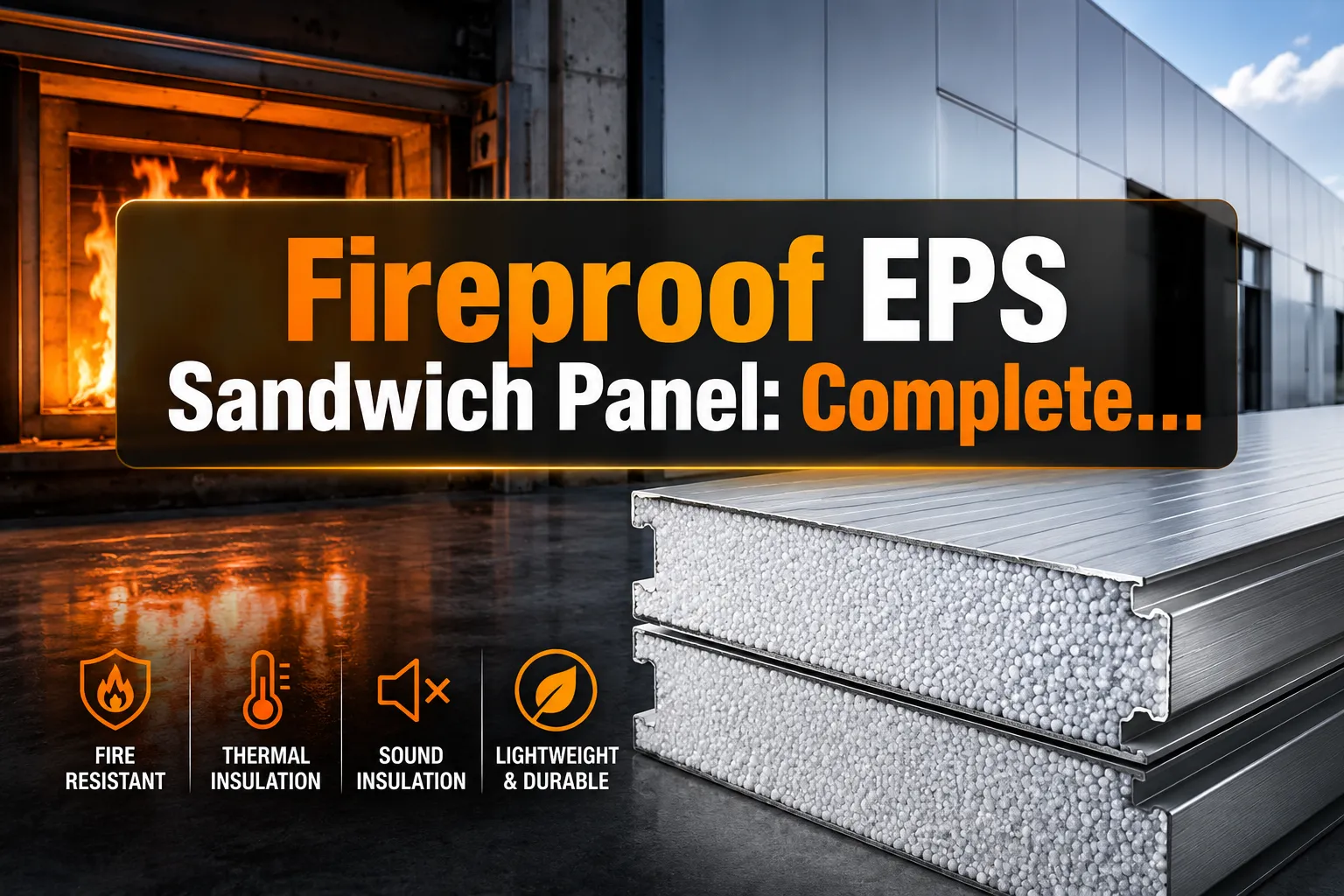
Quick Answer: Fireproof EPS sandwich panels are composite building materials featuring an expanded polystyrene core treated with flame retardant additives, sandwiched between metal facings. These panels provide thermal insulation while meeting fire safety requirements for commercial and industrial construction, though they don't completely stop fire but rather slow its spread and reduce flame propagation.
Key Takeaways
- Fireproof EPS panels use flame-retardant treated polystyrene cores that self-extinguish when fire source is removed
- Cost ranges from $15-35 per square meter depending on thickness and fire rating specifications
- Installation requires proper sealing and fire-stopping at joints to maintain fire resistance integrity
- These panels offer better cost-effectiveness than mineral wool but lower fire performance than rockwool alternatives
- Common applications include warehouses, factories, and agricultural buildings rather than high-rise construction
- Panel thickness typically ranges from 50mm to 200mm based on insulation and structural requirements
- Professional installation is recommended to avoid thermal bridging and fire safety compliance issues
- Lifespan averages 25-30 years with proper maintenance and protection from UV exposure
What Is a Fireproof EPS Sandwich Panel
A fireproof EPS sandwich panel consists of an expanded polystyrene (EPS) foam core treated with flame retardant chemicals, bonded between two metal sheets typically made of galvanized steel or aluminum. The "fireproof" designation refers to the panel's enhanced fire resistance compared to standard EPS panels, not complete fire immunity.
The core material undergoes chemical treatment with additives like hexabromocyclododecane (HBCD) or newer alternatives that help the foam self-extinguish when exposed to flames. The metal facings provide structural strength and act as a barrier against fire penetration.
Key components include:
- Flame-retardant treated EPS core (density 15-25 kg/m³)
- Galvanized steel or aluminum facings (0.4-0.8mm thick)
- Polyurethane adhesive bonding system
- Protective coatings on metal surfaces
These panels typically achieve fire ratings of B-s1,d0 to B-s2,d0 under European EN 13501 standards, indicating limited contribution to fire load with restricted smoke production.
How Do Fireproof EPS Panels Compare to Mineral Wool Panels
Fireproof EPS panels offer lower fire resistance but better thermal performance and cost-effectiveness compared to mineral wool alternatives. Mineral wool panels achieve superior fire ratings (A1 or A2 non-combustible) while EPS panels typically reach B-class combustible ratings.
Fire Performance Differences:
- Mineral wool: Non-combustible, withstands temperatures up to 1000°C, no toxic fume emission
- Fireproof EPS: Self-extinguishing, melts at 80-100°C, potential for toxic gas release under extreme heat
Thermal Insulation Comparison:
- EPS panels: R-value of 3.6-4.2 per inch, excellent moisture resistance
- Mineral wool: R-value of 3.0-3.3 per inch, vapor permeable but can absorb moisture
Cost Analysis:
- Fireproof EPS: $15-35 per square meter installed
- Mineral wool: $25-50 per square meter installed
Choose fireproof EPS panels for cost-sensitive projects with moderate fire risk. Select mineral wool for high-risk applications, hospitals, or buildings requiring non-combustible materials. For detailed mineral wool specifications, see our rockwool sandwich panel fire safety guide.
Fireproof EPS Sandwich Panel Cost Per Square Meter
Fireproof EPS sandwich panel costs range from $15-35 per square meter in 2026, with pricing influenced by thickness, fire rating, and order quantity. Installation adds another $8-15 per square meter for professional fitting.
Price Breakdown by Thickness:
- 50mm panels: $15-22 per square meter
- 75mm panels: $18-26 per square meter
- 100mm panels: $22-30 per square meter
- 150mm panels: $28-35 per square meter
Additional Cost Factors:
- Fire rating certification adds 15-25% premium
- Custom colors increase cost by $2-4 per square meter
- Minimum order quantities (typically 500+ square meters) for best pricing
- Transportation costs vary by distance from manufacturer
Installation costs include:
- Labor: $5-8 per square meter
- Fasteners and sealants: $2-4 per square meter
- Fire-stopping materials: $1-3 per square meter
Bulk orders over 1000 square meters typically receive 10-15% discounts. For current Bangladesh pricing, check our sandwich panel price guide.
Do Fireproof EPS Panels Actually Stop Fire
Fireproof EPS panels do not completely stop fire but significantly slow fire spread and reduce flame propagation compared to standard EPS panels. The flame retardant treatment causes the foam to self-extinguish when the ignition source is removed, buying crucial time for evacuation and fire suppression.
Fire Resistance Mechanisms:
- Self-extinguishing properties: Treated EPS stops burning within 10-15 seconds after flame removal
- Char formation: Creates insulating carbon layer that protects underlying material
- Metal facing barriers: Steel or aluminum sheets resist fire penetration for 30-120 minutes
Limitations to understand:
- Prolonged exposure to high heat (above 100°C) causes melting and potential toxic gas release
- Panel joints and penetrations remain vulnerable without proper fire-stopping
- Performance degrades if protective coatings are damaged or panels are improperly installed
Real-world performance: In standard building fires, fireproof EPS panels provide 30-60 minutes of fire resistance, sufficient for most evacuation scenarios. However, they're not suitable for fire walls or applications requiring non-combustible materials.
For buildings requiring maximum fire safety, consider fire-rated sandwich panels with mineral wool cores instead.
Fireproof EPS Sandwich Panel Installation Problems
Common installation problems with fireproof EPS panels include thermal bridging, inadequate fire-stopping at joints, and moisture infiltration that can compromise both thermal and fire performance. Proper installation requires attention to sealing details and structural support.
Most Frequent Installation Issues:
Thermal Bridging:
- Occurs when metal fasteners create heat transfer paths through insulation
- Solution: Use thermal break washers and minimize fastener penetration
- Impact: Can reduce thermal efficiency by 15-25%
Joint Sealing Failures:
- Gaps at panel connections allow fire and smoke passage
- Required: Fire-rated sealants and gaskets at all joints
- Critical for maintaining fire resistance ratings
Structural Support Problems:
- Inadequate framing causes panel deflection and joint opening
- Minimum support spacing: Every 1.5-2.0 meters for wall panels
- Roof panels require closer spacing based on snow/wind loads
Moisture Control Issues:
- Poor vapor barrier installation leads to condensation within panels
- Essential: Continuous air barrier and proper ventilation design
- Failed moisture control can cause EPS degradation and mold growth
Professional installation is recommended for projects requiring fire certification compliance. DIY installation often fails inspection due to improper fire-stopping and thermal bridge details.
What's Better: Fireproof EPS or Polyurethane Sandwich Panels
Fireproof EPS panels offer better cost-effectiveness and easier handling, while polyurethane (PU) panels provide superior fire performance and thermal efficiency. The choice depends on your specific fire safety requirements and budget constraints.
Fire Safety Comparison:
- Fireproof EPS: B-class fire rating, self-extinguishing, melts at low temperatures
- PU panels: Can achieve B to C class ratings, burns more readily but with less smoke
- Winner: EPS for fire resistance, though both require careful specification
Thermal Performance:
- EPS panels: R-4.0 per inch, stable performance over time
- PU panels: R-6.0+ per inch, excellent insulation efficiency
- Winner: PU for thermal performance
Cost Analysis:
- Fireproof EPS: $15-35 per square meter
- PU panels: $25-45 per square meter
- Winner: EPS for budget-conscious projects
Durability Factors:
- EPS: UV sensitive, requires protective coatings, 25-30 year lifespan
- PU: Better UV resistance, closed-cell structure, 30-35 year lifespan
Choose fireproof EPS for warehouses, agricultural buildings, and cost-sensitive applications. Select PU panels for cold storage, clean rooms, and applications requiring maximum thermal efficiency. For cold storage applications, see our PU sandwich panel guide.
Who Uses Fireproof EPS Sandwich Panels
Industrial and commercial builders primarily use fireproof EPS sandwich panels for warehouses, manufacturing facilities, and agricultural structures where moderate fire resistance meets building code requirements at competitive costs.
Primary Applications:
Industrial Buildings:
- Warehouses and distribution centers
- Manufacturing plants and factories
- Aircraft hangars and maintenance facilities
- Automotive service buildings
Agricultural Sector:
- Poultry farms and livestock buildings
- Grain storage facilities
- Equipment storage barns
- Processing plants
Commercial Construction:
- Retail stores and shopping centers
- Office buildings (non-high-rise)
- Recreational facilities and gymnasiums
- Temporary and modular structures
Geographic Usage Patterns:
- Developing markets prefer EPS for cost advantages
- Cold climate regions value thermal performance
- Areas with moderate fire codes accept B-class ratings
- Industrial zones with large-span requirements
Industries that typically avoid fireproof EPS:
- Hospitals and healthcare facilities (require non-combustible materials)
- High-rise construction (stricter fire codes)
- Chemical processing plants (higher fire risk)
- Schools and educational facilities (enhanced safety requirements)
For agricultural applications, see our poultry farm sandwich panel guide.
Are Fireproof EPS Panels Good for Residential Homes
Fireproof EPS panels can work for residential applications but face limitations due to building codes, aesthetics, and fire safety requirements that vary by location. Most residential use occurs in garages, workshops, and agricultural residential buildings rather than primary living spaces.
Residential Applications Where EPS Works:
- Detached garages and workshops
- Barn-style homes and agricultural residences
- Basement and utility room walls
- Temporary or modular housing units
Building Code Considerations:
- Many residential codes require non-combustible insulation near living spaces
- Fire separation requirements may prohibit EPS in attached structures
- Smoke development ratings often exceed residential limits
- Local authorities having jurisdiction (AHJ) approval needed
Practical Limitations:
- Limited architectural finish options compared to traditional materials
- Visible panel joints create industrial appearance
- Thermal expansion and contraction can cause aesthetic issues
- Difficulty integrating with standard residential electrical and plumbing
Better Residential Alternatives:
- Mineral wool panels for fire-sensitive areas
- Traditional framing with batt insulation for flexibility
- SIPs (Structural Insulated Panels) designed for residential use
- ICF (Insulated Concrete Forms) for basements
When EPS makes sense residentially: Rural properties, agricultural zones, or areas with relaxed building codes where cost savings outweigh aesthetic concerns.
Common Mistakes Installing Fireproof EPS Panels
The most critical installation mistake is inadequate fire-stopping at panel joints, which can void fire ratings and create liability issues. Other common errors include improper fastening patterns and failure to account for thermal movement.
Fire Safety Installation Errors:
Inadequate Joint Sealing:
- Using non-fire-rated sealants at panel connections
- Leaving gaps larger than 6mm without proper fire-stopping
- Failing to seal penetrations for utilities
- Fix: Use intumescent sealants and fire-rated gaskets at all joints
Improper Fastener Selection:
- Using standard screws instead of fire-rated fasteners
- Incorrect fastener spacing (too wide or too close)
- Penetrating through fire barriers without sealing
- Fix: Follow manufacturer specifications for fastener type and spacing
Structural Installation Problems:
Thermal Bridge Creation:
- Direct metal-to-metal contact through insulation layer
- Continuous structural members without thermal breaks
- Impact: Reduces thermal efficiency by 20-30%
Inadequate Support:
- Exceeding recommended span limits
- Insufficient edge support at openings
- Poor connection to structural frame
- Result: Panel deflection, joint opening, water infiltration
Quality Control Issues:
- Skipping pre-installation moisture content checks
- Installing panels in wet conditions
- Failing to protect cut edges from moisture
- Ignoring manufacturer storage requirements
Prevention: Hire certified installers familiar with fire-rated construction and require inspection at key installation milestones.
Fireproof EPS Panel Thickness Requirements
Fireproof EPS panel thickness requirements depend on thermal performance needs, structural loads, and fire rating specifications, typically ranging from 50mm to 200mm for most applications. Building codes often mandate minimum thicknesses based on occupancy type and fire separation requirements.
Standard Thickness Options:
50mm Panels:
- Thermal resistance: R-7 to R-8
- Applications: Interior partitions, mild climate zones
- Fire rating: 30-45 minutes typical
- Structural capacity: Light loads only
75mm Panels:
- Thermal resistance: R-10 to R-12
- Applications: Standard wall construction, moderate climates
- Fire rating: 45-60 minutes typical
- Most common residential/commercial choice
100mm Panels:
- Thermal resistance: R-14 to R-16
- Applications: Cold climates, energy-efficient construction
- Fire rating: 60-90 minutes typical
- Good balance of performance and cost
150mm+ Panels:
- Thermal resistance: R-20+
- Applications: Extreme climates, specialized industrial use
- Fire rating: 90+ minutes possible
- Higher cost, structural considerations required
Code Requirements by Application:
- Fire walls: Often require 100mm minimum with specific ratings
- Exterior walls: Thickness based on climate zone energy codes
- Roof panels: Structural loads may dictate thickness over thermal needs
- Industrial applications: Process heat loads influence minimum thickness
For specific thickness selection guidance, see our sandwich panel thickness guide.
Can You Cut Fireproof EPS Sandwich Panels On Site
Yes, fireproof EPS sandwich panels can be cut on-site using proper tools and techniques, but cutting compromises fire ratings at cut edges unless properly sealed with fire-resistant materials. Field cutting should be minimized through accurate pre-construction planning.
Recommended Cutting Tools:
- Circular saw with fine-tooth blade: Clean cuts through metal facings
- Hot knife or foam saw: Prevents EPS crumbling and melting
- Nibbler or metal shears: For minor metal trimming
- Router with straight bit: For precise notches and openings
Proper Cutting Technique:
- Mark cut lines accurately with chalk or marker
- Support panel fully to prevent deflection during cutting
- Cut metal facings first, then foam core
- Deburr all cut edges to prevent injury and improve fit
- Apply fire-rated edge sealing immediately after cutting
Fire Safety Considerations:
- Cut edges lose factory fire treatment and require field sealing
- Use intumescent paint or fire-rated sealant on all exposed EPS
- Maintain minimum 25mm distance from cut edges to structural elements
- Document all field modifications for fire inspection records
When to Avoid Field Cutting:
- Panels requiring certified fire ratings
- Structural elements under high loads
- Areas subject to weather exposure without immediate sealing
- Projects where warranty coverage is critical
Best practice: Order panels to exact dimensions when possible, limiting field cutting to minor adjustments and utility penetrations.
Fireproof EPS Panels vs Traditional Insulation
Fireproof EPS panels provide integrated structure and insulation in one component, offering faster installation and better thermal continuity compared to traditional batt or rigid board insulation systems. However, traditional systems offer more design flexibility and easier repairs.
Installation Speed Comparison:
- EPS panels: 200-400 square feet per day per installer
- Traditional insulation: 100-200 square feet per day including framing
- Time savings: 40-60% faster installation with panels
Thermal Performance:
- EPS panels: Continuous insulation, minimal thermal bridging
- Traditional systems: Thermal bridges at studs reduce efficiency by 15-25%
- Effective R-value: EPS maintains rated performance, traditional systems often underperform
Cost Analysis:
- EPS panels: Higher material cost, lower labor cost
- Traditional insulation: Lower material cost, higher labor cost
- Total project cost: Often comparable, with EPS saving time
Design Flexibility:
- EPS panels: Limited to standard sizes and configurations
- Traditional systems: Custom shapes, irregular spaces easily accommodated
- Utility integration: Traditional systems easier for complex electrical/plumbing
Long-term Performance:
- EPS panels: Stable performance, difficult to upgrade
- Traditional systems: Easier to modify, repair, or upgrade
- Maintenance access: Traditional systems allow easier inspection
Best applications for EPS: Large, simple buildings with regular geometry and speed requirements. Best applications for traditional: Complex buildings, renovation projects, and applications requiring frequent modifications.
How Long Do Fireproof EPS Sandwich Panels Last
Fireproof EPS sandwich panels typically last 25-30 years with proper installation and maintenance, though the metal facings often outlast the EPS core. Panel lifespan depends heavily on UV protection, moisture control, and mechanical damage prevention.
Lifespan by Component:
Metal Facings:
- Galvanized steel: 25-35 years with proper coating maintenance
- Aluminum: 35-50 years, excellent corrosion resistance
- Painted finishes: Require recoating every 10-15 years
EPS Core:
- Protected from UV: 25-30 years stable performance
- UV exposure: Degradation begins within 2-3 years
- Moisture infiltration: Can cause premature failure in 10-15 years
Factors Affecting Lifespan:
Environmental Conditions:
- Coastal areas: Salt spray accelerates metal corrosion
- Industrial environments: Chemical exposure reduces lifespan
- High UV regions: Require enhanced protective coatings
- Freeze-thaw cycles: Can cause joint movement and sealing failure
Maintenance Requirements:
- Annual inspection of joints and sealants
- Immediate repair of damaged protective coatings
- Cleaning to prevent dirt buildup and moisture retention
- Fastener tightening as panels expand and contract
Signs of Panel Aging:
- Chalking or fading of painted surfaces
- Cracking or separation at panel joints
- Visible EPS degradation at cut edges
- Reduced thermal performance in affected areas
Extending Panel Life:
- Regular maintenance schedule
- Prompt repair of minor damage
- Proper drainage design
- UV-protective coatings in exposed applications
Most manufacturers provide 10-15 year warranties on materials, with 20-25 year warranties available for premium products.
Where Can I Buy Fireproof EPS Sandwich Panels
Fireproof EPS sandwich panels are available through specialized building material suppliers, direct from manufacturers, and construction distributors, with availability varying significantly by region. Professional contractors often have preferred supplier relationships that can provide better pricing and technical support.
Primary Purchase Channels:
Direct from Manufacturers:
- Best pricing for large orders (1000+ square meters)
- Technical support and custom specifications available
- Longer lead times but guaranteed quality control
- Warranty support directly from source
Building Material Distributors:
- Local inventory for faster delivery
- Smaller minimum orders accepted
- Combined orders with other materials
- Regional expertise and code compliance knowledge
Online Suppliers:
- Price comparison capabilities
- Detailed specifications and data sheets
- Limited technical support
- Shipping costs can be significant due to panel size
Specialty Contractors:
- Supply and installation packages
- Professional design assistance
- Responsibility for code compliance
- Higher total cost but reduced project risk
Key Supplier Evaluation Criteria:
- Fire rating certifications and test reports
- Delivery capabilities and lead times
- Technical support and installation guidance
- Warranty terms and local service availability
- References from similar projects
For Bangladesh market: Local manufacturers and suppliers offer competitive pricing and faster delivery. See our sandwich panel suppliers guide for regional options.
Ordering considerations: Request samples for quality evaluation, verify certifications meet local building codes, and confirm delivery scheduling aligns with construction timeline.
Frequently Asked Questions
What fire rating do fireproof EPS sandwich panels achieve?
Fireproof EPS sandwich panels typically achieve B-s1,d0 to B-s2,d0 fire ratings under European EN 13501 standards, providing 30-90 minutes of fire resistance depending on thickness and construction details.
Can fireproof EPS panels be used for load-bearing walls?
Yes, fireproof EPS panels can support structural loads when properly designed and installed with adequate support framing, typically handling 2-5 kN/m² depending on panel thickness and span.
Do fireproof EPS panels require special fasteners?
Yes, fire-rated applications require self-drilling screws with EPDM washers and specific spacing patterns to maintain fire resistance ratings and prevent thermal bridging.
How do you seal joints between fireproof EPS panels?
Joints require fire-rated sealants, typically intumescent compounds that expand when heated, along with compression gaskets to maintain air and water tightness.
What happens to fireproof EPS panels in extreme heat?
The EPS core begins softening at 80°C and melting at 100°C, but flame retardant treatment causes self-extinguishing behavior when ignition sources are removed.
Can you paint fireproof EPS sandwich panels?
Yes, but use paints compatible with the metal facing and avoid blocking panel joints that need to accommodate thermal movement.
Are fireproof EPS panels suitable for cold storage?
Standard fireproof EPS panels work for moderate cold storage, but specialized cold room applications typically use PU core panels for better thermal performance.
How much do fireproof EPS panels weigh?
Weight ranges from 8-15 kg/m² depending on thickness and metal facing gauge, significantly lighter than concrete or masonry alternatives.
Do fireproof EPS panels provide sound insulation?
Yes, EPS core provides moderate sound dampening with STC ratings of 35-45, though not as effective as specialized acoustic panels.
Can insects or rodents damage fireproof EPS panels?
The flame retardant treatment helps deter insects, but rodents can damage exposed EPS if protective facings are compromised.
What building codes apply to fireproof EPS panels?
Local building codes vary, but panels must typically meet IBC, NFPA, or equivalent standards for fire resistance, structural performance, and energy efficiency.
How do you repair damaged fireproof EPS panels?
Small damage can be patched with compatible sealants, but significant damage usually requires panel replacement to maintain fire ratings and structural integrity.
Conclusion
Fireproof EPS sandwich panels offer an effective balance of fire safety, thermal performance, and cost-effectiveness for commercial and industrial construction projects. While they don't provide the ultimate fire resistance of mineral wool alternatives, their self-extinguishing properties and 30-90 minute fire ratings meet requirements for most warehouse, manufacturing, and agricultural applications.
The key to successful fireproof EPS panel projects lies in proper specification, professional installation, and understanding the limitations. These panels work best for large, simple buildings where speed of construction and thermal efficiency are priorities, but building codes allow combustible materials.
Next steps for your project:
- Verify local building code requirements for your specific application
- Obtain samples from multiple suppliers to compare quality and fire certifications
- Consult with certified installers experienced in fire-rated construction
- Consider long-term maintenance requirements and warranty coverage
- Compare total project costs including installation and fire-stopping materials
For professional guidance on fireproof sandwich panel selection and installation, consult with experienced contractors familiar with your local building codes and fire safety requirements.
SEO Meta Title: Fireproof EPS Sandwich Panel Guide: Fire Ratings, Costs & Uses 2026