Last updated: July 31, 2026

Quick Answer: Rockwool sandwich panel prices typically range from $15-45 per square meter depending on thickness, fire rating, and manufacturer. Installation costs add another $8-15 per square meter, making total project costs $23-60 per square meter for most commercial applications.
Key Takeaways
- Standard rockwool sandwich panels cost $15-25 per square meter for basic applications
- Fire-rated panels with A1 classification cost $25-45 per square meter
- Installation adds $8-15 per square meter to total project costs
- Bulk orders over 1000 square meters typically receive 10-20% discounts
- Wall panels cost 15-25% less than roof panels due to lower structural requirements
- Cold storage applications require specialized panels costing 30-50% more than standard options
- Thickness directly impacts price, with 150mm panels costing 60-80% more than 50mm versions
- Quality brands like Kingspan and Metecno command 20-30% premium over local manufacturers
- Proper specification matching prevents costly mistakes and performance issues
- Professional installation ensures warranty coverage and optimal thermal performance
What Are Rockwool Sandwich Panels and How Do They Work
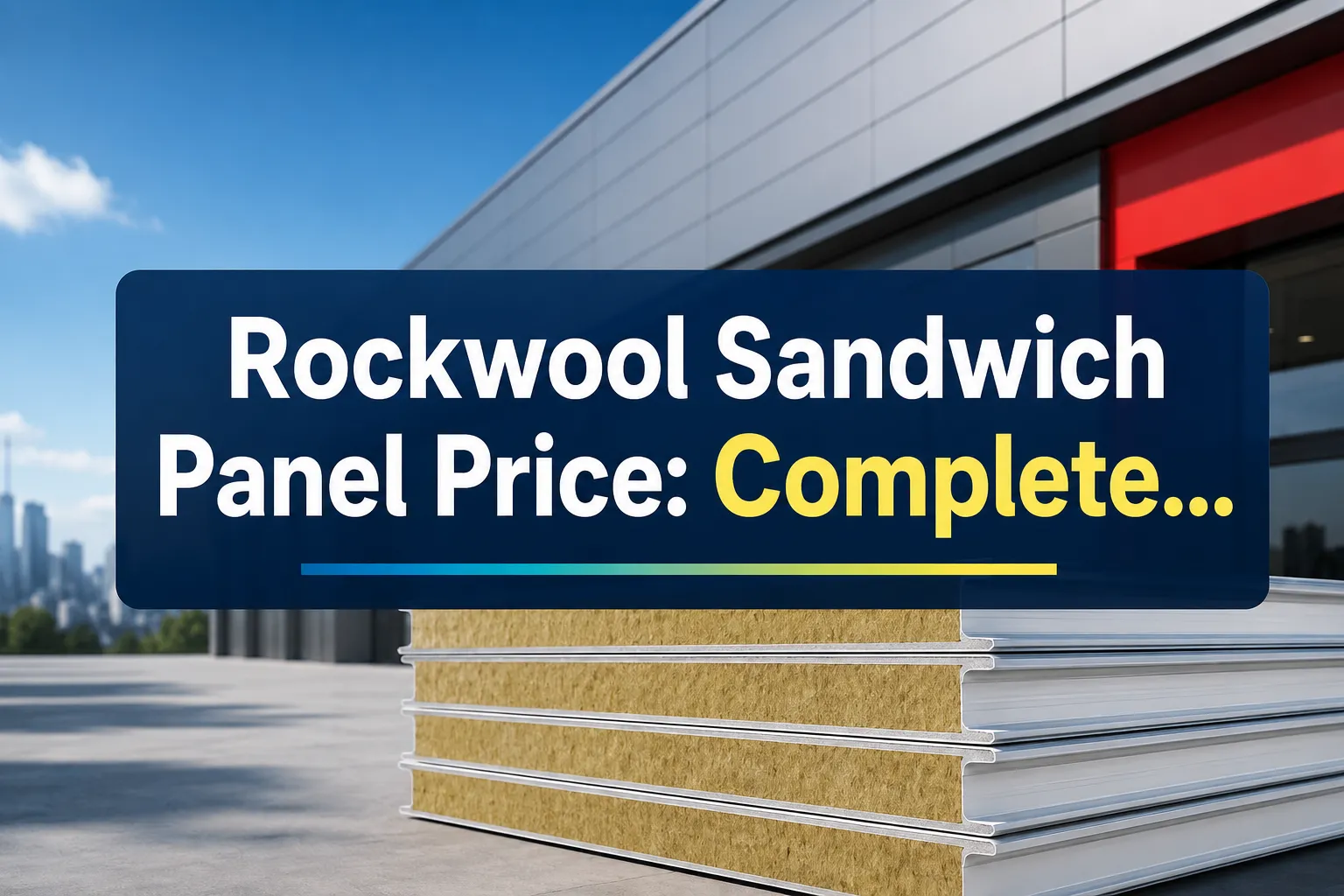
Rockwool sandwich panels consist of mineral wool insulation core bonded between two metal facings, typically galvanized steel or aluminum. The rockwool core provides excellent thermal insulation, fire resistance, and acoustic dampening properties for commercial and industrial buildings.
These panels work by creating a continuous insulation barrier that eliminates thermal bridging common in traditional construction methods. The mineral wool core maintains its insulating properties across a wide temperature range while providing Class A fire resistance. The metal facings protect the core from moisture and physical damage while serving as the structural element.
Key performance characteristics include:
- Thermal conductivity: 0.035-0.040 W/mK
- Fire rating: A1 non-combustible classification
- Acoustic performance: 35-45 dB sound reduction
- Compressive strength: 150-200 kPa
- Temperature range: -200°C to +200°C operating range
The interlocking joint system creates weatherproof seals without additional sealants, making installation faster and more reliable than traditional insulation methods.
Rockwool Sandwich Panel Cost Per Square Meter
Standard rockwool sandwich panel pricing ranges from $15-45 per square meter before installation, with significant variation based on specifications and application requirements.
Basic pricing tiers:
- Economy grade (50-75mm): $15-22 per square meter
- Standard grade (100-125mm): $22-32 per square meter
- Premium grade (150-200mm): $32-45 per square meter
Thickness represents the primary cost driver, with each 25mm increase adding approximately $3-5 per square meter. Fire rating requirements can add $5-12 per square meter for enhanced formulations meeting stricter building codes.
Regional pricing factors include:
- Local manufacturing presence reduces shipping costs by $2-4 per square meter
- Import duties add 15-25% to foreign-manufactured panels
- Project location affects delivery costs, particularly for remote sites
- Seasonal demand fluctuations create 10-15% price variations
For accurate rockwool panel pricing in Bangladesh, local manufacturers typically offer the most competitive rates due to reduced logistics costs.
How Much Do Rockwool Sandwich Panels Cost Compared to Fiberglass
Rockwool sandwich panels cost 25-40% more than fiberglass alternatives initially but provide superior long-term value through enhanced durability and fire safety performance.
Direct cost comparison:
- Fiberglass panels: $12-28 per square meter
- Rockwool panels: $15-45 per square meter
- Price premium: 25-60% depending on specifications
The higher upfront cost reflects rockwool's superior material properties. Fiberglass panels offer adequate thermal performance for basic applications but cannot match rockwool's fire resistance or acoustic dampening capabilities.
Performance advantages justifying the premium:
- Fire rating: Rockwool achieves A1 non-combustible vs. fiberglass B-C ratings
- Moisture resistance: Rockwool maintains performance when wet, fiberglass degrades
- Acoustic performance: 30-40% better sound dampening than fiberglass
- Lifespan: 25-30 years vs. 15-20 years for fiberglass systems
Insurance companies often provide premium discounts for rockwool installations due to reduced fire risk, partially offsetting the initial cost difference over the building's lifecycle.
Where Can You Buy Rockwool Sandwich Panels
Rockwool sandwich panels are available through specialized building material suppliers, direct from manufacturers, and construction material distributors serving commercial and industrial markets.
Primary purchasing channels:
- Manufacturer direct sales: Best pricing for large projects over 2000 square meters
- Authorized distributors: Local inventory and technical support for standard projects
- Building material suppliers: Convenient for smaller quantities under 500 square meters
- Online platforms: Emerging option for price comparison and specification research
Sandwich panel manufacturers in Bangladesh provide local production advantages including reduced lead times and competitive pricing for regional projects.
Purchasing considerations:
- Minimum order quantities typically range from 100-500 square meters
- Lead times vary from 2-8 weeks depending on specifications and manufacturer capacity
- Technical support availability varies significantly between suppliers
- Warranty terms range from 10-25 years depending on manufacturer and application
Choose suppliers offering complete technical documentation, installation guidelines, and responsive customer support to ensure project success.
Rockwool Sandwich Panel Installation Cost
Professional installation costs range from $8-15 per square meter depending on project complexity, site conditions, and local labor rates.
Installation cost factors:
- Basic wall installation: $8-12 per square meter
- Roof installation: $12-18 per square meter
- Complex geometries: $15-25 per square meter
- High-rise applications: $18-30 per square meter
Site accessibility significantly impacts installation costs. Ground-level installations with good crane access achieve the lowest rates, while confined spaces or multi-story projects require specialized equipment and additional labor.
Additional installation expenses:
- Structural modifications: $5-15 per square meter
- Flashing and trim work: $3-8 per linear meter
- Vapor barriers: $2-4 per square meter
- Quality inspections: $500-2000 per project
Professional installation ensures proper panel alignment, weatherproof sealing, and warranty compliance. DIY installation voids manufacturer warranties and creates liability risks for commercial applications.
For detailed guidance, review our sandwich panel installation service guide covering best practices and cost optimization strategies.
What Thickness Rockwool Sandwich Panel Do You Need
Panel thickness selection depends on thermal performance requirements, structural loads, and building code compliance, with options ranging from 50mm to 250mm for most applications.
Standard thickness applications:
- 50-75mm: Interior partitions, mild climate zones
- 100-125mm: Standard commercial walls, moderate insulation needs
- 150-200mm: Cold storage, extreme climate applications
- 200-250mm: Specialized industrial processes, maximum insulation
Thermal performance improves proportionally with thickness, but cost increases make optimal selection critical. Each 25mm thickness increase provides approximately 0.5-0.8 additional R-value while adding $3-5 per square meter cost.
Selection criteria include:
- Climate zone requirements and local building codes
- Internal temperature maintenance needs
- Energy cost considerations and payback calculations
- Structural load limitations and support requirements
Cold storage applications typically require 150-200mm thickness to maintain consistent temperatures while minimizing energy consumption. Standard commercial buildings achieve adequate performance with 100-125mm panels in most climate zones.
Rockwool Sandwich Panel Pricing for Roof vs Wall Applications
Roof panels typically cost 15-25% more than wall panels due to enhanced structural requirements, weather resistance features, and specialized joint systems.
Pricing comparison:
- Wall panels: $15-35 per square meter
- Roof panels: $20-45 per square meter
- Price difference: $5-10 per square meter premium
Roof panels require enhanced structural properties to support snow loads, wind uplift forces, and thermal expansion stresses. The metal facings use heavier gauge steel and specialized coatings for extended weather exposure.
Roof panel enhancements:
- Thicker metal facings (0.6-0.8mm vs. 0.4-0.6mm for walls)
- Enhanced weather sealing systems
- Structural reinforcement for load bearing
- UV-resistant coatings and finishes
Wall panels focus on thermal performance and fire resistance with lighter structural requirements. The reduced material content and simpler manufacturing process enables lower pricing while maintaining insulation effectiveness.
Choose roof-specific panels for overhead applications to ensure structural adequacy and weather protection. Wall panels lack the structural capacity for roof loads and void warranties when misapplied.
Are Rockwool Sandwich Panels Fire Rated
Rockwool sandwich panels achieve A1 non-combustible fire ratings, the highest classification available for building materials under European EN 13501-1 standards.
The mineral wool core consists of basalt rock fibers that maintain structural integrity at temperatures exceeding 1000°C. Unlike organic insulation materials, rockwool does not contribute fuel to fires or release toxic gases during thermal exposure.
Fire performance characteristics:
- Fire rating: A1 non-combustible classification
- Melting point: Above 1000°C for mineral wool core
- Smoke production: Minimal smoke generation during fire exposure
- Toxic gas emission: No harmful gas release under fire conditions
Metal facings provide additional fire protection by containing the insulation core and maintaining structural integrity during fire events. The combination creates fire barriers suitable for high-risk applications including chemical plants, hospitals, and food processing facilities.
Building codes increasingly require A1-rated materials for commercial construction, making rockwool panels essential for code compliance in fire-sensitive applications. For comprehensive fire safety information, consult our rockwool sandwich panel fire safety guide.
Rockwool Sandwich Panel Durability and Lifespan
Quality rockwool sandwich panels provide 25-30 year service life with minimal maintenance when properly installed and specified for application conditions.
The mineral wool core maintains insulation properties indefinitely under normal building conditions. Unlike organic insulation materials, rockwool resists moisture absorption, pest damage, and thermal degradation that reduce performance over time.
Longevity factors:
- Coating system: 15-25 year warranty periods for premium finishes
- Core material: Indefinite lifespan under normal conditions
- Joint sealing: 10-15 year maintenance intervals
- Structural integrity: 25-30 years with proper installation
Metal facing durability depends on coating quality and environmental exposure. Coastal installations require enhanced corrosion protection, while industrial environments may need chemical-resistant coatings for optimal lifespan.
Maintenance requirements:
- Annual visual inspections for damage or deterioration
- Joint sealant replacement every 10-15 years
- Coating touch-up as needed for aesthetic maintenance
- Panel replacement only for physical damage or coating failure
Proper specification matching prevents premature failure and ensures warranty coverage throughout the expected service life.
Common Problems with Rockwool Sandwich Panels
The most frequent issues include improper installation, inadequate vapor barrier systems, and specification mismatches that compromise performance or create maintenance problems.
Installation-related problems:
- Thermal bridging: Occurs when panels lack continuous insulation at joints
- Air leakage: Results from inadequate sealing at panel connections
- Structural inadequacy: Happens when wall panels are used for roof applications
- Moisture infiltration: Caused by improper flashing and weatherproofing
Specification errors:
- Insufficient thickness for climate requirements leads to condensation issues
- Wrong fire rating selection creates code compliance problems
- Inadequate structural capacity causes deflection and joint failure
- Incompatible materials create galvanic corrosion at connections
Prevention strategies:
- Engage qualified installers with manufacturer certification
- Conduct thorough design review before material procurement
- Implement quality control inspections during installation
- Follow manufacturer guidelines for joint sealing and flashing
Most problems trace to inadequate planning or installation shortcuts. Professional design and installation prevent costly remediation while ensuring optimal performance throughout the panel lifespan.
Rockwool Sandwich Panels for Cold Storage vs Regular Buildings
Cold storage applications require specialized panels costing 30-50% more than standard building panels due to enhanced vapor barriers, thicker insulation, and specialized joint systems.
Cold storage specifications:
- Thickness: 150-250mm vs. 75-125mm for standard buildings
- Vapor barriers: Enhanced systems preventing moisture infiltration
- Joint design: Specialized sealing for continuous thermal barrier
- Facing materials: Food-grade finishes and enhanced corrosion resistance
Pricing comparison:
- Standard panels: $15-35 per square meter
- Cold storage panels: $25-55 per square meter
- Premium: $10-20 per square meter for specialized features
The enhanced specifications prevent condensation and ice formation that compromise insulation performance in temperature-controlled environments. Standard panels lack adequate vapor protection for cold storage applications and create maintenance problems.
Performance requirements:
- Continuous vapor barrier preventing moisture infiltration
- Thermal bridging elimination at all panel connections
- Food-grade surface finishes for hygiene compliance
- Enhanced structural capacity for refrigeration equipment loads
Choose cold storage-specific panels for temperature-controlled applications to ensure energy efficiency and prevent costly moisture-related problems.
Bulk Pricing on Rockwool Sandwich Panels
Volume discounts typically begin at 1000 square meters with savings of 10-20% for large projects, while orders exceeding 5000 square meters may achieve 20-30% reductions from standard pricing.
Typical discount tiers:
- 500-1000 sqm: 5-10% discount
- 1000-2500 sqm: 10-15% discount
- 2500-5000 sqm: 15-20% discount
- 5000+ sqm: 20-30% discount
Manufacturers offer aggressive pricing for large projects to secure production capacity and reduce sales costs. The economies of scale in manufacturing and logistics enable significant savings for qualified buyers.
Bulk purchase considerations:
- Delivery scheduling to match construction timeline
- Storage requirements for large material quantities
- Payment terms and financing options for large orders
- Quality consistency across multiple production runs
Additional savings opportunities:
- Annual supply agreements for multiple projects
- Off-season ordering when manufacturing capacity is available
- Standardized specifications reducing custom manufacturing costs
- Direct manufacturer relationships eliminating distributor margins
For substantial projects, request formal quotations from multiple suppliers to optimize pricing while ensuring adequate technical support and delivery reliability.
Rockwool Sandwich Panel Moisture Issues
Proper vapor barrier design and installation prevents moisture problems that compromise insulation performance and create maintenance issues in rockwool sandwich panel systems.
While rockwool itself resists moisture absorption, inadequate vapor control allows condensation within panel assemblies that reduces thermal performance and creates corrosion risks for metal components.
Common moisture sources:
- Interior humidity: High internal moisture loads without adequate vapor barriers
- Air infiltration: Unsealed joints allowing humid air into panel cavities
- Thermal bridging: Temperature differentials creating condensation points
- Weather infiltration: Inadequate exterior sealing allowing direct moisture entry
Prevention strategies:
- Install continuous vapor barriers on warm side of insulation
- Seal all panel joints and penetrations properly
- Design adequate ventilation for high-humidity applications
- Use appropriate panel thickness for climate conditions
Warning signs of moisture problems:
- Visible condensation on interior surfaces
- Ice formation on exterior panels in cold weather
- Corrosion staining at panel joints
- Reduced heating/cooling efficiency
Address moisture issues immediately to prevent insulation degradation and structural damage. Professional assessment identifies root causes and appropriate remediation strategies.
Best Brands of Rockwool Sandwich Panels
Leading manufacturers include Kingspan, Metecno, ArcelorMittal, and Tata Steel, with quality differences reflected in pricing, warranty terms, and performance specifications.
Premium brands (20-30% price premium):
- Kingspan: Industry leader with comprehensive warranty and technical support
- Metecno: European manufacturer known for quality and innovation
- ArcelorMittal: Global steel company with extensive panel portfolio
Value brands (competitive pricing):
- Local manufacturers: Regional producers offering cost advantages
- Tata Steel: Established brand with good quality-to-price ratio
- Private label: Distributor brands manufactured by established producers
Brand selection criteria:
- Warranty coverage and terms (10-25 years typical)
- Technical support and design assistance availability
- Local service and distribution network
- Manufacturing quality certifications and standards compliance
Premium brands justify higher costs through superior technical support, extended warranties, and consistent quality control. Value brands offer adequate performance for price-sensitive projects with basic requirements.
For Bangladesh projects, consider local sandwich panel manufacturers that provide competitive pricing and responsive service while meeting international quality standards.
Frequently Asked Questions
How much do rockwool sandwich panels cost per square foot?
Rockwool sandwich panels cost $1.40-4.20 per square foot ($15-45 per square meter) depending on thickness and specifications, with installation adding another $0.75-1.40 per square foot.
Are rockwool panels more expensive than EPS panels?
Yes, rockwool panels cost 40-60% more than EPS alternatives but provide superior fire resistance, acoustic performance, and durability that justify the premium for many applications.
What is the minimum order quantity for rockwool panels?
Most manufacturers require minimum orders of 100-500 square meters, though some distributors stock smaller quantities for immediate delivery at higher per-unit costs.
How long do rockwool sandwich panels last?
Quality rockwool panels provide 25-30 year service life with minimal maintenance when properly installed and specified for application conditions.
Do rockwool panels need special installation tools?
Standard construction tools suffice for most installations, though specialized lifting equipment may be required for large panels or high-elevation work.
Can rockwool panels be cut on site?
Yes, panels can be field-cut using appropriate tools, but factory cutting ensures cleaner edges and maintains warranty coverage for most applications.
What fire rating do rockwool panels achieve?
Rockwool sandwich panels achieve A1 non-combustible fire rating, the highest classification available under international building standards.
Are rockwool panels suitable for food processing facilities?
Yes, with appropriate food-grade facings and proper installation, rockwool panels meet hygiene requirements for food processing and pharmaceutical applications.
How do rockwool panels perform in coastal environments?
Rockwool panels with enhanced corrosion-resistant coatings perform well in coastal applications, though regular maintenance may be required for optimal lifespan.
What warranty coverage do rockwool panels include?
Warranty terms range from 10-25 years depending on manufacturer and application, typically covering material defects and coating performance under normal conditions.
Can rockwool panels be recycled?
The mineral wool core is recyclable, though the laminated construction makes separation challenging. Some manufacturers offer take-back programs for end-of-life panels.
Do rockwool panels require vapor barriers?
Vapor barrier requirements depend on climate conditions and application. Cold storage and high-humidity applications typically require enhanced vapor control systems.
Conclusion
Rockwool sandwich panel pricing reflects the superior performance characteristics that make these panels essential for fire-sensitive and high-performance building applications. While initial costs range from $15-45 per square meter plus installation, the combination of excellent fire resistance, thermal performance, and 25-30 year lifespan provides strong long-term value.
Key factors affecting rockwool sandwich panel price include thickness requirements, fire rating specifications, application type (wall vs. roof), and order volume. Cold storage and specialized applications command premium pricing but deliver performance unavailable from alternative materials.
Next steps for your project:
- Determine required thickness based on thermal performance needs and building codes
- Specify appropriate fire rating for your application and local requirements
- Request quotations from multiple suppliers for volume pricing comparison
- Engage qualified installers with manufacturer certification for warranty compliance
- Review our complete rockwool sandwich panel guide for detailed specification assistance
Professional specification and installation ensure optimal performance while protecting your investment through comprehensive warranty coverage. The higher initial cost of rockwool panels pays dividends through reduced maintenance, energy savings, and enhanced safety throughout the building's operational life.
SEO Meta Title: Rockwool Sandwich Panel Price Guide 2026: Costs & Buying Tips