Last updated: July 31, 2026

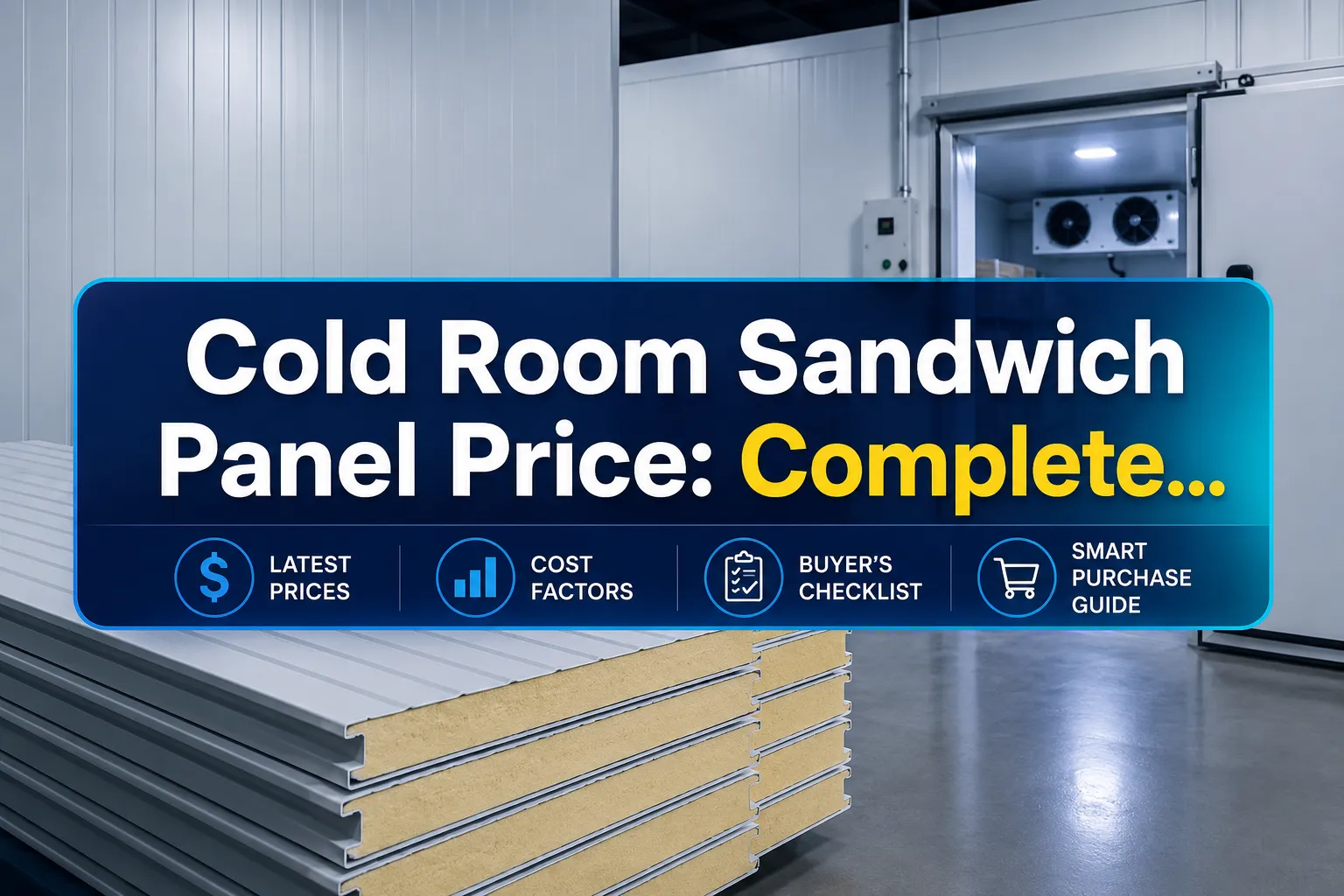
Quick Answer: Cold room sandwich panel prices range from $15-45 per square meter depending on core material, thickness, and brand. PU panels cost $25-45/sqm, EPS panels $15-30/sqm, and rockwool panels $30-50/sqm. Installation adds another $8-15/sqm to total project costs.
Key Takeaways
- PU sandwich panels offer the best insulation performance at $25-45 per square meter
- Panel thickness directly impacts price – 50mm costs 30% less than 150mm panels
- Installation costs add $8-15/sqm to material prices for complete cold room construction
- Brand reputation can increase prices by 20-40% but ensures quality and warranty coverage
- Bulk orders of 500+ square meters typically receive 10-15% volume discounts
- Fire-rated panels cost 15-25% more than standard options but may be required by regulations
- Local suppliers often provide better pricing than imported panels when factoring shipping costs
- Project size significantly affects per-unit costs – industrial facilities get better rates than small businesses
What Is a Cold Room Sandwich Panel
Cold room sandwich panels are composite building materials consisting of two metal faces bonded to an insulating core material. These panels provide thermal insulation, structural strength, and weather protection for refrigerated storage facilities, food processing plants, and pharmaceutical warehouses.
The three-layer construction includes an outer metal skin (typically galvanized steel or aluminum), an insulating core (polyurethane, EPS, or rockwool), and an inner metal skin. This design creates an effective thermal barrier while maintaining structural integrity for wall and ceiling applications.
Common applications include:
- Commercial cold storage facilities
- Food processing plants
- Pharmaceutical storage warehouses
- Restaurant walk-in coolers
- Ice cream manufacturing facilities
- Meat processing facilities
Choose cold room sandwich panels when you need consistent temperature control, energy efficiency, and long-term durability. Avoid them for applications requiring frequent panel removal or where fire ratings exceed available specifications.
Cold Room Sandwich Panel Price Per Square Meter in 2026
Cold room sandwich panel pricing varies significantly based on core material and thickness. PU (polyurethane) panels cost $25-45 per square meter and offer superior insulation performance. EPS (expanded polystyrene) panels range from $15-30/sqm and provide budget-friendly options for less demanding applications.
Rockwool panels command premium pricing at $30-50/sqm due to excellent fire resistance and thermal performance. PIR (polyisocyanurate) panels fall in the $35-55/sqm range and deliver the highest R-values for extreme temperature applications.
| Core Material | Price Range (per sqm) | Best For |
|---|---|---|
| EPS | $15-30 | Budget projects, moderate temperatures |
| PU | $25-45 | Most cold rooms, balanced performance |
| Rockwool | $30-50 | Fire safety requirements |
| PIR | $35-55 | Extreme temperatures, premium facilities |
Thickness significantly impacts pricing – 50mm panels cost approximately 30% less than 100mm panels, while 150mm panels cost 50-60% more than 50mm options. Most cold room applications use 75-100mm thickness for optimal cost-performance balance.
For detailed pricing information, check our comprehensive sandwich panel price per square meter Bangladesh guide.
Panel Thickness Requirements and Price Differences
Panel thickness selection depends on temperature requirements and energy efficiency goals. 50mm panels work for moderate cooling applications (5-10°C) and cost the least per square meter. 75-100mm panels suit most commercial cold rooms (-5 to 5°C) and provide good insulation value.
Thicker panels (120-200mm) are essential for freezer applications (-18°C and below) where energy costs and temperature stability matter most. Each 25mm thickness increase adds approximately 15-20% to panel costs but can reduce energy consumption by 10-15%.
Common thickness applications:
- 50mm: Produce storage, wine cellars, moderate cooling
- 75mm: Dairy storage, prepared foods, general cold storage
- 100mm: Meat storage, frozen foods, commercial freezers
- 150mm+: Ice cream storage, pharmaceutical freezers, blast freezers
Choose thicker panels when energy costs are high or temperature precision is critical. Use thinner panels for budget projects or temporary installations where energy efficiency is less important.
Best Cold Room Sandwich Panel Brands and Pricing
International brands like Kingspan, Metecno, and Isopan command premium pricing ($35-55/sqm) but offer superior quality control, comprehensive warranties, and proven performance records. These panels typically include advanced locking systems and fire certifications.
Regional manufacturers provide competitive alternatives at $20-35/sqm with good quality standards and local support. Many regional brands now match international specifications while offering faster delivery and lower shipping costs.
Local suppliers often provide the most competitive pricing ($15-30/sqm) for standard applications. Quality varies significantly, so verify certifications, thermal performance data, and warranty terms before purchasing.
Key brand selection factors:
- Thermal performance certification (R-value testing)
- Fire safety ratings and compliance certificates
- Warranty coverage (typically 10-20 years for reputable brands)
- Local service and technical support availability
- Delivery timeframes and logistics capabilities
Choose premium brands for critical applications like pharmaceutical storage or large commercial facilities. Select regional or local suppliers for standard cold storage where cost control is the primary concern.
Cold Room Sandwich Panel vs Regular Insulation Cost Analysis
Cold room sandwich panels cost 40-60% more initially than traditional insulation methods but provide significant long-term value. Conventional construction using separate insulation, vapor barriers, and wall systems typically costs $18-25/sqm for materials plus higher labor costs.
Sandwich panels streamline installation, reduce labor time by 50-70%, and eliminate multiple trade coordination. The total installed cost difference often narrows to 10-20% when factoring in reduced construction time and simplified project management.
Long-term advantages of sandwich panels:
- Faster installation: 3-5 days vs 2-3 weeks for conventional methods
- Better thermal performance: Continuous insulation eliminates thermal bridging
- Lower maintenance: Sealed construction reduces moisture infiltration
- Energy savings: 15-25% lower cooling costs over panel lifetime
Regular insulation works better when:
- Building codes require specific construction methods
- Existing structures need retrofit insulation
- Budget constraints prioritize lowest upfront costs
- Custom architectural features require flexible installation
For new cold room construction, sandwich panels typically provide better value despite higher initial costs. Use conventional insulation for renovations or when architectural constraints limit panel installation options.
Where to Buy Cold Room Sandwich Panels
Local manufacturers often provide the best combination of competitive pricing, fast delivery, and technical support. Research regional suppliers who specialize in cold storage applications and can provide references from similar projects.
International suppliers offer premium products with extensive certifications but require longer lead times and higher shipping costs. Consider international options for large projects where quality specifications exceed local capabilities.
Distribution networks provide middle-ground options with established logistics and inventory management. Many distributors stock common sizes and can expedite delivery for standard applications.
Recommended sourcing approach:
- Get quotes from 3-5 suppliers including local, regional, and international options
- Verify certifications for thermal performance, fire safety, and structural ratings
- Check references from recent cold storage projects of similar size and scope
- Compare total costs including delivery, installation support, and warranty terms
- Evaluate lead times to ensure panels arrive when needed for construction schedule
For comprehensive supplier information, review our guide to sandwich panel suppliers in Bangladesh.
Cold Room Sandwich Panel Installation Costs
Professional installation adds $8-15 per square meter to material costs depending on project complexity and local labor rates. Simple wall installations cost less than ceiling installations that require crane access and specialized lifting equipment.
Installation cost factors:
- Project size: Larger projects achieve economies of scale with lower per-unit labor costs
- Site accessibility: Remote locations or confined spaces increase installation time
- Panel complexity: Custom cuts, door openings, and corner details require additional labor
- Structural requirements: Heavy-duty applications need reinforced framing and connections
Typical installation breakdown:
- Basic wall panels: $8-12/sqm labor cost
- Ceiling panels: $12-18/sqm due to lifting requirements
- Corner and trim work: $15-25 per linear meter
- Door and window openings: $50-150 per opening depending on size
DIY installation can reduce costs by 60-80% but requires proper equipment, technical knowledge, and safety training. Most manufacturers void warranties for improper installation, making professional installation worth the investment for commercial applications.
Consider self-installation only for small projects under 200 square meters where you have construction experience and appropriate lifting equipment. For detailed installation guidance, see our sandwich panel installation cost guide.
Are Cold Room Sandwich Panels Worth the Investment
Cold room sandwich panels justify their cost through energy savings, reduced construction time, and lower maintenance requirements. Payback periods typically range from 3-7 years depending on energy costs and facility utilization rates.
Energy efficiency benefits include 15-25% lower cooling costs compared to conventional construction due to superior insulation performance and elimination of thermal bridges. Reduced construction time saves 2-4 weeks on typical projects, reducing financing costs and enabling earlier revenue generation.
Long-term value factors:
- 20-30 year lifespan with minimal maintenance requirements
- Consistent thermal performance maintains food safety and product quality
- Easy cleaning and sanitization for food safety compliance
- Structural integrity handles temperature cycling without degradation
Panels provide best value when:
- Energy costs exceed $0.10 per kWh
- Facility operates 24/7 with consistent temperature requirements
- Food safety regulations require validated construction methods
- Construction timeline constraints favor faster installation
Consider alternatives when:
- Budget constraints require lowest upfront costs
- Temporary or seasonal storage needs don't justify premium materials
- Existing building modifications limit panel installation options
For most commercial cold storage applications, sandwich panels provide superior long-term value despite higher initial investment.
Common Cold Room Sandwich Panel Mistakes to Avoid
Undersizing panel thickness is the most expensive mistake, leading to higher energy costs and potential temperature control issues. Always calculate thermal requirements based on actual operating conditions, not just minimum code requirements.
Ignoring fire safety requirements can result in costly retrofits or regulatory compliance issues. Verify local fire codes and specify appropriate panel ratings before ordering materials.
Poor joint sealing allows air infiltration and moisture problems that compromise thermal performance and food safety. Use manufacturer-specified sealants and follow installation procedures exactly.
Critical mistakes to avoid:
- Mixing incompatible panel systems from different manufacturers
- Inadequate structural support for ceiling panels and heavy loads
- Improper vapor barrier installation leading to condensation problems
- Skipping thermal bridge analysis at structural connections
- Choosing lowest-cost panels without verifying performance specifications
Quality control issues:
- Not inspecting panels on delivery for damage or manufacturing defects
- Storing panels improperly before installation, causing warping or damage
- Using incorrect fasteners that compromise thermal or structural performance
Always work with experienced contractors who specialize in cold storage construction and follow manufacturer installation guidelines precisely. The cost of fixing installation problems far exceeds the savings from cutting corners during initial construction.
Small Business vs Industrial Cold Room Panel Requirements
Small business applications (under 500 sqm) prioritize cost-effectiveness and simple installation. Standard 75-100mm PU panels typically provide adequate performance for restaurants, small groceries, and food service operations at $25-35/sqm.
Industrial facilities (over 2000 sqm) require higher-performance panels with advanced features like cam-lock connections, fire ratings, and structural certifications. Premium panels cost $35-55/sqm but provide better long-term value for large-scale operations.
Small business considerations:
- Budget constraints favor EPS or standard PU panels
- Simple installation reduces need for specialized contractors
- Standard sizes minimize custom fabrication costs
- Local suppliers provide better service and support
Industrial requirements:
- Performance specifications demand certified thermal and structural properties
- Fire safety compliance requires rated panels and documentation
- Large quantities enable volume pricing negotiations
- Technical support for complex installation and integration challenges
Panel selection guidelines:
- Under 200 sqm: EPS panels for budget projects, PU for performance
- 200-1000 sqm: Standard PU panels with good warranty coverage
- Over 1000 sqm: Premium panels with advanced features and certifications
Small businesses should focus on reliable local suppliers who provide good service and competitive pricing. Industrial buyers should prioritize performance specifications and long-term support capabilities.
For specific applications, check our guides for poultry farm cold room panels and PU sandwich panels for cold rooms.
Panel Lifespan and Long-Term Value Analysis
Quality cold room sandwich panels last 20-30 years with proper maintenance and installation. Premium panels with polyurethane cores and heavy-gauge steel faces provide the longest service life, while budget EPS panels may require replacement after 15-20 years in demanding applications.
Factors affecting lifespan:
- Core material quality: PU and PIR cores maintain insulation properties longer than EPS
- Steel gauge and coating: Thicker steel with quality coatings resists corrosion better
- Installation quality: Proper sealing and support prevent premature failure
- Operating conditions: Extreme temperatures and frequent cycling reduce panel life
Maintenance requirements include annual inspection of joints and seals, cleaning of surfaces, and prompt repair of any damage. Well-maintained panels retain 90%+ of original thermal performance throughout their service life.
Replacement indicators:
- Visible damage to panel faces or core material
- Increasing energy costs indicating thermal performance degradation
- Condensation problems suggesting seal failure or insulation issues
- Structural sagging or connection failures
Life cycle cost analysis should include initial purchase price, installation costs, energy consumption, maintenance expenses, and replacement timing. Premium panels typically provide 15-25% better life cycle value despite higher upfront costs.
Plan for panel replacement in 20-25 year cycles for budget planning purposes, but expect quality panels to exceed this timeline with proper care and maintenance.
Fire Rating Requirements and Safety Compliance
Fire safety regulations vary by location and application but typically require Class A or Class 1 fire ratings for commercial cold storage facilities. Rockwool core panels provide the best fire performance, while PU and PIR panels can achieve acceptable ratings with fire-retardant additives.
Common fire rating requirements:
- Food processing facilities: Class A fire rating with low smoke generation
- Pharmaceutical storage: Enhanced fire protection with sprinkler system integration
- Public buildings: Compliance with local building codes and fire marshal requirements
- Industrial facilities: OSHA and insurance company specifications
Fire-rated panels cost 15-25% more than standard options but may be required for permits and insurance coverage. Verify requirements with local authorities before specifying panels to avoid costly changes during construction.
Safety compliance factors:
- Flame spread ratings under ASTM E84 or equivalent standards
- Smoke generation limits for occupied buildings
- Toxic gas emissions during fire conditions
- Structural integrity under fire exposure
Documentation requirements include fire test certificates, installation specifications, and ongoing maintenance procedures. Keep complete records for insurance and regulatory compliance purposes.
Work with suppliers who provide certified fire-rated panels and can supply all necessary documentation for permit applications and inspections. The cost of compliance is minimal compared to potential liability and regulatory issues.
Frequently Asked Questions
How much do cold room sandwich panels cost per square meter?
Cold room sandwich panel prices range from $15-55 per square meter depending on core material and thickness. EPS panels cost $15-30/sqm, PU panels $25-45/sqm, and premium PIR panels $35-55/sqm.
What thickness cold room panel do I need?
Panel thickness depends on temperature requirements: 50mm for moderate cooling (5-10°C), 75-100mm for standard cold storage (-5 to 5°C), and 120mm+ for freezer applications (-18°C and below).
Are cold room sandwich panels better than traditional insulation?
Sandwich panels cost 40-60% more initially but provide faster installation, better thermal performance, and lower long-term maintenance costs. Total project costs are often similar when including labor savings.
How long do cold room sandwich panels last?
Quality panels last 20-30 years with proper installation and maintenance. Premium PU and PIR panels typically outlast budget EPS options by 5-10 years in demanding applications.
Do I need fire-rated panels for my cold room?
Fire rating requirements depend on local codes and building use. Commercial facilities often require Class A ratings, while small business applications may use standard panels. Check with local authorities before ordering.
Can I install cold room panels myself?
DIY installation is possible for small projects under 200 sqm but requires proper equipment and technical knowledge. Professional installation costs $8-15/sqm but ensures warranty coverage and code compliance.
What's the difference between PU and EPS panels?
PU panels provide better insulation performance and longer lifespan but cost 40-50% more than EPS panels. Choose PU for demanding applications and EPS for budget-conscious projects with moderate requirements.
How do I choose the right panel supplier?
Compare at least 3-5 suppliers on price, quality certifications, warranty terms, and delivery capabilities. Local suppliers often provide better service and competitive pricing for standard applications.
What installation costs should I budget?
Professional installation adds $8-15 per square meter to material costs. Complex installations with ceiling work or custom features may cost $15-20/sqm for labor and equipment.
Do thicker panels always perform better?
Thicker panels provide better insulation but cost significantly more. Choose thickness based on actual temperature requirements and energy cost analysis rather than assuming thicker is always better.
What maintenance do cold room panels require?
Annual inspection of joints and seals, regular cleaning, and prompt repair of any damage. Well-maintained panels retain performance for 20+ years with minimal intervention required.
Are imported panels better than local options?
International brands often provide superior quality control and certifications but cost 20-40% more including shipping. Local suppliers can match performance for standard applications at lower total costs.
Conclusion
Cold room sandwich panel pricing in 2026 reflects a mature market with options for every budget and application. Understanding the relationship between core materials, thickness requirements, and total project costs enables informed purchasing decisions that balance upfront investment with long-term value.
Key decision factors include temperature requirements, energy costs, fire safety regulations, and project timeline constraints. Premium PU and PIR panels justify higher costs through superior performance and longevity, while budget EPS options serve less demanding applications effectively.
Next steps for buyers include obtaining quotes from multiple suppliers, verifying performance certifications, and calculating total project costs including installation and long-term energy consumption. Work with experienced contractors who specialize in cold storage construction to ensure proper installation and warranty coverage.
For additional guidance on specific applications, explore our comprehensive resources on cold storage panel types and thermal insulation sandwich panels to make the best choice for your project requirements.
SEO Meta Title: Cold Room Sandwich Panel Price Guide 2026: Complete Buyer's Cost Analysis