Last updated: July 31, 2026

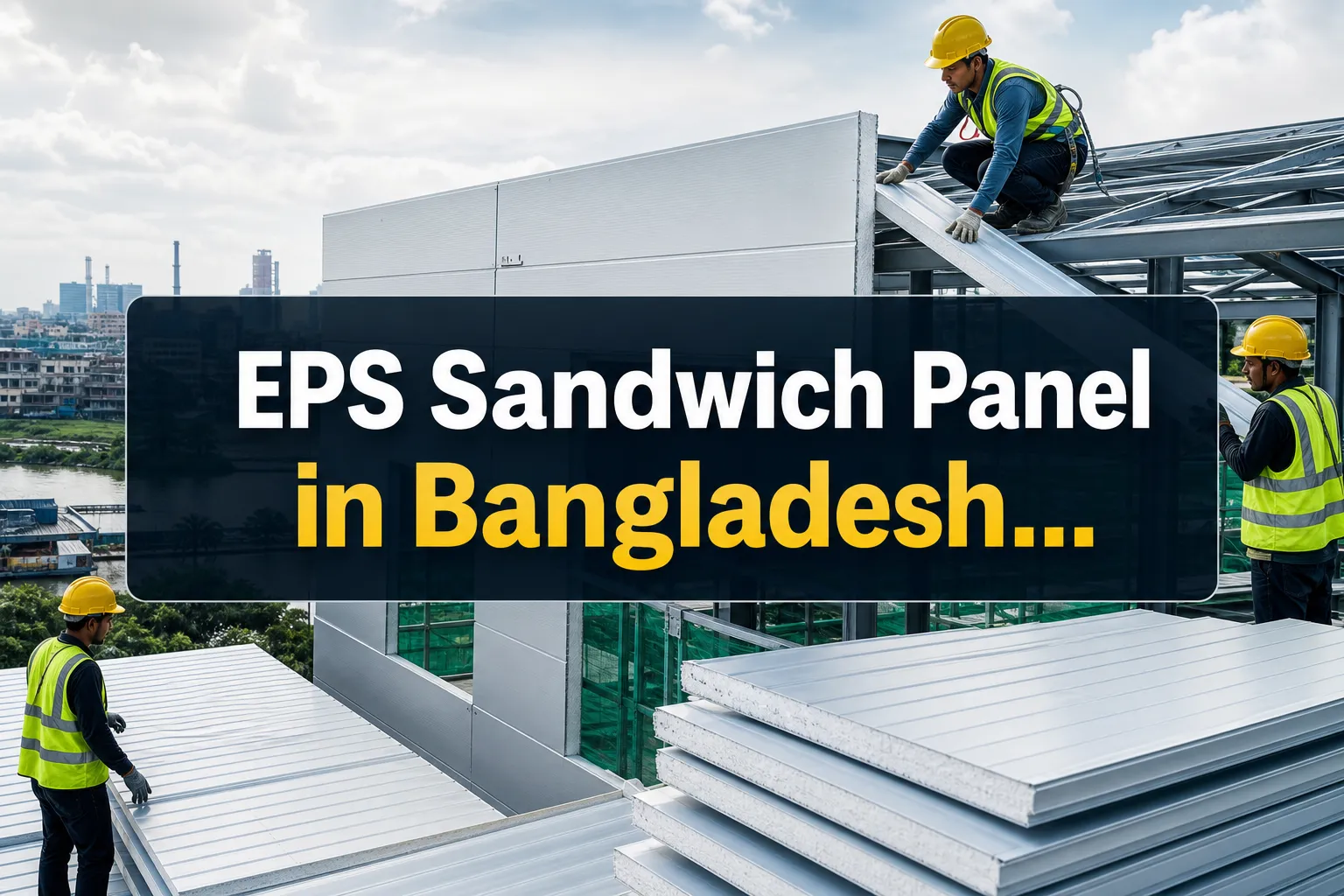
Bangladesh's construction industry is experiencing a revolution with EPS sandwich panels becoming the preferred choice for industrial buildings, warehouses, and commercial structures. EPS sandwich panel in Bangladesh offers superior insulation, faster construction times, and cost-effective solutions compared to traditional brick and mortar construction. These lightweight panels combine expanded polystyrene foam cores with steel facings to deliver exceptional thermal performance and structural integrity.
Key Takeaways
- EPS sandwich panels cost 20-30% less than traditional brick construction in Bangladesh
- Installation time reduces by 60-70% compared to conventional building methods
- Available thickness ranges from 50mm to 200mm for different insulation requirements
- Leading manufacturers in Dhaka offer complete installation services and warranties
- Fire-rated EPS panels meet international safety standards for industrial applications
- Lifespan extends 25-30 years with proper maintenance and quality installation
- Best suited for factories, warehouses, cold storage, and poultry farms
- Price ranges from BDT 800-1,500 per square meter depending on specifications
What is an EPS Sandwich Panel and How Does It Work
EPS sandwich panels are composite building materials consisting of an expanded polystyrene foam core sandwiched between two metal sheets, typically galvanized steel or aluminum. The core provides excellent thermal insulation while the metal facings offer structural strength and weather protection.
The panels work through a simple yet effective design principle. The EPS core acts as a thermal barrier, preventing heat transfer between interior and exterior environments. The metal facings distribute structural loads and protect the foam core from environmental damage. This combination creates a lightweight yet strong building component that can span large distances without additional support structures.
Key components include:
- Expanded polystyrene foam core (density 15-25 kg/m³)
- Galvanized steel or aluminum facings (0.4-0.7mm thickness)
- Polyurethane adhesive bonding system
- Interlocking edge profiles for seamless installation
The manufacturing process involves continuous lamination where the EPS core is bonded to pre-painted metal sheets under controlled pressure and temperature. This creates a monolithic panel with superior strength-to-weight ratio compared to traditional building materials.
EPS Sandwich Panel Price in Bangladesh
EPS sandwich panel prices in Bangladesh range from BDT 800 to BDT 1,500 per square meter, depending on thickness, facing material, and order quantity. Standard 100mm thick panels with galvanized steel facings typically cost BDT 1,000-1,200 per square meter including basic accessories.
Price breakdown by thickness:
- 50mm panels: BDT 800-950 per sqm
- 75mm panels: BDT 900-1,100 per sqm
- 100mm panels: BDT 1,000-1,200 per sqm
- 150mm panels: BDT 1,300-1,450 per sqm
- 200mm panels: BDT 1,400-1,500 per sqm
Additional costs include transportation (BDT 50-100 per sqm), installation services (BDT 200-300 per sqm), and accessories like flashing and sealants (BDT 100-150 per sqm). Bulk orders above 1,000 square meters often receive 10-15% discounts from major suppliers.
For detailed pricing information, check our comprehensive sandwich panel price guide for Bangladesh.
Best EPS Sandwich Panel Manufacturers in Bangladesh
Leading EPS sandwich panel manufacturers in Bangladesh include both local producers and international suppliers with local distribution networks. Top manufacturers offer complete solutions from design consultation to installation services with warranty coverage.
Established manufacturers:
- Local manufacturers: Focus on cost-effective solutions with quick delivery times
- International brands: Offer premium quality with advanced manufacturing technology
- Hybrid suppliers: Import core materials and assemble locally for balanced pricing
When selecting a manufacturer, evaluate production capacity, quality certifications, project portfolio, and after-sales support. Reputable manufacturers provide technical drawings, load calculations, and installation guidance as part of their service package.
Key selection criteria include ISO 9001 certification, fire safety compliance, structural testing reports, and minimum 10-year warranty coverage. Visit our complete guide to Bangladesh sandwich panel exporters for detailed manufacturer comparisons.
EPS Sandwich Panel vs Brick Wall Construction Cost Comparison
EPS sandwich panel construction costs 20-30% less than traditional brick walls when considering total project expenses including materials, labor, and time. The cost advantage increases significantly for large-scale industrial projects where speed of construction is critical.
| Cost Factor | EPS Sandwich Panel | Brick Wall |
|---|---|---|
| Material Cost (per sqm) | BDT 1,000-1,200 | BDT 800-1,000 |
| Labor Cost (per sqm) | BDT 200-300 | BDT 400-600 |
| Foundation Requirement | Minimal | Heavy foundation needed |
| Construction Time | 3-5 days per 1000 sqm | 15-20 days per 1000 sqm |
| Insulation Cost | Built-in | BDT 300-500 extra |
The time savings translate to reduced project financing costs, earlier revenue generation, and lower site overhead expenses. For industrial projects, the faster construction timeline often justifies the material cost difference.
Where to Buy EPS Sandwich Panels in Dhaka
Major EPS sandwich panel suppliers in Dhaka are concentrated in industrial areas including Savar, Gazipur, and Tejgaon, offering both retail and wholesale distribution. Most suppliers provide design consultation, quantity estimation, and delivery services within Dhaka metropolitan area.
Key supplier locations:
- Savar Industrial Area: Multiple manufacturers with production facilities
- Tejgaon Industrial Zone: Importers and distributors of international brands
- Gazipur: Local manufacturers focusing on cost-effective solutions
- Uttara Commercial Area: Sales offices and display centers
When purchasing, request samples, technical specifications, and installation guidelines. Reputable suppliers offer site visits for accurate quantity estimation and provide complete project quotations including accessories and installation services.
For comprehensive supplier information, visit our Dhaka sandwich panel supplier directory with verified contact details and service areas.
EPS Sandwich Panel Installation Process
EPS sandwich panel installation follows a systematic process starting with foundation preparation, structural frame erection, and panel mounting using specialized fasteners and sealants. Professional installation teams can complete 200-300 square meters per day with proper equipment and planning.
Step-by-step installation process:
- Foundation and frame preparation: Ensure level surfaces and proper structural support
- Panel layout planning: Mark panel positions and cutting requirements
- First panel installation: Start from corner with proper alignment and leveling
- Interlocking connection: Join panels using tongue-and-groove edges
- Fastening system: Secure panels with self-drilling screws at specified intervals
- Sealing and flashing: Apply weather seals and install trim accessories
- Quality inspection: Check alignment, gaps, and weather tightness
Critical installation factors include maintaining proper panel overlap, using compatible sealants, and following manufacturer's fastening patterns. Poor installation can compromise thermal performance and structural integrity.
Learn more about professional installation services in our sandwich panel installation guide.
How Long Do EPS Sandwich Panels Last
EPS sandwich panels typically last 25-30 years with proper maintenance, quality installation, and appropriate environmental protection. The lifespan depends on facing material quality, installation standards, and exposure conditions.
Factors affecting lifespan:
- Facing material: Pre-painted steel lasts 20-25 years, aluminum extends to 30+ years
- Installation quality: Proper sealing prevents water ingress and extends life
- Maintenance schedule: Regular cleaning and inspection prevents premature failure
- Environmental conditions: Coastal areas require marine-grade coatings
Regular maintenance includes annual inspections for damage, cleaning of drainage systems, and resealing of joints as needed. Panels in industrial environments may require more frequent maintenance due to chemical exposure or mechanical damage.
Quality manufacturers provide comprehensive warranties covering material defects and performance guarantees. Check our sandwich panel warranty guide for detailed warranty terms and conditions.
EPS Sandwich Panel Thickness Options Bangladesh
EPS sandwich panels in Bangladesh are available in standard thicknesses from 50mm to 200mm, with 100mm being the most common choice for general industrial applications. Thickness selection depends on insulation requirements, structural loads, and building codes.
Thickness applications:
- 50mm panels: Light industrial, temporary structures, mild climate zones
- 75mm panels: Standard warehouses, moderate insulation needs
- 100mm panels: Industrial buildings, cold storage, optimal cost-performance ratio
- 150mm panels: Cold rooms, pharmaceutical facilities, enhanced thermal performance
- 200mm panels: Deep freeze storage, extreme climate applications
Thicker panels provide better thermal insulation but increase material costs and structural requirements. The optimal thickness balances energy efficiency, initial investment, and operational costs over the building's lifespan.
For detailed thickness selection guidance, consult our comprehensive guide on choosing sandwich panel thickness.
EPS Sandwich Panel Fire Rating and Safety
Standard EPS sandwich panels have limited fire resistance, but fire-rated versions with flame retardant additives achieve Class B fire rating suitable for most industrial applications. Fire safety compliance requires proper panel selection, installation details, and building design considerations.
Fire safety features:
- Flame retardant EPS: Self-extinguishing properties reduce fire spread
- Fire barriers: Cavity barriers prevent fire travel through panel joints
- Escape routes: Proper building design ensures safe evacuation paths
- Detection systems: Early warning systems compensate for material limitations
Fire-rated panels cost 15-20% more than standard versions but may be required by local building codes for certain applications. Industrial buildings often combine EPS panels with sprinkler systems and fire-resistant structural elements.
Explore fire-rated options in our complete guide to fire rated sandwich panels for safety compliance requirements.
EPS Sandwich Panel for Roofing vs Walls
EPS sandwich panels perform differently in roofing and wall applications, with roof panels requiring enhanced structural design for snow loads, wind uplift, and thermal movement. Wall panels focus on thermal insulation and weather sealing rather than structural spanning capability.
Roof panel specifications:
- Thicker steel facings (0.6-0.7mm) for structural strength
- Enhanced fastening systems for wind resistance
- Vapor barriers to prevent condensation issues
- Thermal expansion joints for large roof areas
Wall panel specifications:
- Standard steel facings (0.4-0.5mm) adequate for vertical loads
- Focus on thermal bridging prevention
- Weather sealing systems for driving rain protection
- Architectural finishes for aesthetic requirements
Roof installations require specialized accessories including ridge caps, gutters, and snow guards. Wall systems need base flashing, corner trims, and door/window integration details.
EPS Sandwich Panel Waterproofing Issues
Common waterproofing problems with EPS sandwich panels include joint sealing failures, fastener penetration leaks, and condensation within the panel core. Proper installation techniques and quality sealants prevent most water ingress issues.
Prevention strategies:
- Joint sealing: Use structural glazing sealants rated for 20+ year service life
- Fastener sealing: Apply sealant washers and weatherproof screws
- Vapor barriers: Install continuous vapor barriers on warm side of insulation
- Drainage design: Provide adequate slope and drainage for water removal
Water damage to EPS cores can cause permanent compression and reduced insulation performance. Early detection through regular inspections allows repair before extensive damage occurs.
Common problem areas:
- Panel joints and connections
- Roof-to-wall transitions
- Penetrations for utilities
- Base of wall details
Quality installation by experienced contractors significantly reduces waterproofing risks and long-term maintenance costs.
EPS Sandwich Panel Environmental Impact
EPS sandwich panels have mixed environmental impacts with recyclable steel facings offset by non-biodegradable polystyrene cores, but overall lifecycle energy savings often justify their use. Manufacturing energy requirements are lower than traditional masonry construction materials.
Environmental considerations:
- Energy efficiency: Superior insulation reduces building operational energy by 30-40%
- Material recycling: Steel facings are fully recyclable at end of life
- EPS disposal: Limited recycling options require landfill disposal
- Transportation efficiency: Lightweight panels reduce shipping energy
Lifecycle assessments show net positive environmental benefits when energy savings over 25-30 year lifespan are considered. Some manufacturers offer take-back programs for end-of-life panel recycling.
Sustainable alternatives:
- Rockwool core panels for better fire resistance and recyclability
- Bio-based foam cores under development
- Aluminum facings for enhanced durability and recycling value
Learn about sustainable options in our energy efficient sandwich panel guide.
EPS Sandwich Panel Weight and Load Capacity
EPS sandwich panels weigh 10-15 kg per square meter depending on thickness and facing materials, approximately 80% lighter than equivalent insulated masonry walls. Load capacity varies with panel thickness, span length, and support conditions.
Typical load capacities:
- 50mm panels: 0.5-1.0 kN/m² distributed load, 3-4 meter maximum span
- 100mm panels: 1.0-2.0 kN/m² distributed load, 5-6 meter maximum span
- 150mm panels: 2.0-3.0 kN/m² distributed load, 6-8 meter maximum span
Structural calculations must consider dead loads, live loads, wind loads, and seismic forces according to Bangladesh National Building Code requirements. Professional structural engineers should verify load capacities for specific applications.
Weight advantages:
- Reduced foundation requirements
- Lower structural frame costs
- Faster installation with lighter equipment
- Reduced transportation costs
The lightweight nature enables longer spans between supports, reducing overall structural costs for large buildings.
Common Problems with EPS Sandwich Panels
Frequent issues with EPS sandwich panels include thermal bridging at connections, moisture infiltration, and mechanical damage during installation or service. Understanding these problems helps in prevention and early resolution.
Installation problems:
- Improper fastening: Over-tightening crushes EPS core, under-tightening allows movement
- Poor sealing: Inadequate sealant application leads to water and air leaks
- Thermal bridging: Metal connections create heat transfer paths
- Panel damage: Rough handling during installation damages edges and surfaces
Service problems:
- Condensation: Vapor barrier failures cause moisture accumulation
- Fastener corrosion: Poor quality fasteners fail prematurely
- Panel deflection: Inadequate support causes sagging and joint opening
- Impact damage: Mechanical equipment and traffic damage panel surfaces
Prevention measures:
- Use experienced installation crews with proper training
- Specify quality fasteners and sealants appropriate for local conditions
- Provide adequate structural support and thermal break details
- Implement protection measures during construction and operation
Regular maintenance inspections identify problems early when repairs are simple and cost-effective.
Frequently Asked Questions
What is the minimum order quantity for EPS sandwich panels in Bangladesh?
Most suppliers require minimum orders of 500-1,000 square meters for competitive pricing. Smaller quantities are available but at higher per-unit costs due to handling and transportation inefficiencies.
Can EPS sandwich panels be used for residential construction?
EPS panels are suitable for residential applications but may not comply with local building codes for habitable structures. Check with local authorities before specifying for residential projects.
How do EPS panels perform in Bangladesh's humid climate?
EPS panels perform well in humid conditions when properly installed with vapor barriers and adequate ventilation. The closed-cell foam structure resists moisture absorption.
What maintenance is required for EPS sandwich panels?
Annual inspections for damage, cleaning of drainage systems, and resealing of joints as needed. Replace damaged panels promptly to prevent water ingress and structural problems.
Are EPS sandwich panels suitable for earthquake-prone areas?
EPS panels are lightweight and flexible, making them suitable for seismic applications when properly designed and connected. Professional structural design is essential for earthquake resistance.
Can EPS panels be painted or refinished?
Pre-painted steel facings can be repainted with compatible coatings. Surface preparation and primer selection are critical for adhesion and durability.
What accessories are needed for EPS panel installation?
Required accessories include fasteners, sealants, flashing, trim pieces, and closure strips. Complete accessory packages are available from panel suppliers.
How do I calculate the quantity of EPS panels needed?
Measure wall and roof areas, add 5-10% for waste and cutting. Suppliers provide quantity estimation services based on architectural drawings.
What is the difference between EPS and rockwool sandwich panels?
EPS panels offer better thermal insulation and lower cost, while rockwool panels provide superior fire resistance and acoustic performance. See our rockwool panel comparison guide for detailed differences.
Can EPS panels be used for cold storage applications?
Yes, thicker EPS panels (150-200mm) are commonly used for cold storage and freezer applications. Proper vapor barrier installation is critical for condensation control.
What warranty coverage is available for EPS sandwich panels?
Quality manufacturers provide 10-15 year warranties covering material defects and performance. Installation warranties are typically 2-5 years depending on the contractor.
Are there building code restrictions for EPS sandwich panels in Bangladesh?
Local building codes may have specific requirements for fire ratings, structural design, and installation methods. Consult with local authorities and qualified engineers for code compliance.
Conclusion
EPS sandwich panel in Bangladesh represents a transformative building solution that combines cost efficiency, rapid construction, and superior thermal performance. With prices ranging from BDT 800-1,500 per square meter and installation times 60-70% faster than traditional construction, these panels offer compelling advantages for industrial and commercial projects.
Success with EPS sandwich panels depends on selecting reputable manufacturers, ensuring professional installation, and implementing proper maintenance programs. The 25-30 year lifespan and energy savings over operational life typically justify the initial investment for most applications.
Next steps for your EPS sandwich panel project:
- Request quotes from multiple suppliers for price comparison
- Review technical specifications and warranty terms carefully
- Engage qualified installers with proven track records
- Develop maintenance schedules for long-term performance
- Consider fire safety requirements and building code compliance
For comprehensive project planning, explore our complete sandwich panel buying guide and connect with verified suppliers in your area.
SEO Meta Title: EPS Sandwich Panel Bangladesh: Complete 2026 Buyer's Guide & Prices