Last updated: July 31, 2026

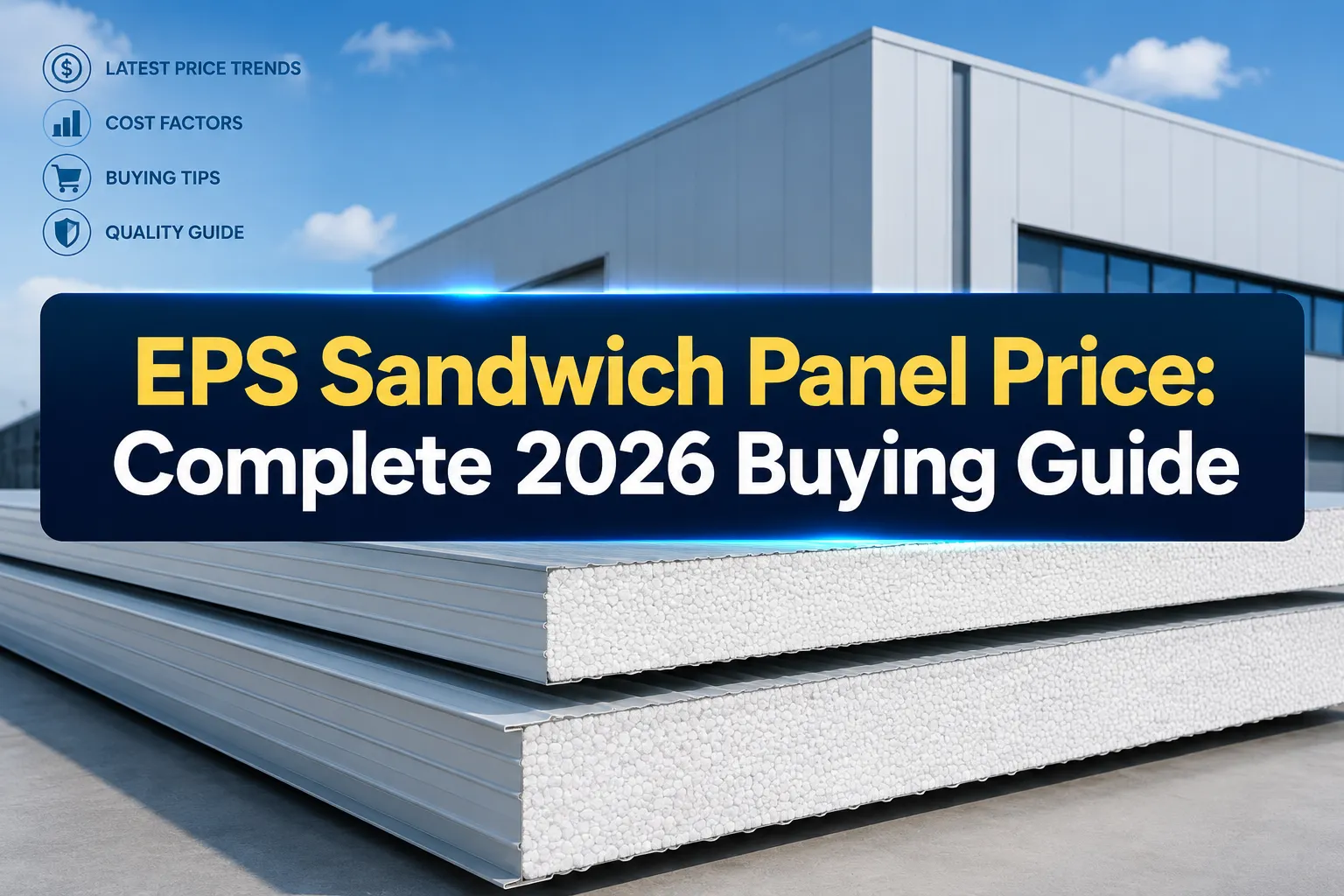
Quick Answer: EPS sandwich panel prices range from $15 to $45 per square meter depending on thickness, core density, and facing materials. Standard 50mm panels cost approximately $18-25 per square meter, while specialized fire-rated or thicker panels can reach $35-45 per square meter. Installation adds another $8-15 per square meter to total project costs.
Key Takeaways
- Standard EPS panels cost $15-25 per square meter for basic applications
- Fire-rated EPS panels add 30-50% to base pricing due to specialized materials
- Panel thickness directly impacts cost – 100mm panels cost 40-60% more than 50mm versions
- Bulk purchasing can reduce costs by 10-20% for orders over 1,000 square meters
- Installation costs typically add $8-15 per square meter to material prices
- Brand reputation affects pricing with premium manufacturers charging 15-25% more
- Regional availability influences final costs due to transportation and local competition
What Is an EPS Sandwich Panel
EPS sandwich panels are composite building materials consisting of an expanded polystyrene (EPS) foam core sandwiched between two metal facings, typically galvanized steel or aluminum. The EPS core provides thermal insulation while the metal facings offer structural strength and weather protection.
These panels combine three essential building functions into one product: structural support, insulation, and weather barrier. The EPS core density typically ranges from 10 kg/m³ to 25 kg/m³, with higher densities providing better compressive strength and thermal performance.
Common applications include:
- Industrial building walls and roofing
- Cold storage facilities
- Agricultural buildings
- Temporary structures
- Residential construction in some markets
The manufacturing process involves injecting liquid EPS between pre-formed metal sheets, creating a continuous bond that eliminates thermal bridges. This construction method makes EPS panels lighter than traditional building materials while maintaining comparable structural performance.
How Much Do EPS Sandwich Panels Cost Per Square Meter
EPS sandwich panel pricing per square meter varies significantly based on specifications and market conditions. Standard 50mm thick panels with basic galvanized steel facings cost $18-25 per square meter for most commercial applications.
Pricing breakdown by thickness:
- 40mm panels: $15-20 per square meter
- 50mm panels: $18-25 per square meter
- 75mm panels: $22-30 per square meter
- 100mm panels: $28-38 per square meter
- 150mm panels: $35-45 per square meter
Core density affects pricing with higher density EPS commanding premium prices. Standard 15 kg/m³ density cores represent baseline pricing, while 20-25 kg/m³ cores add $2-4 per square meter.
Metal facing upgrades also impact costs. Aluminum facings add $3-6 per square meter compared to galvanized steel, while pre-painted or specialized coatings can add another $2-5 per square meter.
For accurate budgeting, request quotes for your specific requirements including delivery to your location. Regional price variations can be substantial due to transportation costs and local market competition.
EPS Sandwich Panel vs Polyurethane: Which Is Cheaper
EPS sandwich panels are consistently cheaper than polyurethane (PU) alternatives, with cost differences ranging from 20-40% depending on specifications. Basic EPS panels cost $18-25 per square meter while comparable PU panels range from $25-40 per square meter.
Cost comparison factors:
- Material costs: EPS raw materials cost significantly less than polyurethane
- Manufacturing complexity: EPS production requires simpler equipment and processes
- Thermal performance: PU offers better insulation per thickness, potentially reducing required panel thickness
- Fire rating: PU panels often include better fire resistance without additional treatments
Choose EPS panels when:
- Budget constraints are primary concern
- Basic thermal performance meets requirements
- Fire rating requirements are minimal
- Project timeline allows for thicker panels if needed
Choose PU panels when:
- Maximum thermal efficiency is required
- Space constraints limit panel thickness
- Superior fire rating is mandatory
- Long-term energy savings justify higher upfront costs
The total project cost difference often narrows when considering installation time and structural requirements. EPS panels' lighter weight can reduce structural support needs, partially offsetting the material cost advantage of PU panels' superior thermal performance.
EPS Sandwich Panel Price Comparison: Different Brands
Brand selection significantly impacts EPS sandwich panel pricing, with established manufacturers commanding premium prices for quality assurance and warranty coverage. Premium brands typically cost 15-25% more than generic alternatives but offer better consistency and support.
Tier 1 manufacturers (international brands): $22-35 per square meter
- Comprehensive warranties (10-15 years)
- Consistent quality control
- Technical support and engineering assistance
- Established distribution networks
Tier 2 manufacturers (regional brands): $18-28 per square meter
- Good quality with moderate warranties (5-10 years)
- Regional technical support
- Competitive pricing for bulk orders
- Limited product range
Tier 3 manufacturers (local/generic brands): $15-22 per square meter
- Basic warranties (2-5 years)
- Limited technical support
- Lowest pricing for budget projects
- Quality variations possible
Key evaluation criteria beyond price:
- Manufacturing certifications (ISO standards)
- Fire rating compliance
- Thermal performance testing
- Installation support availability
- Spare parts and replacement availability
For critical applications like cold storage or industrial facilities, investing in Tier 1 brands often provides better long-term value despite higher upfront costs. Budget-conscious projects with basic requirements can successfully use Tier 2 or 3 options with appropriate quality verification.
Where to Buy EPS Sandwich Panels Wholesale
Wholesale EPS sandwich panel purchasing requires identifying reliable suppliers who can meet quantity, quality, and delivery requirements. Minimum order quantities typically start at 500-1,000 square meters for wholesale pricing benefits.
Primary wholesale sources:
- Direct manufacturers: Best pricing for large orders (2,000+ sqm)
- Authorized distributors: Good pricing with smaller minimums (500+ sqm)
- Building material wholesalers: Moderate pricing with mixed inventory
- Import/export companies: Competitive pricing for international sourcing
Wholesale pricing advantages:
- 10-20% discount on orders over 1,000 square meters
- 15-25% discount on orders over 5,000 square meters
- Negotiable payment terms for established buyers
- Priority delivery scheduling
- Technical support inclusion
Due diligence requirements:
- Verify manufacturing certifications and quality standards
- Request sample panels for testing and evaluation
- Confirm delivery capabilities and timing
- Review warranty terms and claim procedures
- Check references from previous customers
Common wholesale purchasing mistakes include focusing solely on price without considering delivery reliability, quality consistency, or post-sale support. Establish relationships with 2-3 qualified suppliers to ensure supply continuity and competitive pricing leverage.
For comprehensive guidance on supplier selection, consider factors beyond initial pricing including long-term partnership potential and technical expertise.
EPS Sandwich Panel Installation Cost
Installation costs represent a significant portion of total EPS sandwich panel project expenses, typically adding $8-15 per square meter to material costs. Professional installation ensures proper sealing, structural integrity, and warranty compliance.
Installation cost factors:
- Project complexity: Simple wall installations cost less than complex roofing
- Site accessibility: Difficult access increases labor time and equipment needs
- Panel size and weight: Larger panels require more sophisticated handling equipment
- Weather conditions: Adverse weather can extend installation timelines
- Local labor rates: Urban areas typically have higher installation costs
Typical installation pricing:
- Basic wall installation: $8-12 per square meter
- Roof installation: $12-18 per square meter
- Complex geometries: $15-25 per square meter
- High-altitude work: Additional $3-8 per square meter
Installation includes:
- Panel handling and positioning
- Structural attachment and sealing
- Joint sealing and weatherproofing
- Trim and flashing installation
- Quality inspection and testing
DIY installation considerations: While possible for simple applications, professional installation is recommended for critical applications, warranty compliance, and building code requirements. Improper installation can void manufacturer warranties and create performance issues.
Budget 40-60% of material costs for professional installation when planning project finances. For detailed installation guidance, review our complete installation guide.
What Affects EPS Sandwich Panel Pricing
Multiple factors influence EPS sandwich panel pricing beyond basic specifications, creating significant price variations across suppliers and market conditions. Understanding these factors helps optimize purchasing decisions and budget accuracy.
Core material factors:
- EPS density: Higher density cores (20+ kg/m³) cost $2-4 more per square meter
- Fire retardant additives: Add $3-6 per square meter for enhanced fire ratings
- Moisture resistance treatments: Specialized coatings add $1-3 per square meter
Facing material variables:
- Steel gauge thickness: Heavier gauge steel increases costs by $2-5 per square meter
- Coating systems: Pre-painted finishes add $2-4 per square meter
- Aluminum vs steel: Aluminum facings cost $3-6 more per square meter
Manufacturing and market factors:
- Production volume: Custom orders cost 15-30% more than standard products
- Raw material prices: Steel and EPS commodity prices directly impact panel costs
- Energy costs: Manufacturing energy expenses affect final pricing
- Transportation distance: Shipping costs can add $2-8 per square meter
Seasonal price variations occur due to construction industry demand cycles, with peak construction seasons (spring/summer) typically seeing 5-15% higher prices.
Order timing strategies:
- Place orders during off-peak seasons for better pricing
- Combine multiple project orders for volume discounts
- Consider longer lead times for better manufacturing scheduling
Understanding these factors enables better negotiation and timing decisions for cost optimization.
EPS Sandwich Panels for Roof vs Wall Applications
Application-specific requirements significantly impact EPS sandwich panel specifications and pricing, with roof panels typically costing 15-25% more than wall panels due to enhanced structural and weather requirements.
Roof application requirements:
- Higher structural loads: Snow, wind, and maintenance loads require stronger panels
- Enhanced weather sealing: Superior joint sealing and drainage systems
- Slope compatibility: Panels must accommodate roof pitch requirements
- Thermal movement: Greater temperature variations require expansion considerations
Roof panel pricing: $22-35 per square meter for standard applications
Wall application characteristics:
- Vertical installation: Simpler structural requirements and installation
- Weather protection: Less exposure to standing water and snow loads
- Thermal bridging: Different connection details affect thermal performance
- Accessibility: Easier maintenance and replacement access
Wall panel pricing: $18-28 per square meter for standard applications
Specification differences:
- Roof panels often require thicker facings (0.6mm vs 0.5mm for walls)
- Enhanced joint sealing systems for roof applications
- Different connection hardware for structural attachment
- Specialized drainage and ventilation considerations
Application selection guidelines:
- Use roof-rated panels for any horizontal or low-slope applications
- Wall panels are suitable for vertical installations above 15-degree slope
- Consider dual-purpose panels for mixed applications to simplify inventory
Proper application matching ensures performance and longevity while avoiding over-specification costs. For specific application guidance, consult our thermal performance guide.
Are EPS Sandwich Panels Fire Rated and Does That Change Price
Fire rating significantly impacts EPS sandwich panel pricing and application suitability, with fire-rated panels costing 30-50% more than standard versions due to specialized materials and manufacturing processes.
Standard EPS panels typically achieve Class C or Class D fire ratings without additional treatments, suitable for many agricultural and industrial applications where fire codes are less stringent.
Fire-rated EPS panels incorporate flame retardant additives and specialized facings to achieve Class A or Class B ratings required for commercial buildings, schools, and healthcare facilities.
Fire rating cost impact:
- Class C rated panels: $18-25 per square meter (standard pricing)
- Class B rated panels: $24-32 per square meter (25-35% premium)
- Class A rated panels: $28-38 per square meter (40-50% premium)
Fire rating components:
- Flame retardant EPS core: Special additives reduce flame spread and smoke generation
- Fire-resistant facings: Specialized coatings or materials improve fire performance
- Enhanced joint systems: Fire-rated sealants and connection details
- Third-party testing: Certification costs are reflected in panel pricing
Application requirements:
- Building codes dictate minimum fire ratings for different occupancy types
- Insurance requirements may mandate specific fire ratings
- Local fire marshal approval may require certified fire-rated products
Cost-benefit analysis should consider insurance premium reductions and building code compliance requirements when evaluating fire-rated panel premiums. The additional cost often provides value through reduced insurance costs and expanded application possibilities.
For fire-critical applications, review our fire-rated panel guide for detailed specifications and compliance information.
EPS Sandwich Panel Thickness and Price Difference
Panel thickness represents one of the most significant pricing variables for EPS sandwich panels, with costs increasing substantially for thicker panels due to increased material content and manufacturing complexity.
Thickness pricing progression:
- 40mm panels: $15-20 per square meter (baseline)
- 50mm panels: $18-25 per square meter (+20% vs 40mm)
- 75mm panels: $22-30 per square meter (+35% vs 50mm)
- 100mm panels: $28-38 per square meter (+40% vs 75mm)
- 150mm panels: $35-45 per square meter (+50% vs 100mm)
Thickness selection factors:
- Thermal performance requirements: Thicker panels provide better insulation
- Structural load requirements: Increased thickness improves load-bearing capacity
- Building code compliance: Energy codes may mandate minimum R-values
- Climate conditions: Extreme temperatures require enhanced insulation
Performance benefits of increased thickness:
- Thermal resistance: Each 25mm increase adds approximately R-4 to R-5 insulation value
- Structural strength: Thicker cores provide better compression and flexural strength
- Acoustic performance: Additional thickness improves sound transmission reduction
- Durability: Thicker panels resist damage and provide longer service life
Optimal thickness selection:
- Conduct energy modeling to determine cost-effective insulation levels
- Consider local climate data and heating/cooling degree days
- Evaluate structural requirements based on building loads and spans
- Review building code requirements for minimum insulation levels
Common thickness mistakes include over-specifying thickness for minimal performance gains or under-specifying for code compliance issues. For guidance on optimal thickness selection, see our thickness selection guide.
EPS Sandwich Panels for Cold Storage: How Much
Cold storage applications require specialized EPS sandwich panels with enhanced specifications, resulting in premium pricing compared to standard building applications. Cold storage EPS panels typically cost $28-45 per square meter depending on temperature requirements and specifications.
Cold storage panel requirements:
- Enhanced thermal performance: Thicker panels (100-200mm) for temperature maintenance
- Vapor barrier systems: Prevent moisture infiltration and condensation issues
- Food-grade facings: Stainless steel or specialized coatings for hygiene compliance
- Structural reinforcement: Heavy-duty connections for equipment and racking loads
Temperature-specific pricing:
- Above-freezing cold storage (0-5°C): $28-35 per square meter
- Freezer applications (-18°C): $32-40 per square meter
- Deep freeze storage (-25°C and below): $38-45 per square meter
Specialized features adding cost:
- Stainless steel facings: Add $8-15 per square meter vs galvanized steel
- Enhanced vapor barriers: Add $3-6 per square meter
- Food-grade certifications: Add $2-4 per square meter
- Custom joint systems: Add $5-10 per square meter for specialized sealing
Installation considerations:
- Cold storage installation requires specialized expertise and equipment
- Installation costs typically range from $15-25 per square meter
- Proper vapor barrier installation is critical for performance
- Joint sealing requires specialized materials and techniques
Total project costs for cold storage facilities typically range from $45-70 per square meter including materials and installation. Energy savings from proper insulation often justify premium panel costs through reduced operating expenses.
For comprehensive cold storage guidance, review our cold storage panel guide covering specifications and installation requirements.
Common Mistakes When Buying EPS Sandwich Panels
Avoiding common purchasing mistakes can save significant costs and prevent performance issues in EPS sandwich panel projects. Price-focused purchasing without considering quality and performance factors represents the most frequent and costly mistake.
Specification mistakes:
- Under-specifying thickness for climate requirements, leading to energy inefficiency
- Ignoring fire rating requirements until building permit review
- Selecting inappropriate core density for structural load requirements
- Overlooking thermal bridging at connections and joints
Supplier selection errors:
- Choosing suppliers based solely on lowest price without quality verification
- Failing to verify manufacturing certifications and quality standards
- Inadequate warranty evaluation and claim procedure understanding
- Insufficient delivery capability assessment for project timeline requirements
Purchasing process mistakes:
- Ordering without detailed quantity takeoffs, leading to shortages or excess
- Failing to coordinate delivery timing with installation schedules
- Inadequate sample testing before large quantity orders
- Ignoring local building code requirements during specification development
Installation planning oversights:
- Underestimating installation complexity and professional requirements
- Inadequate site preparation for panel delivery and installation
- Poor weather contingency planning affecting installation schedules
- Insufficient quality control during installation process
Cost optimization strategies:
- Obtain multiple quotes with identical specifications for accurate comparison
- Consider total project costs including installation and long-term performance
- Evaluate supplier capabilities beyond initial pricing
- Plan ordering timing to avoid rush charges and premium pricing periods
Prevention measures include engaging qualified consultants for specification development, conducting thorough supplier due diligence, and maintaining realistic project timelines for quality execution.
EPS Sandwich Panels Lifespan and Durability
EPS sandwich panel lifespan directly impacts total cost of ownership, making durability evaluation essential for accurate project economics. Quality EPS panels typically provide 20-30 years of service life with proper installation and maintenance.
Factors affecting lifespan:
- Manufacturing quality: Premium manufacturers provide more consistent long-term performance
- Installation quality: Proper installation prevents premature failure and performance degradation
- Environmental exposure: Coastal, industrial, or extreme climate conditions reduce lifespan
- Maintenance practices: Regular inspection and maintenance extends service life
Durability performance indicators:
- Facing material corrosion resistance: Galvanized steel provides 15-25 year protection
- EPS core stability: Quality EPS maintains insulation properties for 25+ years
- Joint sealing integrity: Proper sealing prevents moisture infiltration and degradation
- Structural connection durability: Quality fasteners and connections ensure long-term stability
Maintenance requirements:
- Annual inspections for damage, loose connections, and sealing integrity
- Joint sealing renewal every 10-15 years depending on exposure conditions
- Surface cleaning to prevent dirt accumulation and coating degradation
- Damage repair to prevent moisture infiltration and performance loss
Lifecycle cost considerations:
- Higher quality panels with 25+ year lifespan provide better value than cheaper alternatives requiring replacement in 10-15 years
- Energy performance maintenance affects operating costs throughout panel lifespan
- Warranty coverage reduces replacement costs for premature failures
Durability optimization strategies:
- Select panels with appropriate specifications for environmental conditions
- Invest in quality installation to maximize performance lifespan
- Implement regular maintenance programs to identify issues early
- Choose suppliers with proven long-term performance records
Understanding total lifecycle costs helps justify initial investment in quality panels and installation for optimal long-term value.
EPS Sandwich Panels for Construction Project Types
Different construction project types have varying EPS sandwich panel requirements and pricing implications, with specialized applications commanding premium prices for enhanced specifications.
Industrial and warehouse construction:
- Standard requirements: Basic thermal performance and structural adequacy
- Typical specifications: 50-75mm thickness, standard fire rating
- Pricing range: $18-28 per square meter
- Key considerations: Cost efficiency and durability for large areas
Agricultural buildings:
- Environmental demands: Moisture resistance and ventilation compatibility
- Common specifications: 50-100mm thickness depending on livestock requirements
- Pricing range: $15-25 per square meter
- Special features: Corrosion resistance for agricultural chemical exposure
Cold storage and food processing:
- Critical requirements: Enhanced thermal performance and hygiene compliance
- Typical specifications: 100-200mm thickness, food-grade facings
- Pricing range: $28-45 per square meter
- Specialized features: Vapor barriers and stainless steel options
Commercial and institutional buildings:
- Code compliance: Fire rating and energy code requirements
- Standard specifications: 75-150mm thickness, Class A or B fire rating
- Pricing range: $25-40 per square meter
- Aesthetic considerations: Architectural finishes and color options
Temporary and modular construction:
- Portability requirements: Lightweight panels with removable connections
- Typical specifications: 40-75mm thickness, standard performance
- Pricing range: $20-30 per square meter
- Special features: Reversible connections and transport compatibility
Healthcare and cleanroom facilities:
- Stringent requirements: Superior hygiene, fire rating, and environmental control
- Advanced specifications: 75-150mm thickness, specialized facings and sealing
- Pricing range: $30-50 per square meter
- Critical features: Non-porous surfaces and antimicrobial treatments
Project type selection significantly impacts total costs through specification requirements, installation complexity, and compliance standards. For project-specific guidance, consult our application-specific guides covering various construction types.
Frequently Asked Questions
How much do EPS sandwich panels cost compared to traditional construction?
EPS sandwich panels typically cost 15-30% less than traditional brick or block construction when considering materials, labor, and construction time. Total project savings often reach 20-40% due to faster installation and reduced foundation requirements.
What is the minimum order quantity for wholesale EPS panel pricing?
Most manufacturers offer wholesale pricing starting at 500-1,000 square meters, with additional discounts available for orders exceeding 2,000-5,000 square meters. Smaller quantities are available at retail pricing through distributors.
Do EPS sandwich panels require special installation tools or equipment?
Basic EPS panel installation requires standard construction tools plus panel lifting equipment for larger panels. Specialized sealing tools and fasteners are recommended for optimal performance and warranty compliance.
How long do EPS sandwich panels last in different climates?
Quality EPS panels provide 20-30 years of service life in most climates with proper installation and maintenance. Extreme coastal or industrial environments may reduce lifespan to 15-25 years depending on exposure conditions.
Can EPS sandwich panels be recycled at end of life?
EPS cores are recyclable through specialized facilities, while metal facings have standard recycling value. Panel disassembly requires separation of materials for proper recycling processing.
What building codes apply to EPS sandwich panel construction?
EPS panels must comply with local building codes for structural, thermal, and fire performance. International Building Code (IBC) and local amendments typically govern commercial applications.
How do transportation costs affect EPS panel pricing?
Transportation typically adds $2-8 per square meter depending on distance from manufacturing facility. Local production or distribution centers can significantly reduce transportation costs for large projects.
Are there seasonal price variations for EPS sandwich panels?
Panel prices typically increase 5-15% during peak construction seasons (spring/summer) due to increased demand. Off-season ordering can provide cost savings and better delivery scheduling.
What warranty coverage is typical for EPS sandwich panels?
Standard warranties range from 2-5 years for basic panels to 10-15 years for premium products. Warranty coverage typically includes manufacturing defects but excludes installation and maintenance issues.
How do EPS panels compare to other insulated panel types for cost?
EPS panels are typically the most cost-effective insulated panel option, costing 20-40% less than polyurethane panels and 30-50% less than mineral wool panels for comparable applications.
What factors should be prioritized when comparing EPS panel suppliers?
Prioritize quality certifications, manufacturing consistency, warranty terms, delivery reliability, and technical support capability over lowest price for critical applications requiring long-term performance.
Can EPS sandwich panels be used for load-bearing applications?
EPS panels can provide structural support for appropriate loads when properly designed and installed. Structural engineering analysis is required for load-bearing applications exceeding manufacturer specifications.
SEO Meta Title: EPS Sandwich Panel Price Guide 2026: Costs, Comparison & Buying Tips