Last updated: July 31, 2026

Quick Answer
Sandwich panels for cold room systems typically cost between $15-45 per square meter in Bangladesh, with polyurethane (PU) panels ranging from $25-45/sqm and polystyrene (EPS) panels from $15-30/sqm. The total system cost including installation ranges from $50-120 per square meter depending on panel thickness, core material, and project complexity.
Key Takeaways
- PU sandwich panels cost $25-45/sqm and offer superior insulation for temperatures below -18°C
- EPS sandwich panels cost $15-30/sqm and work well for moderate cold storage applications
- Panel thickness significantly affects price – 100mm panels cost 40-60% more than 50mm panels
- Installation costs add $15-25/sqm to material prices for professional setup
- Complete cold room systems range from $50-120/sqm including panels, doors, and refrigeration prep
- Bulk orders over 500 sqm typically receive 10-15% discounts from suppliers
- Quality certifications like ISO standards can increase panel costs by 15-25%
What Is a Sandwich Panel for Cold Rooms
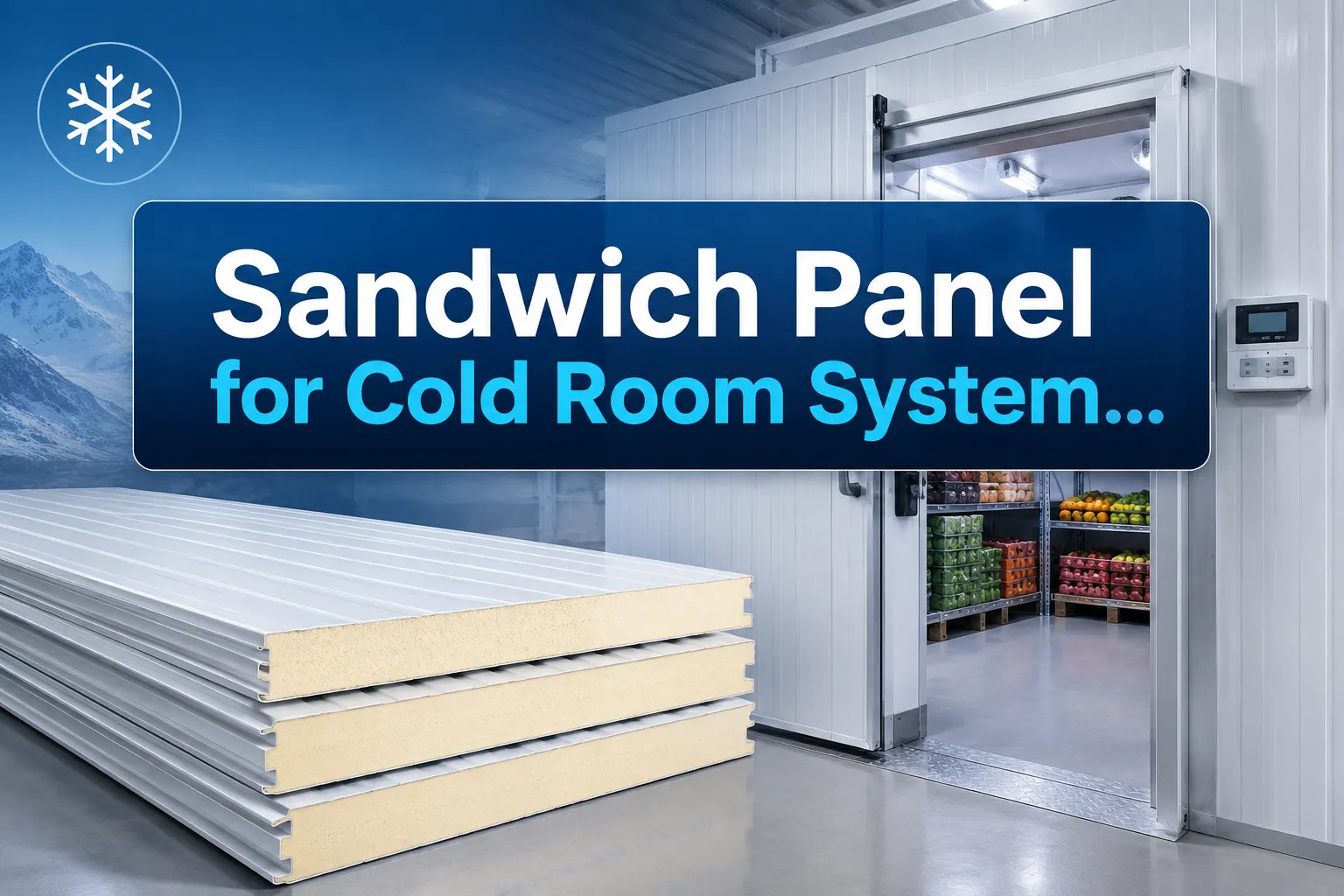
A sandwich panel for cold rooms is a composite building material consisting of two metal faces (typically galvanized steel or aluminum) bonded to an insulating core material. These panels are specifically engineered to maintain consistent low temperatures while preventing thermal bridging and moisture infiltration in refrigerated environments.
The core materials commonly used include:
- Polyurethane (PU): Offers the highest insulation value with R-values of 6-8 per inch
- Polystyrene (EPS): Provides good insulation at lower cost with R-values of 4-5 per inch
- Polyisocyanurate (PIR): Delivers excellent fire resistance and thermal performance
- Rockwool: Adds fire protection but with lower insulation efficiency
Cold room sandwich panels differ from standard construction panels through enhanced vapor barriers, food-grade surface treatments, and specialized joint systems that create airtight seals. The panels typically range from 50mm to 200mm in thickness depending on the required temperature differential.
Choose sandwich panels over traditional insulation when you need consistent temperatures below 10°C, require easy cleaning surfaces, or must meet food safety regulations.
How Much Does a Sandwich Panel for Cold Room Cost
Sandwich panel prices for cold room systems vary significantly based on core material, thickness, and supplier location. In Bangladesh's current market, expect these price ranges:
PU Sandwich Panels:
- 50mm thickness: $25-32 per sqm
- 75mm thickness: $30-38 per sqm
- 100mm thickness: $35-45 per sqm
- 150mm thickness: $45-55 per sqm
EPS Sandwich Panels:
- 50mm thickness: $15-22 per sqm
- 75mm thickness: $20-28 per sqm
- 100mm thickness: $25-35 per sqm
- 150mm thickness: $35-42 per sqm
Additional Cost Factors:
- Fire-rated panels add 20-30% to base prices
- Food-grade surface treatments add $3-5 per sqm
- Custom colors increase costs by 10-15%
- Curved or shaped panels cost 25-40% more than standard rectangles
Common pricing mistake: Comparing only material costs without factoring installation, accessories, and system integration. Budget an additional 40-60% of panel costs for complete installation.
For detailed pricing in your area, check our sandwich panel price guide for Bangladesh.
Sandwich Panel vs Traditional Insulation for Cold Rooms
Sandwich panels outperform traditional insulation methods in cold room applications through superior thermal performance, faster installation, and better moisture control. Traditional spray foam or fiberglass insulation requires separate vapor barriers, structural framing, and interior/exterior finishes.
Sandwich Panel Advantages:
- Installation speed: 3-5x faster than traditional methods
- Thermal efficiency: Eliminates thermal bridging completely
- Moisture control: Integrated vapor barrier prevents condensation
- Structural strength: Self-supporting reduces framing requirements
- Easy maintenance: Smooth surfaces enable thorough cleaning
Traditional Insulation Advantages:
- Lower upfront cost: 20-40% less expensive initially
- Design flexibility: Accommodates irregular shapes easily
- Local availability: Standard materials available everywhere
- Repair simplicity: Individual components can be replaced
Performance Comparison:
- Energy efficiency: Sandwich panels reduce cooling costs by 15-25%
- Lifespan: Panels last 20-25 years vs 10-15 years for traditional systems
- Food safety compliance: Panels meet strict hygiene standards more easily
Choose sandwich panels when energy efficiency, speed of construction, and long-term performance justify the higher initial investment. Choose traditional insulation for irregular spaces, tight budgets, or temporary installations.
Best Sandwich Panels for Cold Room Systems
The best sandwich panel for your cold room depends on operating temperature, budget constraints, and regulatory requirements. Here's how to select the optimal solution:
For Deep Freeze (-25°C to -40°C):
- PU panels 100-150mm thick provide necessary insulation
- Minimum R-value of 25-30 required
- Stainless steel faces recommended for durability
For Standard Freezer (-18°C to -25°C):
- PU panels 75-100mm thick offer excellent performance
- R-value of 20-25 sufficient for most applications
- Galvanized steel faces adequate for most environments
For Chilled Storage (0°C to 4°C):
- EPS panels 50-75mm thick provide cost-effective solution
- R-value of 15-20 meets requirements efficiently
- Standard galvanized faces work well
For Food Processing Areas:
- Food-grade surface treatments mandatory
- Easy-clean profiles with minimal joints
- Consider antimicrobial coatings for enhanced hygiene
Top-rated panel specifications include tongue-and-groove joints, continuous vapor seals, and certified thermal performance ratings. Look for panels meeting ISO 14509 standards for cold storage applications.
Common selection mistake: Choosing panels based only on price without considering long-term energy costs and maintenance requirements.
For specialized applications, explore our PU sandwich panel guide for detailed specifications.
Sandwich Panel Thickness for Cold Room: What Do You Need
Panel thickness directly impacts insulation performance, structural strength, and overall system cost. Calculate required thickness based on temperature differential, energy efficiency goals, and local climate conditions.
Thickness Guidelines by Application:
50mm Panels:
- Suitable for: Chilled storage (0°C to 10°C)
- Temperature differential: Up to 25°C
- R-value: 12-15 (depending on core material)
- Cost efficiency: Best for moderate cooling requirements
75mm Panels:
- Suitable for: Standard refrigeration (-5°C to 5°C)
- Temperature differential: Up to 35°C
- R-value: 18-22
- Balanced performance and cost
100mm Panels:
- Suitable for: Freezer applications (-18°C to -5°C)
- Temperature differential: Up to 45°C
- R-value: 25-30
- Industry standard for commercial freezers
150mm+ Panels:
- Suitable for: Deep freeze (-25°C and below)
- Temperature differential: 50°C+
- R-value: 35-45
- Required for blast freezing and ultra-low storage
Calculation Method:
Required R-value = (Indoor temp – Outdoor temp) ÷ Desired heat transfer rate
Edge case consideration: In high-humidity environments, increase thickness by 15-20% to prevent condensation issues at panel edges.
For comprehensive thickness selection guidance, see our panel thickness selection guide.
How to Install Sandwich Panels in Cold Room
Professional installation ensures proper thermal performance, structural integrity, and long-term reliability. Follow these systematic steps for successful cold room panel installation:
Pre-Installation Requirements:
- Foundation preparation: Level concrete slab with proper drainage
- Structural framework: Install support columns and roof structure
- Utility rough-in: Position electrical, refrigeration, and drainage systems
- Material staging: Acclimate panels to installation temperature
Installation Sequence:
Step 1: Floor Panel Installation
- Install vapor barrier on concrete slab
- Position floor panels with thermal breaks at foundation
- Seal all joints with approved sealants
- Install floor covering suitable for cold room traffic
Step 2: Wall Panel Assembly
- Start from corners and work systematically
- Ensure vertical alignment using laser levels
- Apply structural sealant to all tongue-and-groove joints
- Install panels in continuous runs to minimize thermal bridging
Step 3: Roof Panel Installation
- Install panels perpendicular to wall direction
- Maintain proper slope for condensation drainage
- Secure with appropriate fasteners at specified intervals
- Apply weatherproof membrane over panel joints
Step 4: Sealing and Finishing
- Seal all penetrations with expanding foam
- Install corner trims and edge flashings
- Apply final sealant to all exterior joints
- Test system for air leaks using pressure testing
Critical installation mistake: Inadequate sealing at panel joints allows air infiltration, reducing efficiency by 20-30% and causing ice buildup.
Professional installation typically takes 2-4 days for a standard 50 sqm cold room. For complex installations, consider our professional installation services.
Sandwich Panel Cold Room Problems and Solutions
Understanding common issues helps prevent costly repairs and ensures optimal performance throughout the system's lifespan. Most problems stem from installation errors, material selection mistakes, or inadequate maintenance.
Thermal Bridging Issues:
- Problem: Heat transfer through panel connections reduces efficiency
- Solution: Use thermal break materials at all structural connections
- Prevention: Specify continuous insulation details during design phase
Moisture and Condensation:
- Problem: Water accumulation leads to ice formation and panel damage
- Solution: Install proper vapor barriers and ventilation systems
- Prevention: Maintain consistent humidity levels and seal all air leaks
Panel Joint Failures:
- Problem: Sealant deterioration allows air infiltration
- Solution: Regular inspection and resealing with appropriate materials
- Prevention: Use high-quality structural sealants rated for temperature extremes
Surface Damage:
- Problem: Impacts from forklifts or equipment damage panel faces
- Solution: Install protective barriers in high-traffic areas
- Prevention: Train staff on proper cold room protocols
Fastener Corrosion:
- Problem: Standard fasteners fail in cold, humid conditions
- Solution: Replace with stainless steel or coated fasteners
- Prevention: Specify corrosion-resistant hardware initially
Performance monitoring tip: Install temperature sensors at panel joints to detect thermal bridging before it becomes a major efficiency loss.
Most panel problems are preventable through proper specification, installation, and maintenance protocols. Address issues immediately to prevent minor problems from becoming major system failures.
Sandwich Panels Cold Room: Which Material Is Best – Polyurethane or Polystyrene
Polyurethane (PU) and polystyrene (EPS) cores each offer distinct advantages for cold room applications. Your choice should align with operating requirements, budget constraints, and performance expectations.
Polyurethane (PU) Advantages:
- Superior insulation: R-6 to R-8 per inch vs R-4 to R-5 for EPS
- Better adhesion: Stronger bond between core and metal faces
- Moisture resistance: Closed-cell structure prevents water absorption
- Temperature range: Performs well from -40°C to +80°C
- Structural strength: Higher compressive strength for heavy loads
Polystyrene (EPS) Advantages:
- Lower cost: 30-40% less expensive than PU panels
- Lighter weight: Easier handling and reduced structural requirements
- Recyclability: More environmentally friendly disposal options
- Dimensional stability: Less expansion/contraction with temperature changes
- Fire performance: Self-extinguishing properties in many formulations
Performance Comparison Table:
| Property | Polyurethane (PU) | Polystyrene (EPS) |
|---|---|---|
| R-value per inch | 6-8 | 4-5 |
| Cost per sqm | $25-45 | $15-30 |
| Weight (100mm) | 12-15 kg/sqm | 8-12 kg/sqm |
| Compressive strength | 150-250 kPa | 100-200 kPa |
| Service temperature | -40°C to +80°C | -40°C to +70°C |
Choose PU panels for temperatures below -10°C, high-traffic areas, or when maximum energy efficiency justifies higher costs. Choose EPS panels for moderate cooling applications, budget-conscious projects, or temporary installations.
Hybrid approach: Use PU panels for critical areas (freezer sections) and EPS panels for less demanding zones (prep areas) to optimize overall project costs.
Cold Room Sandwich Panel Suppliers Near Me
Finding reliable local suppliers ensures competitive pricing, faster delivery, and better after-sales support. Evaluate suppliers based on product quality, technical expertise, and service capabilities rather than price alone.
Key Supplier Evaluation Criteria:
Product Quality:
- ISO certification and quality management systems
- Testing reports for thermal performance and structural strength
- Warranty terms and coverage details
- Material traceability and compliance documentation
Technical Capabilities:
- Engineering support for custom applications
- Installation training and supervision services
- Technical documentation and specification assistance
- Problem-solving expertise for complex projects
Service Factors:
- Delivery timeframes and logistics capabilities
- Inventory levels for standard products
- Emergency replacement part availability
- Local service technician network
Leading Supplier Categories in Bangladesh:
National Manufacturers:
- Comprehensive product lines and technical support
- Competitive pricing for large projects
- Quality certifications and testing facilities
- Established distribution networks
Regional Distributors:
- Faster delivery for standard products
- Personalized service and local relationships
- Flexible payment terms and project financing
- Installation contractor networks
Specialized Cold Room Suppliers:
- Deep expertise in refrigeration applications
- Complete system integration capabilities
- Food safety compliance knowledge
- Ongoing maintenance and support services
Supplier selection mistake: Choosing based solely on lowest price without evaluating technical support, delivery reliability, and long-term service capabilities.
Research multiple suppliers and request detailed quotes including delivery, installation support, and warranty terms. For vetted suppliers in Bangladesh, explore our supplier directory.
Sandwich Panel Cold Room Lifespan: How Long Does It Last
Well-maintained sandwich panels in cold room applications typically last 20-25 years, with some high-quality installations exceeding 30 years. Lifespan depends on panel quality, installation practices, operating conditions, and maintenance protocols.
Factors Affecting Lifespan:
Panel Quality:
- Core material density and composition
- Face sheet thickness and coating quality
- Adhesive bond strength between layers
- Manufacturing quality control standards
Operating Conditions:
- Temperature cycling frequency and range
- Humidity levels and condensation exposure
- Chemical exposure from cleaning agents
- Physical impacts from equipment and traffic
Maintenance Practices:
- Regular cleaning and sanitization schedules
- Prompt repair of minor damage
- Sealant inspection and renewal programs
- Preventive maintenance of support systems
Typical Lifespan by Component:
Panel Structure (20-25 years):
- Core insulation maintains 90%+ performance
- Face sheets resist corrosion and impact damage
- Structural integrity remains sound
Joint Sealants (5-10 years):
- Require periodic inspection and renewal
- Performance degrades with temperature cycling
- Critical for maintaining thermal efficiency
Surface Finishes (10-15 years):
- May need refinishing in high-traffic areas
- Food-grade coatings require more frequent renewal
- Protective treatments extend service life
Lifespan Extension Strategies:
- Install protective barriers in impact-prone areas
- Implement regular inspection and maintenance schedules
- Use high-quality sealants and fasteners initially
- Train operators on proper cold room protocols
End-of-life indicators: Visible corrosion, persistent air leaks, declining energy efficiency, or structural deformation signal replacement needs.
Quality panels with proper maintenance provide excellent return on investment through decades of reliable service.
Can I Use Regular Panels Instead of Sandwich Panels for Cold Room
Regular building panels are not suitable for cold room applications due to inadequate insulation, lack of vapor barriers, and insufficient structural performance in low-temperature environments. Cold room applications require specialized panels engineered for thermal efficiency and moisture control.
Why Regular Panels Fail in Cold Rooms:
Thermal Performance:
- Standard panels lack continuous insulation
- Thermal bridging through structural elements
- Insufficient R-values for temperature maintenance
- Higher energy costs and temperature fluctuations
Moisture Control:
- No integrated vapor barriers allow condensation
- Standard materials absorb moisture and lose insulation value
- Ice formation damages panel structure over time
- Mold and bacterial growth in wet insulation
Structural Issues:
- Standard panels not designed for temperature cycling
- Expansion/contraction causes joint failures
- Inadequate strength for refrigeration equipment loads
- Fastener failures in cold, humid conditions
Regulatory Compliance:
- Food safety regulations require specific materials
- Building codes mandate minimum insulation levels
- Insurance requirements specify cold storage construction standards
- Health department approvals require proper sanitizable surfaces
Alternatives to New Sandwich Panels:
Retrofit Solutions:
- Add external insulation to existing walls
- Install vapor barriers and interior finishes
- Upgrade to meet cold room requirements incrementally
- More expensive than purpose-built panels long-term
Hybrid Approaches:
- Use sandwich panels for critical areas only
- Combine with traditional insulation in less demanding zones
- Phase installation to spread costs over time
Cost comparison: While regular panels cost 40-60% less initially, the additional insulation, vapor barriers, and structural modifications typically exceed sandwich panel costs while delivering inferior performance.
Bottom line: Cold room applications require purpose-built sandwich panels to ensure proper performance, regulatory compliance, and long-term reliability.
Sandwich Panel Cold Room Moisture Issues: How to Prevent
Moisture control is critical for cold room performance, energy efficiency, and food safety. Uncontrolled moisture leads to ice formation, insulation degradation, and potential structural damage requiring expensive repairs.
Primary Moisture Sources:
Air Infiltration:
- Door openings and traffic patterns
- Poor sealing at panel joints
- Penetrations for utilities and equipment
- Structural thermal bridging points
Internal Generation:
- Product respiration and moisture release
- Personnel breathing and activity
- Equipment defrost cycles
- Cleaning and sanitization operations
Prevention Strategies:
Vapor Barrier Systems:
- Install continuous vapor barriers on warm side of insulation
- Use appropriate perm ratings for temperature differential
- Seal all penetrations with compatible materials
- Overlap joints minimum 150mm with sealed edges
Air Sealing Methods:
- Apply structural sealants at all panel joints
- Install gaskets and weatherstripping on doors
- Use expanding foam for utility penetrations
- Maintain positive pressure in cold room when possible
Ventilation and Dehumidification:
- Install dedicated dehumidification equipment
- Control air changes to minimize moisture introduction
- Use heat recovery ventilators for fresh air needs
- Monitor and control relative humidity levels
Operational Controls:
- Minimize door opening frequency and duration
- Use strip curtains or air curtains at entrances
- Implement proper product wrapping and storage practices
- Schedule defrost cycles during low-activity periods
Monitoring and Maintenance:
Regular Inspections:
- Check for condensation at panel joints monthly
- Inspect vapor barriers for damage or deterioration
- Monitor humidity levels with calibrated instruments
- Document and trend moisture-related issues
Preventive Maintenance:
- Renew sealants on scheduled intervals
- Clean and service dehumidification equipment
- Replace damaged vapor barriers promptly
- Train staff on moisture prevention protocols
Warning signs: Visible condensation, ice formation on panels, musty odors, or declining energy efficiency indicate moisture problems requiring immediate attention.
Effective moisture control requires integrated design, proper installation, and ongoing maintenance commitment.
Used Sandwich Panels for Cold Room: Where to Buy
Used sandwich panels can provide cost savings of 40-60% compared to new panels, but require careful evaluation to ensure adequate performance and remaining service life. Consider used panels for temporary installations, budget-constrained projects, or non-critical applications.
Sources for Used Panels:
Industrial Salvage Companies:
- Specialize in dismantling cold storage facilities
- Often have large quantities of matching panels
- May offer removal and delivery services
- Typically provide limited or no warranties
Construction Surplus Dealers:
- Handle overstock and project cancellations
- Sometimes have new panels at reduced prices
- Better condition than salvaged materials
- May include original manufacturer warranties
Online Marketplaces:
- Wide selection from multiple sellers
- Competitive pricing through auction formats
- Require careful inspection before purchase
- Higher risk due to limited seller accountability
Direct from Facilities:
- Cold storage facilities upgrading or closing
- Opportunity to inspect panels in operating condition
- Negotiate removal and transportation directly
- May include related equipment and accessories
Evaluation Criteria for Used Panels:
Structural Condition:
- Check for dents, punctures, or deformation
- Inspect joint systems for damage or wear
- Verify face sheet adhesion to core material
- Test panel flatness and dimensional accuracy
Thermal Performance:
- Look for signs of moisture infiltration
- Check core material for compression or degradation
- Verify vapor barrier integrity
- Consider thermal imaging inspection for large quantities
Compatibility Factors:
- Confirm dimensions match project requirements
- Verify joint systems are compatible
- Check face sheet materials and coatings
- Ensure compliance with current building codes
Cost Considerations:
- Factor transportation and handling costs
- Include inspection and testing expenses
- Budget for additional sealants and accessories
- Consider installation complexity with mixed materials
When to avoid used panels: Critical food storage applications, projects requiring warranties, or installations where failure costs exceed savings.
Best practices: Purchase 10-15% extra panels to account for damage during removal and installation, and have panels professionally inspected before committing to large purchases.
Sandwich Panel Cold Room System Complete Cost Installation
Complete cold room system costs include panels, doors, refrigeration preparation, installation labor, and accessories. Understanding total project costs helps with accurate budgeting and vendor comparisons.
Complete System Cost Breakdown:
Panel Materials (40-50% of total):
- Wall and ceiling panels: $25-45 per sqm
- Floor panels or insulation: $15-25 per sqm
- Corner trims and accessories: $5-8 per linear meter
- Sealants and fasteners: $2-4 per sqm
Doors and Access (15-20% of total):
- Hinged cold room doors: $800-1,500 each
- Sliding doors for large openings: $2,000-4,000 each
- Personnel access doors: $600-1,200 each
- Door frames and hardware: $200-400 per door
Installation Labor (25-35% of total):
- Panel installation: $15-25 per sqm
- Electrical and controls: $2,000-5,000 per room
- Plumbing and drainage: $1,000-3,000 per room
- Testing and commissioning: $500-1,500 per room
Project Management and Permits (5-10% of total):
- Engineering and drawings: $2,000-5,000
- Building permits and inspections: $500-2,000
- Project coordination: $1,000-3,000
Total System Costs by Size:
Small Cold Room (20-50 sqm):
- Basic system: $50-80 per sqm installed
- Premium system: $80-120 per sqm installed
- Includes standard doors and basic controls
Medium Cold Room (50-200 sqm):
- Basic system: $60-90 per sqm installed
- Premium system: $90-140 per sqm installed
- Includes multiple doors and advanced controls
Large Cold Room (200+ sqm):
- Basic system: $70-100 per sqm installed
- Premium system: $100-160 per sqm installed
- Includes specialized equipment and systems integration
Cost Optimization Strategies:
- Bundle multiple rooms for volume discounts
- Use standard panel sizes to minimize waste
- Plan utility locations to reduce installation complexity
- Consider phased construction for large projects
Hidden costs to budget: Concrete preparation, utility connections, ongoing maintenance contracts, and operator training can add 15-25% to base system costs.
For detailed project estimates, consult with experienced cold room contractors who can provide accurate pricing based on specific requirements and site conditions.
Frequently Asked Questions
How much do sandwich panels for cold rooms cost per square meter?
Sandwich panel prices range from $15-45 per square meter depending on core material and thickness. PU panels cost $25-45/sqm while EPS panels range from $15-30/sqm. Installation adds another $15-25/sqm to total project costs.
What thickness sandwich panel do I need for a freezer room?
Freezer rooms operating at -18°C typically require 100mm thick panels for optimal energy efficiency. For deep freeze applications below -25°C, use 150mm thick panels. Chilled storage above 0°C can use 50-75mm panels effectively.
How long do cold room sandwich panels last?
Quality sandwich panels last 20-25 years with proper maintenance. Panel cores maintain 90% insulation performance throughout their lifespan, while joint sealants require renewal every 5-10 years to maintain efficiency.
Can I install cold room panels myself?
While possible, professional installation is recommended for cold room panels. Proper sealing, thermal bridging prevention, and vapor barrier installation require specialized knowledge. DIY installation often results in efficiency losses of 20-30%.
What's the difference between PU and EPS panels for cold rooms?
PU panels offer superior insulation (R-6 to R-8 per inch) and better moisture resistance but cost 30-40% more than EPS panels. EPS panels (R-4 to R-5 per inch) work well for moderate cooling applications and budget-conscious projects.
Do I need special permits for cold room construction?
Most cold room installations require building permits, especially for commercial food storage. Electrical permits are needed for refrigeration connections. Food processing facilities may require health department approvals and FDA compliance.
How do I prevent moisture problems in cold room panels?
Install continuous vapor barriers on the warm side, seal all panel joints with structural sealants, minimize air infiltration through doors, and maintain proper humidity control. Regular inspection and maintenance prevent minor issues from becoming major problems.
What's included in cold room panel installation costs?
Installation costs typically include panel mounting, joint sealing, corner trim installation, and basic electrical connections. Additional costs include doors, refrigeration equipment, concrete preparation, and specialized controls or monitoring systems.
Can I buy used sandwich panels for cold rooms?
Used panels can save 40-60% on material costs but require careful inspection for structural integrity and thermal performance. Best suited for temporary installations or non-critical applications. Factor in transportation and compatibility issues when evaluating used panels.
What warranty should I expect on cold room panels?
Quality manufacturers offer 10-15 year warranties on panel structure and thermal performance. Face sheet coatings typically have 5-10 year warranties. Installation workmanship warranties range from 1-3 years depending on the contractor.
How much does a complete cold room system cost?
Complete systems range from $50-160 per square meter installed, depending on size, specifications, and complexity. Small rooms (20-50 sqm) cost $50-120/sqm while large facilities (200+ sqm) range from $70-160/sqm including panels, doors, and installation.
What maintenance do cold room panels require?
Regular maintenance includes monthly inspection of panel joints, annual sealant renewal in high-stress areas, cleaning with approved sanitizers, and prompt repair of any damage. Preventive maintenance extends panel life and maintains energy efficiency.
Conclusion
Sandwich panel pricing for cold room systems reflects the critical balance between upfront investment and long-term performance. With costs ranging from $15-45 per square meter for materials and total installed systems from $50-160 per square meter, proper selection and installation deliver decades of reliable service.
The choice between PU and EPS core materials should align with your specific temperature requirements and budget constraints. PU panels justify their higher cost through superior insulation and moisture resistance in demanding applications, while EPS panels provide cost-effective solutions for moderate cooling needs.
Take these next steps to move your cold room project forward: first, calculate your exact panel requirements based on room dimensions and temperature needs. Second, request detailed quotes from multiple suppliers including installation and warranty terms. Third, verify that your chosen panels meet local building codes and food safety regulations.
Remember that the lowest initial cost rarely delivers the best long-term value. Focus on proven panel quality, professional installation, and comprehensive support to ensure your cold room system performs efficiently throughout its 20-25 year lifespan.
For expert guidance on your specific project requirements, consult with experienced cold room specialists who can provide detailed specifications and accurate cost estimates based on your unique operational needs.
SEO Meta Title: Sandwich Panel Cold Room System Price Guide 2026 | Complete Costs