Quick Answer: Sandwich panels are usually grouped by their core — EPS (expanded polystyrene), PU (rigid polyurethane), PIR (polyisocyanurate) and Rock Wool (mineral wool) — and by where they are used: wall panels, roof panels, cold room panels and clean room panels. The core decides insulation, weight, fire behaviour and cost; the panel form decides how it is fixed and finished. A practical rule of thumb: EPS for general walls and partitions, PU for cold rooms and cold storage, and Rock Wool where fire resistance matters most.
Key Takeaways
- Every sandwich panel has the same three layers: metal facing, insulating core, metal facing.
- Choose the core for the job: EPS for economy and light weight, PU or PIR for insulation per thickness, Rock Wool for fire resistance and sound absorption.
- Choose the panel form for the location: profiled roof panels, flat or lightly ribbed wall panels, and hygienic finishes for cold rooms and clean rooms.
- Joints, facings and accessories matter as much as the core — especially in cold and hygienic rooms.
- Confirm thermal, fire and span data on the datasheet of the exact panel you are quoted.
How a sandwich panel works
A sandwich panel bonds two thin metal facings to a thicker insulating core. The facings carry bending loads and protect the core; the core holds the facings apart, stiffens the panel and provides insulation. Because the panel arrives as one finished unit, a wall or roof can be enclosed and insulated in a single step. If you are new to the subject, our complete sandwich panel guide covers the basics.
Types by core material
EPS sandwich panels
An expanded polystyrene core: light, easy to handle and usually the most economical option. EPS panels suit general factory and warehouse walls, partitions, site buildings and roofs where a slightly thicker panel is acceptable. See EPS sandwich panel and our EPS guide.
PU sandwich panels
A rigid polyurethane foam core that generally insulates better for its thickness than EPS. PU is the usual choice for cold rooms, freezers and cold storage. See PU sandwich panel and our PU guide.
PIR sandwich panels
Polyisocyanurate is a related rigid foam formulated for improved fire performance compared with standard PU, while keeping good insulation. Availability and fire classification vary by manufacturer, so check the test evidence for the specific product. Our PIR sandwich panel guide explains more.
Rock Wool sandwich panels
A mineral wool core that is non-combustible, which makes Rock Wool the core to consider first where fire resistance leads the decision. It also absorbs sound well. It is heavier than foam cores and generally needs more thickness for the same insulation. See Rock Wool sandwich panel and our Rock Wool guide.
Core comparison at a glance
| Core | Insulation for thickness | Fire behaviour | Weight | Typical cost | Typical uses |
|---|---|---|---|---|---|
| EPS | Good | Organic foam — check grade and test evidence | Lightest | Usually lowest | General walls, partitions, roofs |
| PU | Generally better than EPS | Organic foam — check formulation and test evidence | Light | Moderate | Cold rooms, freezers, cold storage |
| PIR | Similar to PU | Improved over standard PU — check test evidence | Light | Moderate to higher | Insulated buildings with stricter fire needs |
| Rock Wool | Lower — needs more thickness | Non-combustible core | Heaviest | Usually higher | Fire walls, generator rooms, noisy areas |
For the two most common head-to-head decisions, read EPS vs PU sandwich panel and PU vs Rock Wool sandwich panel.
Types by application
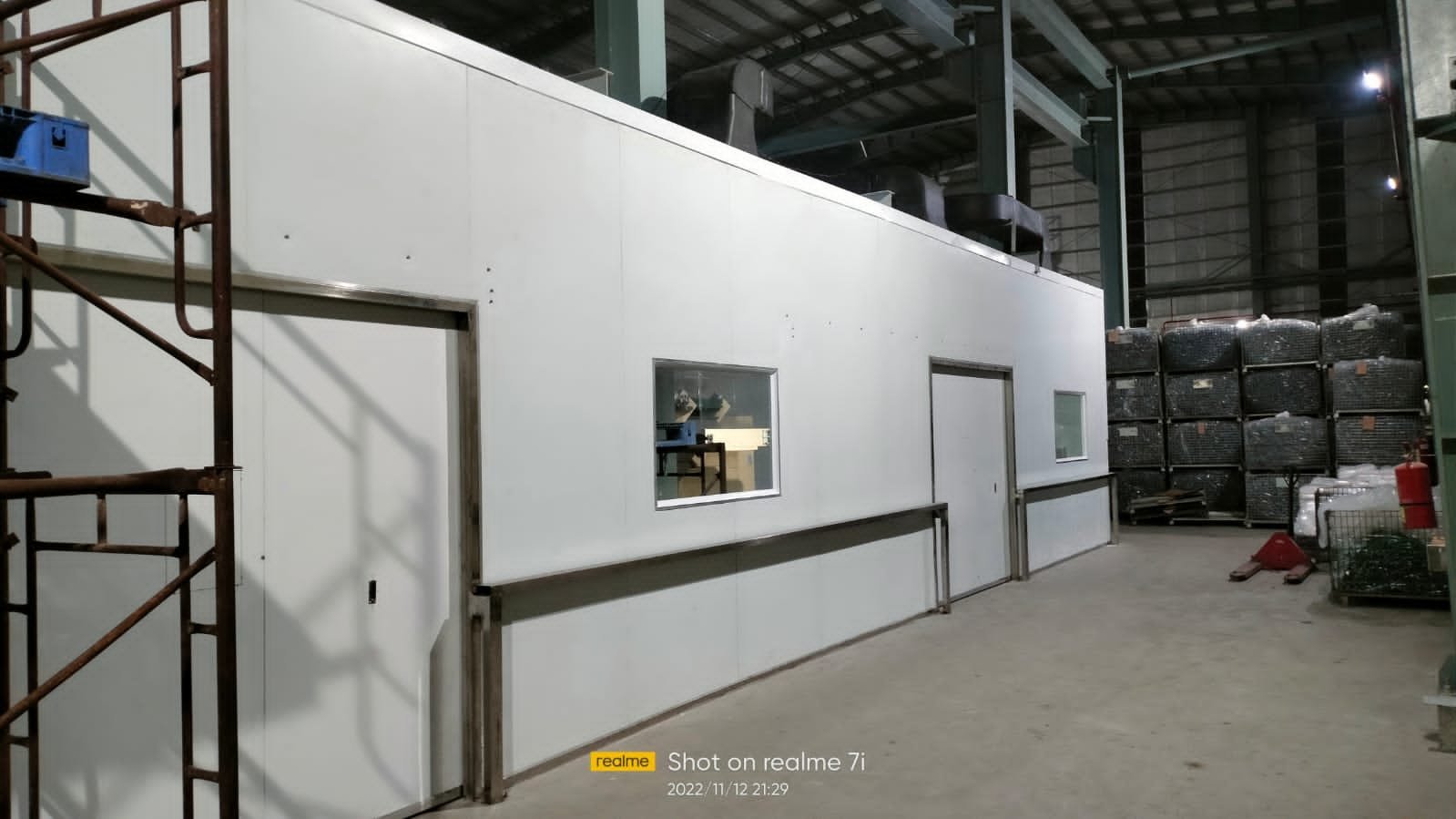
Wall panels
Used for external cladding and internal partitions. Faces are flat or lightly profiled, and panels usually join with a tongue-and-groove edge fixed to the structure. See our insulated wall panel guide.
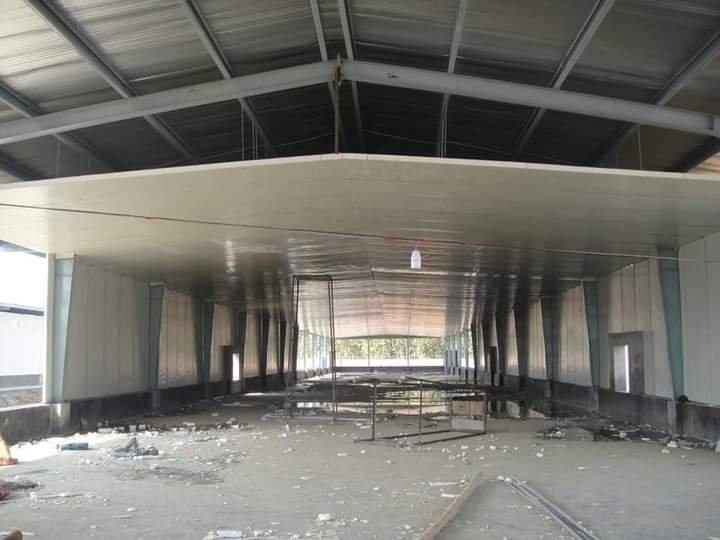
Roof panels
The outer facing is profiled with ribs so the roof sheds rainwater and gains stiffness over purlins. We supply roof panels with EPS, PU and Rock Wool cores. For installation, see our roof panel installation guide.
Cold room and cold storage panels
Built to keep a room at low temperature with as little heat and moisture entry as possible. Joints are designed to be tight and well sealed, and panels are paired with insulated doors. Our cold storage panel types guide covers this category in detail.
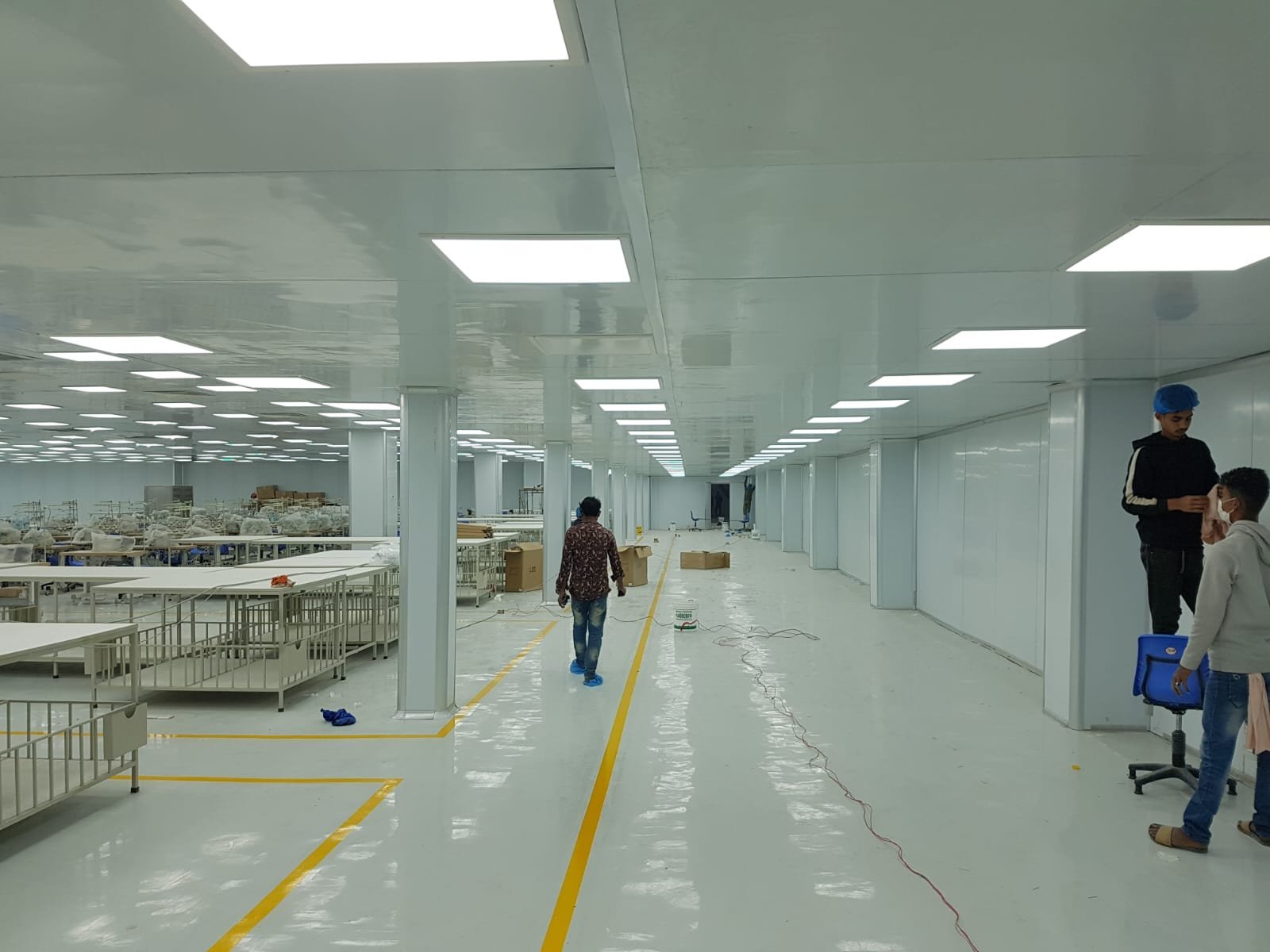
Clean room and hospital panels
Hygienic finishes, flush joints, coved corners and flush doors and windows keep surfaces easy to clean and free of dust traps. See our clean room sandwich panel guide and sandwich panels for OT rooms.
Facings, joints and accessories
Facings are most often colour-coated steel; other facing materials and finishes are offered by some manufacturers for specific environments, so ask what is available for yours. The joint type affects airtightness and how quickly panels can be installed. Finally, the accessories complete the system: coving, corner pieces, channels, jointers and panel doors. See the full accessories range.
How to choose the right type
- Start with the room: what temperature, humidity and hygiene level must it hold?
- Check fire requirements: what do the building's approvals and insurer require for this area?
- Choose the core: based on insulation, fire and budget.
- Choose thickness and facing: see how to choose sandwich panel thickness.
- Confirm span and fixing: use the manufacturer's span tables for your loads.
- Plan the details: joints, doors, coving and penetrations.
Conclusion
There is no single best sandwich panel — there is a best panel for each room. Match the core to the insulation and fire needs, the panel form to the location, and the finish and accessories to the hygiene level. You can see our panels at work on the Projects page, and when you know what you need, request a quote.