Last updated: July 31, 2026

Quick Answer: A PIR sandwich panel is a composite building material featuring a polyisocyanurate (PIR) foam core sandwiched between two metal facings, typically steel or aluminum. These panels deliver superior thermal insulation (R-values of 6-8 per inch), excellent fire resistance, and structural strength, making them ideal for commercial roofing, wall cladding, and cold storage applications where energy efficiency and safety are paramount.
Key Takeaways
- PIR sandwich panels combine polyisocyanurate foam cores with metal facings for exceptional thermal performance
- Fire ratings reach up to 2 hours, exceeding most building code requirements for commercial construction
- R-values range from 6-8 per inch of thickness, outperforming traditional insulation materials
- Common thicknesses span 50mm to 200mm, with costs ranging $15-35 per square meter depending on specifications
- Installation requires proper vapor barriers and certified contractors to prevent moisture damage
- Leading brands include Kingspan, Metecno, and Tata Steel, each offering different performance specifications
- Lifespan typically exceeds 30 years with proper installation and maintenance
- Best suited for commercial buildings, cold storage facilities, and industrial applications requiring high thermal performance
What Is a PIR Sandwich Panel and How Does It Work
A PIR sandwich panel consists of a rigid polyisocyanurate foam core bonded between two metal sheets, creating a composite structure that provides insulation, weather protection, and structural support in a single component. The polyisocyanurate foam core delivers exceptional thermal resistance while the metal facings provide durability and weather resistance.
The manufacturing process involves injecting liquid PIR foam between pre-formed metal sheets under controlled pressure and temperature. As the foam expands and cures, it creates a strong chemical bond with the metal facings, resulting in a unified structural element.
Key performance characteristics include:
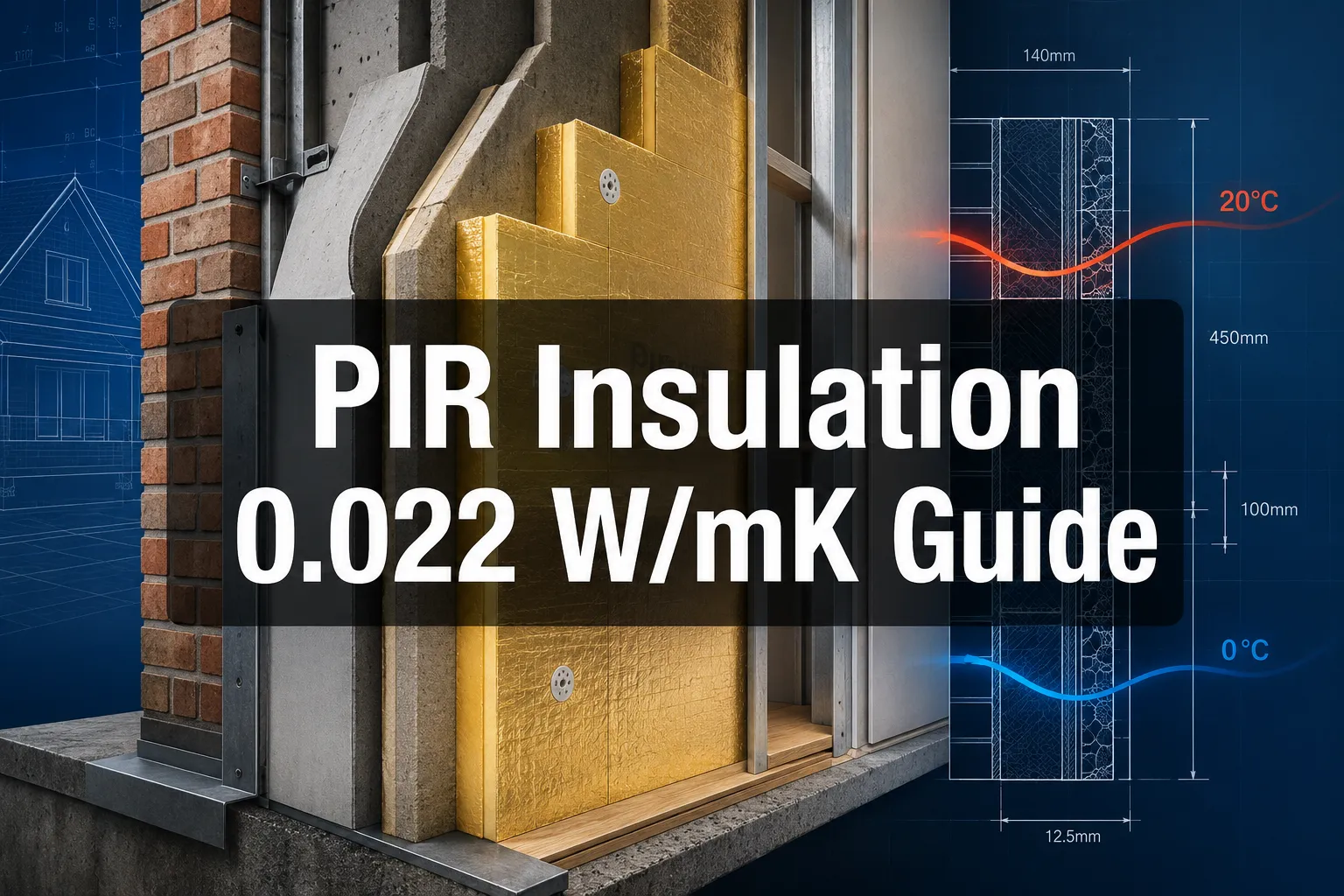
- Thermal conductivity as low as 0.022 W/mK
- Compressive strength up to 200 kPa
- Fire resistance ratings from 30 minutes to 2+ hours
- Temperature stability from -40°C to +120°C
The closed-cell structure of PIR foam prevents moisture absorption and maintains insulation properties over decades. Metal facings are typically galvanized steel, aluminum, or stainless steel with protective coatings to resist corrosion and UV degradation.
For comprehensive guidance on sandwich panel products, manufacturers offer various core materials and facing options to meet specific project requirements.
PIR Sandwich Panel vs Polyurethane vs Mineral Wool Comparison
PIR sandwich panels outperform polyurethane (PU) panels in fire resistance and temperature stability, while offering better thermal performance than mineral wool panels but at higher cost. Each core material serves different applications based on specific performance requirements.
| Property | PIR | Polyurethane (PU) | Mineral Wool |
|---|---|---|---|
| R-Value per inch | 6-8 | 5-7 | 3-4 |
| Fire Rating | Up to 2 hours | 30-60 minutes | Non-combustible |
| Cost per m² | $20-35 | $15-28 | $18-32 |
| Temperature Range | -40°C to +120°C | -40°C to +80°C | -200°C to +750°C |
Choose PIR panels if: Your project requires maximum thermal efficiency with good fire performance, such as commercial buildings or cold storage facilities.
Choose PU panels if: Budget is the primary concern and moderate fire ratings are acceptable for industrial applications.
Choose mineral wool if: Fire safety is paramount and you need non-combustible materials for high-risk environments like chemical plants.
The thermal performance of sandwich panels varies significantly based on core material selection and panel thickness.
PIR Sandwich Panel Cost Per Square Meter
PIR sandwich panel costs range from $15-35 per square meter depending on thickness, facing material, and order quantity. Standard 100mm thick panels with galvanized steel facings typically cost $22-28 per square meter, while premium specifications with aluminum facings or fire-rated cores can reach $30-35 per square meter.
Cost breakdown factors:
- Panel thickness: 50mm ($15-20/m²), 100mm ($22-28/m²), 150mm ($28-32/m²), 200mm ($32-35/m²)
- Facing material: Galvanized steel (standard), aluminum (+15-20%), stainless steel (+25-35%)
- Fire rating: Standard (base price), 1-hour rated (+10-15%), 2-hour rated (+20-25%)
- Order quantity: Small orders (<1000m²) pay premium pricing, bulk orders (>5000m²) receive 10-15% discounts
Additional costs to consider:
- Installation: $8-15 per square meter
- Accessories (flashings, fasteners): $2-5 per square meter
- Transportation: $0.50-2.00 per square meter depending on distance
For detailed pricing in specific markets, consult our sandwich panel price guide which covers regional variations and supplier comparisons.
Budget planning tip: Order 5-10% extra panels to account for cutting waste and future repairs, as color matching can be difficult years later.
Best PIR Sandwich Panel Brands
Leading PIR sandwich panel manufacturers include Kingspan, Metecno, Tata Steel, and DANA Group, each offering different strengths in fire performance, thermal efficiency, and regional availability. Brand selection should prioritize local support, certification compliance, and specific performance requirements over price alone.
Top-tier manufacturers:
Kingspan – Premium fire-rated panels with R-values up to 8 per inch. Strong in Europe and North America with excellent technical support. Best for projects requiring maximum thermal performance.
Metecno – Cost-effective solutions with good fire ratings. Strong manufacturing presence in Asia and Middle East. Ideal for large commercial projects with standard specifications.
Tata Steel – Reliable quality with competitive pricing. Excellent availability in South Asia and established distribution networks. Good choice for industrial applications.
DANA Group – Specialized in high-performance panels for extreme environments. Strong in cold storage and cleanroom applications. Best for specialized industrial uses.
Regional suppliers often provide better pricing and faster delivery than international brands. Evaluate local manufacturers based on:
- ISO certification and quality standards
- Fire testing compliance with local building codes
- Warranty terms and local service support
- Reference projects in similar applications
For comprehensive supplier evaluation, review our guide to sandwich panel manufacturers which includes performance comparisons and selection criteria.
PIR Sandwich Panel Fire Rating and Safety Standards
PIR sandwich panels achieve fire ratings from 30 minutes to 2+ hours depending on core formulation and panel thickness, meeting or exceeding most international building codes including ASTM E119, BS 476, and EN 13501. The polyisocyanurate core forms a protective char layer when exposed to fire, slowing heat transfer and maintaining structural integrity.
Fire performance characteristics:
- Flame spread index: Class A (0-25) for most PIR formulations
- Smoke development: Low smoke generation compared to other foam cores
- Structural integrity: Maintains load-bearing capacity during fire exposure
- Temperature resistance: Core remains stable up to 250°C before decomposition
Key safety certifications:
- FM Approved: Factory Mutual certification for commercial roofing applications
- UL Listed: Underwriters Laboratories approval for wall and roof assemblies
- CE Marking: European Conformity for construction products
- ASTM E84: Surface burning characteristics testing
Common fire ratings by thickness:
- 50-75mm panels: 30-45 minute rating
- 100-125mm panels: 60-90 minute rating
- 150-200mm panels: 120+ minute rating
Building codes typically require 1-hour fire ratings for commercial construction and 2-hour ratings for high-rise or high-occupancy buildings. Verify local requirements before specifying panel fire ratings.
For specialized fire safety applications, consider rockwool sandwich panel fire safety options which offer non-combustible alternatives.
Where to Buy PIR Sandwich Panels Near Me
PIR sandwich panels are available through specialized building material distributors, direct from manufacturers, and construction supply companies, with local suppliers often providing better pricing and faster delivery than distant manufacturers. Most suppliers require minimum orders of 500-1000 square meters for competitive pricing.
Finding local suppliers:
Building material distributors typically stock standard thicknesses and can special-order specific configurations. They offer smaller quantities but at higher per-unit costs.
Direct from manufacturers provides best pricing for large orders (>2000m²) but requires longer lead times and higher minimum quantities.
Construction supply companies serve contractors with established accounts and often provide installation services alongside material supply.
Online marketplaces like Alibaba or regional platforms list multiple suppliers but require careful vetting of quality standards and certifications.
Evaluation criteria for suppliers:
- Inventory levels and standard product availability
- Lead times for custom specifications
- Delivery capabilities and transportation costs
- Technical support and installation guidance
- Warranty terms and after-sales service
- Reference projects and customer testimonials
For regional supplier networks, consult our sandwich panel supplier directory which includes contact information and specialization areas.
Ordering tips: Request samples before large orders, verify certifications match project requirements, and confirm delivery schedules align with construction timelines.
PIR Sandwich Panel Installation Guide
PIR sandwich panel installation requires proper structural support, vapor barrier placement, and sealed joints to prevent thermal bridging and moisture infiltration. Professional installation is recommended for projects over 1000 square meters or applications requiring fire ratings.
Pre-installation requirements:
- Structural frame capable of supporting panel loads (typically 15-25 kg/m²)
- Level and aligned support members with maximum 1.5m spacing
- Vapor barrier installation on warm side of assembly
- Weather protection during installation to prevent moisture exposure
Step-by-step installation process:
- Panel preparation: Check panels for damage, verify dimensions, and stage materials near installation area
- First panel placement: Position corner panel with proper overhang and secure with recommended fasteners
- Joint sealing: Apply structural sealant to panel edges before joining adjacent panels
- Fastener installation: Use manufacturer-specified screws with EPDM washers, spacing per engineering drawings
- Flashing installation: Install perimeter flashings and penetration details to prevent water infiltration
Critical installation details:
- Maintain continuous vapor barrier without gaps or tears
- Use thermal break materials at structural connections
- Install panels in dry conditions with ambient temperature above 5°C
- Seal all joints with compatible sealants rated for expected movement
Common installation mistakes:
- Inadequate fastener spacing leading to panel deflection
- Missing vapor barriers causing condensation problems
- Incompatible sealants that fail under thermal cycling
- Insufficient structural support for wind and snow loads
For detailed installation procedures, reference our sandwich panel roof installation guide which covers specific techniques and best practices.
PIR Sandwich Panel Thickness Options and R-Value
PIR sandwich panels are available in thicknesses from 50mm to 200mm, with R-values ranging from R-12 to R-48 depending on thickness and core density. Thicker panels provide better thermal performance but increase cost and structural loading requirements.
Standard thickness options and performance:
50mm panels (R-12 to R-16):
- Suitable for mild climates or interior partitions
- Lowest cost option at $15-20 per square meter
- Limited structural span capability
75mm panels (R-18 to R-24):
- Good for moderate climate commercial buildings
- Balanced cost-performance ratio
- Adequate for most wall applications
100mm panels (R-24 to R-32):
- Most popular thickness for commercial construction
- Meets energy codes in most climates
- Good structural performance for roofing
125mm panels (R-30 to R-40):
- High-performance applications and cold climates
- Excellent for cold storage facilities
- Higher cost but significant energy savings
150-200mm panels (R-36 to R-48):
- Maximum thermal performance for extreme climates
- Required for specialized applications like freezer storage
- Highest cost but lowest operating energy consumption
Thickness selection factors:
- Local climate and energy code requirements
- Building use and internal temperature requirements
- Structural span limitations and support spacing
- Budget constraints and lifecycle cost analysis
For guidance on optimal thickness selection, see our sandwich panel thickness selection guide which includes climate-specific recommendations.
PIR Sandwich Panel Moisture Damage Problems
Moisture infiltration is the primary cause of PIR sandwich panel failure, leading to core degradation, metal corrosion, and loss of thermal performance. Proper vapor barrier installation and joint sealing prevent 90% of moisture-related problems.
Common moisture entry points:
- Damaged or missing vapor barriers on the warm side of assemblies
- Unsealed panel joints allowing air infiltration
- Penetrations through panels without proper flashing
- Condensation from thermal bridging at structural connections
Signs of moisture damage:
- Visible staining or discoloration on panel faces
- Reduced thermal performance and increased energy costs
- Ice formation on panel surfaces in cold weather
- Musty odors indicating potential mold growth
- Structural deflection from core deterioration
Prevention strategies:
- Install continuous vapor barriers with sealed seams
- Use compatible sealants rated for expected temperature ranges
- Design thermal breaks at all structural connections
- Provide adequate ventilation to remove moisture vapor
- Schedule regular inspections of critical seal locations
Repair procedures for minor damage:
- Clean affected areas and allow complete drying
- Remove damaged sealant and reapply with fresh material
- Patch small vapor barrier tears with compatible tape
- Replace severely damaged panels rather than attempting repairs
When to call professionals:
- Widespread moisture damage affecting multiple panels
- Structural deflection indicating core failure
- Suspected mold growth requiring remediation
- Insurance claims requiring documentation and certified repairs
For moisture prevention in specific applications, review our cold storage panel guide which addresses high-humidity environments.
Are PIR Sandwich Panels Waterproof
PIR sandwich panels are water-resistant but not completely waterproof – they require proper installation with sealed joints and flashing to prevent water infiltration. The metal facings provide excellent weather protection, but panel joints and penetrations need careful detailing to maintain water resistance.
Water resistance characteristics:
- Metal facings are inherently waterproof with proper coatings
- PIR foam core has closed-cell structure that resists water absorption
- Panel joints require sealant application to prevent water entry
- Fastener penetrations need EPDM washers for weatherproofing
Factors affecting water resistance:
- Quality of joint sealants and their compatibility with panel materials
- Proper slope and drainage design to shed water quickly
- Flashing installation at panel edges and penetrations
- Regular maintenance of sealants and weatherproofing components
Applications requiring enhanced waterproofing:
- Roofing systems exposed to standing water
- Exterior walls in high-rainfall climates
- Cold storage facilities with high humidity differentials
- Marine environments with salt spray exposure
Waterproofing best practices:
- Use structural glazing sealants rated for continuous water immersion
- Install panels with minimum 1:40 slope for drainage
- Provide adequate flashing at all panel terminations
- Schedule annual inspections of sealant conditions
Limitations to consider:
- Sealants require periodic replacement (5-15 year intervals)
- Mechanical damage can compromise water resistance
- Thermal cycling can cause sealant failure over time
- Standing water should be avoided on panel surfaces
For applications requiring maximum water resistance, consider our wall cladding solutions which include enhanced weatherproofing details.
PIR Sandwich Panels for Roofing vs Walls
PIR sandwich panels for roofing require higher structural strength and enhanced drainage details, while wall panels prioritize thermal bridging prevention and vapor control. Panel specifications and installation methods differ significantly between these applications.
Roofing applications:
- Thicker panels (100-200mm) for structural spanning capability
- Enhanced drainage design with minimum 1:40 slope
- Stronger fastening systems to resist wind uplift forces
- Fire-rated assemblies for commercial building codes
- Specialized flashing at roof edges and penetrations
Wall applications:
- Moderate thickness (50-125mm) adequate for most climates
- Emphasis on thermal bridging prevention at connections
- Vapor barrier placement on interior (warm) side
- Architectural finishes and color matching considerations
- Integration with window and door systems
Performance differences:
| Aspect | Roofing Panels | Wall Panels |
|---|---|---|
| Structural loads | Snow, wind uplift, maintenance | Wind pressure, seismic forces |
| Water exposure | Direct rainfall, standing water | Wind-driven rain, splash |
| Typical thickness | 100-200mm | 50-125mm |
| Installation complexity | High (safety, flashing) | Moderate (alignment, vapor) |
Selection criteria:
- Choose roofing panels for applications requiring structural spanning and maximum weather protection
- Choose wall panels for vertical applications prioritizing thermal performance and architectural appearance
For specific roofing applications, consult our roof panel thickness guide which covers load calculations and code requirements.
Common Mistakes When Installing PIR Sandwich Panels
The most frequent PIR sandwich panel installation errors include inadequate vapor barrier installation, improper fastener spacing, and incompatible sealant selection, leading to moisture problems and thermal performance degradation. These mistakes can reduce panel lifespan by 50% or more.
Critical installation mistakes:
1. Vapor barrier errors:
- Installing vapor barrier on wrong side of assembly
- Gaps or tears in vapor barrier continuity
- Using incompatible tape or sealants for seams
- Failing to seal vapor barrier at penetrations
2. Fastener problems:
- Insufficient fastener quantity or improper spacing
- Wrong fastener type for panel thickness or application
- Missing EPDM washers causing water infiltration
- Over-tightening fasteners and crushing panel cores
3. Joint sealing failures:
- Using incompatible sealants that don't adhere properly
- Insufficient sealant application leaving gaps
- Failing to prime surfaces before sealant application
- Not accounting for thermal movement in joint design
4. Structural support issues:
- Inadequate structural member spacing for panel spans
- Misaligned support members causing panel deflection
- Missing thermal breaks at structural connections
- Insufficient attachment to resist wind loads
Prevention strategies:
- Follow manufacturer installation guidelines exactly
- Use only approved fasteners and sealants
- Verify structural adequacy before panel installation
- Conduct quality inspections at each installation phase
- Hire certified installers for critical applications
Quality control checkpoints:
- Vapor barrier continuity before panel installation
- Fastener pattern and torque specifications
- Sealant application and weather conditions
- Final inspection of all joints and flashings
For professional installation services, consider our installation service providers who specialize in PIR panel systems.
PIR Sandwich Panel Lifespan and Durability
PIR sandwich panels typically last 30-40 years with proper installation and maintenance, with the metal facings often outlasting the foam core in harsh environments. Lifespan varies significantly based on climate exposure, installation quality, and maintenance frequency.
Factors affecting durability:
Environmental conditions:
- UV exposure degrades coatings and sealants over time
- Thermal cycling causes expansion/contraction stress
- Moisture infiltration accelerates core and facing deterioration
- Chemical exposure from industrial environments
Installation quality:
- Proper vapor barrier installation prevents moisture damage
- Adequate structural support prevents panel deflection
- Quality sealants maintain weather resistance
- Correct fastener selection and spacing
Maintenance practices:
- Annual inspections identify problems early
- Sealant replacement every 10-15 years
- Coating maintenance extends facing life
- Prompt repair of damaged panels
Typical lifespan by component:
- PIR foam core: 25-35 years in normal conditions
- Galvanized steel facings: 20-30 years depending on coating
- Aluminum facings: 30-50 years with proper maintenance
- Sealants and gaskets: 10-20 years requiring periodic replacement
Signs of aging and deterioration:
- Fading or chalking of panel finishes
- Sealant cracking or adhesion failure
- Panel deflection under normal loads
- Increased energy consumption indicating insulation degradation
Extending panel lifespan:
- Schedule regular maintenance inspections
- Replace sealants before failure occurs
- Address minor damage promptly
- Maintain proper drainage and ventilation
For warranty information and expected service life, review our panel warranty guide which covers different manufacturer programs.
Who Should Use PIR Sandwich Panels for Construction
PIR sandwich panels are best suited for commercial, industrial, and institutional buildings requiring high thermal performance, fire resistance, and rapid construction, particularly cold storage facilities, manufacturing plants, and office buildings. They're less suitable for residential construction due to cost and installation complexity.
Ideal applications:
Commercial buildings:
- Office complexes requiring energy efficiency
- Retail facilities with large roof spans
- Warehouses and distribution centers
- Healthcare facilities needing cleanroom environments
Industrial facilities:
- Manufacturing plants with process heating/cooling
- Food processing facilities requiring sanitary construction
- Chemical plants needing fire-resistant assemblies
- Cold storage and freezer facilities
Specialized applications:
- Cleanrooms for pharmaceutical or electronics manufacturing
- Data centers requiring precise temperature control
- Agricultural buildings like poultry farms or greenhouses
- Temporary or relocatable structures
Project characteristics favoring PIR panels:
- Large roof or wall areas (>1000 square meters)
- Tight construction schedules requiring fast installation
- Energy efficiency requirements exceeding standard codes
- Fire safety requirements for commercial occupancies
- Budget allowing for premium building materials
Applications where alternatives may be better:
- Residential construction (cost-prohibitive for most homes)
- Small buildings (<500 square meters) where setup costs are high
- Historic renovations requiring specific architectural details
- Extreme budget constraints where basic insulation is adequate
For specific building types, consult our application guides for factory buildings and warehouse construction.
Frequently Asked Questions
What is the difference between PIR and PUR sandwich panels?
PIR (polyisocyanurate) panels offer better fire resistance and higher temperature stability than PUR (polyurethane) panels. PIR maintains performance up to 120°C while PUR degrades above 80°C. PIR also achieves higher fire ratings (up to 2 hours vs 60 minutes for PUR) but costs 15-20% more.
How long do PIR sandwich panels last?
PIR sandwich panels typically last 30-40 years with proper installation and maintenance. The foam core maintains insulation properties for 25-35 years, while metal facings can last 20-50 years depending on coating type and environmental exposure.
Are PIR sandwich panels toxic?
PIR sandwich panels are non-toxic under normal conditions. During fire exposure, they produce less toxic smoke than many other building materials. However, like all building products, they should not be cut or handled without proper safety equipment.
Can PIR sandwich panels be recycled?
PIR sandwich panels can be partially recycled. The metal facings are fully recyclable through standard metal recycling processes. The PIR foam core is more challenging to recycle but can be processed for energy recovery or ground for use as filler material.
What thickness PIR sandwich panel do I need?
Panel thickness depends on climate, building use, and energy codes. For commercial buildings: 75-100mm in mild climates, 100-125mm in moderate climates, 125-200mm in cold climates or for cold storage applications. Consult local energy codes for minimum requirements.
Do PIR sandwich panels need a vapor barrier?
Yes, PIR sandwich panels require a vapor barrier on the warm side of the assembly to prevent condensation within the panel core. The vapor barrier must be continuous and properly sealed at all joints and penetrations.
How much do PIR sandwich panels cost installed?
Total installed cost ranges $25-50 per square meter including materials, labor, and accessories. Material costs are $15-35/m², installation adds $8-15/m², and accessories contribute $2-5/m². Costs vary by project size, complexity, and regional labor rates.
Can I install PIR sandwich panels myself?
DIY installation is possible for small, simple projects but not recommended for large or complex installations. Professional installation ensures proper vapor barriers, structural adequacy, and warranty compliance. Most manufacturers require certified installers for warranty coverage.
What are the fire safety requirements for PIR panels?
Fire requirements vary by building code and occupancy type. Commercial buildings typically require 1-hour fire ratings, high-rise buildings need 2-hour ratings. PIR panels can achieve these ratings with proper thickness and installation details.
How do I maintain PIR sandwich panels?
Annual inspections should check sealant condition, fastener tightness, and panel surface condition. Replace sealants every 10-15 years, clean panels annually, and repair minor damage promptly. Professional maintenance extends panel lifespan significantly.
Are PIR sandwich panels waterproof?
PIR panels are water-resistant but not completely waterproof. They require proper installation with sealed joints, flashing, and drainage to prevent water infiltration. The panels themselves resist water absorption, but joints need maintenance.
What buildings should not use PIR sandwich panels?
Avoid PIR panels for residential construction (cost-prohibitive), historic buildings requiring specific architectural details, buildings with extreme fire exposure (use mineral wool instead), and projects with very tight budgets where basic insulation is adequate.
Conclusion
PIR sandwich panels represent a premium building solution that delivers exceptional thermal performance, fire resistance, and structural efficiency in a single component. With R-values reaching 6-8 per inch and fire ratings up to 2 hours, these panels excel in commercial, industrial, and specialized applications where energy efficiency and safety are paramount.
The investment in PIR sandwich panels – typically $25-50 per square meter installed – pays dividends through reduced energy costs, faster construction schedules, and superior building performance over 30-40 year lifespans. Success depends heavily on proper installation, particularly vapor barrier continuity and joint sealing, making professional installation essential for most projects.
For building owners and contractors evaluating PIR sandwich panels, start by assessing your specific requirements for thermal performance, fire safety, and budget constraints. Consult with certified installers early in the design process to ensure proper structural support and installation details. Request samples from multiple manufacturers to compare quality and specifications before making final selections.
The future of energy-efficient construction increasingly favors high-performance building envelopes like PIR sandwich panels. As energy codes become more stringent and sustainability goals more demanding, these advanced building systems provide the performance needed to meet tomorrow's building standards today.
SEO Meta Title: PIR Sandwich Panel Guide: Types, Cost, Installation & Fire Rating