Last updated: July 31, 2026

Quick Answer: A sandwich panel is a composite building material consisting of two outer metal sheets (typically steel or aluminum) with an insulating core material (like polyurethane, EPS, or rockwool) bonded between them. These panels provide excellent thermal insulation, structural strength, and quick installation for walls and roofing in commercial, industrial, and residential construction projects.
Key Takeaways
- Sandwich panels combine two metal sheets with an insulating core for superior thermal performance and structural integrity
- Common core materials include polyurethane (PU), expanded polystyrene (EPS), and rockwool, each offering different benefits
- Installation is faster than traditional construction methods, reducing labor costs by 30-50%
- Panels are suitable for walls, roofing, and specialized applications like cold rooms and clean rooms
- Fire ratings vary by core material, with rockwool offering the highest fire resistance
- Thickness options range from 50mm to 200mm depending on insulation requirements and structural loads
- Quality varies significantly between manufacturers, making supplier selection critical
- Total project costs are often lower than traditional construction despite higher material costs
What Is a Sandwich Panel and How Does It Work
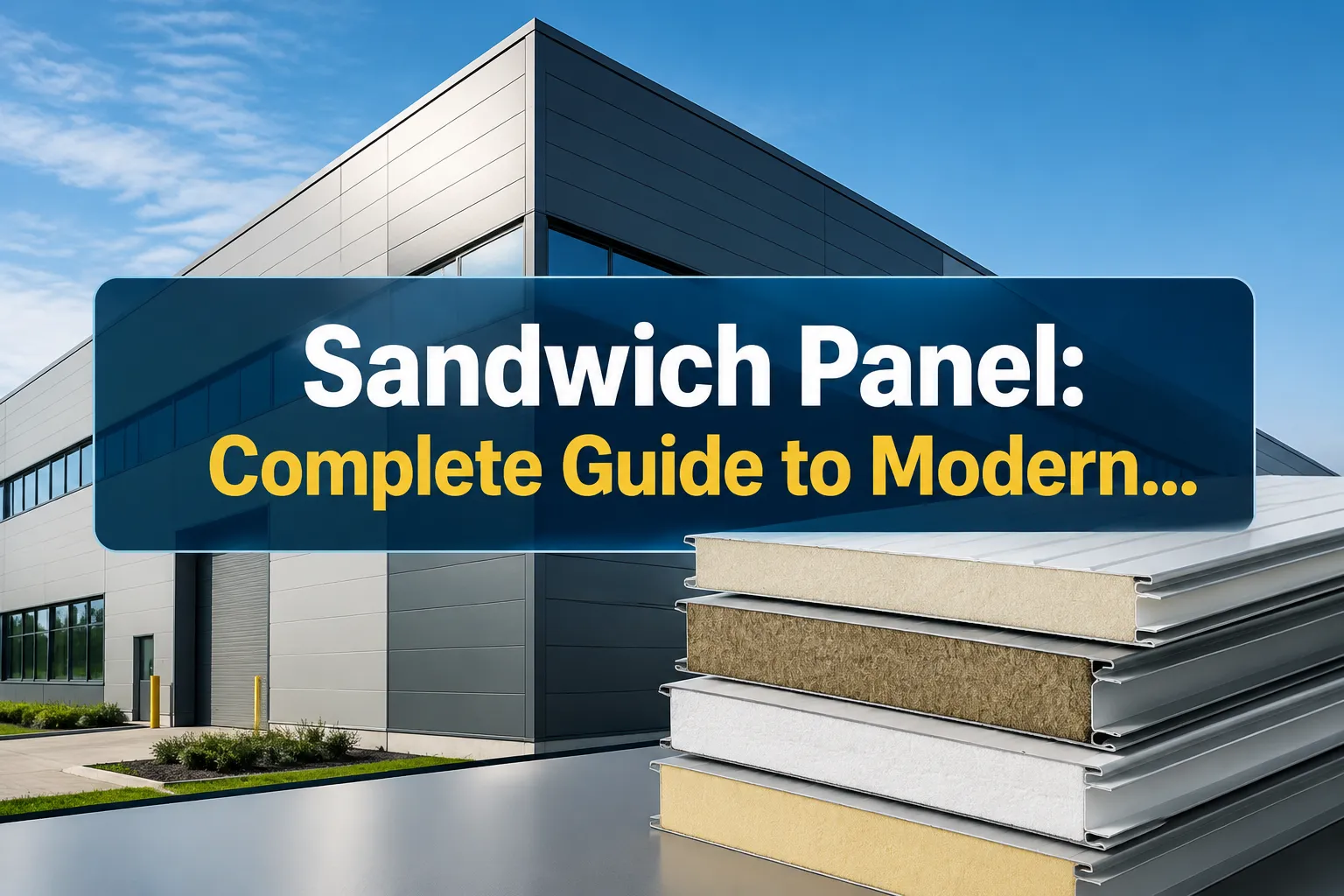
A sandwich panel is a prefabricated composite building material that consists of two thin, strong outer layers (faces) bonded to a lightweight insulating core. The outer faces are typically made from galvanized steel, aluminum, or other metals, while the core material provides insulation and structural support.
The panel works on the structural principle of composite action, where the outer faces carry tensile and compressive loads while the core resists shear forces and provides thermal insulation. This design creates a lightweight yet strong building component that can span large distances without intermediate support.
Core Materials and Their Properties
Polyurethane (PU) cores offer the highest thermal performance with R-values up to 8 per inch of thickness. They provide excellent adhesion to metal faces and maintain structural integrity over time.
Expanded Polystyrene (EPS) cores are the most cost-effective option, offering good insulation properties and easy handling. They're ideal for applications where fire resistance isn't the primary concern.
Rockwool cores provide superior fire resistance and acoustic insulation. They're non-combustible and maintain their properties at high temperatures, making them suitable for industrial applications.
The manufacturing process involves applying adhesive to the metal faces, inserting the core material, and pressing the assembly under controlled temperature and pressure conditions. This creates a permanent bond that ensures the panel acts as a single structural unit.
Sandwich Panel vs Traditional Insulation Comparison
Sandwich panels outperform traditional insulation methods in installation speed, thermal performance, and overall building envelope integrity. Traditional construction using separate insulation, vapor barriers, and cladding requires multiple trades and installation steps, while sandwich panels combine all these functions in a single component.
Installation Speed: Sandwich panels install 3-5 times faster than traditional wall systems. A typical warehouse wall that takes 2-3 weeks with conventional methods can be completed in 3-5 days using sandwich panels.
Thermal Performance: The continuous insulation in sandwich panels eliminates thermal bridging that occurs with traditional stud construction. This results in 15-25% better energy efficiency compared to conventional insulated walls.
Weather Protection: Sandwich panels provide immediate weather protection during installation, while traditional systems leave the building exposed until all layers are complete.
Quality Control: Factory-manufactured panels ensure consistent quality and performance, unlike field-assembled systems that depend on weather conditions and installation quality.
However, traditional construction offers more design flexibility and easier repairs. Individual components can be replaced without affecting the entire wall system, and custom shapes and penetrations are easier to accommodate.
Sandwich Panel Cost and Pricing
Sandwich panel costs in Bangladesh typically range from 800-2,500 BDT per square meter depending on thickness, core material, and quality specifications. PU sandwich panels command premium prices due to superior insulation properties, while EPS panels offer the most economical option.
Material Cost Breakdown:
- EPS core panels: 800-1,200 BDT per sqm
- PU core panels: 1,500-2,500 BDT per sqm
- Rockwool core panels: 1,800-2,800 BDT per sqm
Additional Cost Factors:
- Panel thickness (50mm to 200mm affects pricing by 20-40%)
- Surface finish and coating quality
- Custom colors and profiles
- Minimum order quantities
- Transportation distance from manufacturer
Installation costs typically add 200-400 BDT per square meter, depending on project complexity and accessibility. However, the faster installation often results in lower total project costs when labor, equipment rental, and construction timeline are considered.
For accurate pricing, request quotes from multiple sandwich panel manufacturers in Bangladesh and compare specifications carefully, as quality varies significantly between suppliers.
Where to Buy Sandwich Panels
Quality sandwich panels are available from specialized manufacturers, building material suppliers, and construction distributors across Bangladesh. The key is selecting suppliers who offer consistent quality, proper certifications, and reliable delivery schedules.
Manufacturer Direct Purchase provides the best pricing and quality control for large projects. Leading manufacturers offer technical support, custom specifications, and warranty coverage that distributors may not provide.
Authorized Dealers are suitable for smaller projects and offer local inventory and faster delivery. They typically stock standard sizes and popular configurations but may have limited technical support.
Construction Suppliers often carry sandwich panels as part of broader building material offerings. While convenient, their technical knowledge may be limited, and quality can vary between brands they represent.
When selecting a supplier, verify their manufacturing capabilities, quality certifications, and previous project experience. Request samples for inspection and testing, especially for critical applications like cold rooms or clean rooms where performance is crucial.
Consider suppliers who offer comprehensive services including design assistance, installation training, and after-sales support. This is particularly important for specialized applications or first-time users of sandwich panel systems.
Sandwich Panel Installation Problems and Solutions
Common installation problems include panel alignment issues, thermal bridging at joints, and inadequate fastening systems. These problems typically result from insufficient planning, improper handling, or using inexperienced installation crews.
Panel Warping and Distortion occurs when panels are stored improperly or exposed to extreme temperature differences during installation. Store panels on level surfaces with adequate support every 2 meters, and avoid installation during extreme weather conditions.
Joint Sealing Failures lead to air and water infiltration. Use manufacturer-recommended sealants and follow proper joint preparation procedures. Clean all surfaces thoroughly and apply sealant in appropriate weather conditions.
Fastener Problems include over-tightening that crushes the panel core, under-tightening that allows movement, and incorrect fastener selection. Use fasteners specified by the panel manufacturer and follow torque specifications precisely.
Thermal Bridge Issues occur at structural connections and panel joints. Design thermal breaks into structural connections and use proper joint sealing systems to maintain insulation continuity.
The most effective solution is using experienced installation crews and following manufacturer installation guidelines strictly. Many problems result from treating sandwich panels like conventional building materials rather than engineered composite systems.
For complex projects, consider hiring professional installation services that specialize in sandwich panel systems and offer installation warranties.
Best Sandwich Panel Manufacturers
Top sandwich panel manufacturers distinguish themselves through consistent quality control, technical innovation, and comprehensive customer support. The best manufacturers invest in modern production equipment, maintain strict quality standards, and offer extensive product testing and certification.
Quality Indicators include ISO certification, third-party testing reports, and established track records with major construction projects. Look for manufacturers who provide detailed technical data sheets and performance specifications for their products.
Production Capacity matters for large projects or tight schedules. Established manufacturers maintain adequate inventory and can scale production to meet project demands without compromising quality.
Technical Support separates premium manufacturers from commodity suppliers. The best manufacturers offer design assistance, installation training, and ongoing technical support throughout the project lifecycle.
Geographic Coverage affects delivery costs and lead times. Choose manufacturers with production facilities or distribution networks that can serve your project location efficiently.
When evaluating manufacturers, request facility visits to observe production processes and quality control procedures. This provides valuable insight into their capabilities and commitment to quality that cannot be determined from marketing materials alone.
Consider manufacturers who specialize in your specific application, whether that's industrial buildings, cold storage, or specialized facilities.
Sandwich Panels for Roofing vs Walls
Roofing and wall applications have different structural and performance requirements that affect panel selection and installation methods. Roof panels must handle greater structural loads, weather exposure, and thermal movement, while wall panels focus more on insulation and architectural appearance.
Roofing Panel Requirements:
- Higher structural strength to support snow and wind loads
- Superior weather sealing systems
- Thermal movement accommodation
- Slope requirements for drainage
- Attachment systems designed for roof loads
Wall Panel Requirements:
- Vertical load support capabilities
- Impact resistance at lower levels
- Architectural finish options
- Integration with doors and windows
- Fire resistance ratings for occupancy requirements
Thickness Selection differs between applications. Roof panels typically require 100-150mm thickness for adequate insulation and structural performance, while wall panels may use 75-100mm thickness depending on climate requirements.
Installation Methods vary significantly. Roof installation requires specialized equipment for material handling and worker safety, while wall installation is generally more accessible but requires careful attention to plumb and level alignment.
Cost Differences reflect the additional structural requirements and installation complexity of roofing applications. Roof panels typically cost 20-30% more than equivalent wall panels due to enhanced structural properties and weather sealing systems.
Are Sandwich Panels Worth It
Sandwich panels provide excellent value for most commercial and industrial construction projects when evaluated on total project cost rather than material cost alone. The combination of faster installation, superior energy performance, and lower maintenance requirements typically justifies the higher initial material cost.
Energy Savings from superior insulation performance can reduce heating and cooling costs by 20-40% compared to conventional construction. For climate-controlled facilities like cold storage or manufacturing plants, these savings often pay for the premium panel cost within 2-3 years.
Construction Speed reduces project timelines by 30-50%, lowering financing costs, equipment rental, and labor expenses. This time savings becomes more valuable on larger projects where schedule delays have significant financial impact.
Maintenance Benefits include longer service life, easier cleaning, and reduced repair requirements compared to conventional wall systems. The monolithic panel construction eliminates many potential failure points present in multi-component wall systems.
Design Flexibility allows for larger clear spans and more efficient building layouts. This can increase usable floor area and reduce structural steel requirements, providing additional cost benefits.
However, sandwich panels may not be cost-effective for small residential projects or buildings where energy efficiency isn't critical. The premium cost is best justified when the building will operate for many years with significant energy loads or when construction speed provides substantial project benefits.
Sandwich Panel Fire Rating Requirements
Fire ratings for sandwich panels vary significantly based on core material composition and are regulated by local building codes and international standards. Understanding these requirements is crucial for code compliance and occupant safety.
Rockwool Core Panels achieve the highest fire ratings, typically Class A or non-combustible classifications. These panels can maintain structural integrity for 60-120 minutes in fire conditions, making them suitable for industrial and high-occupancy buildings.
Polyurethane Core Panels typically achieve Class B or C fire ratings depending on formulation and additives. Modern PU formulations include fire retardants that improve performance, but they remain combustible materials requiring careful application.
EPS Core Panels generally have the lowest fire resistance and may not meet requirements for certain occupancy types. They're typically limited to agricultural, warehouse, or low-occupancy applications.
Testing Standards include ASTM E84, UL 263, and local building code requirements. Panels must be tested as complete assemblies, not just core materials, since the metal faces and adhesive systems affect overall fire performance.
Code Compliance requires matching panel fire ratings to building occupancy and use requirements. Fire-rated panels may be required for schools, hospitals, and high-occupancy commercial buildings.
Always verify local fire code requirements with building officials before specifying panels, as requirements vary by jurisdiction and building use type.
Common Mistakes When Installing Sandwich Panels
Installation errors can compromise panel performance, create safety hazards, and void manufacturer warranties. The most common mistakes result from treating sandwich panels like conventional building materials rather than engineered composite systems.
Improper Storage causes panel damage before installation begins. Panels must be stored on level, well-drained surfaces with adequate support to prevent sagging. Exposure to moisture or extreme temperatures can damage core materials and adhesive bonds.
Incorrect Fastener Selection leads to panel failure and weather infiltration. Use only fasteners specified by the panel manufacturer, and ensure proper length, thread type, and sealing washers. Over-tightening crushes the panel core while under-tightening allows movement and leakage.
Poor Joint Sealing creates thermal bridges and allows air and water infiltration. Clean all joint surfaces thoroughly, use manufacturer-recommended sealants, and follow proper application procedures. Weather conditions during sealing application significantly affect long-term performance.
Inadequate Structural Support causes panel deflection and joint failures. Verify that structural framing meets panel manufacturer requirements for spacing and load capacity. Panels are not designed to bridge inadequate structural support.
Thermal Movement Neglect leads to panel buckling and joint failures as buildings expand and contract. Design appropriate expansion joints and allow for thermal movement in fastening systems.
The best prevention is using experienced installation crews who understand composite panel behavior and following manufacturer installation guidelines precisely. Many manufacturers offer installation training programs that significantly reduce error rates.
Sandwich Panels in Cold Climates
Cold climate applications place additional demands on sandwich panel performance, requiring careful attention to thermal bridging, vapor control, and structural loads from snow and ice accumulation.
Thermal Performance becomes critical in cold climates where heating costs represent a major operational expense. Panels with continuous insulation eliminate thermal bridging that can account for 20-30% of heat loss in conventional construction.
Vapor Control requires proper panel selection and installation to prevent condensation within the building envelope. The metal faces provide excellent vapor barriers when joints are properly sealed, but installation errors can create significant problems.
Snow Loading affects structural requirements and panel thickness selection. Roof panels must be designed for local snow loads, which may require thicker panels or closer structural support spacing than standard applications.
Thermal Movement is more pronounced in cold climates due to greater temperature differentials. Expansion joints and flexible connections become more critical to prevent panel damage during thermal cycling.
Ice Damming can occur at roof edges if thermal bridging allows heat loss that melts snow. Proper panel installation and edge details are essential to prevent ice formation and water infiltration.
Consider thermal performance specifications carefully for cold climate applications, as the superior insulation performance often justifies premium panel costs through energy savings.
How Long Do Sandwich Panels Last
Quality sandwich panels typically last 25-40 years with proper installation and maintenance, often matching or exceeding the service life of the buildings they enclose. Panel longevity depends on core material quality, metal face coatings, environmental exposure, and maintenance practices.
Metal Face Durability largely determines panel service life. Galvanized steel faces with quality paint systems can last 25-30 years in normal environments, while aluminum faces may last 40+ years. Coastal or industrial environments with corrosive atmospheres reduce service life significantly.
Core Material Stability affects long-term insulation performance. Quality PU and EPS cores maintain their properties for decades, while poor-quality cores may degrade within 10-15 years. Rockwool cores are extremely stable and can last the full building service life.
Installation Quality significantly impacts longevity. Proper sealing prevents moisture infiltration that can damage core materials and cause metal face corrosion. Poor installation can reduce panel life to 10-15 years even with quality materials.
Maintenance Requirements are minimal but important. Regular inspection of joints and sealants, prompt repair of damage, and cleaning of drainage systems help ensure full service life. Neglected maintenance can lead to premature failure.
Environmental Factors including UV exposure, temperature cycling, and chemical exposure affect panel aging. Panels in harsh environments may require more frequent inspection and maintenance to achieve full service life.
Quality panels from reputable manufacturers often include 15-25 year warranties that provide confidence in long-term performance when properly installed and maintained.
Sandwich Panels for Metal Buildings
Metal building applications represent one of the largest markets for sandwich panels due to excellent compatibility with steel framing systems and superior performance compared to traditional metal building insulation methods.
Structural Integration with metal building frames requires careful coordination between the building manufacturer and panel supplier. Panel attachment systems must accommodate building movement while maintaining weather seal integrity.
Thermal Performance improvements are dramatic compared to traditional metal building insulation. Sandwich panels eliminate thermal bridging through the structural frame and provide continuous insulation that can reduce energy costs by 30-50%.
Installation Speed advantages are maximized in metal building applications where large, unobstructed wall and roof areas allow efficient panel installation. Buildings that traditionally take weeks to insulate can be completed in days.
Design Flexibility allows for larger clear spans and more efficient building layouts. The structural contribution of sandwich panels can reduce secondary framing requirements and increase usable floor area.
Cost Considerations must include the total building system, not just panel costs. Reduced structural steel requirements, faster construction, and lower energy costs often justify premium panel prices for metal building applications.
Compatibility Issues can arise with some metal building systems that weren't designed for sandwich panels. Verify compatibility with the building manufacturer before specifying panels to avoid costly modifications.
Sandwich Panel Thickness Options and What to Choose
Panel thickness selection depends on structural requirements, insulation performance needs, and cost considerations. Thickness options typically range from 50mm to 200mm, with each increment providing different performance characteristics.
50-75mm Panels are suitable for interior partitions, mild climate applications, or situations where space is limited. They provide basic insulation but limited structural capacity for large spans or heavy loads.
100-125mm Panels represent the most common thickness for commercial and industrial applications. They provide good insulation performance and adequate structural capacity for typical building spans and loads.
150-200mm Panels are used for extreme climate conditions, cold storage applications, or situations requiring maximum insulation performance. The additional thickness significantly increases cost but may be justified by energy savings.
Selection Criteria include:
- Climate zone and energy code requirements
- Structural span and load requirements
- Building use and temperature control needs
- Available space and architectural constraints
- Project budget and lifecycle cost analysis
Performance Trade-offs must be considered carefully. Thicker panels provide better insulation but cost more, weigh more, and may require stronger structural support. The optimal thickness balances performance needs with project constraints.
Consult with panel manufacturers and energy modeling professionals to determine the most cost-effective thickness for specific applications, as the optimal choice varies significantly with building use and climate conditions.
Frequently Asked Questions
What is the difference between EPS and PU sandwich panels?
EPS panels use expanded polystyrene foam cores and cost 30-40% less than PU panels, but provide lower insulation performance. PU panels use polyurethane foam cores that offer superior thermal performance and structural strength, making them ideal for temperature-critical applications like cold storage.
Can sandwich panels be used for load-bearing walls?
Yes, sandwich panels can support structural loads when properly designed and installed. However, they typically serve as infill panels between structural frames rather than primary load-bearing elements. Consult with structural engineers for load-bearing applications.
How do you cut sandwich panels on site?
Use fine-tooth circular saw blades or specialized panel cutting tools to prevent core material damage. Cut from the finished face side and seal cut edges immediately to prevent moisture infiltration and core degradation.
Are sandwich panels suitable for residential construction?
Sandwich panels work well for residential applications, particularly for energy-efficient homes or areas with extreme climates. However, the industrial appearance may not suit all architectural styles, and local building codes may have specific requirements.
What maintenance do sandwich panels require?
Minimal maintenance includes annual inspection of joints and sealants, cleaning of drainage systems, and prompt repair of any damage. Replace damaged sealants immediately and keep panel surfaces clean to maximize service life.
Can sandwich panels be recycled?
Metal faces are fully recyclable, but core material recyclability varies by type. Aluminum faces have higher recycling value than steel, while PU and EPS cores may require specialized recycling facilities. Plan for end-of-life disposal during initial design.
How do sandwich panels perform in earthquakes?
Sandwich panels perform well in seismic conditions due to their lightweight construction and flexible attachment systems. However, building design must accommodate seismic movement, and panel connections must allow for building frame movement.
What fire safety precautions are needed during installation?
Follow standard construction fire safety practices and be aware that some core materials are combustible. Keep fire extinguishers nearby, avoid hot work near panels with combustible cores, and ensure proper ventilation during installation.
Can sandwich panels be painted or refinished?
Yes, but surface preparation and paint compatibility are critical. Clean surfaces thoroughly, use primers designed for metal substrates, and select paint systems compatible with the existing coating. Consult paint manufacturers for specific recommendations.
How do you handle thermal expansion in sandwich panel installations?
Design expansion joints at regular intervals, use flexible sealants at panel connections, and allow for movement in fastening systems. Thermal movement calculations should consider local temperature ranges and panel material properties.
What building codes apply to sandwich panel construction?
Sandwich panels must comply with local building codes for structural, fire, and energy requirements. Common standards include IBC, ASCE 7 for structural loads, and ASHRAE 90.1 for energy performance. Verify local requirements with building officials.
Can sandwich panels be used in high-wind areas?
Yes, but panel attachment systems must be designed for local wind loads. Use appropriate fastener spacing and types, ensure adequate structural support, and consider wind uplift forces on roof panels. Consult structural engineers for high-wind applications.
Conclusion
Sandwich panels offer compelling advantages for modern construction projects, combining superior insulation performance, structural efficiency, and installation speed in a single building component. The key to successful projects lies in proper panel selection, quality supplier relationships, and experienced installation crews.
For most commercial and industrial applications, the higher initial cost of sandwich panels is offset by faster construction, better energy performance, and lower maintenance requirements over the building's service life. However, success depends on matching panel specifications to specific project requirements and following manufacturer guidelines precisely.
Next Steps:
- Assess your project's specific requirements for insulation, structural performance, and fire resistance
- Request samples and specifications from multiple reputable manufacturers
- Obtain detailed cost estimates including installation and compare total project costs
- Verify local building code requirements and obtain necessary approvals
- Select experienced installation crews or certified installation services
- Plan for proper storage and handling procedures before panels arrive on site
The sandwich panel industry continues to evolve with new core materials, improved manufacturing processes, and enhanced performance characteristics. Staying informed about these developments and working with knowledgeable suppliers will help ensure optimal results for your construction projects.
For comprehensive guidance on specific applications, consult our detailed guides on benefits of sandwich panels in construction and explore our complete product range to find the right solution for your project needs.
SEO Meta Title: Sandwich Panel Guide 2026: Types, Cost, Installation & Benefits