Quick Answer: EPS and PU sandwich panels share the same build — an insulating core bonded between two metal facings — but the cores behave differently. A PU (rigid polyurethane) core generally insulates better for the same thickness and is the usual choice for cold rooms and freezers, where every millimetre of wall matters. An EPS (expanded polystyrene) core is lighter and usually more economical, and suits general wall and roof insulation where a slightly thicker panel is acceptable. Neither is "better" in every building: the right core depends on the room temperature you need, the fire requirements of the building, the span and the budget.
Key Takeaways
- Both panels use the same principle: metal skin, insulating core, metal skin. The core is what changes insulation, weight, fire behaviour and price.
- PU generally reaches a given insulation level with a thinner panel than EPS — the main reason it dominates cold storage.
- EPS is lighter and usually lower in cost, which makes it practical for general-purpose walls, partitions and roofs.
- Both EPS and PU are organic foams. Where fire resistance is the priority, compare them against a mineral (Rock Wool) core as well.
- Always decide on the manufacturer's datasheet for the exact panel being quoted — thermal values, fire classification and span tables vary by product.
What is an EPS sandwich panel?
An EPS sandwich panel has a core of expanded polystyrene: small polystyrene beads expanded with steam and fused into a solid block, then bonded between two metal facings. The closed-cell structure traps air, which is what provides the insulation, and the result is a light, rigid board that is easy to handle on site.
EPS panels are widely used for factory and warehouse walls, internal partitions, site offices and roofs where good general insulation is needed without the demands of a freezer. You can see our range on the EPS sandwich panel and EPS roof top panel product pages, and the material itself is covered in depth in our EPS sandwich panel guide.
What is a PU sandwich panel?
A PU sandwich panel has a core of rigid polyurethane foam. In most PU panels the liquid components are foamed between the facings, so the core bonds directly to the metal as it cures. That bond, together with the fine closed-cell foam, gives a stiff panel with strong insulating performance for its thickness.
PU panels are the common choice for cold rooms, cold storage chambers, freezer rooms and other temperature-controlled spaces. See the PU sandwich panel and PU roof top panel pages, or our complete PU sandwich panel guide.
EPS vs PU: side-by-side comparison
The table compares the two cores in general terms. It is a starting point for a conversation with your supplier, not a substitute for the datasheet of the specific panel you are buying.
| Factor | EPS core | PU core |
|---|---|---|
| Insulation for the same thickness | Good | Generally better — a thinner PU panel can match a thicker EPS panel |
| Weight | Lighter | Slightly heavier |
| Typical cost | Usually more economical | Usually higher |
| Core-to-facing bond | Typically laminated to the facings with adhesive | Typically foamed in place, bonding to the facings as it cures |
| Moisture | Closed-cell; seal joints and cut edges | Closed-cell; seal joints and cut edges |
| Fire behaviour | Organic foam; depends on the grade and system tested | Organic foam; depends on the formulation and system tested |
| Common uses | General walls, partitions, roofs, site buildings | Cold rooms, freezers, cold storage, insulated roofs |
Thermal performance: why PU leads in cold rooms
Insulation depends on two things: how well the core material resists heat flow, and how thick it is. PU foam generally resists heat flow better than EPS, so for the same insulation target a PU panel can be thinner. In a cold room or freezer that difference adds up — thinner walls leave more usable space inside the same footprint, and better insulation reduces the load on the refrigeration plant.
For a room at ordinary temperatures, the gap matters less, and a slightly thicker EPS panel can reach the insulation you need at a lower cost. If you want to go deeper into the numbers behind insulation materials, our article on PIR vs EPS thermal conductivity explains how conductivity is measured and compared. For choosing the actual thickness, see how to choose sandwich panel thickness.
Fire safety
EPS and PU are both organic foams, so neither should be assumed to be fire-resistant simply because it is enclosed in metal. How a panel behaves in a fire depends on the core formulation, the facings, the joints and how the complete system was tested. Ask for the fire test report or classification of the exact panel, and check what your building's approvals and insurer require.
Where fire resistance is the deciding factor — generator rooms, fire compartment walls, some factory zones — compare both foams with a non-combustible mineral core. Our PU vs Rock Wool comparison and fire-rated sandwich panel guide cover that decision.
Strength, weight and handling
Both cores give a stiff, self-supporting panel because the facings carry the bending load and the core holds them apart. EPS panels are lighter, which helps with manual handling and with lighter supporting structures. A well-bonded PU core produces a very rigid panel. In both cases the span a panel can safely achieve depends on its thickness, facing gauge and the loads involved — use the manufacturer's span table rather than a rule of thumb.
Which core should you choose? By application
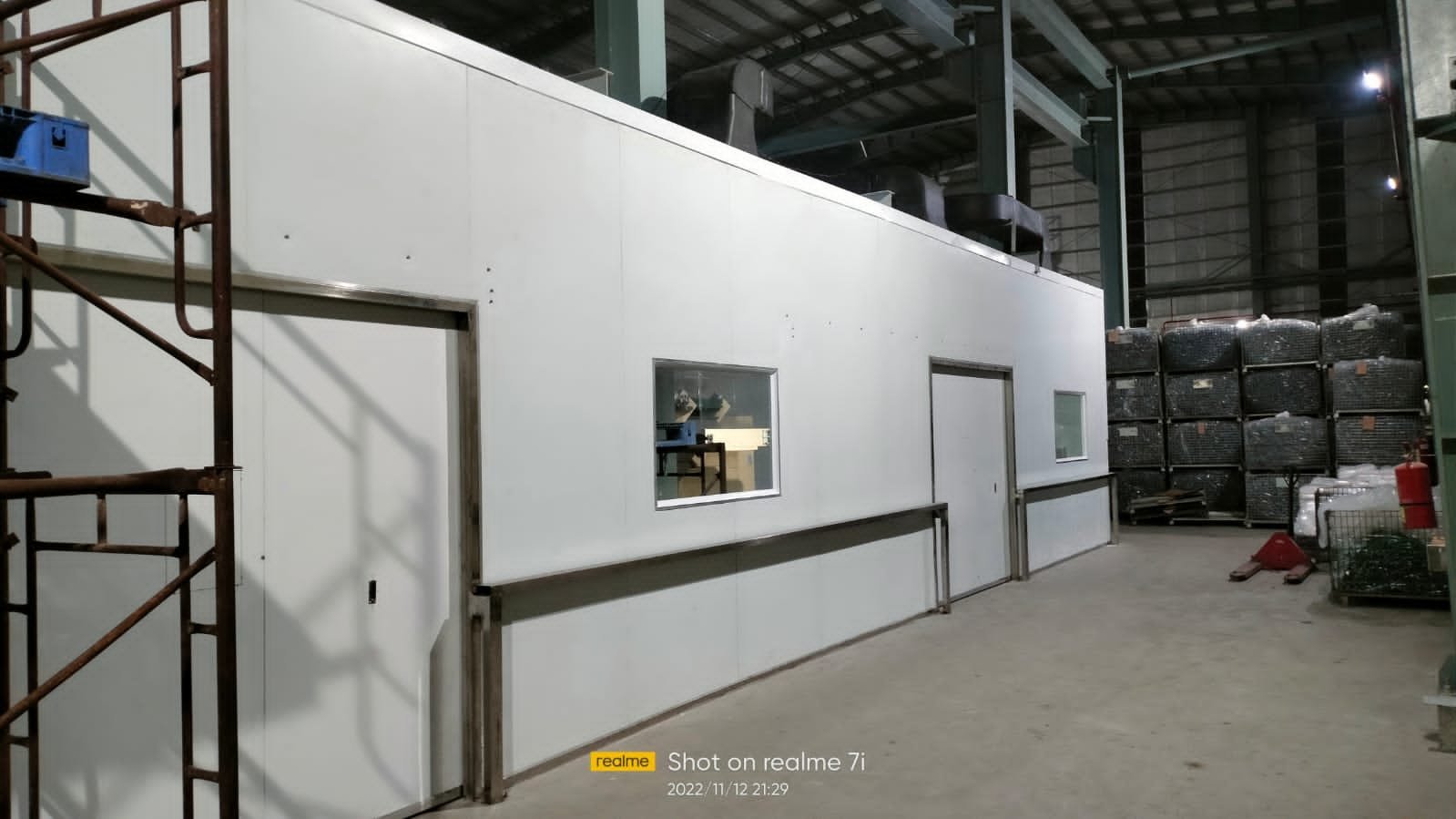
- Cold rooms, freezers and cold storage: PU is the usual choice because it insulates more for the wall thickness. See PU sandwich panel for cold rooms.
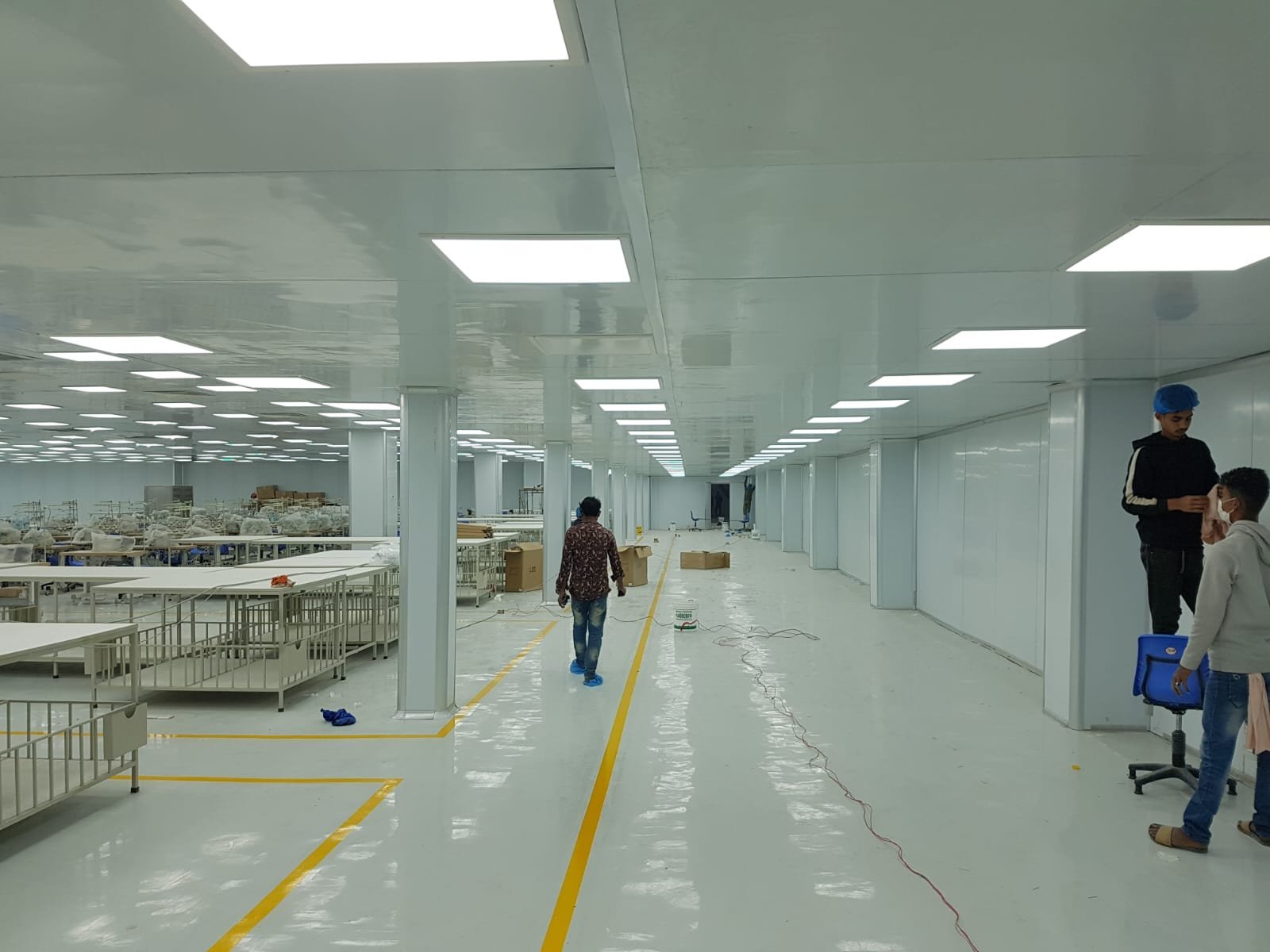
- Clean rooms: both are used; the choice often follows the temperature and fire requirements of the room. See our clean room sandwich panel guide.
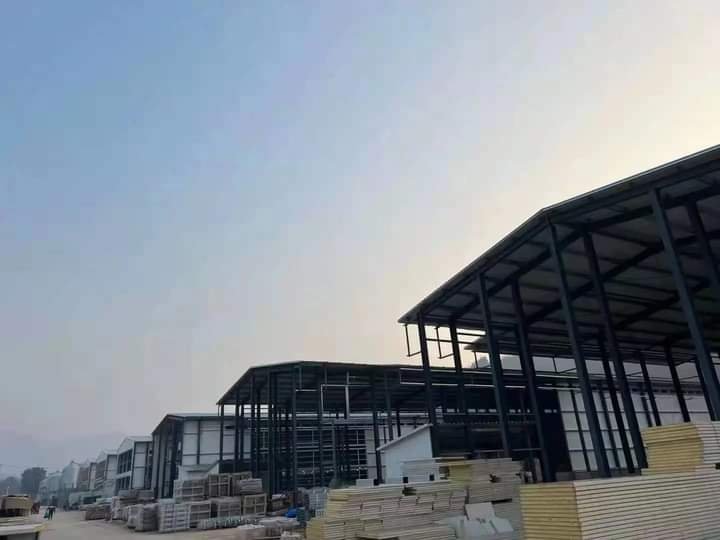
- Factory and warehouse walls and partitions: EPS is often sufficient and economical; PU where better insulation is worth the cost.
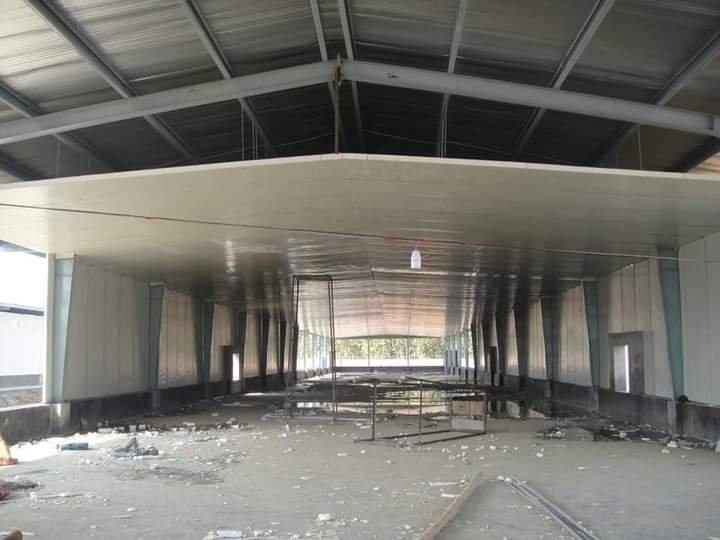
- Roofs: both are available as roof panels; consider heat gain under the sun, span and budget.
- Poultry sheds: insulation, moisture and cleaning all matter — see our poultry farm sandwich panel guide.
- Areas where fire resistance leads the decision: consider a Rock Wool sandwich panel.
Cost considerations in Bangladesh
Price depends on the core, thickness, facing gauge and finish, panel size, quantity, accessories and delivery, so a like-for-like quotation is the only reliable comparison. When comparing EPS and PU, compare the cost of reaching the same insulation performance — a thinner PU panel against a thicker EPS panel — rather than the cost per panel at the same thickness. For how panel pricing is structured, see our sandwich panel price guide.
Questions to ask your supplier
- What are the declared thermal values for this exact panel and thickness?
- What fire test or classification does the panel system have?
- What span can it achieve for my loads, and with which facing gauge?
- How are joints sealed, and which accessories (coving, trims, doors) are included?
- What installation guidance and warranty come with the panels?
Conclusion
Choose PU when insulation per millimetre matters most — cold rooms, freezers and cold storage. Choose EPS when good general insulation at a lower weight and cost is enough. Bring fire requirements into the decision early, and confirm every figure on the datasheet of the panel being quoted. For a broader view of all core types, read sandwich panel types in Bangladesh, and when you are ready, send us your application for a quotation.