Last updated: July 31, 2026

Quick Answer
PU sandwich panels are composite building materials featuring a polyurethane foam core sandwiched between two metal sheets, typically steel or aluminum. These panels provide excellent thermal insulation with R-values ranging from 20-40, making them ideal for cold storage, industrial buildings, and energy-efficient construction projects where temperature control is critical.
Key Takeaways
- PU sandwich panels offer superior insulation with R-values of 20-40, outperforming most traditional building materials
- Installation costs range from $15-25 per square meter including labor, varying by thickness and project complexity
- Fire ratings typically achieve Class B or C classification, with specialized fire-resistant versions available
- Common thickness options include 50mm, 75mm, 100mm, 125mm, and 150mm for different insulation requirements
- Lifespan extends 25-30 years with proper installation and maintenance
- Best suited for cold storage facilities, industrial buildings, and cleanroom applications
- Moisture resistance is excellent when properly sealed, but vulnerable at joints and edges
- Leading brands include Kingspan, Metecno, and Tata Steel with established quality standards
- Installation requires specialized tools and trained professionals for optimal performance
What is a PU Sandwich Panel and How Does It Work
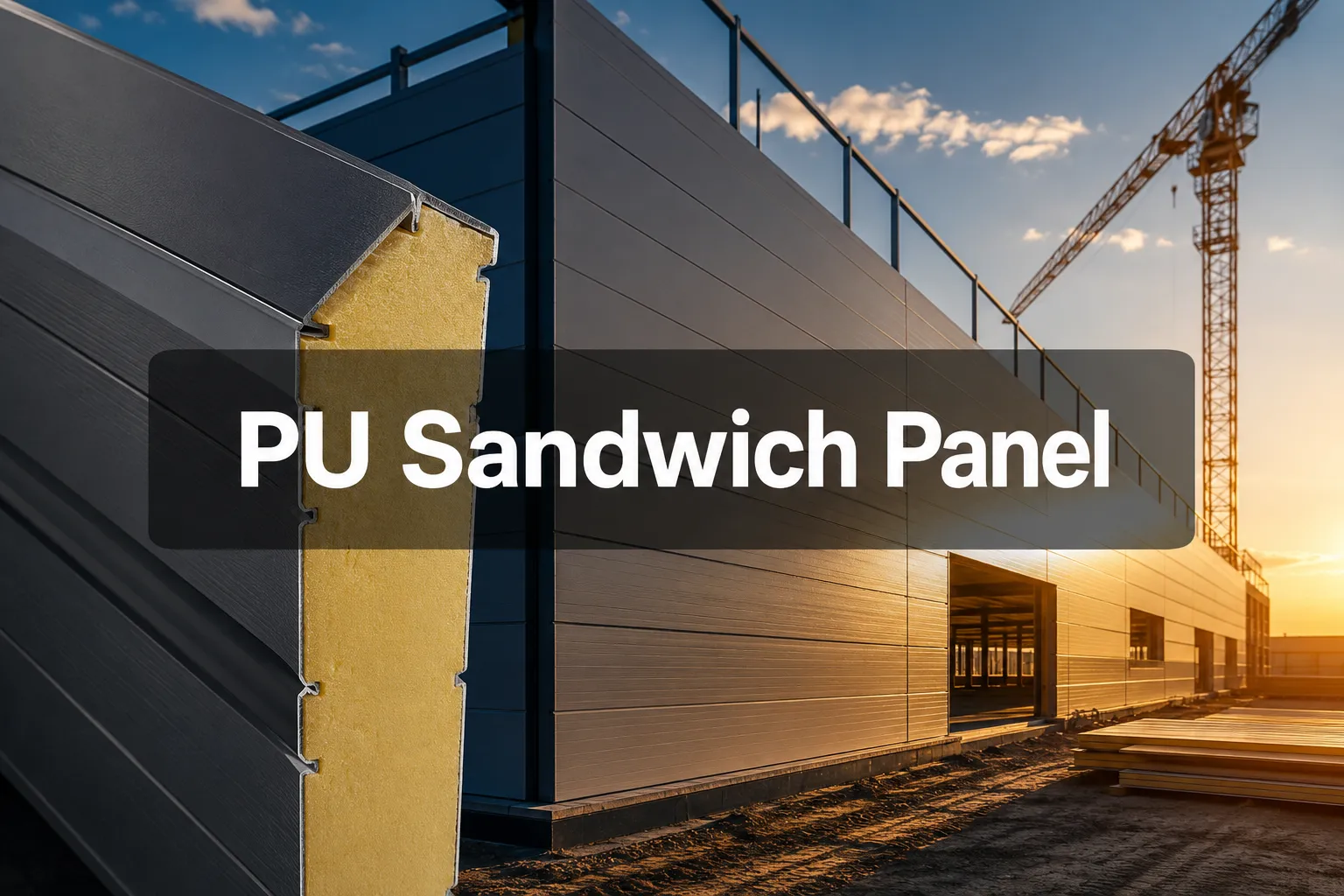
A pu sandwich panel consists of three layers: two outer metal skins (typically galvanized steel or aluminum) bonded to a central polyurethane foam core. The polyurethane core is injected between the metal sheets during manufacturing, creating a continuous insulation barrier that eliminates thermal bridging.
The panels work by trapping air within the closed-cell polyurethane foam structure. This foam has extremely low thermal conductivity, typically 0.020-0.025 W/mK, which prevents heat transfer through the panel. The metal skins provide structural strength and weather protection while the foam core handles insulation duties.
Key structural benefits include:
- Composite action between skin and core creates high strength-to-weight ratio
- Continuous insulation eliminates thermal bridging common in traditional construction
- Factory-controlled manufacturing ensures consistent quality and performance
- Interlocking joint systems create weathertight building envelopes
The panels are manufactured using continuous production lines where liquid polyurethane components are mixed and injected between pre-formed metal sheets. The chemical reaction creates the foam core while simultaneously bonding to the metal skins, resulting in a monolithic panel structure.
PU Sandwich Panel vs Fiberglass vs Rock Wool: Which is Better
PU sandwich panels outperform fiberglass and rock wool in thermal efficiency and moisture resistance, but each material serves different applications based on specific project requirements.
Thermal Performance Comparison:
- PU panels: R-20 to R-40 (depending on thickness)
- Rock wool panels: R-15 to R-25
- Fiberglass panels: R-10 to R-20
Fire Safety Rankings:
- Rock wool: Best (Class A fire rating, non-combustible)
- Fiberglass: Good (Class A with proper facing)
- PU panels: Fair to Good (Class B-C, requires fire-retardant formulations)
Moisture Resistance:
- PU panels: Excellent (closed-cell structure repels water)
- Fiberglass: Poor (absorbs moisture, loses R-value)
- Rock wool: Fair (water-resistant but can retain moisture)
Cost Analysis per Square Meter:
- PU panels: $15-25 installed
- Rock wool panels: $18-28 installed
- Fiberglass panels: $12-20 installed
Choose PU panels for cold storage and energy-critical applications. Select rock wool panels for high-fire-risk buildings. Consider fiberglass for budget-conscious projects with moderate insulation needs.
PU Sandwich Panel Cost Per Square Meter
PU sandwich panel costs range from $8-15 per square meter for materials only, with total installed costs reaching $15-25 per square meter depending on project complexity and regional labor rates.
Material Cost Breakdown by Thickness:
- 50mm panels: $8-10 per sqm
- 75mm panels: $10-12 per sqm
- 100mm panels: $12-14 per sqm
- 150mm panels: $14-16 per sqm
Installation Cost Factors:
- Basic installation: $5-8 per sqm additional
- Complex roof applications: $8-12 per sqm additional
- Cleanroom installations: $12-18 per sqm additional
- Crane requirements: $2-4 per sqm additional
Project Size Impact on Pricing:
- Small projects (under 500 sqm): Premium pricing applies
- Medium projects (500-2000 sqm): Standard rates
- Large projects (over 2000 sqm): Volume discounts of 10-15%
Regional Cost Variations:
Major urban areas typically see 15-20% higher costs due to labor rates and logistics. Remote locations may add 10-25% for transportation costs.
For accurate project pricing, request quotes from established sandwich panel suppliers who can assess site-specific requirements and provide detailed breakdowns.
PU Sandwich Panel R Value and Insulation Rating
PU sandwich panels deliver R-values between 20-40, making them among the most thermally efficient building envelope solutions available for commercial and industrial applications.
R-Value by Panel Thickness:
- 50mm (2"): R-20 to R-25
- 75mm (3"): R-30 to R-35
- 100mm (4"): R-35 to R-40
- 125mm (5"): R-40 to R-45
- 150mm (6"): R-45 to R-50
Thermal Conductivity Performance:
The polyurethane foam core typically achieves thermal conductivity values of 0.020-0.025 W/mK, significantly lower than traditional insulation materials. This translates to superior energy efficiency and reduced HVAC operating costs.
Temperature Performance Range:
- Standard PU panels: -40°C to +80°C operating range
- Cold storage grade: -40°C to +60°C with enhanced low-temperature performance
- High-temperature variants: -20°C to +120°C for specialized applications
Energy Efficiency Impact:
Buildings using PU sandwich panels typically achieve 30-50% lower heating and cooling costs compared to conventional construction. The continuous insulation eliminates thermal bridging that reduces overall wall assembly performance.
Aging Factor Considerations:
PU foam R-values may decrease 5-10% over the first 5-10 years as blowing agents diffuse. Quality manufacturers account for this in their published values and use low-diffusion blowing agents to minimize long-term degradation.
PU Sandwich Panel Installation Guide
PU sandwich panel installation requires specialized tools, trained personnel, and strict adherence to manufacturer specifications to achieve optimal thermal performance and weather sealing.
Pre-Installation Requirements:
- Structural framework must be plumb, level, and properly sized for panel loads
- Verify panel delivery sequence matches installation plan
- Confirm weather conditions (avoid installation in rain or high winds)
- Ensure crane access and lifting equipment capacity
Step-by-Step Installation Process:
-
Foundation and Framework Preparation
- Install base flashing and vapor barriers
- Verify structural member spacing matches panel spans
- Apply structural sealants at connection points
-
Panel Lifting and Positioning
- Use vacuum lifters or panel clamps (never lift by joints)
- Position panels with 10-15mm temporary gaps for adjustment
- Maintain panel orientation (arrows indicate proper direction)
-
Joint Sealing and Connection
- Apply structural sealant to male joint profiles
- Engage interlocking joints with steady pressure
- Install mechanical fasteners per manufacturer specifications
-
Weather Sealing and Finishing
- Install cap flashings and trim pieces
- Apply exterior sealants at all penetrations
- Complete interior vapor barrier continuity
Critical Installation Mistakes to Avoid:
- Never compress joints beyond manufacturer limits (reduces thermal performance)
- Avoid thermal bridging through improper fastener selection
- Don't skip vapor barrier continuity at panel joints
For complex projects, consider hiring certified installation services to ensure warranty compliance and optimal performance.
PU Sandwich Panel Fire Rating and Safety
Most PU sandwich panels achieve Class B or C fire ratings, with specialized fire-resistant formulations available for applications requiring enhanced fire safety performance.
Standard Fire Performance:
- Flame spread index: 25-75 (Class B classification)
- Smoke development: 50-450 depending on formulation
- Ignition temperature: 300-400°C for standard PU foam
- Self-extinguishing properties when flame source removed
Enhanced Fire-Resistant Options:
- PIR (Polyisocyanurate) cores achieve Class A ratings
- Fire-retardant additives reduce flame spread to Class B
- Mineral wool hybrid cores provide non-combustible alternatives
- Specialized facings can improve overall assembly ratings
Fire Safety Design Considerations:
- Install fire stops at floor lines and compartment boundaries
- Maintain proper clearances from high-heat sources
- Consider sprinkler system integration for enhanced protection
- Specify fire-rated sealants at all panel joints
Code Compliance Requirements:
Different building codes have varying requirements for foam plastic insulation. International Building Code (IBC) typically requires thermal barriers (such as gypsum board) between foam insulation and occupied spaces unless the foam meets specific criteria.
Testing Standards:
- ASTM E84: Surface burning characteristics
- ASTM E119: Fire resistance of building assemblies
- FM 4880: Fire performance of sandwich panels
- UL 263: Fire resistance ratings
For high-risk applications, consider fire-rated sandwich panel alternatives or hybrid solutions combining PU efficiency with enhanced fire performance.
Best PU Sandwich Panel Brands
Leading PU sandwich panel manufacturers include Kingspan, Metecno, Tata Steel, and Nucor with established quality systems and comprehensive warranty programs.
Tier 1 International Brands:
- Kingspan: Premium pricing, excellent technical support, 20-year warranties
- Metecno: Strong European presence, good value proposition, proven track record
- Tata Steel: Competitive pricing, wide availability, solid performance standards
- Nucor Building Systems: North American focus, integrated manufacturing, reliable supply
Regional Quality Manufacturers:
- Isopan: Italian engineering, architectural focus, custom solutions
- ArcelorMittal: Global steel expertise, construction industry integration
- Zhongjie Group: Cost-effective options, growing quality reputation
- Alubel: Specialized applications, technical innovation focus
Selection Criteria for Brand Choice:
- Warranty Terms: Look for minimum 15-year thermal performance warranties
- Technical Support: Availability of engineering assistance and installation training
- Local Presence: Regional manufacturing or distribution for faster delivery
- Certification Standards: ISO 9001 quality systems and third-party testing
- Project References: Successful installations in similar applications
Quality Indicators:
- Consistent foam density (35-45 kg/m³ for standard applications)
- Uniform skin thickness and coating weights
- Precise dimensional tolerances (±2mm typical)
- Clean joint profiles with proper sealant grooves
When selecting suppliers, prioritize established manufacturers with local technical support and proven performance in your specific application type.
PU Sandwich Panel Thickness Options
Standard PU sandwich panel thicknesses range from 50mm to 200mm, with 75mm, 100mm, and 150mm being the most common options for typical building applications.
Standard Thickness Options:
- 50mm (2"): Light commercial, moderate climate zones, R-20 to R-25
- 75mm (3"): General commercial buildings, R-30 to R-35
- 100mm (4"): Industrial applications, cold storage, R-35 to R-40
- 125mm (5"): Enhanced cold storage, extreme climates, R-40 to R-45
- 150mm (6"): Freezer applications, arctic construction, R-45 to R-50
- 200mm (8"): Ultra-low temperature storage, specialized applications
Application-Specific Thickness Selection:
Cold Storage Applications:
- Chiller rooms (+2°C to +8°C): 100-125mm thickness
- Freezer rooms (-18°C to -25°C): 150-200mm thickness
- Blast freezers (below -30°C): 200mm+ thickness
Climate Zone Considerations:
- Tropical/subtropical regions: 50-75mm adequate for most applications
- Temperate climates: 75-100mm for energy efficiency
- Cold climates: 100-150mm for heating cost control
- Arctic conditions: 150-200mm minimum requirements
Structural Span Capabilities:
Thicker panels provide greater structural strength, allowing longer spans between supports:
- 50mm panels: 3-4 meter spans typical
- 100mm panels: 5-6 meter spans possible
- 150mm panels: 6-8 meter spans achievable
Cost vs. Performance Trade-offs:
While thicker panels cost more initially, the energy savings often justify the investment. Calculate payback periods based on local energy costs and climate conditions.
For guidance on optimal thickness selection, consult our panel thickness selection guide.
PU Sandwich Panel Moisture and Water Resistance
PU sandwich panels provide excellent moisture resistance due to their closed-cell foam structure, but proper installation and sealing are critical to prevent water infiltration at joints and penetrations.
Moisture Resistance Properties:
- Closed-cell PU foam: Less than 2% water absorption by volume
- Vapor permeability: Extremely low, functions as vapor barrier
- Freeze-thaw resistance: Excellent due to minimal water uptake
- Long-term performance: Maintains properties in wet conditions
Vulnerable Areas Requiring Attention:
- Panel Joints: Require proper sealant application and maintenance
- Roof Penetrations: Flashing details critical for water exclusion
- Base Connections: Ground moisture can wick into panel edges
- Damaged Areas: Cuts or punctures compromise moisture resistance
Installation Best Practices for Moisture Control:
- Apply continuous sealant beads at all horizontal joints
- Install proper flashing at roof-to-wall transitions
- Maintain positive drainage away from panel bases
- Use compatible sealants that maintain flexibility over time
Vapor Barrier Considerations:
PU panels function as effective vapor barriers, which can be beneficial or problematic depending on climate and building design:
- Cold Climates: Vapor barrier should be on warm side of assembly
- Hot, Humid Climates: May trap moisture if improperly designed
- Mixed Climates: Require careful analysis of vapor drive directions
Maintenance Requirements:
- Annual inspection of sealant joints and flashings
- Immediate repair of any panel damage or punctures
- Cleaning of drainage systems and gutters
- Replacement of deteriorated sealants every 10-15 years
Condensation Control:
Proper ventilation design prevents condensation issues that could compromise panel performance or create indoor air quality problems.
PU Sandwich Panel Common Problems and Failures
The most frequent PU sandwich panel failures involve joint sealant deterioration, thermal bridging, and installation errors that compromise both thermal performance and weather resistance.
Joint and Sealant Issues (60% of problems):
- Sealant cracking due to thermal movement or UV exposure
- Incomplete sealant application during installation
- Incompatible sealants that don't adhere properly to panel materials
- Missing sealant at vertical joints allowing water infiltration
Thermal Bridging Problems:
- Improper fastener selection creating cold spots
- Compressed joints reducing insulation effectiveness
- Missing thermal breaks at structural connections
- Inadequate overlap at panel ends
Installation-Related Failures:
- Panels installed backwards (vapor barrier on wrong side)
- Insufficient structural support causing panel deflection
- Damaged panels during handling or installation
- Improper storage leading to moisture infiltration before installation
Long-Term Degradation Issues:
- UV degradation of exposed foam at cut edges
- Corrosion of metal skins in aggressive environments
- Foam shrinkage creating gaps at panel edges
- Mechanical damage from building settlement or thermal movement
Prevention Strategies:
- Quality Control: Inspect panels upon delivery and reject damaged units
- Proper Training: Ensure installers understand manufacturer requirements
- Material Selection: Use compatible sealants and fasteners specified by manufacturer
- Regular Maintenance: Implement annual inspection and maintenance programs
Early Warning Signs:
- Visible condensation or frost patterns indicating thermal bridging
- Water stains or discoloration around panel joints
- Unusual energy consumption increases
- Interior temperature variations or drafts
Repair Considerations:
Minor sealant issues can be addressed with resealing, but major thermal bridging or structural problems may require panel replacement. Early intervention prevents more costly repairs.
PU Sandwich Panel Lifespan: How Long Does It Last
PU sandwich panels typically last 25-30 years with proper installation and maintenance, with the metal skins often determining overall service life rather than the foam core.
Component Lifespan Breakdown:
- PU Foam Core: 30-40 years (minimal degradation in protected environment)
- Galvanized Steel Skins: 25-35 years depending on coating thickness and environment
- Aluminum Skins: 40-50 years with proper alloy selection
- Joint Sealants: 10-20 years requiring periodic replacement
Factors Affecting Lifespan:
Environmental Conditions:
- Marine Environments: Reduced lifespan (15-20 years) due to salt corrosion
- Industrial Areas: Chemical exposure may accelerate degradation
- UV Exposure: Affects sealants and exposed foam edges
- Temperature Cycling: Repeated expansion/contraction stresses joints
Installation Quality Impact:
- Proper installation: Full design life achievable
- Poor installation: 50% reduction in service life common
- Inadequate sealing: Premature failure within 10-15 years
- Thermal bridging: Accelerated foam degradation
Maintenance Requirements for Longevity:
- Annual sealant inspection and repair
- Gutter and drainage system cleaning
- Prompt repair of any panel damage
- Recoating of metal surfaces every 15-20 years in harsh environments
End-of-Life Indicators:
- Widespread sealant failure requiring extensive resealing
- Metal skin corrosion compromising structural integrity
- Significant thermal performance degradation
- Repeated maintenance costs exceeding replacement value
Warranty Considerations:
Most manufacturers provide 15-20 year warranties on thermal performance and 10-15 years on weather resistance, indicating expected minimum service life under normal conditions.
Lifecycle Cost Analysis:
When evaluating total cost of ownership, factor in energy savings over the panel lifespan, which often justifies premium initial investment in higher-quality systems.
PU Sandwich Panel for Cold Storage vs Regular Buildings
PU sandwich panels for cold storage applications require enhanced specifications including thicker cores, specialized vapor barriers, and cold-temperature-rated adhesives compared to standard building applications.
Cold Storage Specific Requirements:
Enhanced Insulation Performance:
- Minimum 100mm thickness for chiller applications (+2°C to +8°C)
- 150-200mm thickness for freezer rooms (-18°C to -30°C)
- Continuous vapor barrier to prevent moisture infiltration
- Thermal bridge-free installation details
Specialized Manufacturing Features:
- Low-temperature adhesives maintaining bond strength to -40°C
- Enhanced vapor barrier films with lower permeability
- Reinforced joint systems for thermal movement
- Food-grade surface treatments where required
Installation Differences:
- Vapor Barrier Continuity: Critical for preventing condensation within panels
- Joint Sealing: Enhanced sealant systems for temperature differentials
- Structural Considerations: Increased loads from refrigeration equipment
- Access Requirements: Coordinated installation with refrigeration systems
Performance Comparison Table:
| Application | Thickness | R-Value | Special Features |
|---|---|---|---|
| Regular Building | 50-100mm | R-20 to R-35 | Standard adhesives, basic vapor control |
| Cold Storage | 100-200mm | R-35 to R-50 | Low-temp adhesives, enhanced vapor barrier |
| Freezer Room | 150-250mm | R-45 to R-60 | Arctic-grade materials, food-safe surfaces |
Cost Implications:
Cold storage panels typically cost 25-40% more than standard building panels due to enhanced specifications and specialized manufacturing requirements.
Energy Efficiency Impact:
Proper cold storage panel selection can reduce refrigeration energy costs by 30-50% compared to conventional construction methods.
For detailed cold storage specifications, reference our PU sandwich panel for cold room guide.
PU Sandwich Panel vs Metal Roofing Panels
PU sandwich panels provide integrated insulation and structure in a single component, while metal roofing panels require separate insulation systems, making sandwich panels more cost-effective for energy-efficient construction.
Performance Comparison:
Thermal Efficiency:
- PU Sandwich Panels: R-20 to R-40 integrated insulation
- Metal Roofing + Insulation: R-10 to R-30 with thermal bridging losses
- Energy Performance: Sandwich panels eliminate thermal bridging for 20-30% better efficiency
Installation Complexity:
- Sandwich Panels: Single-step installation, integrated vapor barrier
- Metal Roofing Systems: Multi-step process requiring separate insulation, vapor barriers, and interior finishing
Cost Analysis:
- Initial Cost: Sandwich panels 15-25% higher material cost
- Labor Costs: Sandwich panels reduce installation time by 40-60%
- Total Installed Cost: Often comparable due to labor savings
Structural Considerations:
- Sandwich Panels: Self-supporting spans up to 8 meters
- Metal Roofing: Requires more frequent structural support
- Wind Load Resistance: Both systems perform well with proper attachment
Maintenance Requirements:
- Sandwich Panels: Sealant maintenance every 10-15 years
- Metal Roofing: Coating maintenance, insulation inspection access issues
Application Suitability:
Choose sandwich panels for:
- New construction prioritizing energy efficiency
- Single-story industrial or commercial buildings
- Cold storage or temperature-controlled environments
- Projects requiring fast installation schedules
Choose metal roofing for:
- Retrofit applications over existing structures
- Complex roof geometries with multiple penetrations
- Buildings requiring frequent roof access
- Budget-constrained projects with minimal insulation requirements
Where to Buy PU Sandwich Panels Wholesale
Wholesale PU sandwich panels are available through manufacturer direct sales, authorized distributors, and specialized building material suppliers with minimum order quantities typically starting at 500-1000 square meters.
Direct Manufacturer Sources:
- Advantages: Best pricing, technical support, custom specifications
- Requirements: Large volume commitments, longer lead times
- Minimum Orders: Usually 2000+ square meters
- Payment Terms: Often require letters of credit or advance payment
Authorized Distributor Network:
- Benefits: Local inventory, faster delivery, smaller quantities
- Services: Installation support, technical assistance, warranty service
- Pricing: 10-20% premium over direct manufacturer pricing
- Flexibility: Mixed orders, various thicknesses and profiles
Regional Supplier Considerations:
Evaluation Criteria for Wholesale Suppliers:
- Quality Certifications: ISO 9001, third-party testing reports
- Inventory Levels: Ability to supply consistent quantities
- Delivery Capabilities: Transportation and logistics support
- Technical Support: Engineering assistance and installation training
- Warranty Terms: Comprehensive coverage and local service
Procurement Best Practices:
- Request samples for quality evaluation before large orders
- Verify manufacturing dates (avoid panels stored over 6 months)
- Confirm delivery schedules match construction timeline
- Negotiate payment terms and volume discounts
- Establish clear specifications for thickness, profiles, and accessories
Documentation Requirements:
- Material test certificates and quality assurance documentation
- Thermal performance data and R-value certifications
- Fire rating test reports where required
- Installation guidelines and technical specifications
Logistics Considerations:
- Panels require specialized transportation (flatbed trucks, proper securing)
- Unloading equipment needs (cranes or forklifts)
- Storage requirements (covered, level surfaces, proper stacking)
- Delivery coordination with construction schedules
For established suppliers in your region, consult our sandwich panel supplier directory to compare options and capabilities.
Frequently Asked Questions
What is the difference between PU and PIR sandwich panels?
PU (polyurethane) panels use standard polyurethane foam, while PIR (polyisocyanurate) panels use a modified foam with better fire resistance. PIR panels typically achieve Class A fire ratings compared to Class B-C for standard PU panels, but cost 15-25% more.
How much weight can PU sandwich panels support?
Standard 100mm PU sandwich panels can support distributed loads of 150-250 kg/m² depending on span length and support spacing. Thicker panels (150mm+) can handle 300-400 kg/m² for shorter spans. Always verify load capacity with structural calculations.
Can PU sandwich panels be cut on site?
Yes, panels can be cut with circular saws using fine-tooth blades, but cut edges must be sealed immediately to prevent moisture infiltration and foam degradation. Use compatible sealants and avoid exposing foam to UV light.
Do PU sandwich panels require building permits?
Most jurisdictions require building permits for PU sandwich panel installations as they affect structural and energy code compliance. Check local building codes for specific requirements regarding foam plastic insulation and thermal barriers.
What maintenance is required for PU sandwich panels?
Annual inspection of joint sealants, immediate repair of any damage, cleaning of drainage systems, and resealing of joints every 10-15 years. Replace damaged panels promptly to prevent moisture infiltration.
Are PU sandwich panels recyclable?
Metal skins are fully recyclable, but PU foam recycling is limited. Some manufacturers offer take-back programs, and the foam can be processed for chemical recycling or energy recovery. Plan for end-of-life disposal during project planning.
Can PU sandwich panels be painted or coated?
Factory-finished panels typically don't require additional coating, but field painting is possible with compatible primers and paints. Avoid solvents that could damage the PU foam core. Consult manufacturer recommendations for approved coating systems.
What is the maximum span for PU sandwich panels?
Maximum spans depend on thickness, load requirements, and deflection limits. Typical ranges: 50mm panels (3-4m), 100mm panels (5-6m), 150mm panels (6-8m). Longer spans possible with intermediate supports or custom structural designs.
Do PU sandwich panels provide sound insulation?
PU panels offer moderate acoustic insulation with Sound Transmission Class (STC) ratings of 35-45 depending on thickness. For enhanced soundproofing requirements, consider specialized acoustic sandwich panels or additional acoustic treatments.
How do PU sandwich panels perform in earthquakes?
PU sandwich panels are lightweight and flexible, making them suitable for seismic applications when properly designed and connected. The panels themselves perform well, but connection details and structural integration are critical for seismic resistance.
Can PU sandwich panels be used for residential construction?
While technically possible, PU sandwich panels are primarily designed for commercial and industrial applications. Residential use may require additional thermal barriers to meet building codes and fire safety requirements for occupied spaces.
What happens if a PU sandwich panel gets damaged?
Minor damage can be repaired with compatible sealants and patches, but significant damage typically requires panel replacement. Water infiltration into damaged panels can cause foam degradation and reduced thermal performance, making prompt repair critical.
Conclusion
PU sandwich panels represent a highly efficient building envelope solution that combines superior insulation performance with structural capability in a single component. With R-values ranging from 20-40 and excellent moisture resistance, these panels excel in applications requiring precise temperature control and energy efficiency.
The key to successful PU sandwich panel implementation lies in proper specification, quality installation, and regular maintenance. While initial costs may exceed traditional construction methods, the energy savings and reduced labor requirements often provide attractive returns on investment over the panel's 25-30 year lifespan.
Next Steps for Your Project:
- Assess Requirements: Determine insulation needs, fire ratings, and structural requirements for your specific application
- Compare Options: Evaluate PU panels against alternatives like rock wool or EPS based on your priorities
- Select Suppliers: Research qualified manufacturers and distributors with proven track records
- Plan Installation: Engage experienced installers familiar with PU sandwich panel requirements
- Develop Maintenance: Establish inspection and maintenance schedules to maximize panel lifespan
For complex projects or specialized applications, consult with experienced sandwich panel manufacturers who can provide engineering support and ensure optimal system performance for your specific requirements.
SEO Meta Title: PU Sandwich Panel Guide: Complete 2026 Buyer's Reference