Quick Answer: Sandwich panels need little maintenance, but they are not maintenance-free. The work is mostly preventive: keep joints and sealants intact, keep fasteners tight, keep the coated facings clean and undamaged, and deal with dents, scratches, condensation or door-seal wear early. A simple routine of regular visual checks plus a more thorough periodic inspection — adjusted to how harsh the environment is — protects the insulation, the hygiene of the room and the warranty. For damage that has already happened, see our sandwich panel repair guide.
Key Takeaways
- Most panel problems start at joints, cut edges, fixings and damaged coating — inspect those first.
- Water getting into a joint or cut edge is the main enemy of insulation and of the metal facings.
- Clean with methods and chemicals that the coating manufacturer allows; harsh abrasives damage the protective finish.
- Cold rooms, food areas, poultry sheds and humid or coastal sites need more frequent checks than a dry warehouse.
- Follow the manufacturer's maintenance instructions and keep records — many warranties depend on them.
Why maintenance matters
An insulated panel only performs as a system. The core insulates, the facings protect it, and the joints, sealants and trims keep air and moisture out. When one part fails — a torn sealant bead, a loose fastener, a scratch through the coating — the damage tends to spread quietly: moisture enters, condensation forms, the facing corrodes, and insulation and hygiene both suffer. Catching these small defects early is far cheaper than replacing panels later.
Inspection checklist
Joints and sealants
- Look for cracked, shrunken, missing or peeling sealant along panel joints, corners and junctions with the floor and ceiling.
- Check that joints have not opened up and that there are no visible gaps or daylight at junctions.
- In cold rooms, look for ice or frost lines along joints — a sign that warm, moist air is getting in.
Our article on sandwich panel joint details and sealing explains how joints are meant to be built.
Fasteners and fixings
- Check screws and fixings for looseness, missing washers or rust staining around the head.
- On roofs, check that fixings have not been over- or under-tightened and that washers still seal.
Facings and coating
- Look for scratches, chips, dents and areas where the coating has worn through to bare metal.
- Note any rust spots, blistering or discoloration, especially at cut edges and around penetrations.
- Check areas exposed to impact — near doors, loading bays and forklift routes.
Doors, trims and accessories
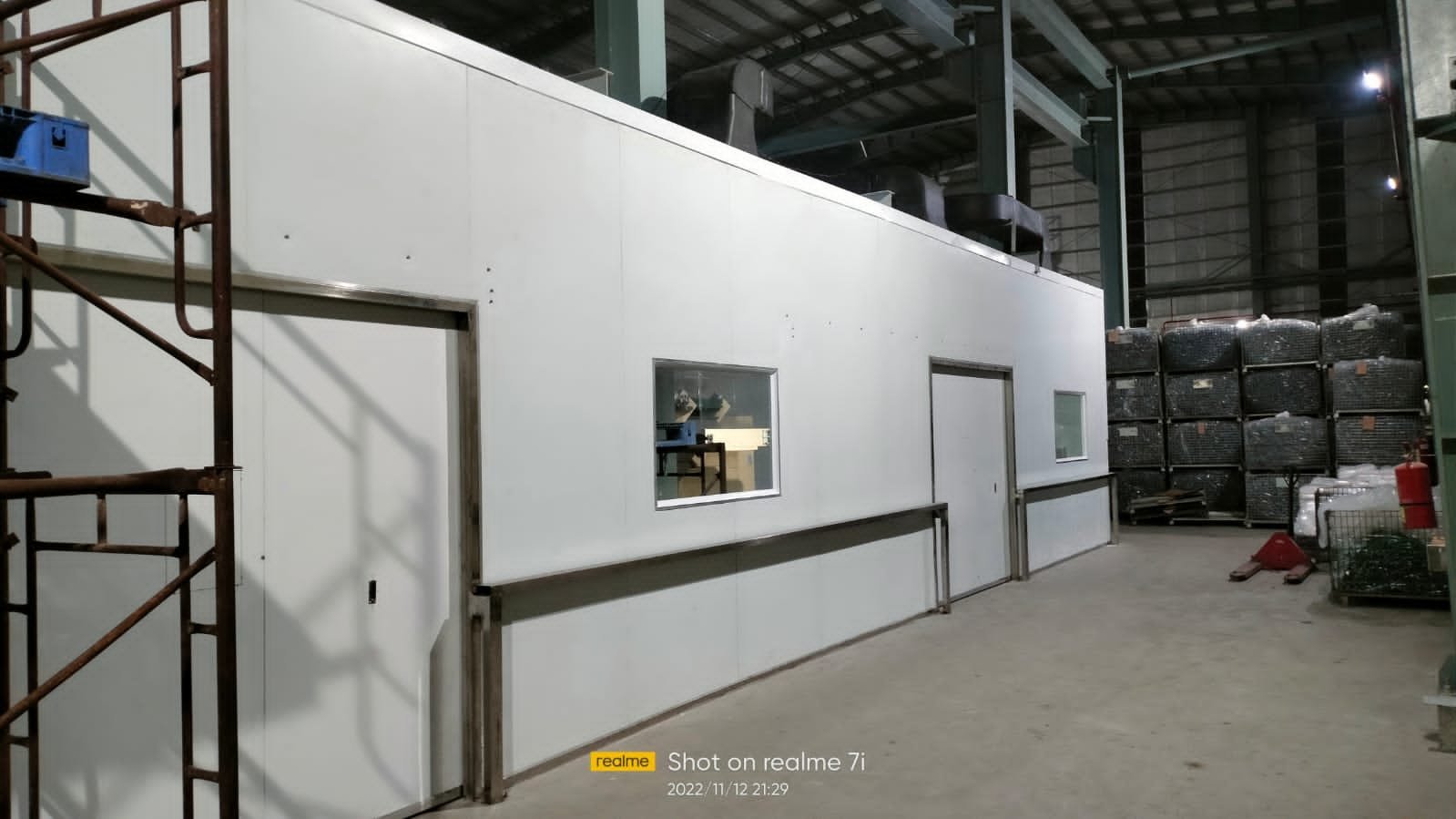
- Check door gaskets for tears, flattening or gaps; a worn seal lets in warm air and moisture.
- Check hinges, closers and handles, and that doors close fully without dragging.
- Check coving, corner pieces and trims for loose sections or gaps where dirt can collect.
For cold room doors in particular, see cold room door sandwich panels. Replacement coving and trims are listed under accessories.
Condensation and moisture
- Look for water marks, damp patches or dripping on panel surfaces and at the base of walls.
- Investigate the cause — a failed joint, a damaged vapour seal or a penetration that was never sealed — rather than just wiping the surface.
Penetrations
- Check every place where pipes, cables, drains or ducts pass through panels. Each one must remain sealed.
- Any new penetration added after installation should be sealed to the same standard as the original work.
Cleaning by environment
Always use cleaning products and methods approved by the panel or coating manufacturer. As a general rule, use mild detergent and water with soft cloths or brushes, rinse off residues, and avoid abrasive pads, solvents and high-pressure jets aimed directly into joints.
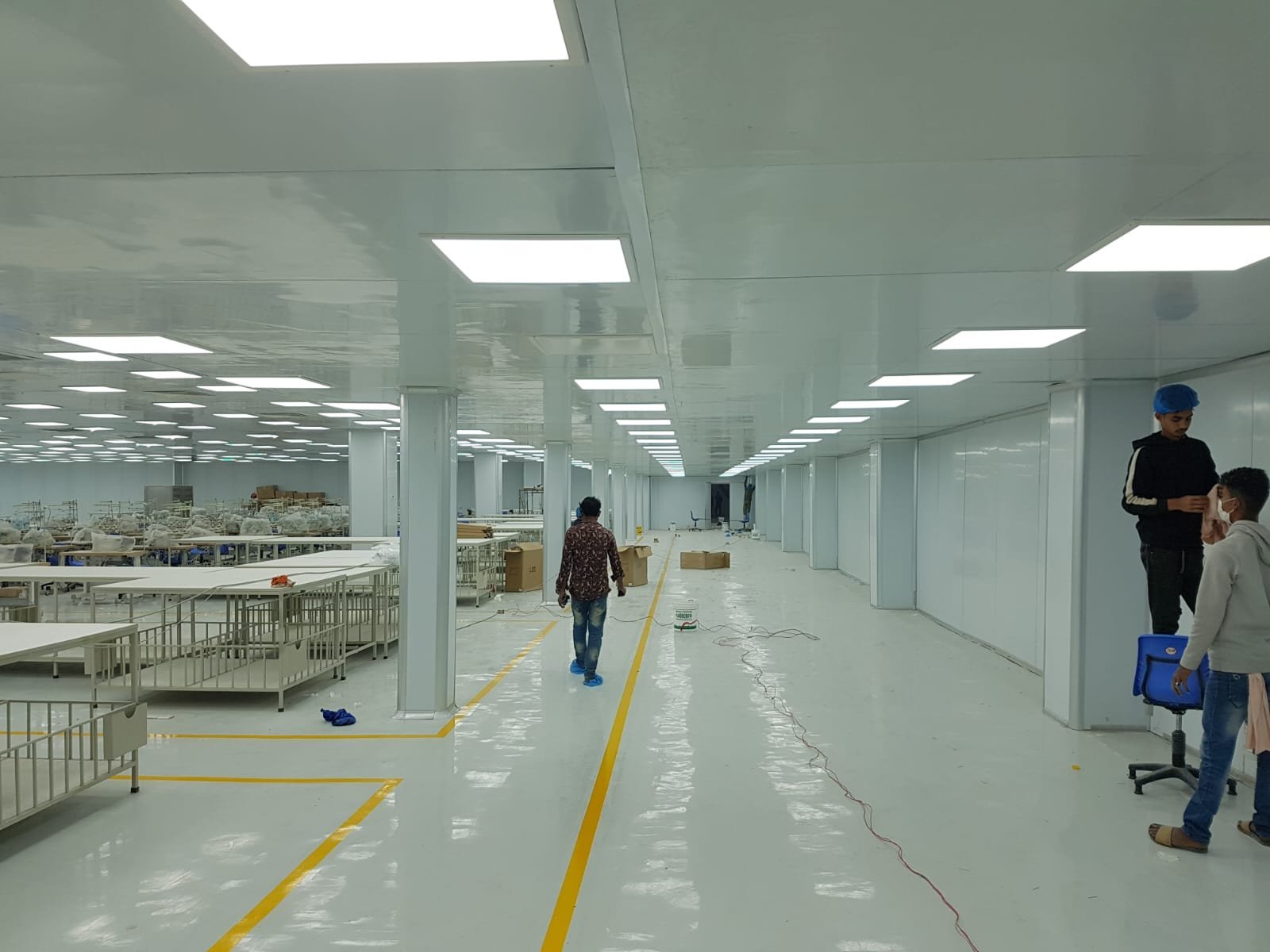
- Clean rooms and hospital rooms: follow the facility's validated cleaning and disinfection procedure, and confirm that the disinfectants used are compatible with the panel finish. See our clean room construction guide.
- Food processing areas: washdown routines are frequent and demanding; keep sealed joints and coving intact so that water and residues cannot collect. See sandwich panels for food processing facilities.
- Cold rooms: clean when the room can be emptied, avoid leaving water on surfaces that will freeze, and dry the room before bringing it back to temperature.
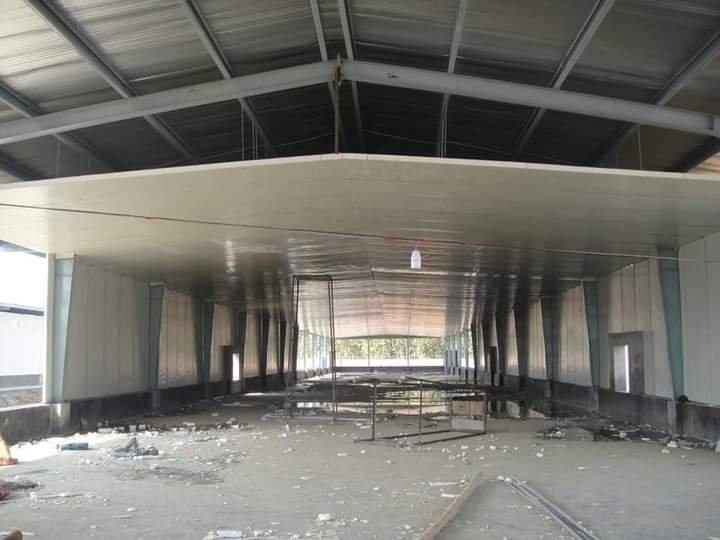
- Poultry sheds: dust, manure and ammonia are harsh on coatings; clean between flocks and inspect coating condition at the same time. See our poultry farm sandwich panel guide.
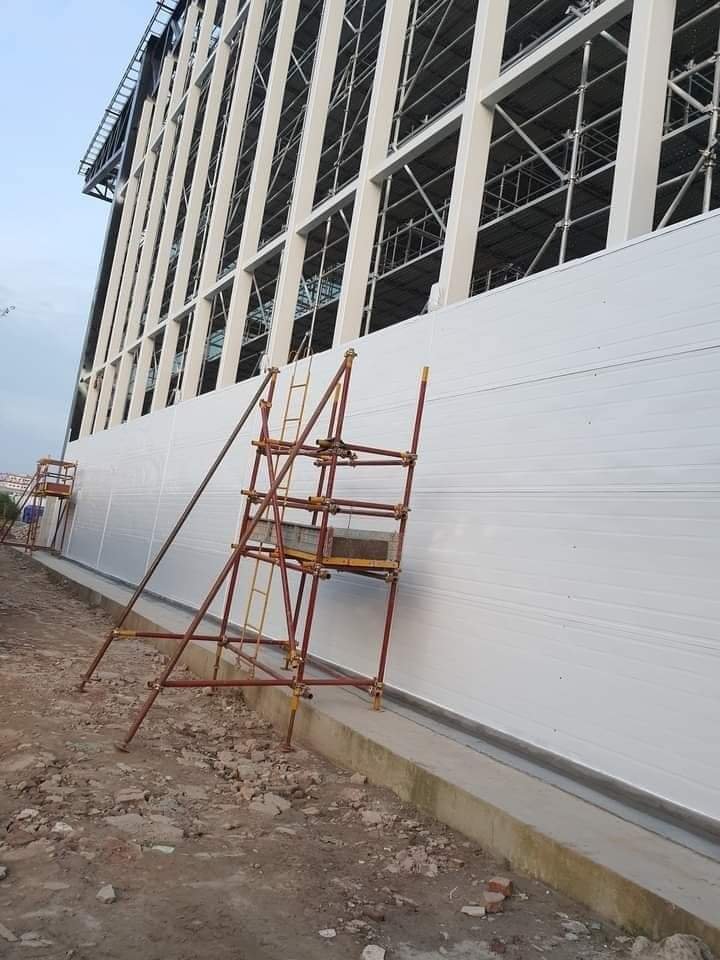
- Humid or coastal sites: salt and humidity speed up corrosion, so rinse external facings more often and pay extra attention to cut edges and fixings.
Building a maintenance schedule
There is no single schedule that fits every building. A practical approach is to combine three layers, and tighten the intervals where the environment is harsh or where hygiene and temperature control are critical:
| Layer | What it covers | Who |
|---|---|---|
| Routine checks | Visible damage, door seals closing properly, condensation, cleanliness | Facility or operations staff, as part of normal walk-rounds |
| Periodic inspection | Full checklist above: joints, sealants, fixings, coating, penetrations, trims | Maintenance team, on a fixed calendar |
| After events | Impact damage, leaks, storms, modifications or new penetrations | Maintenance team, as soon as practical |
Record what was inspected, what was found and what was done. Those records make it easier to spot recurring problems and are often needed for warranty claims.
Common problems and when to repair
- Failed sealant: remove the old material and reseal with a compatible product.
- Surface scratches: treat promptly with the touch-up system the coating manufacturer recommends, before corrosion starts.
- Dents and punctured facings: a dent may be cosmetic, but a puncture exposes the core and needs proper repair.
- Persistent condensation or ice: usually points to an air or vapour leak that must be traced and sealed.
- Delaminated or badly damaged panels: these usually need replacing rather than patching.
Our repair guide covers repair methods in more detail. If the damage is extensive, consider a professional assessment — see our installation service page.
Maintenance and your warranty
Panel and coating warranties commonly set out conditions for cleaning, inspection and repair. Read those conditions when the panels are installed, build them into your schedule, and keep your records. Our sandwich panel warranty guide explains what to look for.
Conclusion
Good panel maintenance is mostly about paying attention: joints sealed, fixings sound, coating intact, doors closing properly and moisture kept out. Set a routine that suits your environment, follow the manufacturer's instructions, and repair small defects before they become large ones. If you need replacement panels or accessories, contact us for a quotation.