Last updated: July 31, 2026

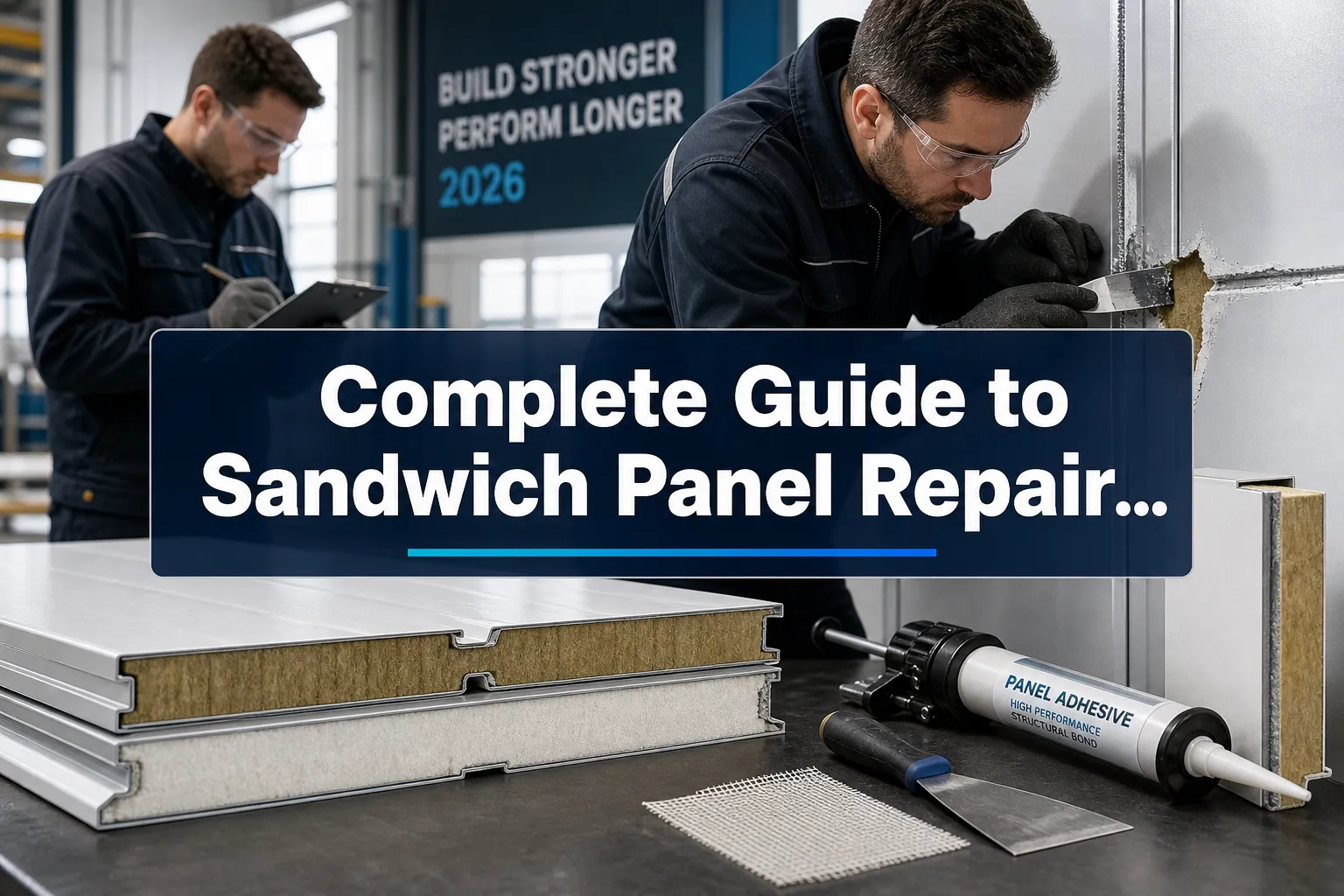
Quick Answer: Sandwich panel repair involves fixing damaged composite building panels through delamination repair, edge sealing, surface patching, or complete section replacement. Most damage can be repaired for $15-50 per square foot, significantly less than full replacement costs of $80-150 per square foot.
Key Takeaways
- Sandwich panels can often be repaired rather than replaced, saving 60-70% on costs
- Common repair methods include adhesive injection for delamination and edge sealing for water damage
- DIY repairs work for minor surface damage, but structural issues require professional assessment
- Repair costs range from $15-50 per square foot versus $80-150 for replacement
- Water damage requires immediate attention to prevent core deterioration
- Professional repairs typically come with 5-10 year warranties
- Edge damage is the most common issue and easiest to repair
- Core material type (EPS, PU, rockwool) affects repair approach and adhesive selection
What Are Sandwich Panels and How Do They Work
Sandwich panels are composite building materials consisting of two metal face sheets bonded to an insulating core material. The outer skins, typically made of steel or aluminum, provide structural strength and weather protection, while the core (expanded polystyrene, polyurethane foam, or mineral wool) delivers thermal insulation and additional rigidity.
These panels work through composite action, where the face sheets resist bending forces while the core maintains separation between them and transfers shear loads. This design creates exceptional strength-to-weight ratios and thermal performance in a single building component.
Common applications include:
- Industrial building walls and roofing
- Cold storage facilities
- Clean rooms and pharmaceutical facilities
- Agricultural buildings and poultry farms
- Temporary and modular construction
The panels connect through interlocking edge profiles or mechanical fasteners, creating continuous building envelopes. When properly installed, they provide excellent weather sealing and energy efficiency for both warehouse applications and specialized facilities like cold storage rooms.
What Causes Sandwich Panel Damage and Delamination
Delamination occurs when the bond between face sheets and core material fails, creating air pockets or separation within the panel structure. This represents the most serious form of sandwich panel damage and requires immediate attention to prevent structural failure.
Primary causes of panel damage include:
- Moisture infiltration through damaged seals or fastener holes
- Thermal cycling that expands and contracts materials at different rates
- Impact damage from equipment, vehicles, or falling objects
- UV degradation of exposed sealants and edge treatments
- Poor installation with inadequate sealing or over-tightened fasteners
- Building settlement creating stress concentrations
- Chemical exposure in industrial environments
Delamination warning signs:
- Visible bulging or oil-canning of face sheets
- Hollow sounds when tapped
- Water stains or discoloration
- Cracking along panel edges
- Separation at joints or fasteners
Choose immediate repair if delamination covers less than 25% of panel area and hasn't compromised structural integrity. Consider replacement when damage exceeds 50% of panel area or affects multiple adjacent panels, as repair costs approach replacement economics.
Common Sandwich Panel Problems and Solutions
Most sandwich panel issues fall into predictable categories with established repair protocols. Understanding these common problems helps building owners make informed decisions about repair versus replacement.
Edge damage represents 60% of all panel problems. Water enters through damaged edge seals, causing core deterioration and face sheet corrosion. Solution involves cutting back damaged material, applying new sealant, and installing protective flashing.
Surface dents and scratches affect appearance but rarely compromise performance. Minor damage under 1/8 inch deep can be filled with automotive body filler and repainted. Deeper gouges may require face sheet patching.
Fastener problems include loose screws, oversized holes, and corrosion around penetrations. Repair involves removing damaged fasteners, sealing holes with structural adhesive, and reinstalling with proper washers and sealants.
Joint separation occurs when thermal movement exceeds design limits. This requires removing old sealant, cleaning surfaces, and applying new high-movement sealant with proper backer rod installation.
For specialized applications like clean room environments, repairs must maintain contamination control and meet industry standards.
How Much Does Sandwich Panel Repair Cost
Sandwich panel repair costs vary significantly based on damage extent, access requirements, and local labor rates. Professional repairs typically cost $15-50 per square foot, while DIY materials alone run $3-8 per square foot.
Cost breakdown by repair type:
| Repair Type | DIY Cost/sq ft | Professional Cost/sq ft | Timeline |
|---|---|---|---|
| Surface patching | $3-6 | $15-25 | 2-4 hours |
| Edge sealing | $4-7 | $20-35 | 4-6 hours |
| Delamination injection | $5-8 | $25-40 | 1-2 days |
| Section replacement | $8-12 | $35-50 | 2-3 days |
Additional cost factors include:
- Access requirements – scaffolding adds $5-15 per square foot
- Weather protection – temporary enclosures cost $200-500 per day
- Core material type – rockwool repairs cost 20-30% more than EPS
- Structural modifications – engineering consultation adds $1,000-3,000
Emergency repairs typically cost 50-100% more than scheduled work due to overtime labor and expedited material delivery. Plan repairs during favorable weather to minimize complications and costs.
Compare these costs to current panel pricing when evaluating repair versus replacement decisions.
Can You Repair Damaged Sandwich Panels or Replace Them
Most sandwich panel damage can be successfully repaired when caught early and properly assessed. The decision depends on damage extent, structural integrity, and economic factors rather than technical feasibility alone.
Repairable conditions include:
- Delamination covering less than 40% of panel area
- Edge damage without core saturation
- Surface dents and scratches of any size
- Isolated fastener failures
- Joint sealant deterioration
Replacement indicators:
- Structural damage affecting load-bearing capacity
- Extensive water damage with core deterioration
- Multiple panel involvement
- Repair costs exceeding 70% of replacement cost
- Building code compliance issues
Assessment criteria:
- Structural integrity – tap test for hollow sounds indicating delamination
- Water damage extent – probe core material for saturation
- Age and condition – consider remaining service life
- Building use – critical facilities may require replacement for reliability
Professional assessment costs $200-500 but prevents costly repair failures. Structural engineers should evaluate any damage affecting building safety or code compliance.
For specialized applications like fire-rated panels, repairs must maintain original performance ratings through approved methods and materials.
Sandwich Panel Repair vs Replacement: Which Is Better
Repair typically offers better value when damage is localized and panels retain structural integrity. Replacement becomes economical when multiple panels are affected or building upgrades are planned simultaneously.
Choose repair when:
- Damage covers less than 30% of affected panels
- Building is less than 15 years old
- Core material remains dry and intact
- Access is straightforward without major disruption
- Budget constraints favor lower upfront costs
Choose replacement when:
- Multiple adjacent panels show damage
- Building requires energy efficiency upgrades
- Insurance covers replacement but not repairs
- Long-term reliability is critical
- Repair access costs exceed 40% of replacement
Economic comparison factors:
- Repair lifecycle – properly executed repairs last 10-15 years
- Energy performance – new panels may offer better insulation
- Maintenance costs – repaired areas may require more frequent inspection
- Warranty coverage – new panels include full manufacturer warranties
Common mistake: Attempting repairs on panels with extensive water damage. Saturated core material rarely dries completely and continues deteriorating even after surface repairs.
Consider building-wide assessment when individual panel repairs become frequent, as this indicates systematic issues requiring comprehensive solutions.
DIY Sandwich Panel Repair: How to Fix Minor Issues Yourself
DIY sandwich panel repair works well for surface damage, minor edge sealing, and simple fastener repairs. Structural issues and delamination repairs require professional expertise and specialized equipment.
DIY-suitable repairs:
- Surface scratches and small dents
- Loose or missing fasteners
- Minor edge seal touch-ups
- Small punctures under 2 inches diameter
Required tools and materials:
- Structural adhesive compatible with core material
- Automotive body filler for surface repairs
- Silicone or polyurethane sealant
- Self-drilling screws with neoprene washers
- Clean rags and degreasing solvent
Step-by-step surface repair process:
- Clean the damaged area with degreasing solvent and allow to dry completely
- Sand the surface lightly to create adhesion profile
- Apply body filler in thin layers, building up to surface level
- Sand smooth when cured, starting with 120-grit and finishing with 220-grit
- Prime and paint to match existing finish
Edge sealing procedure:
- Remove old, failed sealant completely
- Clean joint surfaces with appropriate solvent
- Install backer rod to proper depth
- Apply new sealant in continuous bead
- Tool to proper profile before skinning occurs
Safety considerations:
- Work only in dry conditions above 40°F
- Use proper fall protection on elevated surfaces
- Ensure adequate ventilation when using solvents
- Test adhesives on inconspicuous areas first
Avoid DIY attempts on delamination repairs, as improper injection techniques can worsen damage and void manufacturer warranties.
Best Adhesives for Sandwich Panel Repair
Adhesive selection depends on core material type, environmental conditions, and structural requirements. Using incompatible adhesives can cause chemical reactions that worsen damage or prevent proper bonding.
For EPS (expanded polystyrene) cores:
- Water-based polyurethane adhesives provide excellent bond strength without dissolving foam
- Modified silicone sealants work for non-structural applications
- Avoid solvent-based products that can dissolve polystyrene
For polyurethane foam cores:
- Two-part structural acrylics offer highest strength for delamination repairs
- Polyurethane construction adhesives provide good flexibility and weather resistance
- Epoxy adhesives work for high-load applications but lack flexibility
For mineral wool cores:
- Hybrid polymer adhesives bond well to inorganic surfaces
- Structural silicones provide weather sealing and movement accommodation
- Polyurethane foams can fill voids while providing insulation
Application considerations:
- Temperature range – ensure adhesive works in local climate conditions
- Cure time – balance working time with project schedule requirements
- Movement capability – building movement requires flexible adhesives
- Chemical compatibility – test on sample materials when uncertain
Professional-grade products:
- 3M VHB structural tapes for permanent bonding
- Dow Corning structural glazing sealants
- Sika structural adhesives for construction applications
Purchase adhesives from suppliers specializing in construction materials to ensure compatibility and technical support availability.
Sandwich Panel Water Damage Repair: Immediate Action Steps
Water damage requires immediate response to prevent core deterioration and structural failure. Delayed action often converts repairable damage into replacement scenarios within 48-72 hours.
Immediate assessment steps:
- Locate water entry point and stop active leaks
- Document damage extent with photos for insurance purposes
- Test core saturation by drilling small probe holes
- Assess structural integrity through visual inspection and tap testing
Emergency stabilization:
- Install temporary weather protection over damaged areas
- Remove standing water and improve drainage
- Provide ventilation to accelerate drying
- Monitor for signs of progressive damage
Repair decision matrix:
- Dry core, intact bonds – seal entry point and monitor
- Damp core, good bonds – enhance drying and seal when dry
- Wet core, partial delamination – professional injection repair required
- Saturated core, extensive delamination – section replacement necessary
Drying techniques:
- Natural ventilation works for minor moisture infiltration
- Forced air circulation accelerates drying in enclosed spaces
- Dehumidification removes moisture from air to enhance evaporation
- Heat application speeds drying but requires temperature control
Common mistake: Sealing water entry points before ensuring complete core drying. Trapped moisture continues causing damage and may lead to mold growth in organic core materials.
Professional intervention required when:
- Core saturation exceeds 25% of panel thickness
- Structural deflection is visible
- Electrical systems are affected
- Building occupancy is compromised
For critical facilities like cold storage applications, water damage can compromise temperature control and product safety, requiring immediate professional response.
How to Repair Sandwich Panel Edge Damage
Edge damage represents the most common and repairable form of sandwich panel deterioration. Proper edge repair techniques restore weather sealing and prevent progressive water infiltration that leads to more extensive damage.
Damage assessment criteria:
- Surface level – affects only face sheet and sealant
- Shallow penetration – reaches core material but remains localized
- Deep damage – extends through significant core thickness
- Full thickness – compromises structural integrity
Repair procedure for moderate edge damage:
- Remove damaged material by cutting back to sound substrate using oscillating saw
- Clean exposed surfaces with wire brush and solvent degreasing
- Apply primer to metal surfaces according to manufacturer specifications
- Install new core material if removal exceeded 1 inch depth
- Apply structural adhesive to bond new and existing materials
- Install weather sealing with appropriate sealant and backer rod
- Apply protective coating to match existing finish
Material requirements:
- Core material matching original density and type
- Structural adhesive compatible with both face sheets and core
- Weather sealant with minimum 25% movement capability
- Primer appropriate for substrate metal type
Quality control checkpoints:
- Verify complete adhesion before removing clamps or supports
- Test sealant adhesion after initial cure
- Inspect for proper drainage and no water trapping
- Confirm thermal bridging hasn't been created
Preventive measures:
- Install drip edges where appropriate
- Improve building drainage around repaired areas
- Schedule regular inspection of vulnerable edges
- Apply protective coatings in high-exposure locations
Edge repairs typically last 15-20 years when properly executed, matching or exceeding original panel life expectancy in most applications.
How Long Does Sandwich Panel Repair Take
Repair timelines depend on damage extent, weather conditions, and access requirements. Most repairs complete within 1-3 days, significantly faster than replacement projects that may require 1-2 weeks for material procurement and installation.
Typical repair schedules:
Surface repairs (4-8 hours):
- Surface preparation: 1-2 hours
- Material application: 2-3 hours
- Curing time: 2-4 hours
- Finish work: 1 hour
Edge sealing (1-2 days):
- Damage removal: 2-4 hours
- Surface preparation: 2-3 hours
- Adhesive application and cure: 8-12 hours
- Sealing and finishing: 2-3 hours
Delamination injection (2-3 days):
- Access preparation: 4-6 hours
- Injection process: 6-8 hours
- Cure and monitoring: 24-48 hours
- Surface restoration: 2-4 hours
Weather impact factors:
- Temperature below 40°F – extends cure times by 50-100%
- High humidity – slows solvent-based material curing
- Rain or snow – requires temporary weather protection
- High winds – limits elevated work and material handling
Scheduling considerations:
- Plan repairs during favorable weather windows
- Coordinate with building operations to minimize disruption
- Allow extra time for complex access requirements
- Schedule inspections after cure periods complete
Expedited repair options:
- Fast-cure adhesives reduce project time by 24-48 hours
- Temporary repairs allow immediate weather protection
- Modular repair techniques enable parallel work on multiple areas
For facilities requiring continuous operation like industrial buildings, repairs can often be scheduled in phases to maintain partial building use throughout the process.
Finding Sandwich Panel Repair Companies Near You
Professional sandwich panel repair requires specialized knowledge of composite materials, structural adhesives, and building envelope systems. Not all general contractors possess the expertise for reliable repairs.
Qualified contractor characteristics:
- Specific sandwich panel experience with similar building types
- Manufacturer certifications for major panel brands
- Structural adhesive training from adhesive manufacturers
- Insurance coverage including professional liability
- Local project references available for inspection
Evaluation criteria:
- Request detailed repair procedures and material specifications
- Verify insurance coverage and bonding capacity
- Check references from similar projects within past 2 years
- Confirm warranty terms and company stability
- Review safety record and training programs
Finding qualified contractors:
- Contact panel manufacturers for certified repair contractors
- Check with local commercial roofing associations
- Consult building envelope specialists
- Review industrial contractor directories
- Ask for referrals from building owners with similar facilities
Red flags to avoid:
- Contractors recommending immediate replacement without assessment
- Unwillingness to provide detailed repair procedures
- Lack of specific sandwich panel experience
- No warranty offered on repair work
- Significantly low bids without explanation
Getting accurate quotes:
- Provide detailed damage documentation with photos
- Allow on-site inspection before final pricing
- Request material specifications and application procedures
- Clarify warranty terms and exclusions
- Confirm project timeline and weather contingencies
Work with established manufacturers who can recommend qualified repair contractors and provide technical support throughout the project.
Sandwich Panel Repair Warranty Coverage
Professional sandwich panel repairs typically include warranties covering both materials and workmanship, though coverage terms vary significantly between contractors and repair types. Understanding warranty provisions helps evaluate contractor qualifications and long-term repair value.
Standard warranty coverage:
- Material defects – 2-5 years depending on adhesive and sealant brands
- Workmanship issues – 1-3 years for application and installation
- Weather sealing – 5-10 years for properly installed edge sealing
- Structural repairs – 3-7 years for delamination and major repairs
Warranty exclusions typically include:
- Damage from building movement exceeding design limits
- Impact damage from equipment or vehicles
- Modifications by others affecting repaired areas
- Normal wear and weathering of surface finishes
- Damage from building maintenance activities
Manufacturer material warranties:
- Structural adhesives often include 10-20 year performance warranties
- Sealants may warrant against adhesion loss for 15-25 years
- Core materials typically don't include separate repair warranties
- Face sheet materials may include finish warranties
Warranty claim procedures:
- Document any issues with photos and written descriptions
- Notify contractor within specified timeframe (usually 30-90 days)
- Allow contractor opportunity to inspect and remedy issues
- Understand dispute resolution procedures before problems arise
Maximizing warranty value:
- Choose contractors offering comprehensive coverage terms
- Verify contractor business stability and longevity
- Maintain repair areas according to warranty requirements
- Schedule recommended inspection and maintenance activities
Insurance considerations:
- Building insurance may cover warranty work under some circumstances
- Contractor insurance should cover warranty claim costs
- Professional liability coverage protects against design errors
- Product liability coverage addresses material defect issues
Quality contractors stand behind their work with meaningful warranties backed by insurance coverage and business stability. Compare warranty terms as carefully as initial repair costs when selecting contractors.
Frequently Asked Questions
How do I know if my sandwich panels need repair or replacement?
Panels need repair when damage covers less than 30% of the area and structural integrity remains intact. Replace panels when delamination exceeds 50% coverage, multiple panels are affected, or water damage has saturated the core material extensively.
Can I repair delaminated sandwich panels myself?
Minor surface delamination under 6 inches can be DIY repaired with appropriate structural adhesives. Extensive delamination requires professional injection equipment and expertise to ensure proper bonding and prevent further damage.
What's the average cost difference between repair and replacement?
Professional repairs typically cost $15-50 per square foot while replacement ranges from $80-150 per square foot. Repairs can save 60-70% compared to replacement when damage is localized and panels are structurally sound.
How long do sandwich panel repairs last?
Properly executed repairs using quality materials typically last 10-15 years, often matching the remaining service life of the original panels. Edge sealing repairs may last 15-20 years with appropriate maintenance.
What causes sandwich panel delamination?
Delamination results from moisture infiltration, thermal cycling, impact damage, UV degradation of seals, poor installation practices, or building settlement creating stress concentrations. Early detection and repair prevent progression.
Can water-damaged sandwich panels be saved?
Panels with minor water infiltration and dry core material can often be repaired successfully. Extensively saturated cores rarely dry completely and typically require section replacement to prevent ongoing deterioration.
What adhesive works best for EPS sandwich panel repair?
Water-based polyurethane adhesives provide excellent bonding for EPS cores without chemical dissolution. Avoid solvent-based products that can damage polystyrene foam cores.
Do sandwich panel repairs affect building warranties?
Repairs using manufacturer-approved methods and materials typically don't void building warranties. Unauthorized repairs or incompatible materials may affect warranty coverage, so verify procedures with manufacturers.
How soon should I repair damaged sandwich panels?
Address water infiltration immediately to prevent core saturation. Surface damage can wait for favorable weather conditions, but edge damage should be repaired within 30-60 days to prevent progression.
Can I match the color of repaired sandwich panels?
Professional contractors can closely match existing colors using automotive paint systems. Perfect matches may be difficult on weathered panels, but repairs can be made visually acceptable with proper surface preparation.
What weather conditions are needed for sandwich panel repair?
Repairs require dry conditions with temperatures above 40°F and relative humidity below 85%. Avoid work during precipitation or when rain is forecast within 24 hours of material application.
How do I prevent future sandwich panel damage?
Regular inspection and maintenance of seals, proper drainage around buildings, prompt repair of minor damage, and protection from impact damage significantly extend panel service life and reduce major repair needs.
SEO Meta Title: Sandwich Panel Repair Guide: Costs, Methods & DIY Tips 2026