Last updated: July 31, 2026

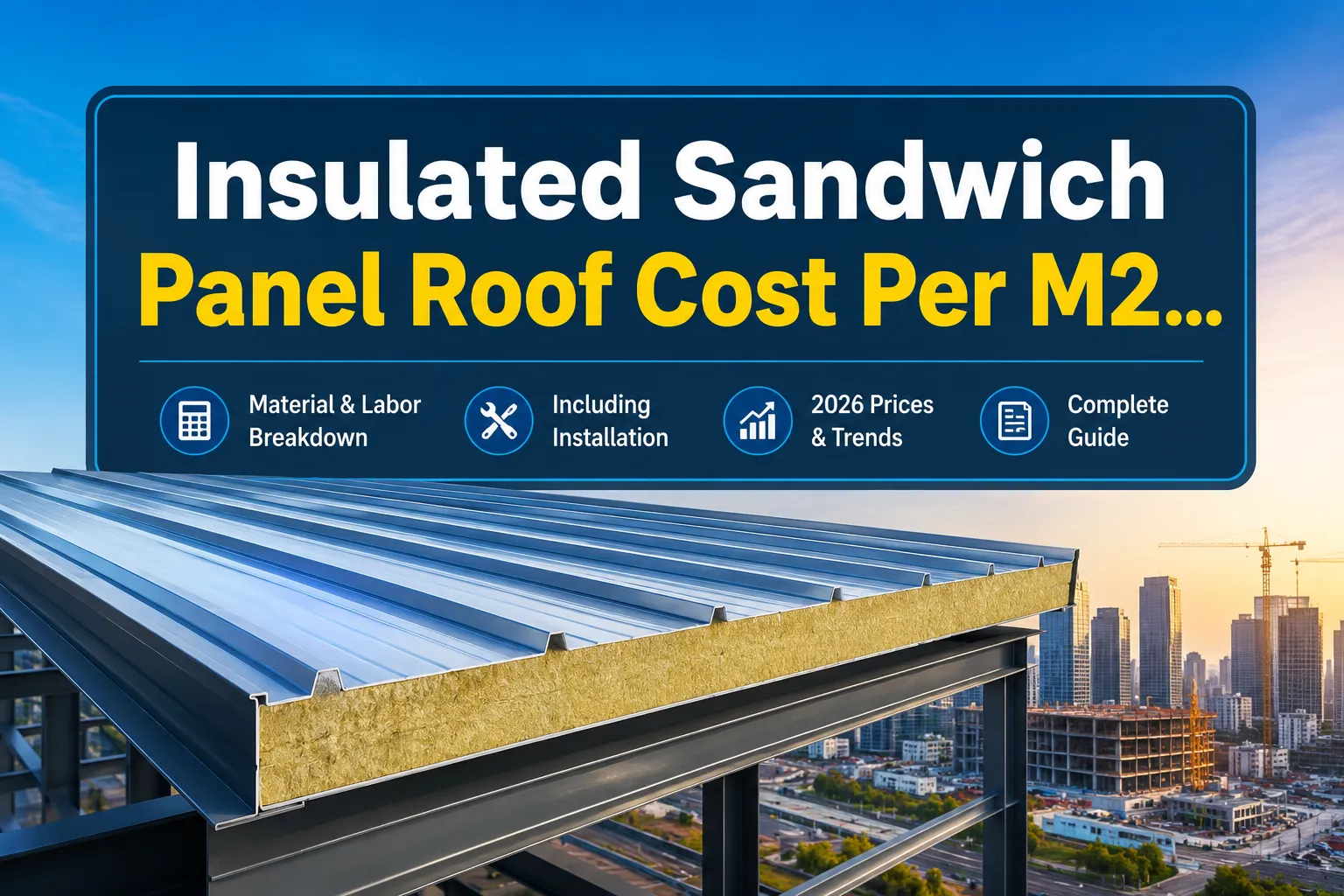
Quick Answer: Insulated sandwich panel roof cost per m2 including installation ranges from $45-85 per square meter in 2026, depending on panel thickness, core material (EPS, PU, or rockwool), and project complexity. Basic EPS panels start at $45/m2 installed, while premium PU or rockwool systems reach $85/m2 including professional installation and accessories.
Key Takeaways
- Total installed costs range $45-85 per m2 for complete insulated sandwich panel roofing systems
- Material costs account for 60-70% of total project expenses, with installation making up the remainder
- EPS core panels offer the most budget-friendly option at $45-55/m2 installed
- PU and rockwool panels cost $65-85/m2 installed but provide superior insulation and fire resistance
- Project size significantly impacts per-square-meter pricing, with larger installations reducing unit costs
- Installation complexity varies based on roof slope, access, and structural requirements
- Professional installation is essential for warranty coverage and proper weatherproofing
- Long-term savings from energy efficiency often justify higher upfront investment
What Are Insulated Sandwich Panels and How Do They Work
Insulated sandwich panels consist of two metal sheets (typically steel or aluminum) bonded to a rigid foam core, creating a single structural element that provides both roofing and insulation in one system. The outer metal faces resist weather and structural loads while the insulated core delivers thermal performance equivalent to traditional insulation systems at a fraction of the thickness.
The panels work through continuous insulation principles, eliminating thermal bridges that plague conventional construction methods. Common core materials include:
Expanded Polystyrene (EPS): Lightweight, cost-effective, R-value of 3.8-4.2 per inch
Polyurethane (PU): Superior insulation performance, R-value of 6.5-7.0 per inch, moisture resistant
Rockwool: Fire-resistant mineral fiber, R-value of 4.0-4.3 per inch, excellent acoustic properties
Panel thicknesses range from 50mm to 200mm, with thicker panels providing higher insulation values but increased material costs. The interlocking joint system creates weathertight seals without additional sealants when properly installed.
For detailed technical specifications, review our complete guide to sandwich panel thickness selection.
Insulated Sandwich Panel Roof Cost Per M2 in 2026
Current market pricing for insulated sandwich panel roof cost per m2 including installation varies significantly based on specifications and regional factors. Here's the comprehensive breakdown:
Budget Range (EPS Core): $45-55 per m2 installed
- 50-75mm EPS panels
- Standard steel facing (0.5mm thickness)
- Basic fastening systems
- Suitable for warehouses, agricultural buildings
Mid-Range (Enhanced EPS/Basic PU): $55-70 per m2 installed
- 75-100mm panels
- Upgraded steel facing (0.6-0.7mm)
- Enhanced weatherproofing accessories
- Commercial and light industrial applications
Premium Range (PU/Rockwool): $70-85 per m2 installed
- 100-150mm high-performance cores
- Heavy-duty steel or aluminum facing
- Complete accessory packages
- Industrial, cold storage, specialized facilities
Ultra-Premium (Specialized Applications): $85+ per m2 installed
- 150mm+ thickness
- Fire-rated or specialized coatings
- Complex architectural requirements
- Clean rooms, pharmaceutical facilities
Material costs typically represent 60-70% of total installed pricing, with labor and accessories comprising the remainder. Larger projects (over 1000 m2) often achieve 10-15% cost reductions through volume purchasing and installation efficiencies.
Installation Costs and Labor Requirements
Professional installation accounts for 30-40% of total insulated sandwich panel roof cost per m2 including installation. Labor rates vary by region and project complexity, but typical installation costs range $15-25 per square meter.
Installation factors affecting cost:
- Roof slope: Steeper roofs require additional safety equipment and slower installation
- Building height: Multi-story installations increase crane and safety costs
- Access conditions: Remote locations or restricted access sites add logistical expenses
- Structural modifications: Existing roof removal or structural upgrades increase labor time
- Weather conditions: Installation delays due to weather impact project timelines
Typical installation timeline: Experienced crews install 200-400 m2 per day depending on complexity. Simple warehouse roofs achieve higher daily rates, while complex architectural projects require more careful installation.
Essential installation components:
- Structural purlins and supports
- Weatherproofing accessories (ridge caps, gutters, flashings)
- Fasteners and sealants
- Vapor barriers (climate-dependent)
Choose contractors with specific sandwich panel experience, as improper installation voids warranties and creates long-term performance issues. Request references from similar projects and verify insurance coverage before proceeding.
Learn more about professional installation processes in our step-by-step sandwich panel roof installation guide.
Insulated Sandwich Panels vs Traditional Roofing Systems
Insulated sandwich panels offer distinct advantages over conventional roofing plus separate insulation systems, though initial costs may appear higher when comparing basic materials only.
Cost Comparison (per m2 installed):
| System Type | Material Cost | Installation Cost | Total Cost |
|---|---|---|---|
| EPS Sandwich Panel | $30-35 | $15-20 | $45-55 |
| PU Sandwich Panel | $45-55 | $20-25 | $65-80 |
| Metal Roof + Fiberglass | $25-30 | $25-35 | $50-65 |
| Built-up Roof System | $35-45 | $30-40 | $65-85 |
Performance advantages of sandwich panels:
- Faster installation: Single-component system reduces construction time by 40-60%
- Superior thermal performance: Continuous insulation eliminates thermal bridging
- Weather resistance: Factory-sealed joints provide better weatherproofing than field-assembled systems
- Structural efficiency: Self-supporting panels may eliminate secondary framing requirements
Traditional system advantages:
- Repair flexibility: Individual components can be replaced independently
- Material availability: Standard materials available from multiple suppliers
- Contractor familiarity: More contractors experienced with conventional systems
For energy-efficient buildings, sandwich panels typically provide better long-term value despite potentially higher initial costs. Calculate total lifecycle costs including energy savings over 20-25 years for accurate comparison.
Are Insulated Sandwich Panels Worth the Investment
Insulated sandwich panels justify their cost through energy savings, construction speed, and long-term durability for most commercial and industrial applications. The return on investment typically occurs within 5-8 years through reduced heating and cooling costs.
Financial benefits:
- Energy savings: 20-40% reduction in HVAC costs compared to minimally insulated buildings
- Construction speed: Faster installation reduces labor costs and project financing
- Maintenance: Factory-finished surfaces require minimal maintenance for 15-20 years
- Insurance: Some insurers offer premium reductions for fire-rated panel systems
Best applications for sandwich panels:
- Warehouses and distribution centers
- Manufacturing facilities
- Cold storage and food processing
- Agricultural buildings
- Aircraft hangars and large-span structures
Less suitable applications:
- Residential construction (typically not cost-effective)
- Small buildings under 500 m2 (higher per-unit costs)
- Temporary structures (payback period too long)
- Historic renovations (aesthetic limitations)
Break-even analysis: Calculate monthly energy savings against additional upfront costs. Buildings with high heating/cooling loads, extended operating hours, or extreme climate conditions achieve faster payback periods.
Consider consulting energy modeling professionals for large projects to quantify expected savings and optimize panel specifications for your specific application.
Installation Time and Labor Cost Factors
Installation duration directly impacts the total insulated sandwich panel roof cost per m2 including installation through labor costs, equipment rental, and project financing. Understanding these factors helps budget accurately and select appropriate contractors.
Typical installation rates:
- Simple warehouse roofs: 300-400 m2 per crew per day
- Complex commercial buildings: 150-250 m2 per crew per day
- Specialized facilities: 100-200 m2 per crew per day
- Renovation projects: 75-150 m2 per crew per day
Labor cost variables:
- Crew size: 3-5 person crews standard for most projects
- Equipment requirements: Crane rental adds $800-1200 per day
- Safety measures: Fall protection and confined space requirements increase time
- Weather delays: Winter installation may require heated enclosures
Regional labor rate ranges:
- Urban areas: $25-35 per hour per worker
- Rural locations: $18-28 per hour per worker
- Specialized installers: Premium of 15-25% over general contractors
Installation efficiency factors:
- Panel size: Larger panels reduce installation time but require heavier equipment
- Roof complexity: Multiple slopes, penetrations, and architectural features slow progress
- Sequencing: Proper material delivery timing prevents delays and storage costs
- Quality control: Experienced crews work faster while maintaining installation standards
Common installation mistakes that increase costs:
- Inadequate structural analysis leading to reinforcement requirements
- Poor weather planning causing material damage or delays
- Insufficient access planning requiring additional equipment
- Lack of coordination with other trades creating scheduling conflicts
Choose contractors who provide detailed installation schedules and have experience with similar project types to minimize cost overruns and delays.
Best Brands and Pricing for Insulated Sandwich Panels
Leading manufacturers offer varying price points and performance characteristics for insulated sandwich panel systems. Brand selection significantly impacts both initial costs and long-term performance.
Premium International Brands:
- Kingspan: $55-75 per m2 material cost, superior PU technology, 20-year warranties
- Metecno: $50-70 per m2 material cost, wide product range, global availability
- Tata Steel: $45-65 per m2 material cost, proven durability, strong technical support
Regional Quality Brands:
- Local manufacturers: $35-55 per m2 material cost, competitive pricing, shorter lead times
- Asian suppliers: $30-50 per m2 material cost, cost-effective options, variable quality control
Brand selection criteria:
- Warranty terms: Look for minimum 15-year warranties on materials and workmanship
- Technical support: Availability of engineering assistance and installation training
- Local representation: Service and parts availability in your region
- Testing certifications: Fire ratings, structural approvals, and energy performance data
- Supply reliability: Consistent availability and delivery performance
Cost optimization strategies:
- Volume purchasing: Negotiate better pricing for projects over 1000 m2
- Standard specifications: Avoid custom colors and non-standard dimensions
- Timing flexibility: Off-season purchasing may offer 5-10% discounts
- Multiple quotes: Compare at least three suppliers for significant projects
Quality indicators:
- Steel thickness and coating specifications
- Core density and thermal performance data
- Joint design and weatherproofing details
- Manufacturing quality certifications (ISO 9001, etc.)
For Bangladesh-specific options, explore our comprehensive guide to top sandwich panel manufacturers in Dhaka for local supplier recommendations and pricing.
Residential vs Commercial Applications and Costs
Insulated sandwich panel roof cost per m2 including installation varies significantly between residential and commercial applications due to scale, complexity, and performance requirements.
Commercial Applications (Most Cost-Effective):
- Project sizes: Typically 1000+ m2, enabling volume discounts
- Installation efficiency: Large, simple roof areas maximize crew productivity
- Specification standards: Standardized systems reduce engineering and customization costs
- Typical cost range: $45-70 per m2 installed
Industrial Applications (Moderate Premium):
- Enhanced specifications: Thicker panels, specialized coatings, fire ratings
- Complex requirements: Heavy loads, chemical resistance, temperature control
- Specialized installation: Experienced crews and specialized equipment required
- Typical cost range: $60-85 per m2 installed
Residential Applications (Highest Per-Unit Costs):
- Small project sizes: Under 200 m2 typical, higher per-unit costs
- Aesthetic requirements: Custom colors, architectural details increase costs
- Code compliance: Residential building codes may require additional features
- Typical cost range: $70-120 per m2 installed
Application-specific considerations:
Warehouses and Distribution:
- Focus on cost-effectiveness and energy efficiency
- Standard panel thicknesses (75-100mm) adequate for most climates
- Simple installation reduces labor costs
Manufacturing Facilities:
- Enhanced fire ratings may be required
- Acoustic performance important for worker comfort
- Chemical resistance for specific industrial processes
Cold Storage:
- Maximum insulation thickness (150-200mm) essential
- Vapor barriers and specialized details required
- Higher installation precision needed
Agricultural Buildings:
- Cost optimization critical for project viability
- Corrosion resistance important in livestock environments
- Natural ventilation integration may be required
Residential Projects:
- Aesthetic integration with existing architecture
- Local building code compliance
- Higher per-unit costs due to small scale
Choose panel specifications appropriate for your specific application to avoid over-engineering costs while ensuring adequate performance for intended use.
Common Problems and Maintenance Costs
Understanding potential issues with insulated sandwich panel roofs helps budget for long-term ownership costs and select appropriate specifications to minimize problems.
Common installation problems:
- Thermal bridging: Improper fastening creates cold spots and condensation
- Water infiltration: Poor joint sealing leads to leaks and insulation damage
- Structural inadequacy: Insufficient support causes panel deflection and joint failure
- Vapor barrier issues: Incorrect installation creates moisture problems
Long-term maintenance requirements:
Annual Maintenance (Years 1-10): $0.50-1.00 per m2 annually
- Visual inspections and minor sealant touch-ups
- Gutter cleaning and drainage maintenance
- Fastener inspection and tightening
Mid-life Maintenance (Years 10-15): $2-4 per m2 one-time cost
- Joint sealant replacement
- Panel refinishing in high-wear areas
- Accessory replacement (gutters, trim pieces)
Major Maintenance (Years 15-25): $5-10 per m2 one-time cost
- Panel replacement in damaged sections
- Complete sealant system renewal
- Structural component updates
Preventive measures to reduce maintenance:
- Quality installation: Use experienced contractors with panel-specific training
- Appropriate specifications: Select panel thickness and coatings for environmental conditions
- Regular inspections: Annual professional inspections identify problems early
- Prompt repairs: Address minor issues before they become major problems
Warranty coverage typically includes:
- Material defects: 15-20 years
- Weather-tightness: 10-15 years
- Structural performance: 10-20 years
- Finish durability: 10-15 years
Factors affecting maintenance costs:
- Climate exposure: Coastal, industrial, or extreme weather environments increase maintenance needs
- Building use: Chemical exposure, temperature cycling, and mechanical damage affect longevity
- Installation quality: Poor installation dramatically increases maintenance requirements
- Panel specifications: Higher-grade materials and coatings reduce maintenance frequency
Budget 1-2% of initial installation cost annually for maintenance and repairs over the panel system's 25-30 year lifespan.
Retrofitting Existing Roofs with Insulated Panels
Installing insulated sandwich panels over existing roofs can reduce total project costs while improving building performance, though specific conditions must be met for successful retrofitting.
Retrofit feasibility requirements:
- Structural capacity: Existing structure must support additional panel weight (15-25 kg/m2)
- Roof condition: Existing roof should be weather-tight without major structural issues
- Building codes: Local codes may require complete removal rather than overlay systems
- Access considerations: Adequate crane access and staging areas required
Retrofit cost advantages:
- Reduced demolition: Saves $8-15 per m2 in removal and disposal costs
- Faster installation: Overlay systems install 25-40% faster than complete replacement
- Continued occupancy: Building operations can often continue during installation
- Waste reduction: Environmentally friendly approach reduces landfill disposal
Retrofit installation process:
- Structural evaluation: Engineer confirms adequate load capacity
- Existing roof preparation: Minor repairs and cleaning as needed
- Support system installation: New purlins or attachment points as required
- Panel installation: Standard installation over prepared substrate
- Integration details: Proper flashing and weatherproofing connections
Retrofit cost range: $35-60 per m2 installed (20-30% savings vs. complete replacement)
Best candidates for retrofit:
- Structurally sound buildings with inadequate insulation
- Metal roofs in good condition but poor thermal performance
- Buildings requiring upgraded fire ratings or weather resistance
- Facilities needing improved acoustics or condensation control
Poor retrofit candidates:
- Roofs with significant structural damage or leaks
- Buildings near structural load limits
- Roofs with complex geometry or numerous penetrations
- Facilities requiring complete architectural updates
Special retrofit considerations:
- Height increase: New panels add 50-200mm to building height
- Drainage modifications: Roof slope and gutter systems may require updates
- Penetration details: Existing vents, equipment, and skylights need integration
- Warranty implications: Overlay warranties may differ from new construction coverage
Consult structural engineers and experienced contractors to evaluate retrofit feasibility and develop appropriate installation details for your specific building conditions.
Alternatives to Insulated Sandwich Panel Roofs
Several alternative roofing systems compete with insulated sandwich panels, each offering different cost structures and performance characteristics.
Conventional Metal Roof with Separate Insulation:
- Cost range: $50-70 per m2 installed
- Advantages: Flexible insulation thickness, familiar to contractors, repairable components
- Disadvantages: Thermal bridging, longer installation, potential moisture issues
Built-Up Roofing (BUR) Systems:
- Cost range: $60-90 per m2 installed
- Advantages: Proven long-term performance, excellent waterproofing, walkable surface
- Disadvantages: Heavy weight, slow installation, limited insulation integration
Single-Ply Membrane Systems (TPO/EPDM):
- Cost range: $45-75 per m2 installed
- Advantages: Lightweight, fast installation, good warranty coverage
- Disadvantages: Separate insulation required, puncture vulnerability, seam dependence
Spray Polyurethane Foam (SPF):
- Cost range: $55-85 per m2 installed
- Advantages: Seamless application, excellent insulation, self-flashing
- Disadvantages: Weather-dependent installation, specialized contractors, surface coating required
Standing Seam Metal with Continuous Insulation:
- Cost range: $65-95 per m2 installed
- Advantages: Architectural appearance, long lifespan, thermal performance
- Disadvantages: Complex details, higher cost, limited contractor availability
Selection criteria comparison:
Choose sandwich panels when:
- Fast installation timeline required
- Energy efficiency is priority
- Large, simple roof areas
- Minimal maintenance desired
Choose alternatives when:
- Architectural appearance critical
- Existing contractor relationships important
- Specific performance requirements (walkable surface, etc.)
- Budget constraints favor lower initial cost
Lifecycle cost analysis:
Consider 25-year total costs including energy, maintenance, and replacement expenses. Sandwich panels often provide better total value despite potentially higher initial costs, particularly for energy-intensive buildings or extreme climate conditions.
For detailed cost comparisons in the Bangladesh market, review our comprehensive sandwich panel pricing guide.
Installation Mistakes That Increase Costs
Poor installation practices can double the effective cost of insulated sandwich panel systems through repairs, energy losses, and premature replacement. Understanding common mistakes helps select qualified contractors and avoid costly problems.
Critical installation errors:
Inadequate Structural Support:
- Problem: Insufficient purlins or incorrect spacing causes panel deflection and joint failure
- Cost impact: $15-25 per m2 for structural reinforcement and panel replacement
- Prevention: Require structural calculations and engineer approval before installation
Poor Joint Sealing:
- Problem: Improper sealant application or missing weatherproofing details
- Cost impact: $8-15 per m2 for leak repairs and water damage remediation
- Prevention: Specify complete accessory packages and experienced installation crews
Thermal Bridge Creation:
- Problem: Metal fasteners or structural elements penetrating insulation continuity
- Cost impact: 20-40% increase in energy costs over building lifetime
- Prevention: Use thermal break fasteners and proper installation techniques
Incorrect Panel Orientation:
- Problem: Installing panels with vapor barrier on wrong side creates moisture problems
- Cost impact: $20-35 per m2 for panel replacement and moisture damage repair
- Prevention: Require installation drawings and contractor training verification
Fastener Problems:
- Problem: Over-driving, under-driving, or incorrect fastener selection
- Cost impact: $5-12 per m2 for fastener replacement and panel repair
- Prevention: Specify proper fasteners and require installation testing
Quality control measures:
- Pre-installation meetings: Review installation procedures and details
- Progress inspections: Daily quality checks during installation
- Testing requirements: Water testing and thermal imaging verification
- Contractor qualifications: Verify training and experience with panel systems
Red flags when selecting contractors:
- Significantly lower bids without clear cost justification
- Lack of panel-specific installation experience
- No references from similar recent projects
- Inadequate insurance or bonding coverage
- Unwillingness to provide detailed installation procedures
Contract protection strategies:
- Performance bonds: Ensure financial protection for installation quality
- Warranty requirements: Minimum 5-year installation warranty
- Quality standards: Reference manufacturer installation guidelines
- Payment schedules: Tie payments to completion milestones and quality inspections
Invest in qualified contractors and proper installation procedures to avoid the false economy of low-bid installations that create expensive long-term problems.
How Long Do Insulated Sandwich Panel Roofs Last
Insulated sandwich panel roofs typically provide 25-30 years of service life when properly installed and maintained, making them cost-competitive with alternative roofing systems over their full lifecycle.
Lifespan factors:
Panel Core Material:
- EPS cores: 25-30 years typical service life
- PU cores: 30-35 years with superior moisture resistance
- Rockwool cores: 35-40 years, excellent durability and fire resistance
Metal Facing Quality:
- Standard steel (0.5mm): 20-25 years before refinishing needed
- Heavy steel (0.7mm+): 25-30 years with proper maintenance
- Aluminum facing: 30-40 years, superior corrosion resistance
Environmental Conditions:
- Moderate climates: Full design life achievable with standard specifications
- Coastal environments: Require upgraded coatings, reduce lifespan 15-20%
- Industrial atmospheres: Chemical-resistant coatings extend service life
- Extreme temperatures: Thermal cycling may reduce joint life 10-15%
Maintenance impact on longevity:
- Regular maintenance: Achieves full 25-30 year design life
- Minimal maintenance: Reduces service life to 15-20 years
- Deferred maintenance: May require replacement in 10-15 years
End-of-life indicators:
- Widespread joint failure and water infiltration
- Significant panel deflection or structural issues
- Coating failure exposing steel substrate to corrosion
- Insulation degradation affecting thermal performance
Lifecycle cost calculation:
- Initial cost: $45-85 per m2 installed
- Annual maintenance: $0.50-1.50 per m2
- Mid-life updates: $5-10 per m2 (years 15-20)
- Total 25-year cost: $60-110 per m2
Comparison to alternatives (25-year lifecycle):
- Built-up roofing: $80-120 per m2 total cost
- Single-ply membranes: $70-100 per m2 total cost (2-3 replacements)
- Metal with separate insulation: $75-110 per m2 total cost
Factors extending service life:
- Quality installation: Proper techniques and experienced contractors
- Appropriate specifications: Panel thickness and coatings matched to environment
- Proactive maintenance: Regular inspections and prompt repairs
- Building protection: Adequate drainage, proper ventilation, impact protection
Warranty coverage timeline:
- Years 1-15: Full material and installation warranty coverage
- Years 15-25: Prorated coverage for materials, full labor responsibility
- Years 25+: Owner responsibility for all maintenance and repairs
Plan for panel replacement or major renovation at 25-30 years, though well-maintained systems in favorable environments may provide additional service life with appropriate maintenance investments.
Frequently Asked Questions
What is the cheapest insulated sandwich panel option per m2?
EPS core panels with 50-75mm thickness offer the lowest cost at $45-55 per m2 installed. However, consider long-term energy costs when selecting minimum specifications, as thicker panels often provide better total value.
How much does installation add to material costs?
Installation typically adds $15-25 per m2 to material costs, representing 30-40% of total project expense. Complex roofs, difficult access, or specialized requirements can increase installation costs significantly.
Can I install insulated sandwich panels myself?
Professional installation is strongly recommended and typically required for warranty coverage. Panel installation requires specialized equipment, safety training, and technical knowledge to ensure proper weatherproofing and structural performance.
What panel thickness should I choose for my climate?
Panel thickness depends on local climate and energy costs. Generally, 75-100mm works for moderate climates, 100-150mm for extreme climates, and 150mm+ for cold storage or specialized applications. Consult energy modeling for optimal thickness.
How do sandwich panels compare to spray foam insulation costs?
Sandwich panels ($45-85/m2) compete closely with spray foam systems ($55-85/m2) but offer faster installation, integrated weather barrier, and structural capabilities that spray foam cannot provide.
What warranty should I expect on installed panels?
Quality manufacturers provide 15-20 year material warranties and contractors should offer minimum 5-year installation warranties. Weather-tightness warranties typically range 10-15 years depending on specifications.
Do insulated panels work for residential roofing?
Panels work technically but cost $70-120/m2 for residential applications due to small scale and aesthetic requirements. They're most cost-effective for large commercial and industrial buildings.
How long does panel installation take?
Installation crews typically complete 200-400 m2 per day depending on roof complexity. Simple warehouse roofs install fastest, while complex commercial buildings require more time for proper detailing.
What happens if panels get damaged?
Individual panels can be replaced, though color matching may be challenging after several years. Maintain spare panels from original installation for future repairs to ensure consistent appearance.
Are there financing options for panel roofing projects?
Many contractors offer financing, and energy-efficient improvements may qualify for specialized lending programs. Some utility companies provide rebates for high-performance insulation systems.
Do panels require special structural support?
Panels are self-supporting between purlins but require adequate structural framing. Typical purlin spacing ranges 1.2-2.4 meters depending on panel specifications and load requirements.
What maintenance do sandwich panel roofs need?
Annual inspections, sealant touch-ups, and gutter cleaning typically cost $0.50-1.50 per m2 annually. Major maintenance occurs every 15-20 years and costs $5-10 per m2.
Conclusion
Insulated sandwich panel roof cost per m2 including installation ranges from $45-85 in 2026, offering competitive pricing compared to alternative high-performance roofing systems. The investment typically pays for itself within 5-8 years through energy savings, faster construction, and reduced maintenance requirements.
Key decision factors:
- Project size: Larger installations achieve better per-unit pricing through volume efficiencies
- Performance requirements: Balance initial cost against long-term energy and maintenance savings
- Installation quality: Professional installation is essential for warranty coverage and long-term performance
- Specifications: Match panel thickness and core material to your specific climate and application needs
Next steps for your project:
- Define requirements: Determine building size, performance needs, and budget parameters
- Get multiple quotes: Compare at least three qualified contractors with panel experience
- Evaluate total costs: Consider 25-year lifecycle costs including energy and maintenance
- Verify qualifications: Confirm contractor training, insurance, and references from similar projects
- Plan installation: Schedule installation during favorable weather with adequate site access
For Bangladesh-specific guidance and local supplier connections, explore our comprehensive sandwich panel installation services or contact qualified local manufacturers for detailed project quotes.
The combination of energy efficiency, durability, and installation speed makes insulated sandwich panels an excellent investment for most commercial and industrial roofing applications when properly specified and professionally installed.
SEO Meta Title: Insulated Sandwich Panel Roof Cost Per M2 Installation 2026