Last updated: July 31, 2026

Quick Answer
Mineral wool sandwich panels for fireproof wall applications provide superior fire resistance with ratings up to 240 minutes, combining dense mineral wool core insulation between steel facings. These panels meet international fire safety standards while offering excellent thermal and acoustic performance for commercial, industrial, and residential fireproof wall construction.
Key Takeaways
- Mineral wool sandwich panels achieve fire ratings from 60 to 240 minutes depending on thickness and construction
- Core density ranges from 100-150 kg/m³ for optimal fire resistance and structural integrity
- Installation costs average 15-25% higher than standard panels but provide superior long-term fire safety
- Panels require proper vapor barrier systems in high-humidity environments to prevent moisture issues
- Leading brands include Kingspan, Metecno, and Isopan with certified fire-rated products
- Standard thicknesses range from 50mm to 200mm for different fire rating requirements
- Panels offer additional benefits including soundproofing up to 45dB reduction
- Professional installation ensures proper fire-rated joint sealing and structural connections
- Lifespan exceeds 50 years with minimal maintenance when properly installed
- Suitable for both new construction and retrofit fireproofing applications
What Are Mineral Wool Sandwich Panels and How Do They Work
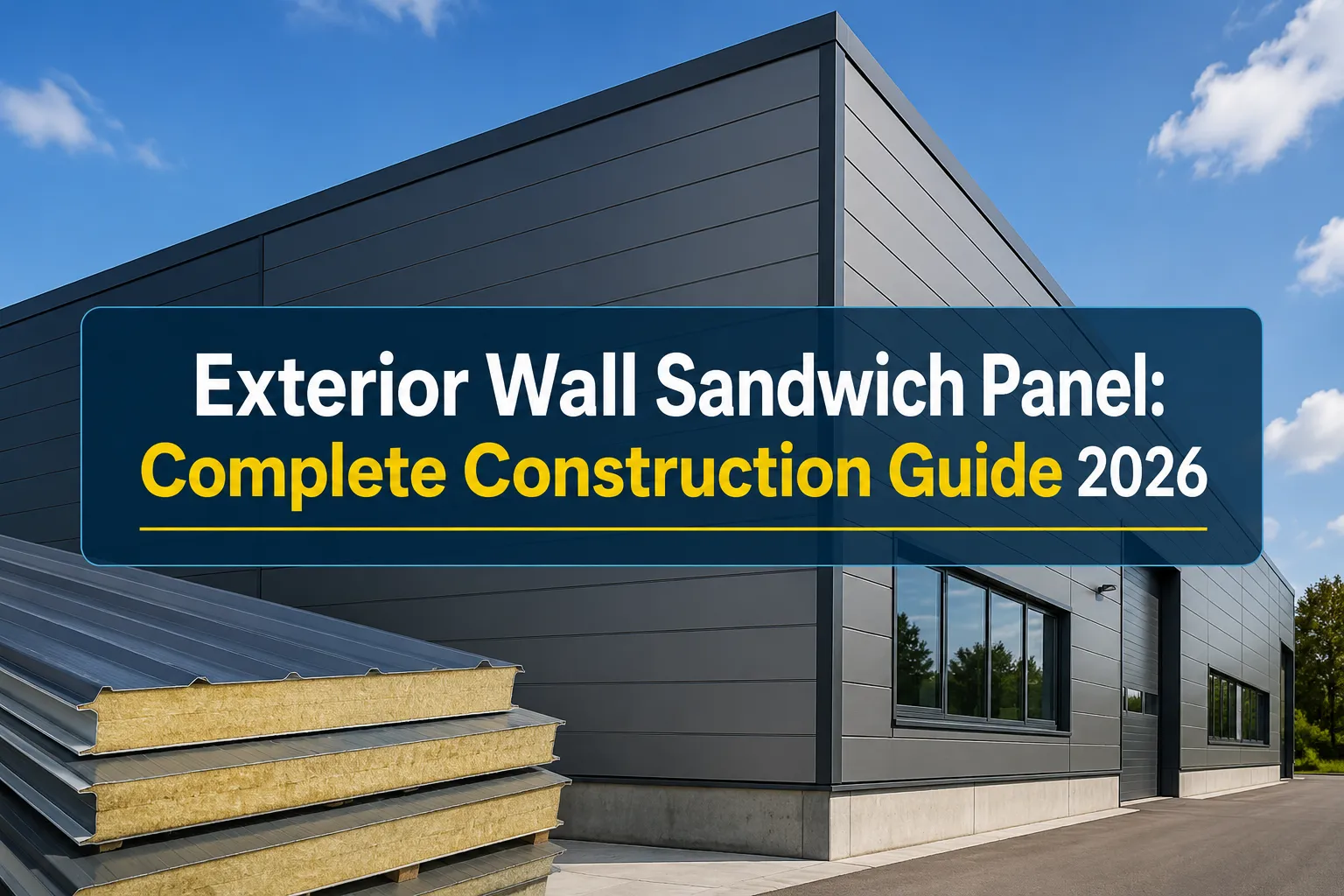
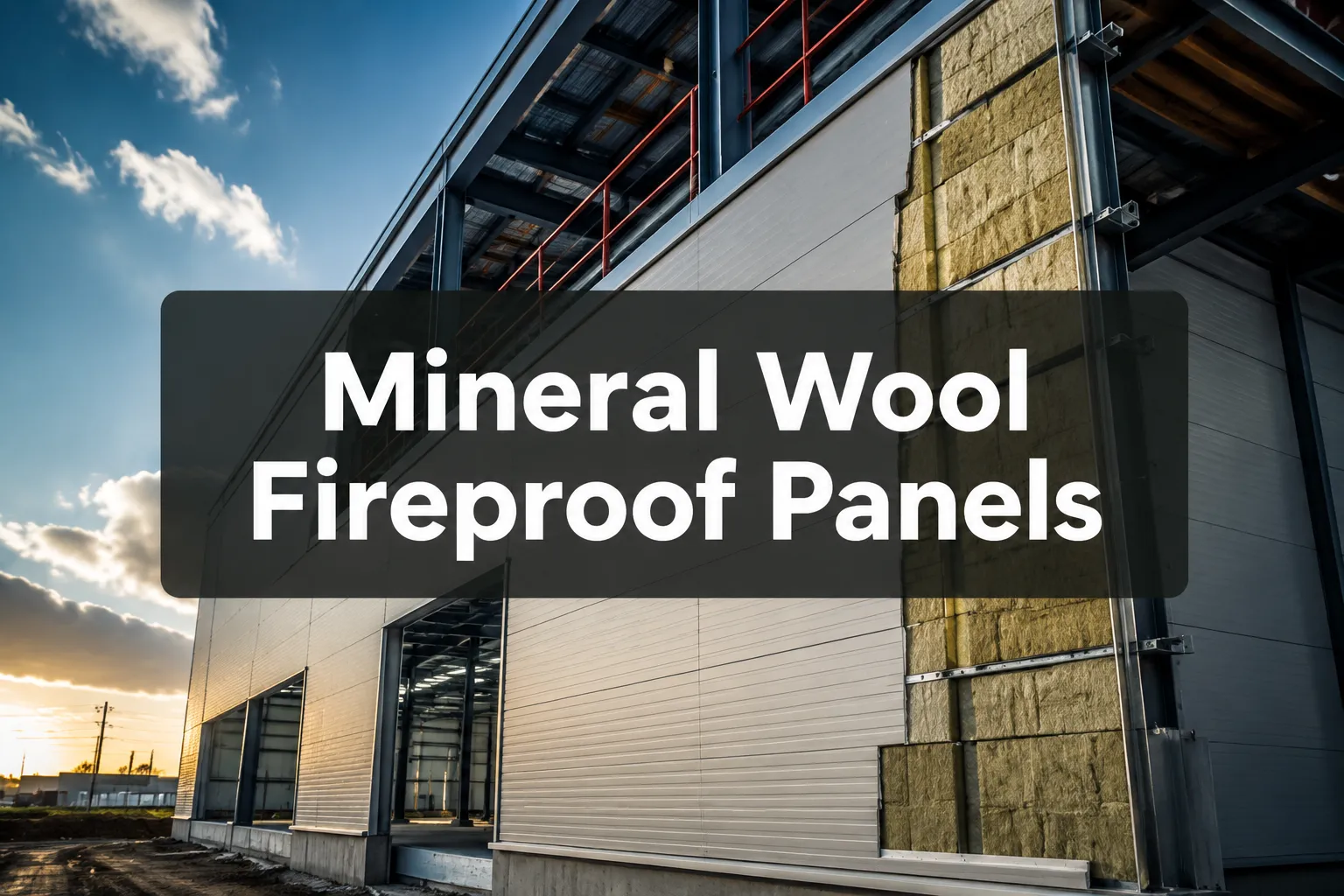
Mineral wool sandwich panels for fireproof wall construction consist of a dense mineral wool core sandwiched between two steel facings, typically galvanized or pre-painted steel sheets. The mineral wool core, made from basalt rock or steel slag heated to over 1,500°C, provides exceptional fire resistance by maintaining structural integrity at extreme temperatures.
The panels work through several fire protection mechanisms:
Fire Barrier Properties:
- Mineral wool core withstands temperatures up to 1,000°C without melting
- Steel facings provide structural support and weather protection
- Intumescent edge seals expand when heated to prevent fire spread
- Continuous barrier prevents flame and smoke penetration
Construction Details:
- Core density: 100-150 kg/m³ for fire-rated applications
- Steel facing thickness: 0.5-0.7mm depending on structural requirements
- Panel widths: Standard 1000mm, custom widths available
- Connection systems: Tongue-and-groove or overlapping joints with fire-rated sealants
The mineral wool core maintains its insulating properties even when exposed to fire, preventing heat transfer to the unexposed side of the wall. This characteristic makes these panels ideal for creating fire compartments in buildings where containing fire spread is critical.
For comprehensive fire safety specifications, review our detailed rockwool sandwich panel fire safety guide which covers testing standards and certification requirements.
How Fireproof Are Mineral Wool Sandwich Panels Really
Mineral wool sandwich panels for fireproof wall applications achieve verified fire resistance ratings from 60 to 240 minutes when tested according to international standards like ASTM E119, EN 1364-1, and AS 1530.4. The actual fire resistance depends on panel thickness, core density, and installation quality.
Certified Fire Ratings by Thickness:
- 50mm panels: 60-90 minutes fire resistance
- 75mm panels: 90-120 minutes fire resistance
- 100mm panels: 120-180 minutes fire resistance
- 150mm+ panels: 180-240 minutes fire resistance
Fire Performance Characteristics:
- Integrity: Panels prevent flame penetration for the full rated period
- Insulation: Unexposed surface temperature stays below 140°C average rise
- Load-bearing: Maintains structural capacity under fire conditions
- Smoke control: Minimal smoke production compared to organic insulation
Real-World Fire Performance:
Independent testing shows mineral wool panels outperform many traditional fire barriers. The mineral wool core doesn't contribute fuel to fires and actually helps suppress flame spread. Steel facings may deform under extreme heat but maintain barrier function throughout the rated period.
Common installation mistakes that reduce fire performance include inadequate joint sealing, missing fire stops at penetrations, and improper fastening schedules. Professional installation following manufacturer specifications ensures full fire rating performance.
For specific fire rating requirements in Bangladesh, consult our fire rated sandwich panel guide which covers local building codes and certification processes.
Mineral Wool Sandwich Panels Cost Per Square Meter
Mineral wool sandwich panels for fireproof wall construction cost between $25-45 per square meter for materials, with total installed costs ranging from $40-70 per square meter including labor and accessories. Pricing varies significantly based on panel thickness, fire rating requirements, and project specifications.
Material Cost Breakdown:
- 50mm panels: $25-30 per m²
- 75mm panels: $30-35 per m²
- 100mm panels: $35-40 per m²
- 150mm+ panels: $40-45 per m²
Additional Installation Costs:
- Fire-rated sealants and gaskets: $3-5 per m²
- Structural supports and fixings: $5-8 per m²
- Professional installation labor: $12-20 per m²
- Fire stopping at penetrations: $2-4 per m²
Cost Factors That Increase Pricing:
- Custom panel sizes or colors add 10-15% premium
- Higher fire ratings (180+ minutes) increase costs 20-30%
- Complex architectural details require additional fabrication
- Remote locations increase transportation and labor costs
Long-term Value Considerations:
While initial costs exceed standard insulated panels by 15-25%, mineral wool panels provide superior durability and lower maintenance costs. Insurance premiums may be reduced for buildings with certified fire-rated construction, offsetting higher upfront investment over the building lifecycle.
For current Bangladesh market pricing, reference our comprehensive sandwich panel price guide which includes supplier comparisons and bulk pricing options.
Mineral Wool vs Fiberglass Sandwich Panels for Fire Rating
Mineral wool sandwich panels significantly outperform fiberglass alternatives in fire resistance, achieving 60-240 minute ratings compared to fiberglass panels which typically max out at 30-60 minutes. The fundamental difference lies in material composition and behavior under fire conditions.
Fire Performance Comparison:
| Property | Mineral Wool | Fiberglass |
|---|---|---|
| Melting Point | 1,000°C+ | 540-660°C |
| Maximum Fire Rating | 240 minutes | 60 minutes |
| Smoke Production | Minimal | Moderate |
| Toxic Gas Release | None | Potential formaldehyde |
| Post-fire Integrity | Maintains structure | Deteriorates rapidly |
Key Performance Differences:
- Temperature Resistance: Mineral wool withstands nearly double the temperature of fiberglass before structural failure
- Fire Spread: Mineral wool acts as a fire barrier while fiberglass may contribute to flame spread
- Structural Integrity: Mineral wool panels maintain load-bearing capacity longer during fire exposure
- Recovery: Buildings with mineral wool panels often have less fire damage and faster recovery times
Application Suitability:
Choose mineral wool panels for high-risk applications including hospitals, schools, industrial facilities, and multi-story buildings where extended fire resistance is critical. Fiberglass panels may suffice for low-risk applications with minimal fire exposure requirements.
Cost vs. Performance Trade-off:
Mineral wool panels cost 20-40% more than fiberglass alternatives but provide 2-4 times longer fire resistance. For fireproof wall applications where life safety is paramount, the performance advantage justifies the additional investment.
Explore detailed comparisons in our EPS vs mineral wool panel analysis covering various core material options and their fire performance characteristics.
Best Brands of Mineral Wool Sandwich Panels
Leading mineral wool sandwich panel manufacturers for fireproof wall applications include Kingspan, Metecno, Isopan, and Ruukki, each offering certified fire-rated products with comprehensive testing documentation and warranty coverage.
Top International Brands:
Kingspan KS1000 AWP:
- Fire ratings up to 240 minutes
- Core density 145 kg/m³
- Extensive color and finish options
- Global availability and support
Metecno Isometal:
- Specialized fire-rated configurations
- Custom manufacturing capabilities
- Strong presence in industrial markets
- Comprehensive technical support
Isopan isoFIRE:
- Purpose-built for fire applications
- Multiple thickness options
- Certified to European standards
- Competitive pricing structure
Regional Considerations:
Local manufacturers often provide better pricing and faster delivery for standard applications. However, international brands typically offer superior technical support, wider product ranges, and more extensive testing documentation for critical fire-rated applications.
Selection Criteria:
- Verify fire rating certifications from accredited testing laboratories
- Review warranty terms and local service support availability
- Compare lead times and inventory availability for project schedules
- Evaluate technical support quality for complex installations
Quality Indicators:
Look for manufacturers with ISO 9001 quality certification, comprehensive product testing, and established track records in fire-rated construction. Request test reports and installation guidelines before finalizing supplier selection.
For Bangladesh-specific suppliers and availability, consult our rockwool sandwich panel suppliers guide which covers local distributors and import options.
How to Install Mineral Wool Sandwich Panels on Walls
Installing mineral wool sandwich panels for fireproof wall construction requires precise techniques to maintain fire ratings and structural integrity. Proper installation follows manufacturer specifications and fire safety standards to ensure certified performance.
Pre-Installation Requirements:
- Verify structural support capacity for panel loads
- Install continuous fire-rated vapor barrier if required
- Mark panel layout to minimize cuts and waste
- Prepare fire-rated sealants and fastening materials
Step-by-Step Installation Process:
-
Start with corner or reference panel
- Ensure plumb and level installation
- Apply fire-rated sealant to structural connections
- Secure with manufacturer-specified fasteners
-
Install subsequent panels
- Engage tongue-and-groove connections fully
- Apply continuous fire-rated sealant to joints
- Maintain consistent fastening pattern
-
Seal all penetrations
- Use approved fire-stopping materials
- Maintain fire rating at electrical and plumbing penetrations
- Document all fire-stopping installations
-
Complete edge details
- Install fire-rated trim and flashing
- Seal connections to adjacent construction
- Verify continuous fire barrier integrity
Critical Installation Details:
- Fastener spacing: Maximum 600mm centers for fire-rated applications
- Joint sealing: Continuous fire-rated sealant at all panel connections
- Structural connections: Engineer-specified attachments to building frame
- Quality control: Visual inspection of all joints and connections
Common Installation Errors:
Inadequate joint sealing reduces fire ratings significantly. Missing fire stops at penetrations create fire spread paths. Incorrect fastening patterns may cause panel failure under fire conditions.
For detailed installation procedures, reference our comprehensive sandwich panel installation guide with step-by-step instructions and quality control checklists.
Do Mineral Wool Sandwich Panels Need a Vapor Barrier
Mineral wool sandwich panels for fireproof wall applications require vapor barriers in high-humidity environments or when interior humidity levels consistently exceed 60%. The mineral wool core can absorb moisture, potentially reducing thermal performance and creating condensation issues within the wall assembly.
When Vapor Barriers Are Required:
- Swimming pools, laundries, and food processing facilities
- Climates with high humidity and temperature differentials
- Buildings with significant interior moisture generation
- Cold storage or refrigerated facility applications
Vapor Barrier Selection:
- Fire-rated barriers: Essential to maintain wall fire rating
- Permeability: Maximum 1.0 perm for effective moisture control
- Continuity: Sealed joints and penetrations prevent moisture bypass
- Compatibility: Must not compromise panel fire performance
Installation Considerations:
Install vapor barriers on the warm side of the insulation to prevent condensation within the mineral wool core. In fire-rated assemblies, use only fire-rated vapor barrier materials that maintain integrity during fire exposure. Seal all joints, penetrations, and connections to ensure continuous moisture protection.
Alternative Approaches:
Some mineral wool panels feature factory-applied vapor-resistant facings that eliminate separate vapor barrier requirements. These integrated systems simplify installation while maintaining fire ratings and moisture protection.
Moisture Management:
Even without vapor barriers, proper ventilation and humidity control reduce moisture risks. Design wall assemblies with adequate drying potential and avoid vapor traps that could concentrate moisture within the panel core.
For specific humidity control strategies, review our thermal insulation guide covering moisture management in various building applications.
Mineral Wool Sandwich Panels Fire Rating Standards Explained
Fire rating standards for mineral wool sandwich panels vary by region but follow similar testing protocols to evaluate integrity, insulation, and load-bearing performance under fire conditions. Understanding these standards ensures proper panel selection for specific fire safety requirements.
International Fire Testing Standards:
- ASTM E119 (USA): Standard test methods for fire tests of building construction materials
- EN 1364-1 (Europe): Fire resistance tests for non-loadbearing elements
- AS 1530.4 (Australia): Methods for fire tests on building materials and structures
- ISO 834 (International): Fire resistance tests – elements of building construction
Fire Rating Classifications:
Fire ratings indicate the time period (in minutes) that a wall assembly maintains its fire-resistant properties:
Integrity (E Rating):
- Prevents flame and hot gas penetration
- No sustained flaming on unexposed side
- Maintains structural continuity
Insulation (I Rating):
- Limits temperature rise on unexposed surface
- Maximum 140°C average temperature increase
- Maximum 180°C at any single point
Load-bearing (R Rating):
- Maintains structural capacity under fire exposure
- Supports design loads throughout test period
- No excessive deflection or collapse
Certification Process:
Accredited testing laboratories conduct full-scale fire tests on complete wall assemblies, not individual panels. Test results apply only to the specific configuration tested, including panel thickness, fastening details, and joint sealing methods.
Compliance Verification:
Building officials typically require certified test reports and installation documentation to verify fire rating compliance. Modifications to tested assemblies may void fire ratings and require additional testing or engineering analysis.
For Bangladesh building code requirements, consult our fire rated panel compliance guide covering local certification and approval processes.
Are Mineral Wool Sandwich Panels Safe for Residential Use
Mineral wool sandwich panels are safe for residential fireproof wall applications and offer superior fire protection compared to traditional residential construction methods. These panels contain no harmful chemicals and actually improve indoor air quality by preventing fire spread and reducing smoke infiltration.
Health and Safety Benefits:
- Non-toxic composition: Mineral wool contains no formaldehyde or volatile organic compounds
- Fire safety: Significantly reduces fire spread risk in residential buildings
- Air quality: Prevents smoke and toxic gas infiltration from adjacent spaces
- Allergen reduction: Sealed panel construction reduces dust and allergen infiltration
Residential Applications:
- Attached garages and workshop separations
- Basement fire-rated assemblies
- Multi-family building fire walls
- Home office or studio fire separations
Installation Considerations:
Residential installations must follow the same fire-rated construction principles as commercial applications. Proper joint sealing, fire stopping, and structural connections ensure full fire rating performance in residential settings.
Building Code Compliance:
Most residential building codes accept mineral wool sandwich panels for fire-rated wall construction when properly certified and installed. Verify local code requirements and obtain necessary permits before installation.
Cost-Benefit Analysis:
While initial costs exceed standard residential construction, mineral wool panels provide superior fire protection that may reduce insurance premiums and increase property values. The investment in fire safety often pays dividends through improved building performance and occupant protection.
Aesthetic Integration:
Modern mineral wool panels offer various finishes and colors that integrate well with residential architectural styles. Interior and exterior finishes can match traditional construction appearances while providing superior fire protection.
For residential project examples, explore our custom sandwich panel applications showcasing various residential fire-rated installations.
Mineral Wool Sandwich Panels Moisture and Condensation Issues
Mineral wool sandwich panels can experience moisture and condensation problems when improperly designed or installed, particularly in high-humidity environments or where significant temperature differentials exist across the wall assembly.
Common Moisture Problems:
- Interstitial condensation: Moisture vapor condenses within the mineral wool core
- Surface condensation: Forms on interior panel surfaces in high-humidity conditions
- Thermal bridging: Metal fasteners create cold spots that attract condensation
- Air leakage: Unsealed joints allow humid air infiltration into wall cavity
Risk Factors:
High-humidity applications like swimming pools, laundries, or food processing facilities create elevated moisture loads. Poor vapor barrier installation or missing air sealing allows moisture penetration into the panel core. Inadequate insulation thickness may cause surface temperatures below dew point.
Prevention Strategies:
Install continuous vapor barriers on the warm side of the insulation in heating climates. Use thermal breaks at structural connections to minimize thermal bridging. Seal all joints and penetrations to prevent air leakage. Design adequate ventilation to control interior humidity levels.
Moisture Management Solutions:
- Proper vapor barrier placement: Warm side installation prevents condensation
- Continuous air barrier: Prevents humid air infiltration
- Thermal bridging control: Insulated fasteners and connections
- Ventilation design: Controls interior humidity levels
Remediation Approaches:
Existing moisture problems require identifying and eliminating moisture sources, improving ventilation, and potentially replacing damaged insulation. Professional assessment helps determine appropriate remediation strategies for specific conditions.
Design Guidelines:
Calculate dew point locations within wall assemblies to prevent condensation. Specify appropriate vapor barrier permeability ratings for climate conditions. Design wall assemblies with adequate drying potential to handle occasional moisture exposure.
How Long Do Mineral Wool Sandwich Panels Last
Mineral wool sandwich panels for fireproof wall applications typically last 50+ years with minimal maintenance when properly installed and protected from weather exposure. The mineral wool core maintains its properties indefinitely, while steel facings may require periodic maintenance depending on environmental conditions.
Longevity Factors:
- Core material: Mineral wool doesn't degrade over time and maintains fire resistance
- Steel facings: Galvanized or painted steel provides 25-50 year protection
- Sealants and gaskets: Require replacement every 15-25 years
- Environmental exposure: Weather protection significantly extends lifespan
Maintenance Requirements:
Inspect joint sealants annually and replace as needed to maintain fire ratings. Check fastener tightness and panel alignment after extreme weather events. Clean panel surfaces periodically to prevent dirt accumulation that could affect performance.
Performance Degradation:
Fire resistance properties remain constant throughout panel lifespan since mineral wool doesn't deteriorate. Thermal performance may decrease slightly if moisture infiltration occurs, but proper vapor barriers prevent this issue.
End-of-Life Considerations:
Mineral wool panels are recyclable, with steel facings having high scrap value and mineral wool core suitable for reprocessing. This recyclability reduces long-term environmental impact compared to non-recyclable insulation materials.
Warranty Coverage:
Most manufacturers provide 15-25 year warranties on material defects and performance. Extended warranties may be available for specific applications or environmental conditions. Review warranty terms carefully to understand coverage limitations and maintenance requirements.
Life Cycle Costs:
While initial costs exceed some alternatives, the long lifespan and minimal maintenance requirements result in lower total cost of ownership. Factor in energy savings, reduced maintenance costs, and potential insurance benefits when evaluating long-term value.
For warranty information and maintenance guidelines, consult our sandwich panel warranty guide covering various manufacturer programs and coverage options.
Mineral Wool Sandwich Panels vs Traditional Brick Fireproofing
Mineral wool sandwich panels offer superior fire performance compared to traditional brick fireproofing while providing faster installation, better insulation, and lower overall costs for most fireproof wall applications.
Fire Performance Comparison:
| Aspect | Mineral Wool Panels | Brick Fireproofing |
|---|---|---|
| Fire Rating | Up to 240 minutes | 120-180 minutes typical |
| Installation Speed | 3-5x faster | Traditional masonry pace |
| Thermal Performance | R-20 to R-35 | R-2 to R-4 |
| Weight | 15-25 kg/m² | 150-300 kg/m² |
| Thickness | 50-200mm | 100-200mm minimum |
Performance Advantages:
Mineral wool panels achieve higher fire ratings in thinner cross-sections while providing excellent thermal insulation. Installation speed significantly reduces construction schedules and labor costs. Lighter weight reduces structural loading requirements.
Traditional Brick Benefits:
Brick construction offers proven durability and aesthetic appeal for certain architectural styles. Material costs may be lower in regions with abundant clay resources. Some building codes specifically require masonry construction for certain applications.
Cost Analysis:
Initial material costs favor brick in many markets, but mineral wool panels typically cost less when installation labor and structural requirements are included. Faster installation reduces project schedules and financing costs.
Application Suitability:
Choose mineral wool panels for industrial, commercial, and residential applications where fire performance, insulation, and installation speed are priorities. Brick fireproofing remains preferred for historical restoration, high-security applications, or where local codes mandate masonry construction.
Hybrid Approaches:
Some projects combine both systems, using mineral wool panels for primary fire resistance and brick veneer for aesthetic appeal. This approach provides optimal performance while meeting architectural requirements.
Can You Cut and Customize Mineral Wool Sandwich Panels
Mineral wool sandwich panels for fireproof wall applications can be cut and customized on-site using standard construction tools, but modifications may affect fire ratings and require additional sealing to maintain certified performance.
Cutting Methods:
- Circular saw: Use fine-tooth blade for clean cuts through steel facings
- Reciprocating saw: Effective for rough openings and irregular cuts
- Nibbler: Precise cuts in steel facings without disturbing core material
- Hot knife: Specialized tool for clean mineral wool core cuts
Customization Options:
Standard panels accommodate most architectural requirements, but custom fabrication provides optimal fit and performance. Factory customization maintains fire ratings and warranty coverage, while field modifications require careful attention to fire-stopping details.
Fire Rating Considerations:
Field cuts and modifications may void fire rating certifications unless properly sealed with approved fire-rated materials. Maintain continuous fire barriers at all cuts and penetrations. Document all modifications for building code compliance verification.
Best Practices:
- Plan panel layout to minimize field cuts
- Use factory-fabricated panels for complex shapes when possible
- Seal all field cuts with fire-rated sealants
- Install proper fire stopping at penetrations
- Verify modified assemblies meet fire rating requirements
Professional Installation:
Complex customizations benefit from professional installation to ensure proper fire-stopping and code compliance. Experienced installers understand fire rating requirements and can modify panels while maintaining certified performance.
Quality Control:
Inspect all field modifications to verify proper sealing and fire-stopping. Poor field modifications are common sources of fire rating failures and code violations.
For complex customization requirements, consider our custom sandwich panel services which provide factory fabrication to exact specifications while maintaining fire certifications.
Mineral Wool Sandwich Panels Soundproofing Benefits
Mineral wool sandwich panels for fireproof wall construction provide excellent acoustic performance, achieving sound transmission class (STC) ratings of 35-45 depending on panel thickness and installation details. The dense mineral wool core effectively absorbs sound energy while the steel facings provide mass for sound blocking.
Acoustic Performance Ratings:
- 50mm panels: STC 35-38
- 75mm panels: STC 38-42
- 100mm panels: STC 40-45
- 150mm+ panels: STC 45+ with proper installation
Sound Control Mechanisms:
The mineral wool core absorbs sound energy through its fibrous structure, while the steel facings provide mass that blocks sound transmission. Proper installation with sealed joints prevents sound flanking paths that reduce acoustic performance.
Application Benefits:
Fire-rated walls often serve dual purposes as acoustic barriers between spaces. Mineral wool panels excel in applications like hotel room separations, office partitions, and industrial noise control where both fire safety and sound control are required.
Installation for Maximum Acoustic Performance:
Seal all joints with acoustic sealant to prevent sound leaks. Avoid rigid connections between panels and structure that could transmit vibration. Install continuous gaskets at panel connections to eliminate air gaps.
Comparison to Alternatives:
Mineral wool panels typically outperform fiberglass alternatives in acoustic applications due to higher core density. Performance approaches that of traditional stud wall construction while providing superior fire resistance.
Multi-Benefit Value:
The combination of fire resistance, thermal insulation, and acoustic performance makes mineral wool panels cost-effective for applications requiring multiple performance criteria. Single-component solutions reduce complexity and installation costs.
For detailed acoustic specifications, review our rockwool panel acoustic properties guide covering sound transmission testing and performance data.
Frequently Asked Questions
What fire rating do mineral wool sandwich panels achieve?
Mineral wool sandwich panels achieve fire ratings from 60 to 240 minutes depending on thickness and construction details. Standard 100mm panels typically provide 120-180 minutes of fire resistance when properly installed with fire-rated joint sealing.
How much do mineral wool sandwich panels cost compared to regular panels?
Mineral wool sandwich panels cost 15-25% more than standard EPS panels but provide superior fire resistance. Material costs range from $25-45 per square meter, with total installed costs of $40-70 per square meter including professional installation.
Can mineral wool sandwich panels be used in residential construction?
Yes, mineral wool sandwich panels are safe and effective for residential fireproof wall applications. They're commonly used for garage separations, basement fire walls, and multi-family building fire barriers while meeting residential building codes.
Do mineral wool panels require special installation techniques?
Mineral wool panels require fire-rated sealants at all joints and proper fire-stopping at penetrations to maintain certified fire ratings. Professional installation ensures compliance with manufacturer specifications and building code requirements.
How do mineral wool panels compare to brick for fire protection?
Mineral wool panels achieve higher fire ratings (up to 240 minutes vs. 120-180 for brick) while providing better insulation and faster installation. They're lighter weight and more cost-effective for most fireproof wall applications.
What maintenance do mineral wool sandwich panels require?
Minimal maintenance is required – inspect joint sealants annually and replace every 15-25 years as needed. Clean panel surfaces periodically and check fastener tightness after severe weather events to maintain optimal performance.
Can you cut mineral wool sandwich panels on site?
Yes, mineral wool panels can be cut using standard construction tools, but all field cuts must be sealed with fire-rated materials to maintain fire ratings. Factory customization is preferred for complex shapes to ensure certified performance.
Do mineral wool panels need vapor barriers?
Vapor barriers are required in high-humidity environments or when interior humidity consistently exceeds 60%. Install fire-rated vapor barriers on the warm side of the insulation to prevent condensation within the mineral wool core.
What thickness of mineral wool panel do I need for 2-hour fire rating?
A 2-hour (120-minute) fire rating typically requires 75-100mm mineral wool sandwich panels with proper installation and fire-rated joint sealing. Verify specific requirements with manufacturer test data and local building codes.
Are mineral wool sandwich panels environmentally friendly?
Yes, mineral wool panels are made from abundant natural materials (basalt rock) or recycled steel slag. They're fully recyclable at end of life and provide energy savings through superior insulation performance throughout their 50+ year lifespan.
How long do mineral wool sandwich panels last?
Mineral wool sandwich panels last 50+ years with minimal maintenance when properly installed. The mineral wool core maintains properties indefinitely, while steel facings provide 25-50 years of protection depending on environmental conditions.
Can mineral wool panels be painted or finished?
Yes, mineral wool sandwich panels accept most architectural finishes including paint, stucco, and cladding systems. Factory-finished panels offer superior durability and appearance compared to field-applied finishes while maintaining fire ratings.
Conclusion
Mineral wool sandwich panels for fireproof wall construction represent the gold standard for combining fire safety, thermal performance, and installation efficiency in modern building design. With fire ratings reaching 240 minutes and comprehensive benefits including acoustic control and long-term durability, these panels provide superior value for critical fire-rated applications.
The key to successful implementation lies in proper specification, professional installation, and attention to fire-rated details like joint sealing and penetration fire-stopping. While initial costs exceed standard construction methods by 15-25%, the combination of fire safety, energy efficiency, and minimal maintenance requirements delivers strong long-term value.
Next Steps:
- Evaluate your specific fire rating requirements and building code compliance needs
- Request certified test data and installation specifications from qualified manufacturers
- Obtain quotes from experienced installers familiar with fire-rated construction
- Verify local building department approval processes for fire-rated assemblies
- Consider professional design review for complex applications or high-risk facilities
For project-specific guidance and supplier recommendations, consult with fire protection engineers and experienced contractors who understand the critical importance of proper fire-rated construction details.
SEO Meta Title: Mineral Wool Sandwich Panels Fireproof Wall Guide 2026
SEO Meta Description: Complete guide to mineral wool sandwich panels for fireproof walls. Fire ratings, costs, installation, brands & specifications. Professional advice for 2026 projects.