Last updated: July 31, 2026

Quick Answer
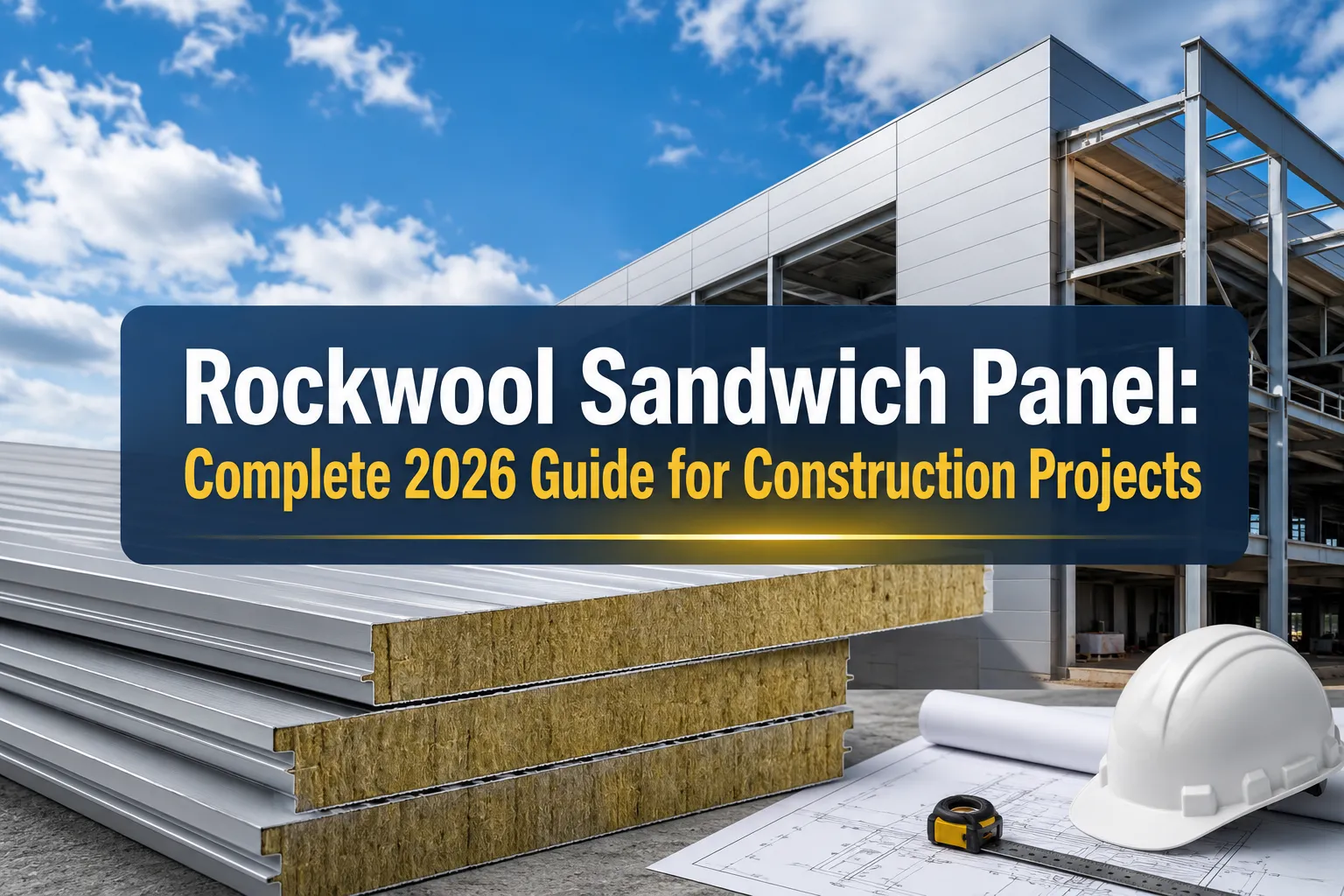
Rockwool sandwich panels are composite building materials consisting of a mineral wool core sandwiched between two metal facings, typically steel or aluminum. These panels provide superior fire resistance, thermal insulation, and acoustic performance compared to traditional building materials. They're commonly used in industrial buildings, cold storage facilities, and commercial construction where fire safety and energy efficiency are critical requirements.
Key Takeaways
- Rockwool sandwich panels offer Class A fire resistance with melting points exceeding 1000°C
- Thermal performance ranges from R-3.5 to R-7 per inch depending on density and thickness
- Cost typically ranges from $15-35 per square meter including installation
- Available in thicknesses from 50mm to 200mm for various applications
- Superior acoustic dampening properties reduce noise transmission by 40-60 decibels
- Lifespan exceeds 30 years with proper installation and maintenance
- Moisture resistance prevents mold growth and structural degradation
- Installation requires specialized tools and trained professionals for optimal performance
What Is a Rockwool Sandwich Panel and How Does It Work
A rockwool sandwich panel consists of three main components: two outer metal skins and a core made from mineral wool (rockwool) insulation. The mineral wool core is manufactured by melting basalt rock and recycled steel slag at temperatures above 1500°C, then spinning the molten material into fibers.
The panel works through multiple mechanisms:
Thermal Insulation: The rockwool core contains millions of tiny air pockets that trap heat, preventing thermal transfer through the building envelope. The fibrous structure creates a barrier that significantly reduces heat loss in winter and heat gain in summer.
Fire Protection: Unlike organic insulation materials, rockwool is non-combustible and acts as a fire barrier. The mineral fibers maintain their structure even at extreme temperatures, providing passive fire protection for up to 4 hours depending on panel thickness.
Sound Dampening: The dense, fibrous structure absorbs sound waves across multiple frequencies. This makes rockwool sandwich panels ideal for buildings requiring acoustic control, such as manufacturing facilities or buildings near airports.
Moisture Management: The mineral wool core is naturally hydrophobic and vapor permeable, allowing moisture to escape while preventing water absorption that could lead to mold growth or structural damage.
Choose rockwool sandwich panels when fire safety is paramount, such as in chemical processing facilities, or when you need combined thermal and acoustic performance in a single building component.
Rockwool Sandwich Panel vs Fiberglass Insulation Comparison
Rockwool sandwich panels outperform fiberglass insulation in fire resistance, moisture tolerance, and acoustic properties, though at a higher initial cost. The key differences determine which material suits specific construction requirements.
Fire Performance: Rockwool maintains structural integrity at temperatures up to 1177°C, while fiberglass begins degrading at 260°C. This makes rockwool the clear choice for buildings requiring Class A fire ratings or those storing flammable materials.
Moisture Resistance: Rockwool repels water naturally and dries quickly if exposed to moisture. Fiberglass absorbs water, loses insulation value when wet, and can promote mold growth. For humid environments or buildings with condensation concerns, rockwool provides superior long-term performance.
Acoustic Control: Rockwool's density (typically 100-150 kg/m³) provides better sound absorption than fiberglass (10-50 kg/m³). Rockwool panels can reduce noise transmission by 45-60 decibels compared to 25-35 decibels for fiberglass systems.
Cost Considerations: Fiberglass insulation costs 30-50% less initially, but rockwool's durability and performance often justify the higher upfront investment. Factor in energy savings, fire insurance premiums, and replacement costs when comparing total lifecycle value.
Installation Differences: Rockwool sandwich panels install as complete units, reducing labor time and eliminating thermal bridging. Fiberglass requires separate installation of insulation, vapor barriers, and cladding systems.
Choose rockwool when building codes require fire resistance, when acoustic control is important, or for buildings in harsh climates. Select fiberglass for budget-conscious projects where fire and moisture concerns are minimal.
For detailed fire safety specifications, see our complete guide to rockwool sandwich panel fire safety.
Rockwool Sandwich Panel Cost Per Square Meter
Rockwool sandwich panel costs range from $15-35 per square meter installed, depending on thickness, facing materials, and project complexity. This price includes materials, delivery, and professional installation but excludes structural modifications or specialized fastening systems.
Price Breakdown by Thickness:
- 50mm panels: $15-20 per square meter
- 75mm panels: $18-25 per square meter
- 100mm panels: $22-30 per square meter
- 150mm panels: $28-35 per square meter
Factors Affecting Cost:
Panel Specifications: Thicker panels cost more due to increased material content. Premium facing materials like aluminum or pre-finished steel add $3-8 per square meter compared to galvanized steel.
Project Scale: Orders above 1000 square meters typically qualify for volume discounts of 10-20%. Small projects under 200 square meters may incur minimum order surcharges.
Installation Complexity: Standard wall installations cost less than roof applications or curved surfaces. Complex geometries, multiple penetrations, or height restrictions can increase labor costs by 25-40%.
Geographic Location: Remote locations or areas with limited suppliers may see 15-30% higher costs due to transportation and logistics.
Additional Costs to Consider:
- Structural modifications: $5-15 per square meter
- Special fasteners and sealants: $2-5 per square meter
- Fire-rated accessories: $3-8 per square meter
- Professional design services: $1-3 per square meter
Compare quotes from multiple suppliers and ensure all costs are included. The lowest price may not represent the best value if installation quality or material specifications are compromised.
For current pricing in Bangladesh, check our sandwich panel price guide.
Best Rockwool Sandwich Panel Brands and Suppliers
Leading rockwool sandwich panel manufacturers include Kingspan, Metecno, Tata Steel, and ArcelorMittal, each offering distinct advantages in quality, availability, and technical support. Brand selection should align with project requirements, local availability, and long-term warranty coverage.
Top Global Brands:
Kingspan: Premium manufacturer known for superior fire ratings and thermal performance. Their KS1000 RW series offers Class A fire resistance and R-values up to R-7 per inch. Best for projects requiring maximum performance and comprehensive technical support.
Metecno: Italian manufacturer with strong presence in Asia and Middle East. Offers competitive pricing while maintaining European quality standards. Their Isometal line provides good value for standard commercial applications.
Tata Steel: Major supplier in Asian markets with local manufacturing capabilities. Provides cost-effective solutions with reliable quality control. Strong technical support and faster delivery times in regional markets.
ArcelorMittal: Global steel producer offering integrated sandwich panel solutions. Competitive pricing for large-scale projects and excellent availability through extensive distribution networks.
Supplier Selection Criteria:
Technical Certifications: Verify fire ratings, thermal performance data, and structural load capacities meet local building codes. Request third-party test reports and certification documents.
Warranty Coverage: Standard warranties range from 10-25 years. Premium brands offer longer coverage and more comprehensive terms including weathering, thermal performance, and structural integrity.
Local Support: Choose suppliers with regional technical representatives, installation training programs, and readily available replacement parts.
Project Experience: Select suppliers with proven track records in similar applications. Request references and case studies from comparable projects.
Common Mistake: Selecting suppliers based solely on price without evaluating technical support, warranty terms, or local availability. Poor supplier selection can lead to project delays, performance issues, and limited recourse for problems.
For Bangladesh-specific suppliers, see our guide to choosing the best sandwich panel manufacturer.
Rockwool Sandwich Panel Installation Guide
Rockwool sandwich panel installation requires proper planning, specialized tools, and trained personnel to achieve optimal performance and warranty compliance. The process involves structural preparation, panel positioning, sealing, and quality verification.
Pre-Installation Requirements:
Structural Assessment: Verify that supporting structure can handle panel loads plus wind and seismic forces. Rockwool panels typically weigh 15-25 kg per square meter depending on thickness.
Tool Requirements: Panel lifter, magnetic drill, torque wrench, sealant gun, measuring tools, and safety equipment. Specialized vacuum lifters are essential for panels over 100mm thickness.
Weather Conditions: Install only in dry conditions with temperatures between 5-35°C. Wind speeds should not exceed 25 km/h during installation.
Step-by-Step Installation Process:
-
Layout and Marking: Mark panel positions on structure using chalk lines. Verify dimensions and account for thermal expansion joints every 50-75 meters.
-
First Panel Placement: Position corner or starter panel using lifting equipment. Check plumb and level before fastening. Use temporary bracing to maintain position.
-
Panel Connection: Engage male/female joint system completely. Apply structural sealant to horizontal joints before positioning next panel. Verify proper engagement along entire joint length.
-
Fastening: Install fasteners at specified intervals using manufacturer-recommended torque settings. Typical spacing is 300-600mm depending on wind loads and panel thickness.
-
Sealing: Apply weather sealant to all external joints within 24 hours of installation. Use compatible sealants specified by panel manufacturer.
-
Quality Control: Inspect joint engagement, fastener installation, and sealant application. Document any defects for correction before project completion.
Critical Installation Mistakes:
- Insufficient structural support leading to panel deflection
- Improper joint engagement causing air leakage
- Over-torquing fasteners that compress insulation core
- Using incompatible sealants that don't adhere properly
Professional installation typically takes 8-12 hours per 100 square meters with a trained crew. DIY installation is not recommended due to safety requirements and warranty implications.
For detailed roof installation procedures, see our sandwich panel roof installation guide.
Rockwool Sandwich Panel Fire Rating and Safety Specs
Rockwool sandwich panels achieve Class A fire ratings with fire resistance periods up to 240 minutes, making them suitable for the most demanding fire safety applications. The mineral wool core maintains structural integrity at temperatures exceeding 1000°C while the metal facings provide additional protection.
Fire Performance Standards:
ASTM E119/UL 263: Rockwool panels typically achieve 2-4 hour fire resistance ratings depending on thickness and construction details. 100mm panels commonly provide 2-hour ratings while 150mm panels can achieve 4-hour ratings.
EN 13501-2: European classification ranges from EI 60 to EI 240 for integrity and insulation criteria. REI ratings include load-bearing capacity for structural applications.
Key Safety Specifications:
Flame Spread Index: Class A rating with flame spread index of 0-25 and smoke development index below 450. This meets requirements for most building occupancy types without additional fire protection.
Melting Point: Mineral wool fibers maintain structure up to 1177°C, well above typical building fire temperatures of 800-900°C. This prevents structural collapse and toxic gas release.
Smoke Production: Rockwool produces minimal smoke compared to organic insulation materials. Low smoke density aids evacuation and firefighting operations.
Toxic Gas Emissions: Testing shows negligible production of toxic gases during fire exposure. This is critical for occupied buildings where smoke inhalation is the primary cause of fire fatalities.
Installation Requirements for Fire Rating:
Joint Sealing: Fire-rated sealants must be used at all panel joints to maintain fire barrier integrity. Standard construction sealants may fail at lower temperatures.
Penetration Details: All electrical, plumbing, and HVAC penetrations require fire-rated sealing systems. Unsealed penetrations can compromise the entire fire barrier.
Structural Support: Supporting structure must maintain integrity for the full fire rating period. Steel supports may require fire protection coatings.
Documentation: Maintain installation records and use only approved materials to ensure warranty and insurance coverage. Building inspectors typically require certification of fire-rated assemblies.
Choose fire-rated rockwool panels for buildings storing hazardous materials, high-occupancy structures, or where building codes mandate specific fire resistance periods.
Rockwool Sandwich Panel Thickness Options and R-Value
Rockwool sandwich panels are available in thicknesses from 50mm to 200mm, with thermal resistance (R-value) ranging from R-3.5 to R-14 depending on panel thickness and rockwool density. Proper thickness selection balances thermal performance, structural requirements, and cost considerations.
Standard Thickness Options:
50mm Panels: R-3.5 to R-4.2, suitable for mild climates or interior partitions. Commonly used for warehouse walls in temperate regions or acoustic barriers.
75mm Panels: R-5.3 to R-6.3, appropriate for standard commercial buildings in moderate climates. Good balance of cost and performance for most applications.
100mm Panels: R-7.0 to R-8.4, recommended for cold storage facilities or energy-efficient buildings. Meets most energy codes for commercial construction.
150mm Panels: R-10.5 to R-12.6, used for extreme climate conditions or specialized applications like pharmaceutical storage.
200mm Panels: R-14.0 to R-16.8, reserved for ultra-low temperature storage or buildings requiring maximum energy efficiency.
R-Value Factors:
Rockwool Density: Higher density (120-150 kg/m³) provides better R-value but increases cost and weight. Standard density (80-100 kg/m³) offers good performance for most applications.
Thermal Bridging: Metal facings create thermal bridges that reduce overall R-value by 10-15%. Thermal break systems can minimize this effect but add cost and complexity.
Installation Quality: Gaps, compressed insulation, or poor joint sealing can reduce effective R-value by 20-40%. Proper installation is critical for achieving rated performance.
Thickness Selection Guidelines:
Climate Zone 1-2 (Hot): 50-75mm panels typically sufficient
Climate Zone 3-4 (Moderate): 75-100mm panels recommended
Climate Zone 5-6 (Cold): 100-150mm panels required
Climate Zone 7-8 (Very Cold): 150-200mm panels necessary
Special Applications:
- Cold storage (-18°C): Minimum 100mm, often 150mm
- Freezer storage (-29°C): 150-200mm required
- Clean rooms: 75-100mm for temperature control
- Acoustic barriers: Thickness affects sound absorption
Consider local energy codes, utility costs, and payback periods when selecting thickness. Thicker panels cost more initially but provide greater long-term energy savings.
For thickness recommendations by application, see our guide to sandwich panel thickness selection.
Rockwool Sandwich Panel for Cold Storage vs Warehouse Applications
Rockwool sandwich panels perform differently in cold storage versus warehouse environments due to varying temperature requirements, moisture conditions, and structural demands. Cold storage applications require thicker panels and specialized details to prevent thermal bridging and condensation.
Cold Storage Requirements:
Thermal Performance: Cold storage facilities typically require R-values of R-20 to R-35 depending on storage temperature. This necessitates 100-200mm rockwool panels or dual-layer systems.
Vapor Control: Continuous vapor barriers are essential to prevent moisture migration into the insulation core. Rockwool's natural moisture resistance provides advantages over organic insulation materials that can freeze and lose effectiveness.
Thermal Bridging: Metal panel facings create significant thermal bridges in cold storage applications. Thermal break systems or structural glazing techniques may be necessary to maintain energy efficiency.
Structural Loads: Temperature differentials create thermal stresses that must be accommodated through expansion joints and flexible connections. Panel support systems require careful design to prevent stress concentration.
Warehouse Applications:
Moderate Insulation: Warehouses typically require R-10 to R-20 depending on climate and contents. Standard 75-100mm panels usually provide adequate performance.
Simplified Details: Less stringent vapor control requirements allow simpler installation details and reduced costs compared to cold storage facilities.
Fire Safety Priority: Warehouse applications often prioritize fire resistance over maximum thermal performance, making rockwool an ideal choice due to its non-combustible properties.
Application Comparison:
| Feature | Cold Storage | Warehouse |
|---|---|---|
| Panel Thickness | 100-200mm | 75-100mm |
| R-Value Required | R-20 to R-35 | R-10 to R-20 |
| Vapor Barrier | Critical | Moderate |
| Installation Cost | High | Moderate |
| Energy Impact | Very High | Moderate |
Common Design Mistakes:
- Using warehouse-grade panels for cold storage applications
- Inadequate vapor barrier systems in cold storage
- Ignoring thermal expansion in large temperature differentials
- Insufficient structural support for thermal stress loads
Choose cold storage specifications when interior temperatures will be below 4°C or when storing temperature-sensitive products. Warehouse specifications are adequate for ambient or mildly conditioned storage environments.
For cold storage panel details, see our PU sandwich panel cold room guide.
Rockwool Sandwich Panel Moisture Problems and Condensation Control
Rockwool sandwich panels resist moisture absorption but can experience condensation issues if improperly designed or installed. Understanding moisture dynamics and implementing appropriate control strategies prevents mold growth, structural damage, and insulation degradation.
Moisture Resistance Properties:
Rockwool mineral fibers are naturally hydrophobic, repelling liquid water while allowing vapor transmission. This characteristic prevents the insulation from becoming saturated and losing thermal effectiveness, unlike organic materials that absorb and retain moisture.
Common Condensation Problems:
Interstitial Condensation: Occurs when warm, humid air penetrates the panel assembly and reaches the dew point within the insulation core. This typically happens due to inadequate vapor barriers or air sealing failures.
Surface Condensation: Forms on interior surfaces when indoor humidity is high and surface temperatures drop below the dew point. Most common during startup of HVAC systems or in buildings with high moisture loads.
Thermal Bridge Condensation: Metal panel facings can create cold spots that promote condensation even when the insulation core remains dry. This is particularly problematic in cold storage or high-humidity applications.
Prevention Strategies:
Vapor Barrier Systems: Install continuous vapor barriers on the warm side of the insulation to prevent moisture migration. Use compatible tapes and sealants to maintain continuity at joints and penetrations.
Air Sealing: Eliminate air leakage paths that can transport moisture into the panel assembly. Pay special attention to panel joints, penetrations, and connections to structural elements.
Thermal Break Details: Use thermal breaks at structural connections to minimize cold spots that could promote condensation. This is especially important in cold storage applications.
Ventilation Design: Provide adequate ventilation to control indoor humidity levels. Mechanical ventilation may be necessary in high-moisture applications like food processing or swimming pools.
Troubleshooting Moisture Issues:
Identify Source: Determine whether moisture is from air leakage, vapor diffusion, or external water intrusion. This affects the appropriate repair strategy.
Drying Procedures: Rockwool dries quickly when moisture sources are eliminated. Forced air circulation can accelerate drying in enclosed spaces.
Repair Methods: Replace damaged vapor barriers, seal air leakage paths, and improve ventilation as needed. Document repairs for warranty purposes.
Edge Case: In extremely humid environments (>80% RH), even rockwool can experience surface moisture on the fibers. This doesn't affect thermal performance but may require enhanced ventilation or dehumidification.
Proper moisture control design prevents 90% of panel moisture problems. Invest in quality vapor barriers and professional installation to avoid costly remediation later.
Rockwool Sandwich Panel Lifespan and Durability
Rockwool sandwich panels typically last 30-50 years with proper installation and maintenance, significantly outlasting many alternative building systems. The mineral wool core is dimensionally stable and doesn't degrade over time, while metal facings provide long-term weather protection.
Durability Factors:
Core Material Stability: Rockwool mineral fibers don't settle, compress, or decompose like organic insulation materials. The fibrous structure maintains its thermal and acoustic properties throughout the building's service life.
Corrosion Resistance: Pre-finished metal facings with polyester or PVDF coatings resist corrosion and UV degradation. Galvanized steel facings provide 20-30 year service life while premium coatings can last 40+ years.
Thermal Cycling: Rockwool panels accommodate repeated thermal expansion and contraction without cracking or delamination. This is critical in applications with large temperature variations.
Moisture Tolerance: The hydrophobic nature of rockwool prevents moisture-related degradation that affects other insulation types. Panels maintain performance even after temporary water exposure.
Performance Over Time:
Years 1-10: Minimal performance degradation with proper installation. Thermal and acoustic properties remain stable.
Years 10-25: Gradual weathering of exterior finishes may occur. Sealants may require replacement every 10-15 years.
Years 25-40: Metal facings may show signs of aging depending on environmental conditions. Core insulation typically maintains full performance.
Years 40+: Replacement may be necessary based on aesthetic requirements rather than performance degradation.
Maintenance Requirements:
Annual Inspections: Check sealant condition, fastener tightness, and surface finishes. Address minor issues before they become major problems.
Sealant Replacement: Expect to replace exterior sealants every 10-20 years depending on climate and sealant quality.
Surface Cleaning: Periodic cleaning maintains appearance and prevents buildup of corrosive contaminants.
Damage Repair: Address impact damage, scratches, or penetrations promptly to prevent water intrusion and corrosion.
Factors Affecting Lifespan:
Environmental Conditions: Coastal environments, industrial pollution, and extreme weather reduce service life. Panels in benign environments can exceed 50-year lifespans.
Installation Quality: Poor installation reduces durability through air leakage, thermal bridging, and inadequate support.
Building Use: High-traffic areas, chemical exposure, or mechanical abuse can shorten panel life.
Maintenance Program: Regular maintenance extends service life and maintains warranty coverage.
End-of-Life Considerations: Rockwool is recyclable, and metal facings have scrap value. This makes panel replacement more economical than disposal of non-recyclable materials.
Choose rockwool panels when long-term durability is important and when lifecycle costs are more critical than initial investment.
Are Rockwool Sandwich Panels Better Than Metal Studs
Rockwool sandwich panels outperform metal stud systems in thermal efficiency, installation speed, and air sealing, but metal studs offer greater design flexibility and lower material costs. The choice depends on project priorities, building codes, and long-term performance requirements.
Performance Comparison:
Thermal Efficiency: Rockwool panels eliminate thermal bridging that reduces metal stud wall R-values by 30-50%. A 100mm rockwool panel (R-8) outperforms a metal stud wall with R-13 batt insulation due to continuous insulation coverage.
Air Sealing: Sandwich panels create inherently tight building envelopes with minimal air leakage. Metal stud walls require separate air barrier systems that are difficult to install perfectly and prone to failure over time.
Installation Speed: Rockwool panels install 3-5 times faster than metal stud systems since they combine structure, insulation, and cladding in one component. This reduces labor costs and construction schedules significantly.
Fire Performance: Both systems can achieve similar fire ratings, but rockwool panels provide passive fire protection without requiring additional fire-rated assemblies or cavity insulation.
System Comparison:
| Factor | Rockwool Panels | Metal Studs |
|---|---|---|
| R-Value (Effective) | R-7 to R-14 | R-8 to R-15* |
| Air Leakage | <0.1 CFM/ft² | 0.2-0.6 CFM/ft² |
| Installation Time | 1-2 days | 3-7 days |
| Material Cost | Higher | Lower |
| Labor Cost | Lower | Higher |
| Design Flexibility | Limited | High |
*Reduced by thermal bridging
Advantages of Rockwool Panels:
- Superior thermal performance in practice
- Faster installation and reduced labor
- Excellent air sealing without additional systems
- Combined structure, insulation, and cladding
- Predictable performance and quality control
Advantages of Metal Studs:
- Lower material costs for simple applications
- Unlimited design flexibility and geometries
- Easier integration of utilities and services
- Familiar to most contractors and trades
- Better for renovation and retrofit projects
Selection Criteria:
Choose rockwool panels when energy efficiency is critical, construction schedules are tight, or when building simple geometries like warehouses or industrial facilities.
Select metal studs for complex architectural designs, renovation projects, or when initial cost is the primary concern and long-term energy performance is less important.
Common Mistake: Comparing material costs only without considering labor, schedule, and long-term energy impacts. Rockwool panels often provide better total project value despite higher material costs.
For industrial applications, see our sandwich panel for factory building guide.
Rockwool Sandwich Panel Common Installation Mistakes
Poor installation practices can reduce rockwool sandwich panel performance by 30-50% and void manufacturer warranties. Understanding common mistakes and prevention strategies ensures optimal system performance and long-term durability.
Critical Installation Errors:
Inadequate Structural Support: Undersized or improperly spaced structural members cause panel deflection, joint failure, and air leakage. Verify load calculations include wind, seismic, and thermal loads plus safety factors.
Incomplete Joint Engagement: Panels must engage fully along the entire joint length to maintain thermal and air barrier continuity. Partial engagement creates thermal bridges and allows air infiltration.
Improper Fastener Installation: Over-torquing compresses the rockwool core and reduces insulation value. Under-torquing allows panel movement and joint separation. Use torque wrenches set to manufacturer specifications.
Sealant Application Failures: Using incompatible sealants, applying in wet conditions, or inadequate surface preparation causes sealant failure within 2-5 years. This leads to air leakage and water infiltration.
Prevention Strategies:
Pre-Installation Planning: Review structural drawings, verify dimensions, and confirm material delivery schedules. Identify potential problems before installation begins.
Crew Training: Ensure installers understand panel systems, joint details, and quality requirements. Manufacturer training programs significantly reduce installation errors.
Quality Control Procedures: Implement inspection checkpoints at each installation phase. Document compliance with specifications and manufacturer requirements.
Weather Protection: Protect panels and sealants from moisture during installation. Cover work areas and avoid installation during precipitation.
Specific Mistake Examples:
Thermal Bridge Creation: Installing continuous metal members through the insulation core eliminates thermal benefits. Use thermal break details or discontinuous support systems.
Vapor Barrier Damage: Puncturing or inadequately sealing vapor barriers allows moisture migration and condensation problems. Repair all damage immediately and verify continuity.
Expansion Joint Omission: Failing to provide thermal expansion joints in long runs causes panel buckling and joint failure. Install expansion joints every 50-75 meters maximum.
Incompatible Materials: Using standard construction sealants instead of structural glazing compounds reduces joint performance and durability.
Cost of Poor Installation: Remediation typically costs 2-5 times more than proper initial installation due to access difficulties and collateral damage. Prevention through proper training and supervision provides significant cost savings.
Quality Assurance: Document installation procedures with photos and maintain records for warranty purposes. Many panel failures result from installation defects rather than material problems.
Professional installation by trained crews reduces defect rates by 80-90% compared to inexperienced installers, making the additional cost worthwhile for most projects.
Rockwool Sandwich Panel Acoustic Properties and Sound Dampening
Rockwool sandwich panels provide excellent acoustic performance with noise reduction coefficients (NRC) of 0.85-1.0 and sound transmission class (STC) ratings of 45-65 depending on panel thickness and construction details. The dense mineral wool core absorbs sound energy across a wide frequency range.
Acoustic Performance Metrics:
Sound Transmission Class (STC): Measures how well panels block airborne sound transmission. Rockwool panels typically achieve:
- 75mm panels: STC 45-50
- 100mm panels: STC 50-55
- 150mm panels: STC 55-65
Noise Reduction Coefficient (NRC): Indicates sound absorption within a space. Rockwool panels with perforated facings can achieve NRC values of 0.85-1.0, meaning they absorb 85-100% of incident sound energy.
Impact Insulation Class (IIC): For floor applications, rockwool panels provide IIC ratings of 50-60, effectively reducing impact noise transmission between floors.
Frequency Response: Rockwool provides consistent performance across speech frequencies (250-4000 Hz) and good low-frequency absorption that many materials struggle with.
Design Applications:
Industrial Noise Control: Manufacturing facilities use rockwool panels to contain equipment noise and meet OSHA exposure limits. Panels can reduce noise levels by 15-25 decibels in typical applications.
Commercial Acoustics: Office buildings, schools, and healthcare facilities benefit from improved speech privacy and reduced ambient noise levels.
Transportation Infrastructure: Buildings near airports, highways, or railways use rockwool panels to block external noise intrusion while maintaining thermal performance.
Multi-Family Housing: Rockwool panels in party walls and floor assemblies provide acoustic separation between units to meet building code requirements.
Acoustic Design Considerations:
Facing Perforation: Perforated metal facings improve sound absorption but may reduce weather resistance. Use perforated facings on interior surfaces only.
Panel Thickness: Thicker panels provide better low-frequency absorption and higher STC ratings. Consider 100mm minimum for critical acoustic applications.
Joint Sealing: Acoustic performance depends on airtight installation. Even small gaps can significantly reduce sound blocking effectiveness.
Resonance Control: Avoid cavity depths that create acoustic resonance at problem frequencies. Vary panel thickness or add damping materials if needed.
Performance Optimization:
Layered Systems: Combining rockwool panels with additional acoustic materials can achieve STC ratings above 65 for critical applications.
Decoupled Construction: Isolating panels from structure reduces vibration transmission and improves acoustic performance.
Edge Sealing: Acoustic caulk at panel perimeters prevents sound flanking around the panel assembly.
Rockwool panels excel in applications requiring both thermal and acoustic performance, eliminating the need for separate insulation and sound control systems.
For detailed acoustic specifications, see our rockwool panel acoustic properties guide.
Where to Buy Rockwool Sandwich Panels Near Me
Rockwool sandwich panels are available through specialized building material suppliers, metal building manufacturers, and direct from panel producers. Local availability varies significantly by region, making supplier research essential for project planning and cost estimation.
Primary Distribution Channels:
Manufacturer Direct Sales: Major producers like Kingspan, Metecno, and Tata Steel sell directly for large projects typically exceeding 1000 square meters. This offers best pricing but requires longer lead times and minimum quantities.
Authorized Distributors: Regional distributors stock common sizes and can provide faster delivery for smaller quantities. They often provide technical support and installation services.
Metal Building Suppliers: Companies specializing in pre-engineered buildings typically stock rockwool panels and can integrate them into complete building packages.
Specialty Insulation Contractors: Some insulation contractors stock panels for specific applications like cold storage or industrial facilities.
Supplier Selection Process:
Technical Capability: Verify suppliers can provide required fire ratings, thermal performance data, and structural calculations. Request product certifications and test reports.
Inventory Levels: Confirm availability of required thicknesses and facing materials. Standard products ship faster than custom specifications.
Geographic Coverage: Choose suppliers with local presence for technical support, warranty service, and replacement parts availability.
Installation Services: Many suppliers offer installation services or can recommend qualified contractors. This ensures proper installation and maintains warranty coverage.
Regional Considerations:
Urban Areas: Major cities typically have multiple suppliers and better availability. Competition often results in better pricing and service.
Rural Locations: Limited supplier options may increase costs and delivery times. Plan for longer lead times and consider larger order quantities.
International Markets: Import regulations, duties, and shipping costs significantly affect pricing and availability in some regions.
Procurement Strategy:
Request Multiple Quotes: Compare pricing, delivery terms, and technical support from 3-5 suppliers. Evaluate total project cost, not just material prices.
Verify Credentials: Confirm supplier authorization, insurance coverage, and references from similar projects.
Plan Lead Times: Standard products typically ship in 2-4 weeks while custom specifications may require 6-12 weeks.
Consider Local Content: Some projects require local material content for tax incentives or regulatory compliance.
For Bangladesh suppliers, see our comprehensive supplier directory and manufacturer selection guide.
Frequently Asked Questions
How long do rockwool sandwich panels last?
Rockwool sandwich panels typically last 30-50 years with proper installation and maintenance. The mineral wool core doesn't degrade over time, while metal facings provide long-term weather protection. Regular sealant replacement every 10-20 years maintains optimal performance.
Can rockwool sandwich panels get wet?
Rockwool is naturally hydrophobic and repels water, so temporary moisture exposure doesn't damage the panels. However, continuous water intrusion should be prevented to avoid corrosion of metal facings and potential mold growth on organic contaminants.
What thickness rockwool sandwich panel do I need?
Panel thickness depends on climate zone and application. Use 75-100mm for moderate climates, 100-150mm for cold climates, and 150-200mm for cold storage applications. Consult local energy codes and thermal calculations for specific requirements.
Are rockwool sandwich panels fire resistant?
Yes, rockwool sandwich panels achieve Class A fire ratings with fire resistance periods up to 4 hours. The mineral wool core maintains structural integrity at temperatures exceeding 1000°C, making them suitable for high fire safety applications.
How much do rockwool sandwich panels cost installed?
Installed costs range from $15-35 per square meter depending on thickness, facing materials, and project complexity. Thicker panels and premium finishes increase costs, while larger projects typically qualify for volume discounts.
Can I install rockwool sandwich panels myself?
Professional installation is strongly recommended due to safety requirements, specialized tools needed, and warranty implications. Poor installation can reduce performance by 30-50% and void manufacturer warranties.
Do rockwool sandwich panels need vapor barriers?
Vapor barriers are recommended on the warm side of panels in cold climates or high-humidity applications. While rockwool resists moisture absorption, vapor barriers prevent condensation within the panel assembly.
What's the R-value of rockwool sandwich panels?
R-values range from R-3.5 for 50mm panels to R-16.8 for 200mm panels, depending on rockwool density and panel construction. Effective R-values may be reduced by thermal bridging through metal facings.
How do rockwool panels compare to EPS panels?
Rockwool panels offer superior fire resistance, moisture tolerance, and acoustic performance compared to EPS panels. EPS panels cost less initially but don't provide the same level of fire safety or sound control.
Can rockwool sandwich panels be recycled?
Yes, both the rockwool core and metal facings are recyclable at end of service life. The mineral wool can be reprocessed into new insulation products, while metal facings have scrap value for steel recycling.
Do rockwool panels require special fasteners?
Yes, use fasteners specifically designed for sandwich panels with proper length, thread type, and sealing washers. Standard fasteners may not provide adequate holding power or weather sealing for panel applications.
What maintenance do rockwool sandwich panels need?
Annual inspections of sealants, fasteners, and surface finishes are recommended. Replace exterior sealants every 10-20 years and address any damage promptly to prevent water intrusion and maintain performance.
Conclusion
Rockwool sandwich panels represent a premium building solution that combines superior fire resistance, thermal performance, and acoustic control in a single integrated system. With Class A fire ratings, R-values up to R-16, and 30-50 year lifespans, these panels provide exceptional value for projects prioritizing safety, energy efficiency, and long-term durability.
The key to successful rockwool sandwich panel projects lies in proper specification, quality installation, and ongoing maintenance. While initial costs exceed basic alternatives, the combination of energy savings, fire safety benefits, and reduced maintenance requirements often justifies the investment over the building's lifecycle.
Next Steps for Your Project:
- Assess Requirements: Determine fire rating needs, thermal performance targets, and acoustic requirements for your specific application
- Select Specifications: Choose appropriate thickness, facing materials, and accessories based on climate and building codes
- Evaluate Suppliers: Request quotes from multiple authorized distributors and verify technical support capabilities
- Plan Installation: Engage qualified contractors with panel installation experience and manufacturer training
- Implement Quality Control: Establish inspection procedures and documentation requirements to ensure warranty compliance
For project-specific guidance and current pricing in Bangladesh, explore our comprehensive sandwich panel resources or contact local suppliers for detailed quotations and technical support.
SEO Meta Title: Rockwool Sandwich Panel Guide 2026: Complete Specs & Installation