Last updated: July 31, 2026

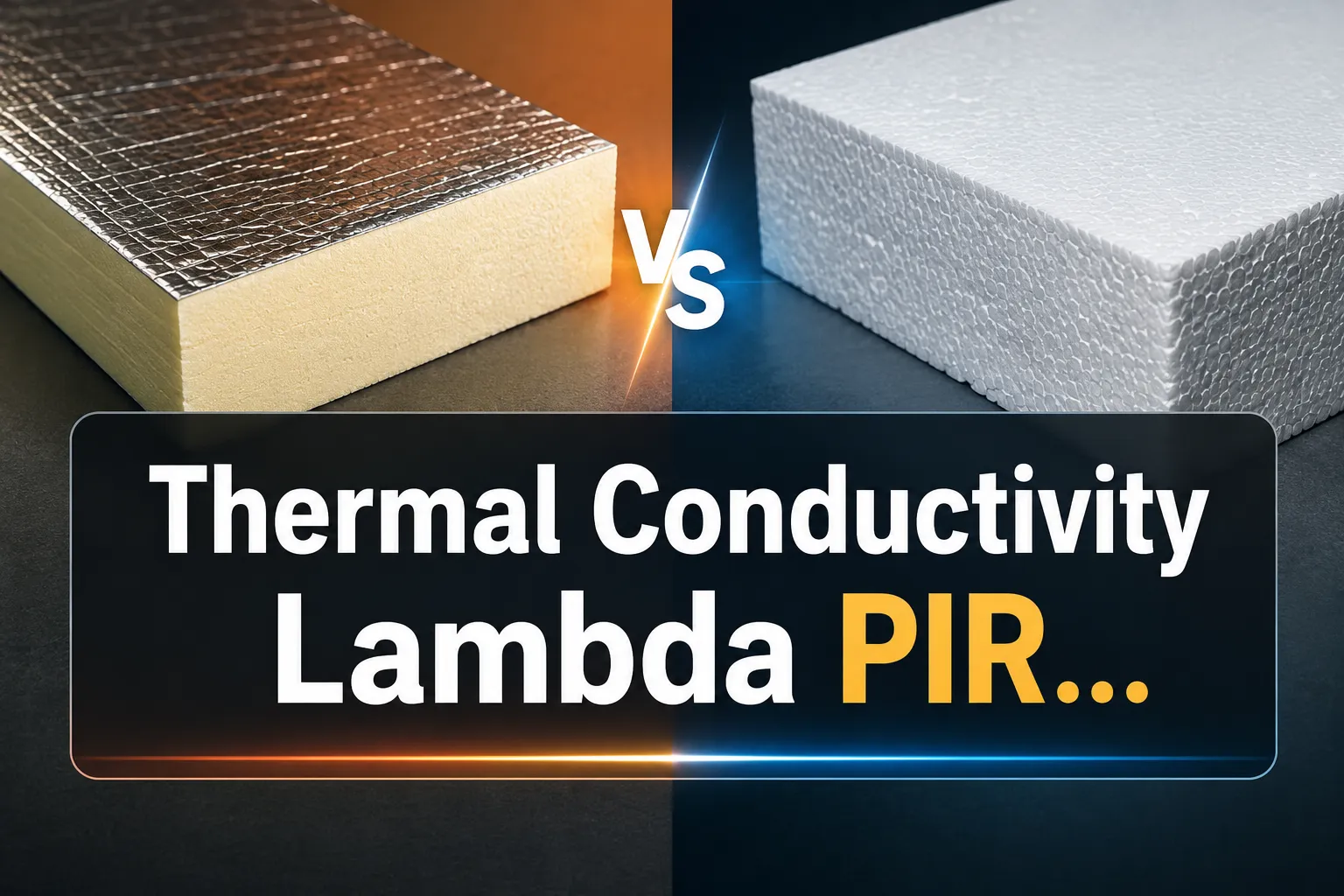
Quick Answer: PIR insulation delivers superior thermal performance with lambda values of 0.020-0.025 W/mK compared to EPS styrofoam's 0.032-0.040 W/mK. PIR costs 30-50% more but provides better insulation in thinner profiles, while EPS offers excellent value for standard applications where space isn't constrained.
Key Takeaways
- PIR insulation has 20-35% better thermal conductivity than EPS styrofoam, requiring less thickness for equivalent performance
- EPS costs significantly less and works well for most residential and commercial applications
- PIR excels in space-constrained projects where maximum insulation in minimal thickness is critical
- Both materials offer excellent moisture resistance but PIR handles higher temperatures better
- Fire ratings differ substantially – PIR typically achieves Class B or better, while standard EPS is Class E
- Installation costs are similar despite PIR's higher material cost due to reduced thickness requirements
- Lifespan expectations are comparable at 25-50 years when properly installed
- Choose PIR for premium applications and EPS for cost-effective standard insulation needs
What Is Thermal Conductivity Lambda and How Is It Measured
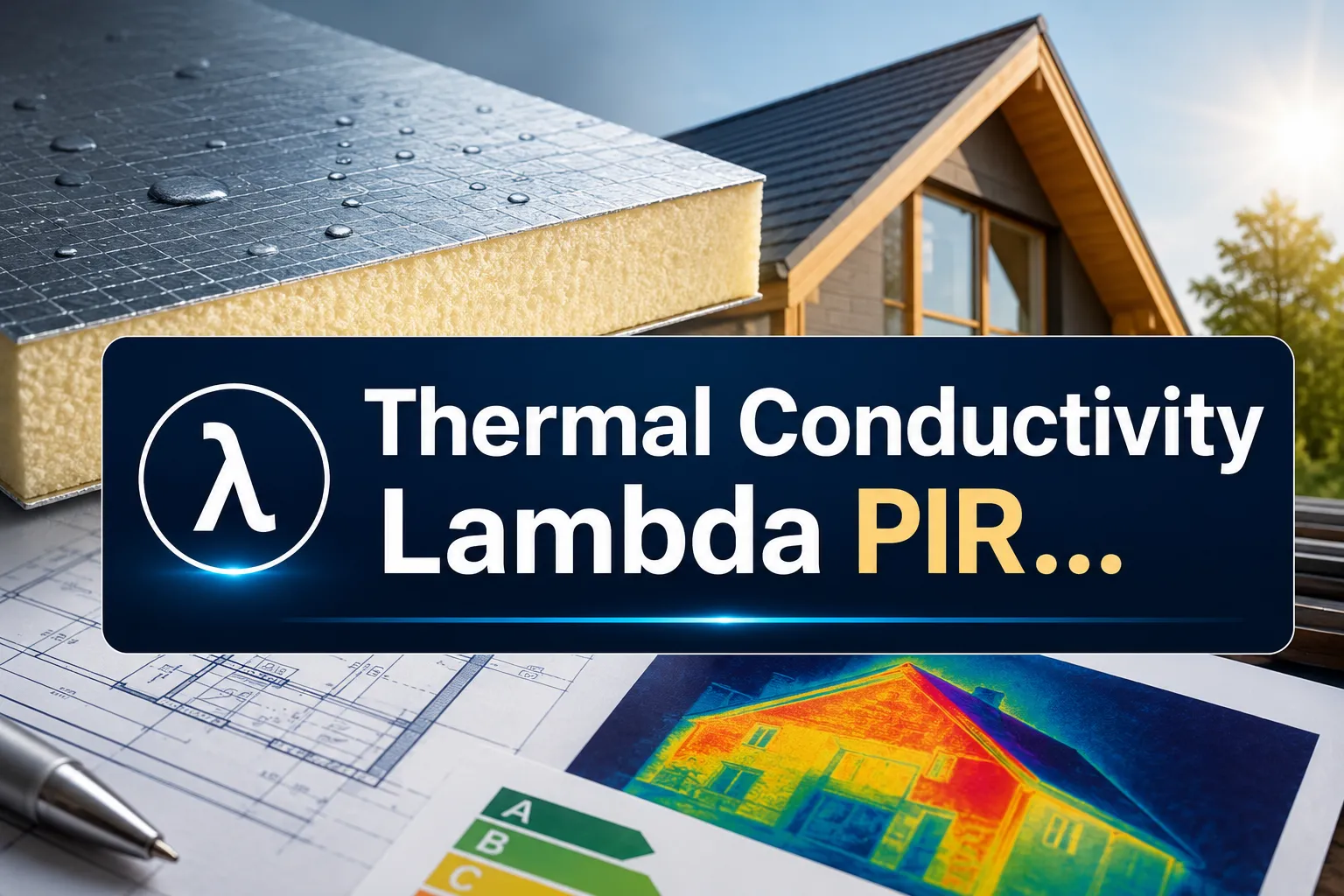
Thermal conductivity lambda represents a material's ability to conduct heat, measured in watts per meter-kelvin (W/mK). Lower lambda values indicate better insulating properties, meaning less heat transfer through the material.
Lambda values are determined through standardized testing methods including:
- Hot plate method (ISO 8301) – Most common for rigid insulation materials
- Heat flow meter method (ISO 8301) – Used for comparative testing
- Guarded hot plate (ASTM C177) – High-precision laboratory standard
Testing occurs under controlled conditions at 10°C mean temperature with specific humidity levels. Manufacturers must declare lambda values based on these standardized tests, ensuring consistent comparisons between different insulation materials.
Common mistake: Comparing lambda values from different test conditions or aged vs. initial performance data leads to inaccurate material selection.
PIR Insulation Thermal Conductivity Lambda Value
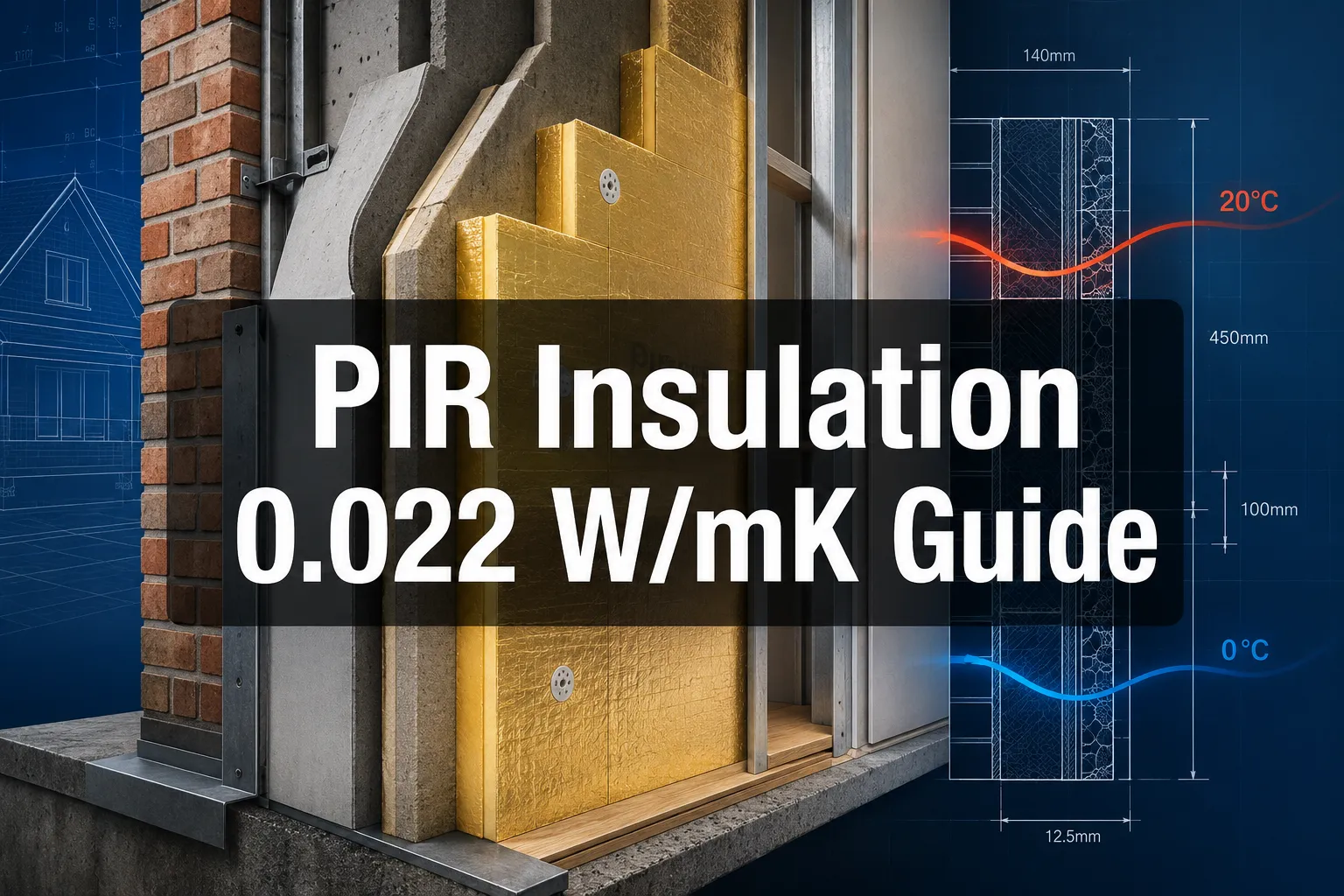
PIR (Polyisocyanurate) insulation typically achieves lambda values between 0.020-0.025 W/mK when tested under standard conditions. Premium PIR products can reach as low as 0.018 W/mK, making them among the best-performing rigid foam insulators available.
Key factors affecting PIR lambda performance:
- Foam density – Higher density generally improves thermal performance
- Cell structure – Closed-cell foam with fine, uniform cells performs better
- Blowing agent – Modern low-GWP agents maintain excellent thermal properties
- Aging characteristics – PIR maintains stable performance over decades
PIR's superior lambda values result from its closed-cell structure and advanced manufacturing processes. The material's rigid foam contains millions of tiny cells filled with low-conductivity gas, creating an effective thermal barrier.
Choose PIR when: Project specifications require maximum insulation performance in limited space, such as thermal insulation sandwich panels or high-performance building envelopes.
EPS Styrofoam Thermal Conductivity Lambda Comparison
EPS (Expanded Polystyrene) styrofoam delivers lambda values ranging from 0.032-0.040 W/mK, depending on density and manufacturing quality. Standard EPS typically performs at 0.035-0.038 W/mK, while high-performance grades can achieve 0.032 W/mK.
EPS thermal performance factors include:
- Bead fusion quality – Better fusion reduces thermal bridging
- Density grades – Higher density EPS (20-30 kg/m³) outperforms lower grades
- Moisture content – Dry EPS maintains optimal lambda values
- Manufacturing precision – Consistent bead expansion improves uniformity
The thermal conductivity difference between PIR and EPS translates to significant thickness variations. Where 100mm PIR provides specific R-value performance, EPS requires approximately 130-140mm to achieve equivalent results.
Edge case: In extremely thick applications (>200mm), EPS's cost advantage can outweigh PIR's performance benefits, making it the economical choice for large-scale projects.
Why Is PIR Insulation More Expensive Than EPS
PIR insulation costs 30-50% more than comparable EPS due to complex manufacturing processes and premium raw materials. The price difference stems from several factors that justify PIR's premium positioning in thermal conductivity lambda PIR insulation vs EPS styrofoam comparisons.
Manufacturing complexity drives PIR's higher cost:
- Advanced chemical reactions require precise temperature and pressure control
- Specialized blowing agents cost more than simple pentane used in EPS
- Quality control standards demand rigorous testing and consistency measures
- Lower production volumes compared to mass-market EPS manufacturing
Raw material costs also contribute significantly. PIR requires polyol and isocyanate components that fluctuate with petrochemical markets, while EPS uses simpler polystyrene beads with more stable pricing.
However, PIR's superior lambda performance often justifies the cost premium. Projects requiring specific R-values can use thinner PIR sections, reducing overall material volume and potentially offsetting the higher per-unit cost.
Decision rule: Choose PIR when space constraints, performance requirements, or long-term energy savings outweigh initial cost differences.
PIR Insulation Pros and Cons for Home Insulation
PIR insulation offers exceptional thermal performance for residential applications but comes with trade-offs that homeowners should carefully consider when evaluating thermal conductivity lambda PIR insulation vs EPS styrofoam options.
PIR Advantages:
- Superior thermal performance – 20-35% better than EPS
- Thinner installation – Saves valuable interior space
- Excellent moisture resistance – Closed-cell structure prevents water absorption
- High temperature stability – Maintains properties in extreme conditions
- Good fire performance – Typically achieves Class B fire rating
- Long-term stability – Minimal performance degradation over decades
PIR Disadvantages:
- Higher initial cost – 30-50% premium over EPS
- Limited DIY options – Requires professional installation for optimal performance
- Cutting challenges – Harder to modify on-site than EPS
- Chemical sensitivity – Some solvents can damage PIR foam
For residential projects, PIR works best in applications where space is limited or maximum performance is required. Thermal performance sandwich panels incorporating PIR excel in energy-efficient home construction.
Common mistake: Choosing PIR for all applications regardless of performance requirements wastes money on over-specification.
EPS Styrofoam When to Use Instead of PIR
EPS styrofoam remains the preferred choice for many applications despite PIR's superior thermal conductivity lambda values. Understanding when EPS provides better overall value helps optimize project costs and performance in thermal conductivity lambda PIR insulation vs EPS styrofoam decisions.
Choose EPS for:
- Budget-conscious projects where cost is the primary concern
- Thick insulation applications where space isn't constrained
- DIY installations requiring easy cutting and handling
- Large-scale commercial projects needing consistent, economical insulation
- Below-grade applications where EPS's moisture resistance suffices
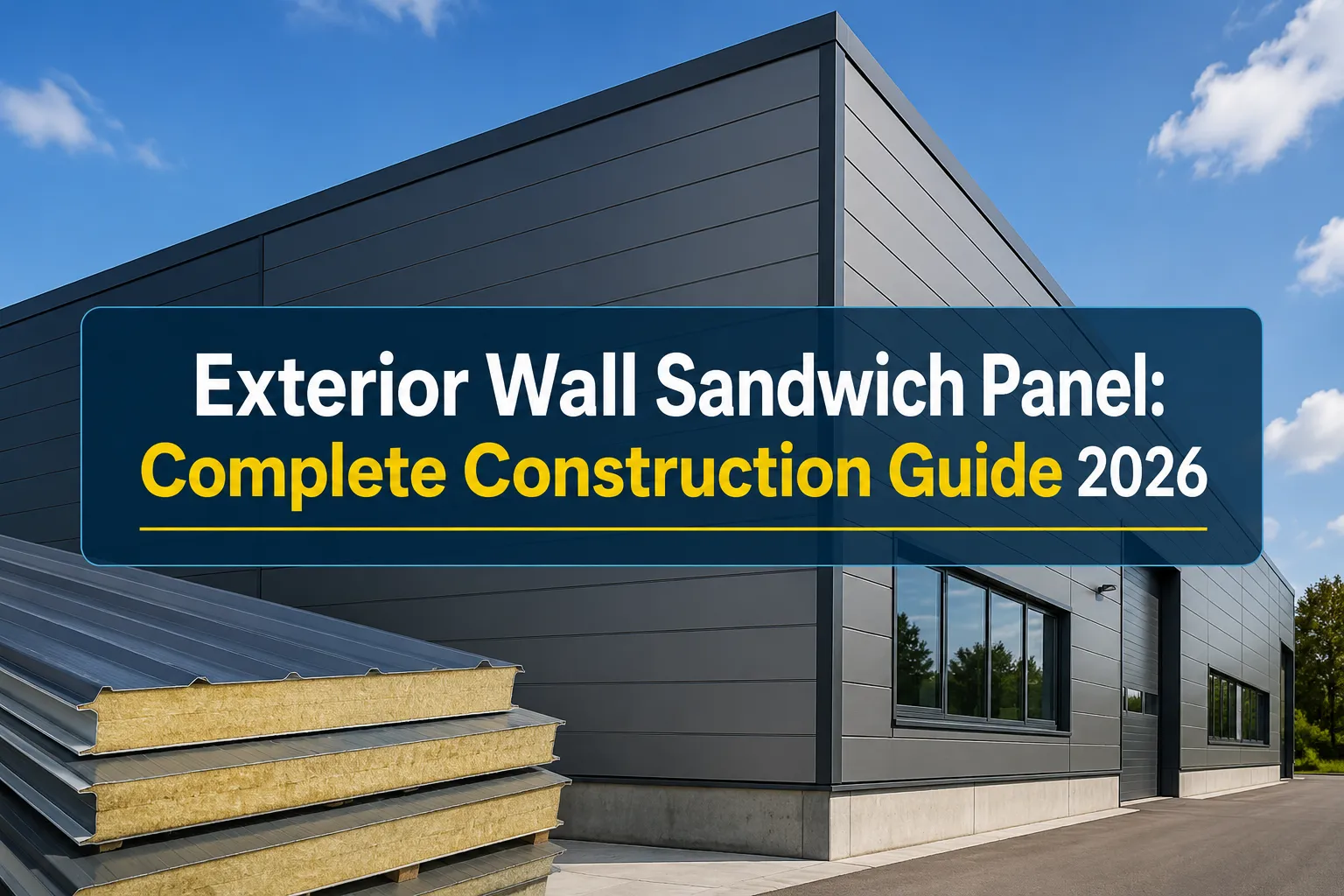
EPS excels in scenarios where its thermal performance meets requirements without over-engineering. For example, EPS sandwich panels provide excellent value for warehouse and industrial buildings where wall thickness isn't critical.
Specific applications favoring EPS:
- Foundation insulation below frost line
- Roof insulation with ample cavity space
- Perimeter insulation for concrete slabs
- Packaging and protective applications
Decision criteria: Use EPS when lambda values of 0.035-0.038 W/mK meet project thermal requirements and budget constraints are significant.
Does PIR Insulation Have Lower Thermal Conductivity Than EPS
Yes, PIR insulation consistently demonstrates lower thermal conductivity than EPS styrofoam across all comparable product grades. PIR's lambda values of 0.020-0.025 W/mK significantly outperform EPS's typical range of 0.032-0.040 W/mK.
This performance difference translates to practical advantages:
Thickness comparison for equivalent R-value:
- 100mm PIR (λ=0.022) = R-4.5
- 135mm EPS (λ=0.035) = R-4.5
- Space savings: 26% thinner with PIR
The thermal conductivity advantage stems from PIR's advanced cellular structure and manufacturing process. PIR foam contains smaller, more uniform cells with better gas retention compared to EPS's bead-based structure.
Real-world impact: In cold storage applications, PIR's lower thermal conductivity reduces energy consumption and allows thinner wall construction, maximizing interior storage volume.
Testing verification: Independent laboratory tests consistently confirm PIR's thermal superiority, making it the preferred choice when maximum insulation performance is required regardless of cost considerations.
PIR vs EPS Fire Rating and Safety Differences
Fire performance represents a critical safety distinction in thermal conductivity lambda PIR insulation vs EPS styrofoam comparisons, with significant implications for building code compliance and occupant safety.
PIR Fire Performance:
- Typical rating: Class B (limited combustibility)
- Self-extinguishing: Stops burning when flame source is removed
- Lower smoke production compared to standard EPS
- Higher ignition temperature provides better fire resistance
EPS Fire Performance:
- Standard rating: Class E (combustible)
- Fire-retardant versions: Can achieve Class B with additives
- Higher flame spread in standard formulations
- Melts and drips when exposed to flame
The fire safety difference becomes crucial in commercial and industrial applications where building codes mandate specific fire ratings. Fire-rated sandwich panels typically use PIR cores to meet stringent safety requirements.
Code compliance considerations:
- PIR often meets requirements without additional fire barriers
- EPS may require protective coverings or fire-retardant grades
- Insurance implications can favor PIR in commercial applications
Safety recommendation: Prioritize PIR for applications where fire safety is paramount, especially in occupied buildings or areas with high fire risk.
Common Mistakes When Choosing Between PIR and EPS Insulation
Selecting between PIR and EPS requires careful analysis beyond simple thermal conductivity lambda comparisons. Common errors lead to over-specification, cost overruns, or inadequate performance in thermal conductivity lambda PIR insulation vs EPS styrofoam decisions.
Frequent specification mistakes:
Over-specifying PIR: Using premium PIR where standard EPS meets thermal requirements wastes budget without performance benefits. Analyze actual R-value needs before defaulting to higher-performance materials.
Ignoring total system cost: Focusing only on material cost per square meter ignores installation, thickness, and long-term energy implications. Thinner PIR may cost less overall despite higher unit prices.
Mismatching application requirements: Choosing EPS for space-constrained applications or PIR for cost-sensitive large-scale projects misaligns material properties with project needs.
Overlooking fire code requirements: Selecting based purely on thermal performance without considering fire ratings can necessitate costly design changes or protective measures.
Neglecting moisture considerations: Both materials resist moisture, but installation details and vapor barriers require different approaches for optimal performance.
Decision framework: Evaluate thermal requirements, space constraints, fire codes, budget parameters, and installation complexity before selecting insulation materials for any project.
PIR Insulation Moisture Resistance Compared to Styrofoam
Both PIR and EPS demonstrate excellent moisture resistance due to their closed-cell structures, but performance characteristics differ in specific applications affecting thermal conductivity lambda PIR insulation vs EPS styrofoam selection criteria.
PIR Moisture Performance:
- Water absorption: <2% by volume after 24-hour immersion
- Vapor permeability: Extremely low, acts as vapor barrier
- Dimensional stability: Minimal swelling when wet
- Drying capability: Returns to original properties when dried
EPS Moisture Performance:
- Water absorption: 1-3% by volume depending on density
- Vapor permeability: Low but slightly higher than PIR
- Dimensional stability: Good resistance to moisture-induced changes
- Long-term performance: Maintains insulation value when properly installed
The moisture resistance difference becomes significant in specific applications:
Below-grade installations: Both materials perform well, but PIR's superior vapor barrier properties may eliminate need for separate moisture barriers.
High-humidity environments: PIR's lower permeability provides additional protection in applications like cold room panels where moisture control is critical.
Installation considerations: Proper sealing and vapor barrier installation matter more than material choice for most residential applications.
Edge case: In marine or consistently high-moisture environments, PIR's marginally better moisture resistance may justify cost premiums for long-term performance assurance.
How Long Does PIR Insulation Last vs EPS
Both PIR and EPS insulation materials offer excellent longevity when properly installed, with expected service lives of 25-50 years under normal building conditions. Performance degradation patterns differ between materials but rarely affect thermal conductivity lambda values significantly over time.
PIR Longevity Characteristics:
- Expected lifespan: 30-50 years in building applications
- Thermal stability: Minimal lambda degradation over time
- Physical integrity: Maintains dimensional stability decades
- Performance factors: Quality of installation and environmental exposure
EPS Longevity Characteristics:
- Expected lifespan: 25-40 years in typical applications
- Thermal stability: Stable lambda values throughout service life
- UV sensitivity: Requires protection from direct sunlight exposure
- Mechanical durability: Good resistance to compression and impact
Factors affecting both materials:
- Installation quality and workmanship
- Environmental exposure conditions
- Building movement and settling
- Moisture infiltration and thermal cycling
Long-term performance studies show both materials maintain their insulating properties well beyond typical building warranty periods. The choice between PIR and EPS rarely hinges on longevity differences, as both exceed standard building design life expectations.
Maintenance consideration: Neither material requires ongoing maintenance once properly installed, making lifecycle costs predictable for building insulation applications.
PIR Insulation Best Uses Commercial vs Residential
PIR insulation's superior thermal conductivity lambda performance creates distinct advantages in commercial applications while offering selective benefits for residential projects in thermal conductivity lambda PIR insulation vs EPS styrofoam comparisons.
Commercial Applications Where PIR Excels:
- Cold storage facilities requiring maximum insulation in limited wall thickness
- Clean rooms and laboratories needing precise temperature control
- High-rise construction where space efficiency matters
- Industrial buildings with specific fire rating requirements
- Data centers requiring consistent thermal performance
Residential Applications for PIR:
- Space-constrained renovations where wall thickness is critical
- High-performance homes targeting passive house standards
- Basement insulation in areas with limited headroom
- Attic conversions maximizing usable space
Commercial advantages:
PIR's cost premium becomes justified in commercial projects where energy efficiency, space optimization, and fire safety requirements align with its performance characteristics. Commercial building panels frequently specify PIR cores for these reasons.
Residential considerations:
Most residential applications achieve adequate performance with EPS, making PIR's premium cost harder to justify unless specific space or performance constraints exist.
Decision rule: Choose PIR for commercial applications requiring maximum performance; evaluate cost-benefit carefully for residential projects.
Can You Use EPS Styrofoam Where PIR Is Recommended
EPS styrofoam can substitute for PIR in many applications with design modifications, but direct replacement without adjusting thickness or system design may compromise performance in thermal conductivity lambda PIR insulation vs EPS styrofoam scenarios.
Successful EPS substitution requires:
- Increased thickness to achieve equivalent R-values (typically 30-40% more)
- Fire protection measures if PIR was specified for fire rating compliance
- Space availability to accommodate larger insulation sections
- Code compliance verification for the modified design
Applications where substitution works well:
- Large commercial buildings with ample wall cavity space
- Residential construction without space constraints
- Below-grade applications where fire ratings are less critical
- Budget-sensitive projects where performance can be adjusted
Applications where substitution is problematic:
- Space-constrained renovations
- Buildings requiring specific fire ratings
- High-performance construction targeting energy standards
- Applications where vapor barrier properties are critical
Engineering considerations: Substituting EPS for PIR requires thermal modeling to ensure equivalent performance. Simply replacing materials without design analysis can lead to inadequate insulation or code compliance issues.
Cost-benefit analysis: While EPS costs less per unit, the increased thickness required may offset savings in material volume and installation complexity.
Comparison Table: PIR vs EPS Key Specifications
| Specification | PIR Insulation | EPS Styrofoam |
|---|---|---|
| Thermal Conductivity (λ) | 0.020-0.025 W/mK | 0.032-0.040 W/mK |
| Cost Premium | 30-50% higher | Baseline cost |
| Fire Rating | Class B typical | Class E standard |
| Water Absorption | <2% by volume | 1-3% by volume |
| Service Life | 30-50 years | 25-40 years |
| Best Applications | Space-constrained, high-performance | Cost-effective, standard applications |
Frequently Asked Questions
What is the thermal conductivity difference between PIR and EPS?
PIR insulation achieves lambda values of 0.020-0.025 W/mK while EPS typically ranges from 0.032-0.040 W/mK, making PIR 20-35% more thermally efficient than EPS styrofoam.
Is PIR insulation worth the extra cost over EPS?
PIR justifies its 30-50% cost premium when space constraints exist, maximum thermal performance is required, or fire rating specifications mandate superior materials. For standard applications with adequate space, EPS provides excellent value.
How much thinner can PIR be compared to EPS for the same R-value?
PIR typically requires 25-30% less thickness than EPS to achieve equivalent thermal performance. For example, 100mm PIR provides similar insulation to 130-140mm EPS.
Which insulation has better fire safety – PIR or EPS?
PIR typically achieves Class B fire ratings with self-extinguishing properties, while standard EPS rates as Class E. Fire-retardant EPS versions can improve ratings but cost more and may still underperform PIR.
Can I use EPS instead of PIR to save money?
Yes, but you'll need increased thickness (30-40% more) to match thermal performance, adequate space for the thicker sections, and verification that fire codes allow the substitution.
Do PIR and EPS have similar moisture resistance?
Both materials offer excellent moisture resistance due to closed-cell structures. PIR has slightly lower water absorption and vapor permeability, making it marginally better for high-moisture applications.
Which insulation lasts longer – PIR or EPS?
Both materials provide 25-50 year service lives when properly installed. PIR may last slightly longer (30-50 years vs 25-40 years) but both exceed typical building design life requirements.
What applications favor EPS over PIR?
Choose EPS for budget-conscious projects, thick insulation applications where space isn't constrained, DIY installations, and large-scale commercial projects where cost is the primary concern.
How do installation costs compare between PIR and EPS?
Installation labor costs are similar since both materials use comparable techniques. PIR's thinner profile may reduce installation time, partially offsetting its higher material cost.
Which insulation is better for cold storage applications?
PIR excels in cold storage due to superior thermal performance allowing thinner walls, better fire ratings, and excellent moisture resistance. The space savings often justify the cost premium.
Can both materials be recycled?
EPS has established recycling programs and can be processed into new products. PIR recycling is more limited but improving, with some programs accepting clean PIR waste for energy recovery.
Do thermal conductivity values change over time?
Both PIR and EPS maintain stable lambda values throughout their service lives when properly installed. Initial performance typically represents long-term capability for both materials.
SEO Meta Title: PIR vs EPS Insulation: Thermal Conductivity Lambda Comparison 2026