Last updated: July 31, 2026

Quick Answer
Foam core sandwich panels consist of two metal face sheets bonded to a lightweight foam insulation core, creating a single structural unit that provides excellent thermal performance, strength, and weight savings. These panels are widely used in commercial, industrial, and residential construction for walls, roofing, and specialized applications like cold storage facilities. The foam core typically uses expanded polystyrene (EPS), polyurethane (PU), or polyisocyanurate (PIR) materials.
Key Takeaways
- Foam core sandwich panels combine structural strength with superior insulation in a single lightweight component
- Three main foam types: EPS (most economical), PU (best thermal performance), and PIR (highest fire resistance)
- Typical thickness ranges from 50mm to 200mm, with R-values between 15-40 depending on core material
- Installation costs range from $15-35 per square meter including labor in most markets
- Fire ratings vary significantly by core material – PIR offers Class A ratings while EPS requires special treatment
- Lifespan typically exceeds 30 years with proper installation and maintenance
- Weight savings of 50-70% compared to traditional construction methods
- Moisture resistance depends heavily on proper sealing and installation techniques
- Best applications include warehouses, cold storage, agricultural buildings, and commercial roofing
What Are Foam Core Sandwich Panels and How Do They Work
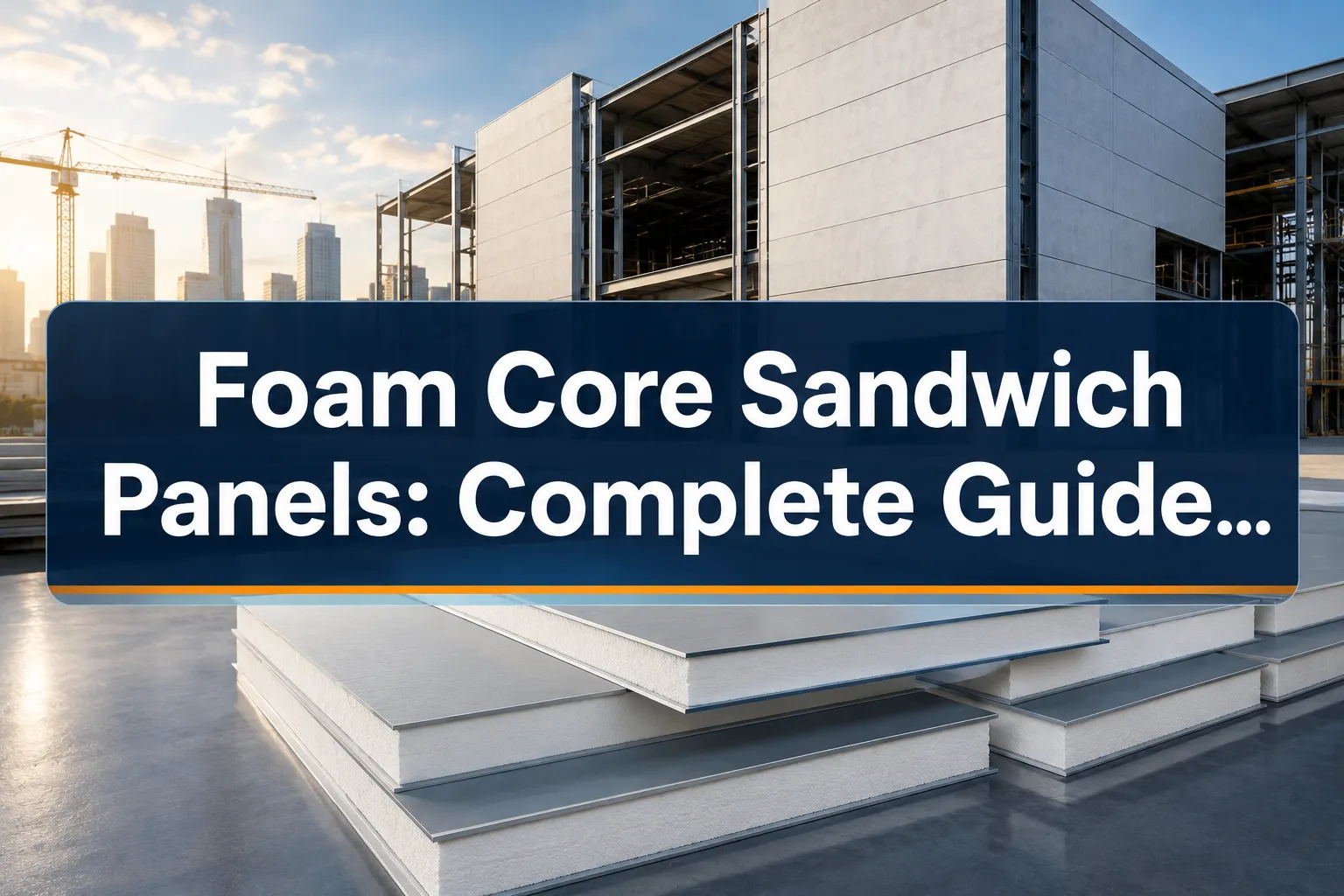
Foam core sandwich panels are composite building materials that sandwich a lightweight foam insulation core between two structural face sheets, typically made of steel, aluminum, or other metal materials. This construction creates a single integrated panel that serves as both structure and insulation.
The panels work on the principle of composite action, where the outer face sheets carry structural loads while the foam core provides:
- Thermal insulation – preventing heat transfer through the building envelope
- Structural stability – maintaining the distance between face sheets and preventing buckling
- Sound dampening – reducing noise transmission
- Weight reduction – significantly lighter than solid construction materials
The foam core materials most commonly used include:
Expanded Polystyrene (EPS): Closed-cell foam offering good insulation at the lowest cost. R-value typically ranges from 3.8-4.2 per inch of thickness.
Polyurethane (PU): Higher density foam with superior thermal performance, achieving R-values of 6-7 per inch. More expensive but offers better long-term performance.
Polyisocyanurate (PIR): Premium foam core with the highest fire resistance and thermal performance, reaching R-values up to 8 per inch.
The manufacturing process bonds these materials under controlled pressure and temperature, creating a permanent structural connection that cannot be separated without destroying the panel.
Foam Core Sandwich Panels vs Other Insulation Materials
Foam core sandwich panels outperform traditional insulation methods in several key areas, though trade-offs exist depending on specific project requirements.
Compared to Fiberglass Batt Insulation:
- Panels eliminate thermal bridging that reduces fiberglass effectiveness by 20-30%
- Installation time reduced by 60-80% since panels combine structure and insulation
- No settling or compression issues that degrade fiberglass performance over time
- Higher upfront cost but lower total installed cost including labor
Compared to Spray Foam:
- Panels provide consistent R-value with no application variables
- No curing time or weather restrictions during installation
- Lower material cost per square foot
- Cannot conform to irregular surfaces like spray foam can
Compared to Rigid Board Insulation:
- Single-step installation versus multiple components (framing, sheathing, insulation, vapor barrier)
- Superior structural properties eliminate need for separate framing in many applications
- Better air sealing when properly installed
- Limited design flexibility compared to stick-built construction
Performance Comparison Table:
| Material | R-Value/Inch | Cost/SF | Install Time | Lifespan |
|---|---|---|---|---|
| EPS Sandwich Panel | 3.8-4.2 | $18-25 | Fast | 30+ years |
| PU Sandwich Panel | 6.0-7.0 | $25-35 | Fast | 30+ years |
| Fiberglass Batt | 3.1-3.4 | $8-12 | Slow | 20-25 years |
| Spray Foam | 6.0-6.5 | $15-22 | Medium | 25+ years |
Choose foam core sandwich panels when project priorities include speed of construction, structural efficiency, and consistent thermal performance. Traditional methods may be preferable for complex architectural designs or when local labor costs favor conventional construction.
Foam Core Sandwich Panels Cost and Pricing
Foam core sandwich panels typically cost between $15-35 per square meter installed, with significant variation based on core material, thickness, and project specifications.
Material Cost Breakdown:
- EPS core panels: $12-18 per square meter (material only)
- PU core panels: $18-25 per square meter (material only)
- PIR core panels: $22-32 per square meter (material only)
Installation costs add $3-8 per square meter depending on:
- Project size (larger projects achieve better rates)
- Panel complexity and custom fabrication requirements
- Site accessibility and crane requirements
- Local labor rates and availability of trained installers
Thickness Impact on Pricing:
- 50mm thickness: Base pricing
- 75mm thickness: Add 15-20%
- 100mm thickness: Add 30-40%
- 150mm+ thickness: Add 50-70%
Additional Cost Factors:
- Custom colors or coatings: Add $2-5 per square meter
- Fire-rated cores: Add 20-30% to material cost
- Architectural profiles: Add 25-50% for complex shapes
- Small quantities (under 500 sq meters): Add 15-25% markup
Cost Comparison vs Alternatives:
Traditional stick-built construction with separate insulation typically costs $20-40 per square meter installed, making foam core panels competitive while offering faster construction timelines.
For current market pricing in your region, consult our sandwich panel price guide which includes regional variations and bulk pricing options.
Where to Buy Foam Core Sandwich Panels
Foam core sandwich panels are available through specialized manufacturers, building supply distributors, and metal building suppliers, with purchasing options varying by project size and location.
Direct from Manufacturers:
- Best pricing for orders over 1000 square meters
- Custom specifications and colors available
- Technical support and engineering assistance included
- Typical lead times: 2-6 weeks depending on specifications
Regional Distributors:
- Stock standard sizes and colors for immediate delivery
- Smaller minimum orders (often 100+ square meters)
- Local delivery and installation services
- Higher per-unit cost but lower total project risk
Online Suppliers:
- Price comparison across multiple manufacturers
- Detailed specifications and technical data sheets
- Freight shipping to most locations
- Limited technical support compared to direct sales
Key Purchasing Considerations:
Quality Certifications: Verify panels meet local building codes and carry appropriate certifications (ASTM, UL, FM Global ratings where required).
Warranty Terms: Standard warranties range from 10-20 years on material defects, with some manufacturers offering performance warranties up to 30 years.
Technical Support: Ensure supplier provides installation guides, structural calculations, and technical assistance for proper installation.
Delivery Logistics: Panels require specialized transport and handling equipment. Confirm delivery capabilities and any site access requirements.
For projects in Bangladesh and surrounding regions, explore our network of certified sandwich panel suppliers who provide quality materials with local support and competitive pricing.
Foam Core Sandwich Panels Installation Guide
Foam core sandwich panels require careful installation to achieve optimal performance, with proper planning and technique being critical for long-term success.
Pre-Installation Requirements:
- Structural frame must be level, plumb, and properly aligned
- Panel delivery should be scheduled to minimize on-site storage time
- Weather conditions must be suitable (no installation during rain or high winds)
- Required tools: Panel lifter, sealants, fasteners, cutting tools
Step-by-Step Installation Process:
1. Panel Preparation
- Inspect panels for damage during transport
- Remove protective film from both faces
- Pre-cut panels to required dimensions if necessary
- Apply structural sealant to panel edges where specified
2. First Panel Placement
- Position starting panel using mechanical lifters (never manual handling for panels over 2 meters)
- Ensure panel is plumb and properly aligned with structural frame
- Secure temporarily with clamps before final fastening
3. Fastening System
- Use manufacturer-specified fasteners only
- Fastener spacing typically 300-600mm on center depending on load requirements
- Pre-drill holes to prevent panel damage
- Apply sealant washers to prevent moisture infiltration
4. Subsequent Panel Installation
- Apply structural sealant to joining edges
- Maintain consistent joint width (typically 6-12mm)
- Ensure proper overlap or interlocking connection
- Check alignment frequently using string lines or laser levels
5. Sealing and Finishing
- Seal all joints with weather-resistant sealant
- Install trim pieces and flashing as required
- Remove any excess sealant before curing
- Final inspection for proper alignment and secure attachment
Critical Installation Mistakes to Avoid:
- Over-tightening fasteners which can crush the foam core
- Installing panels in wet conditions without proper protection
- Inadequate edge sealing leading to moisture infiltration
- Insufficient structural support for panel loads
Professional installation is recommended for projects over 500 square meters or when structural calculations are required. For detailed installation specifications, refer to our professional installation service guide.
Foam Core Sandwich Panels Weight and Thickness Options
Foam core sandwich panels offer significant weight advantages over traditional construction, with thickness options ranging from 50mm to 200mm to meet various performance requirements.
Standard Thickness Options:
50mm panels: Weighing 8-12 kg/m², suitable for interior partitions and light-duty applications. R-value ranges from 7-12 depending on core material.
75mm panels: Weighing 10-15 kg/m², commonly used for commercial wall applications. R-value ranges from 11-18, meeting most building code requirements.
100mm panels: Weighing 12-18 kg/m², preferred for cold storage and high-performance buildings. R-value ranges from 15-25.
150mm panels: Weighing 16-24 kg/m², used for extreme climate conditions or specialized applications. R-value ranges from 22-35.
200mm panels: Weighing 20-30 kg/m², maximum thickness for ultra-high performance requirements. R-value can exceed 40.
Weight Comparison Benefits:
- Traditional masonry wall with insulation: 180-250 kg/m²
- Steel stud wall with fiberglass: 35-50 kg/m²
- Foam core sandwich panel: 8-30 kg/m²
This weight reduction provides several advantages:
- Reduced foundation requirements and costs
- Lower structural loads on building frame
- Easier handling and faster installation
- Reduced transportation costs
Choosing the Right Thickness:
Climate considerations: Colder climates typically require 100mm+ thickness to meet energy codes.
Application type: Cold storage requires maximum thickness, while interior partitions can use minimum thickness.
Structural requirements: Thicker panels provide greater structural strength and spanning capability.
Budget constraints: Each thickness increase adds 15-20% to material cost.
For specific thickness recommendations based on your application, consult our panel thickness selection guide which includes climate zone maps and performance calculations.
Foam Core Sandwich Panels Fire Rating and Safety
Foam core sandwich panels have varying fire performance characteristics that depend heavily on the foam core material and any fire-retardant treatments applied during manufacturing.
Fire Rating by Core Material:
EPS Core Panels: Standard EPS achieves Class C fire ratings. Fire-retardant EPS can achieve Class B ratings but requires special additives that increase cost by 15-25%. Melting point around 200°F means panels can fail structurally before ignition.
PU Core Panels: Typically achieve Class B fire ratings with standard formulations. Some specialty PU formulations can reach Class A ratings. Better high-temperature structural integrity than EPS.
PIR Core Panels: Naturally achieve Class A fire ratings due to chemical composition. Self-extinguishing properties and highest structural integrity at elevated temperatures. Premium cost reflects superior fire performance.
Critical Fire Safety Considerations:
Smoke Generation: All foam cores produce toxic smoke when burning. Proper ventilation design and fire suppression systems are essential in occupied buildings.
Structural Integrity: Panel failure during fire can compromise building stability. Fire-rated panels maintain structural properties longer during fire exposure.
Installation Impact: Poor installation with inadequate sealing can create fire spread pathways. Proper fire-stopping at penetrations is critical.
Building Code Compliance: Many jurisdictions have specific requirements for foam core panels in different occupancy types. Always verify local code requirements before specification.
Testing Standards: Look for panels tested to ASTM E84 (surface burning characteristics), ASTM E119 (fire resistance), and FM 4880 (fire performance) standards.
Applications Requiring Enhanced Fire Ratings:
- Schools and healthcare facilities
- High-rise construction
- Industrial facilities with fire hazards
- Buildings with limited egress options
For fire-critical applications, consider our fire-rated sandwich panel options which meet stringent safety requirements while maintaining thermal performance.
Foam Core Sandwich Panels Moisture and Water Damage Issues
Foam core sandwich panels can experience significant performance degradation when moisture infiltrates the foam core, making proper installation and maintenance critical for long-term success.
Primary Moisture Entry Points:
- Improperly sealed panel joints
- Damaged or missing sealant at penetrations
- Fastener holes without proper sealing washers
- Damaged panel faces from impact or weathering
Moisture Damage by Core Type:
EPS Core: Most vulnerable to moisture damage. Water absorption can reduce R-value by 30-50% and cause dimensional instability. Freeze-thaw cycles can cause permanent damage to foam structure.
PU Core: Better moisture resistance than EPS but still susceptible to performance loss. Closed-cell structure provides some protection, but prolonged exposure causes degradation.
PIR Core: Best moisture resistance among foam types. Maintains performance longer when exposed to moisture, but still requires proper sealing for optimal performance.
Signs of Moisture Problems:
- Visible staining on panel faces
- Ice formation in cold weather
- Reduced thermal performance (higher energy costs)
- Sagging or deformation of panels
- Mold or mildew growth around panel edges
Prevention Strategies:
Proper Installation: Use manufacturer-specified sealants and fasteners. Maintain consistent sealant beads without gaps or voids.
Regular Maintenance: Inspect and renew sealants every 5-7 years. Replace damaged panels promptly to prevent moisture migration.
Vapor Barriers: In high-humidity applications, consider vapor barriers on the warm side of panels to prevent condensation within the foam core.
Drainage Design: Ensure proper building drainage to prevent water accumulation against panel surfaces.
Quality Control: Specify panels with integral vapor barriers or moisture-resistant facings for high-risk applications.
Repair Procedures: Small moisture infiltration can sometimes be addressed by drilling drainage holes and resealing, but extensive damage typically requires panel replacement.
For moisture-critical applications like cold storage, explore our specialized insulated panel solutions designed for high-humidity environments.
Foam Core Sandwich Panels Best Uses and Applications
Foam core sandwich panels excel in applications requiring rapid construction, superior insulation, and structural efficiency, with optimal performance in specific building types and conditions.
Ideal Applications:
Commercial and Industrial Buildings: Warehouses, manufacturing facilities, and distribution centers benefit from panels' large spanning capability and excellent thermal performance. Cost savings of 20-30% compared to conventional construction.
Cold Storage Facilities: Continuous insulation and minimal thermal bridging make panels ideal for refrigerated buildings. PU and PIR cores maintain performance at extreme temperatures.
Agricultural Buildings: Poultry farms, dairy facilities, and livestock buildings require controlled environments that panels provide efficiently. Easy cleaning and maintenance suit agricultural requirements.
Retail and Commercial: Big box stores, shopping centers, and commercial buildings achieve fast construction schedules with consistent appearance and performance.
Specialized Facilities: Clean rooms, laboratories, and food processing plants benefit from smooth, sealed surfaces that meet hygiene requirements.
Applications to Avoid:
High-Rise Residential: Fire code restrictions and acoustic requirements often favor traditional construction methods.
Architecturally Complex Buildings: Custom shapes and frequent penetrations reduce panel efficiency advantages.
Seismic Zones: Rigid panel connections may not provide adequate flexibility for seismic movement without special design considerations.
High-Impact Areas: Vehicle traffic zones or areas subject to frequent impact damage are better served by more robust materials.
Selection Criteria by Building Type:
Choose EPS core for: Basic warehouses, agricultural buildings, and applications where cost is the primary concern.
Choose PU core for: Cold storage, commercial buildings, and applications requiring superior thermal performance.
Choose PIR core for: Food processing, clean rooms, and applications with strict fire safety requirements.
For specific application guidance, review our comprehensive building type guides that detail optimal panel specifications for different facility types.
Foam Core Sandwich Panels for Roofing vs Walls
Foam core sandwich panels perform differently in roofing versus wall applications, with distinct requirements for structural design, weathering resistance, and installation methods.
Roofing Applications:
Structural Requirements: Roof panels must support snow loads, wind uplift, and maintenance traffic. Minimum 75mm thickness typically required, with 100mm+ common in northern climates.
Weather Resistance: Roof panels require superior UV resistance and thermal cycling durability. Factory-applied protective coatings essential for longevity.
Drainage Considerations: Proper slope (minimum 1:40) and sealed joints prevent water accumulation. Special attention required at panel end laps and ridge connections.
Installation Differences: Roof panels typically install with hidden fastener systems to prevent water infiltration. Structural sealants at all joints mandatory.
Wall Applications:
Load Requirements: Wall panels primarily resist wind loads and support their own weight. Spanning capability allows fewer structural supports.
Thermal Performance: Continuous insulation eliminates thermal bridging common in conventional wall systems. Vapor barrier considerations important in humid climates.
Aesthetic Options: Wall panels available in wider range of profiles, colors, and textures. Architectural reveals and shadow lines possible.
Installation Flexibility: Wall panels accommodate more penetrations and connections than roof applications. Easier access for maintenance and modifications.
Performance Comparison:
| Aspect | Roofing Panels | Wall Panels |
|---|---|---|
| Min Thickness | 75mm | 50mm |
| Fastening | Hidden/sealed | Exposed acceptable |
| Slope Requirements | 1:40 minimum | Vertical |
| Weather Exposure | Extreme | Moderate |
| Maintenance Access | Limited | Good |
Common Mistakes:
- Using wall-grade panels for roofing applications
- Inadequate slope causing water ponding
- Mixing panel types within single project
- Insufficient structural support for roof loads
For detailed specifications by application, consult our roofing panel guide and wall cladding solutions.
How Long Do Foam Core Sandwich Panels Last
Foam core sandwich panels typically provide 30-50 years of service life when properly installed and maintained, with performance varying significantly based on core material, environmental conditions, and maintenance practices.
Lifespan by Core Material:
EPS Core Panels: 25-35 years typical service life. UV exposure and moisture infiltration are primary degradation factors. Performance decline becomes noticeable after 20 years in harsh environments.
PU Core Panels: 30-40 years expected service life. Better resistance to environmental factors extends useful life. Thermal performance remains stable longer than EPS.
PIR Core Panels: 35-50 years service life potential. Superior chemical stability and fire resistance contribute to longest lifespan among foam core options.
Factors Affecting Longevity:
Climate Conditions: Extreme temperature cycling, high UV exposure, and frequent freeze-thaw cycles reduce lifespan by 20-30%. Coastal environments with salt exposure particularly challenging.
Installation Quality: Proper sealing and fastening can extend lifespan by 10-15 years compared to poor installation. Moisture infiltration is the primary cause of premature failure.
Maintenance Practices: Regular sealant renewal every 5-7 years and prompt repair of damage can achieve maximum service life. Neglected panels may fail in 15-20 years.
Building Use: Industrial environments with chemical exposure or high temperatures may reduce panel life. Clean, controlled environments maximize longevity.
Performance Degradation Timeline:
Years 1-10: Minimal performance loss with proper installation. Sealant may require first renewal around year 7.
Years 10-20: Gradual thermal performance decline (5-10%). Some sealant joints may require attention.
Years 20-30: Noticeable performance reduction (10-20%). Panel replacement may become economically attractive.
Years 30+: Significant degradation possible. Replacement typically justified for energy efficiency.
Warranty Considerations: Most manufacturers offer 10-20 year material warranties, with some providing performance warranties up to 30 years for premium products.
End-of-Life Planning: Panel replacement is typically driven by energy performance rather than structural failure. Recycling options vary by core material and local facilities.
Foam Core Sandwich Panels Environmental Impact and Recycling
Foam core sandwich panels present both environmental benefits and challenges, with recycling options limited by the composite nature of the materials and local processing capabilities.
Environmental Benefits:
Energy Efficiency: Superior insulation performance reduces building energy consumption by 20-40% compared to conventional construction. Lifecycle energy savings typically offset manufacturing impacts within 2-5 years.
Material Efficiency: Lightweight construction reduces raw material consumption and transportation energy. Steel face sheets use 50-70% less material than equivalent solid construction.
Construction Waste Reduction: Precise manufacturing and modular installation generate 60-80% less construction waste than traditional building methods.
Durability: Long service life (30+ years) reduces replacement frequency and associated environmental impacts.
Environmental Challenges:
Foam Core Materials: EPS, PU, and PIR are petroleum-based products with significant manufacturing energy requirements. Chemical blowing agents in some foams have global warming potential.
Recycling Complexity: Bonded composite structure makes separation of materials difficult. Most panels currently end up in landfills at end of life.
Manufacturing Emissions: Foam production and panel assembly generate greenhouse gas emissions, though lifecycle analysis typically shows net benefit due to energy savings.
Recycling Options by Material:
Steel Face Sheets: Highly recyclable when separated from foam core. Magnetic separation possible in some recycling facilities.
EPS Core: Recyclable into new EPS products or alternative applications like concrete aggregate. Limited processing facilities available.
PU/PIR Cores: More challenging to recycle due to thermoset nature. Some facilities can process into carpet padding or other low-grade applications.
Emerging Solutions:
- Chemical recycling processes for foam materials
- Design for disassembly approaches
- Bio-based foam cores from renewable feedstocks
- Mechanical separation technologies
Best Practices for Environmental Responsibility:
- Specify panels with recycled content where available
- Plan for end-of-life material recovery during design phase
- Choose longest-life panel options to maximize service period
- Consider panels in green building certification programs
Learn more about sustainable panel options in our green building certification guide.
Foam Core Sandwich Panels Common Installation Mistakes
Foam core sandwich panels require precise installation techniques, with several common errors that can compromise performance, durability, and safety.
Critical Installation Mistakes:
Inadequate Structural Support: Panels spanning beyond manufacturer specifications cause deflection, stress concentration, and premature failure. Always verify structural calculations before installation.
Poor Joint Sealing: Incomplete or improperly applied sealant allows moisture infiltration, reducing thermal performance and causing core degradation. Use continuous sealant beads without gaps.
Incorrect Fastener Selection: Wrong fastener type, length, or spacing compromises structural integrity and weather resistance. Over-tightening crushes foam core; under-tightening allows panel movement.
Weather Exposure During Installation: Installing panels in rain or high humidity without protection allows moisture into unsealed joints. Wet panels should be rejected or thoroughly dried before sealing.
Thermal Bridge Creation: Metal-to-metal contact through improperly installed fasteners or trim pieces creates thermal bridges that reduce insulation effectiveness by 20-30%.
Misaligned Panel Installation: Poor alignment creates stress concentrations and irregular joint widths. Use string lines and laser levels to maintain proper alignment throughout installation.
Inadequate Edge Protection: Exposed foam edges at openings and terminations allow moisture infiltration and pest intrusion. All edges must be properly sealed and protected.
Prevention Strategies:
Pre-Installation Planning: Review manufacturer installation guides thoroughly. Verify all materials and tools are available before starting installation.
Quality Control Checkpoints: Inspect each panel before installation. Verify alignment and fastening at regular intervals during installation.
Weather Monitoring: Avoid installation during adverse weather conditions. Protect partially completed installations from moisture.
Training Requirements: Ensure installation crews are trained on specific panel systems. Different manufacturers may have varying requirements.
Common Repair Issues: Most installation mistakes require panel replacement rather than repair. Prevention through proper technique is far more cost-effective than remediation.
Professional Installation Benefits: Certified installers typically provide warranties on workmanship and have experience avoiding common pitfalls. Consider professional installation for critical applications or large projects.
For professional installation services with quality guarantees, explore our certified installation network that ensures proper techniques and long-term performance.
Foam Core Sandwich Panels Thermal Performance R-Value
Foam core sandwich panels deliver superior thermal performance through continuous insulation and minimal thermal bridging, with R-values varying significantly based on core material and thickness.
R-Value Performance by Core Material:
EPS Core R-Values:
- 50mm thickness: R-7 to R-8
- 75mm thickness: R-11 to R-13
- 100mm thickness: R-15 to R-17
- 150mm thickness: R-22 to R-26
PU Core R-Values:
- 50mm thickness: R-12 to R-14
- 75mm thickness: R-18 to R-21
- 100mm thickness: R-24 to R-28
- 150mm thickness: R-36 to R-42
PIR Core R-Values:
- 50mm thickness: R-14 to R-16
- 75mm thickness: R-21 to R-24
- 100mm thickness: R-28 to R-32
- 150mm thickness: R-42 to R-48
Performance Advantages:
Continuous Insulation: Unlike cavity insulation, panels provide uninterrupted thermal barrier with no thermal bridging through structural members.
Aging Stability: Quality panels maintain 90-95% of initial R-value after 20 years, compared to 70-80% for some cavity insulation systems.
Installation Consistency: Factory-controlled manufacturing eliminates installation variables that can reduce field-applied insulation performance.
Air Sealing: Properly installed panels create continuous air barrier, preventing convective heat loss that reduces effective R-value.
Real-World Performance Factors:
Fastener Thermal Bridging: Metal fasteners create minimal thermal bridges, typically reducing effective R-value by 2-5%.
Joint Quality: Poor joint sealing can reduce effective R-value by 10-20% through air leakage and thermal bridging.
Panel Age: R-value degradation occurs gradually over time, with foam core materials slowly losing insulating gas and gaining air.
Temperature Effects: R-value varies with temperature. Performance ratings typically based on 75°F mean temperature.
Code Compliance: Most energy codes now recognize continuous insulation benefits, allowing thinner panels to meet requirements compared to cavity insulation systems.
Energy Modeling: Building energy models should account for thermal bridge reduction and improved air sealing when calculating panel performance benefits.
For detailed thermal performance data and energy calculations, refer to our thermal performance guide which includes climate-specific recommendations and energy modeling assistance.
Frequently Asked Questions
What is the difference between EPS, PU, and PIR foam cores?
EPS offers the lowest cost with good basic insulation (R-3.8 per inch), PU provides superior thermal performance (R-6+ per inch) at moderate cost, and PIR delivers the highest fire resistance and thermal performance (R-8 per inch) at premium pricing. Choose based on performance requirements and budget constraints.
Can foam core sandwich panels be used for load-bearing applications?
Yes, properly designed foam core panels can support significant structural loads including roof loads, wind loads, and seismic forces. Structural calculations must verify adequacy for specific loading conditions. Panels work best in simple span applications with adequate support spacing.
How do you cut foam core sandwich panels on site?
Use fine-tooth circular saw blades or specialized panel cutting tools to prevent foam core damage. Cut face sheets first, then foam core with sharp knife. Seal cut edges immediately to prevent moisture infiltration. Avoid cutting in wet conditions.
What maintenance do foam core sandwich panels require?
Inspect and renew sealants every 5-7 years, check for panel damage or loose fasteners annually, clean panels as needed to maintain appearance, and promptly repair any damage to prevent moisture infiltration. Well-maintained panels can exceed 30-year service life.
Are foam core sandwich panels suitable for residential construction?
Panels work well for residential applications but may face building code restrictions in some jurisdictions. Fire ratings, acoustic performance, and architectural integration should be evaluated. Most successful in simple residential designs like warehouses converted to living spaces.
How do foam core panels perform in extreme weather conditions?
Panels handle extreme temperatures well but require proper installation for severe weather exposure. Wind uplift resistance depends on fastening system design. Ice and snow loads must be considered in structural design. UV-resistant coatings essential for long-term durability.
Can you install electrical and plumbing through foam core panels?
Limited penetrations are possible with proper sealing, but extensive MEP systems are challenging. Plan utility routing during design phase. Use dedicated utility chases or surface-mounted systems where possible. All penetrations must be properly sealed to maintain thermal performance.
What fire safety considerations apply to foam core panels?
Fire ratings vary significantly by core material – PIR offers best fire resistance, EPS requires fire-retardant treatment for many applications. Smoke generation during fire is a concern for occupied buildings. Verify local fire code requirements before specification.
How do foam core panels compare to structural insulated panels (SIPs)?
Both are composite panels but foam core panels typically use metal face sheets versus OSB for SIPs. Metal-faced panels offer better durability and moisture resistance. SIPs may integrate better with wood frame construction. Performance and cost are comparable for most applications.
What warranty coverage is available for foam core panels?
Standard material warranties range 10-20 years covering manufacturing defects. Some manufacturers offer performance warranties up to 30 years. Installation workmanship typically warranted separately by contractors. Weather-related damage generally not covered unless due to manufacturing defects.
Can damaged foam core panels be repaired?
Minor face sheet damage can often be repaired with appropriate coatings. Moisture infiltration into foam core usually requires panel replacement. Structural damage typically requires replacement of affected panels. Prevention through proper installation and maintenance is more cost-effective than repair.
How do you ensure proper vapor barrier performance?
Specify panels with integral vapor barriers for high-humidity applications. Install vapor barrier on warm side of assembly. Seal all joints and penetrations in vapor barrier system. Consider climate conditions and interior humidity levels when designing vapor control strategy.
Conclusion
Foam core sandwich panels represent a proven solution for modern construction projects requiring efficient thermal performance, structural capability, and rapid installation. The choice between EPS, PU, and PIR core materials should align with specific performance requirements, budget constraints, and application demands.
Success with foam core panels depends heavily on proper material selection, professional installation, and regular maintenance. While initial costs may exceed traditional construction methods, the combination of energy savings, construction speed, and long-term durability typically provides favorable lifecycle economics.
Next Steps:
- Evaluate your project requirements against panel capabilities and limitations
- Consult with manufacturers or suppliers to verify specifications and availability
- Obtain structural calculations and building code approval where required
- Select qualified installers with experience in panel systems
- Develop a maintenance plan to ensure optimal long-term performance
For project-specific guidance and current pricing information, explore our comprehensive sandwich panel buying guide or connect with certified suppliers in your region.
SEO Meta Title: Foam Core Sandwich Panels: Complete 2026 Guide to Types & Uses