Last updated: July 31, 2026

Quick Answer
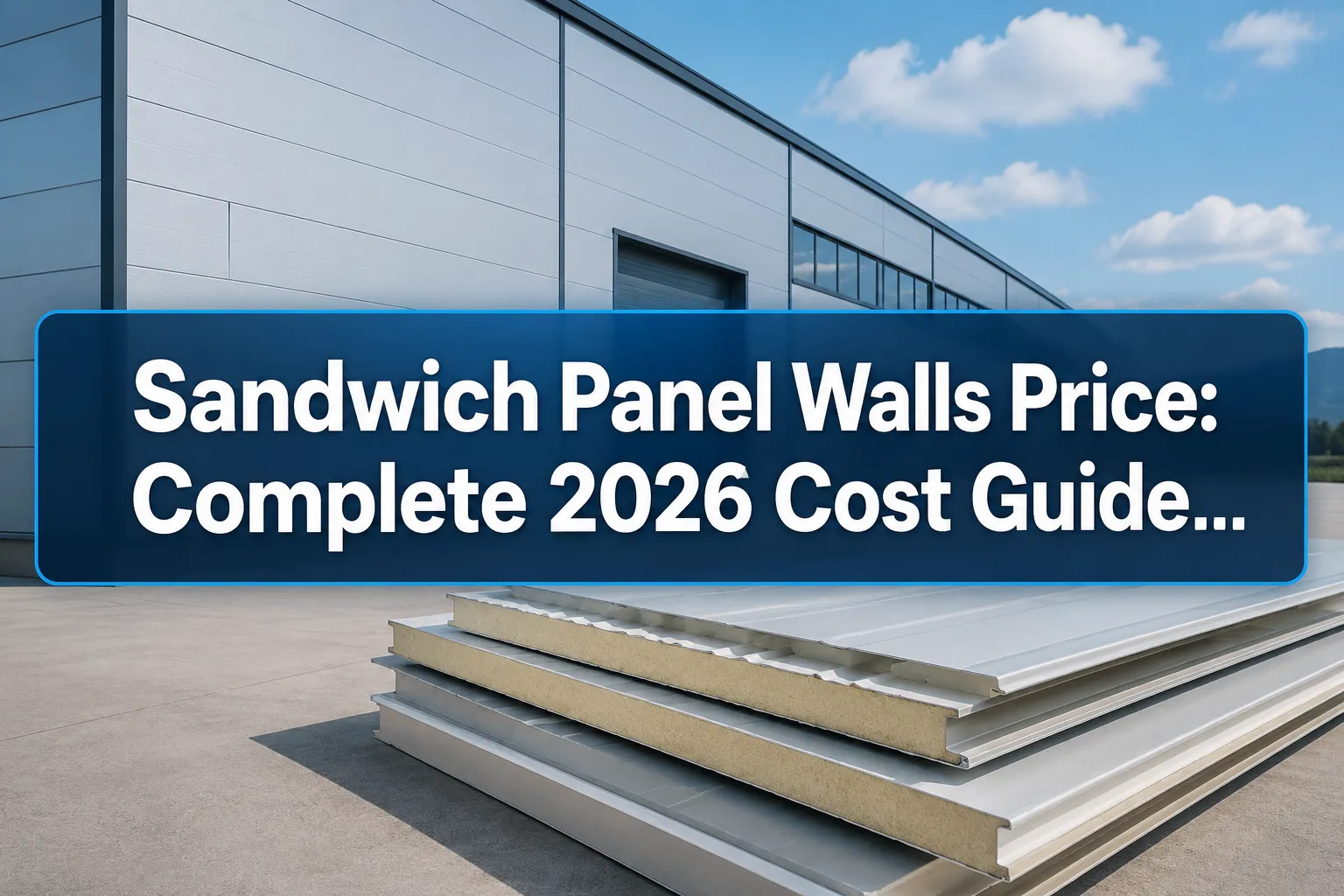
Sandwich panel walls typically cost between $8-25 per square foot for materials, with total project costs ranging from $15-45 per square foot including installation. The final sandwich panel walls price depends on core material type (EPS, PU, or rockwool), thickness, fire rating requirements, and project size.
Key Takeaways
- Material costs: EPS panels ($8-12/sq ft), PU panels ($12-18/sq ft), Rockwool panels ($15-25/sq ft)
- Installation adds: $7-20 per square foot depending on project complexity
- Bulk pricing: Orders over 5,000 sq ft typically receive 15-25% discounts
- Fire-rated panels: Cost 20-40% more than standard options
- Lifespan: Quality sandwich panels last 25-30 years with proper maintenance
- ROI timeline: Energy savings typically offset higher upfront costs within 5-7 years
- Best value: EPS panels for basic applications, rockwool for fire safety requirements
What Are Sandwich Panel Walls
Sandwich panel walls consist of two metal facings bonded to an insulating core material, creating a lightweight yet strong building component. The core materials include expanded polystyrene (EPS), polyurethane (PU), or mineral wool (rockwool), each offering different performance characteristics and price points.
These panels serve as both structural elements and insulation systems, eliminating the need for separate framing, insulation, and exterior cladding in many applications. The panels connect through interlocking joints or mechanical fasteners, creating continuous thermal barriers.
Common applications include:
- Industrial warehouses and factories
- Cold storage facilities
- Commercial buildings
- Agricultural structures
- Clean rooms and laboratories
The panels typically range from 2-8 inches thick, with thicker options providing better insulation values but higher costs. Standard widths span 36-42 inches, while lengths can extend up to 40 feet for seamless installation.
How Much Do Sandwich Panel Walls Cost Per Square Foot
Sandwich panel walls cost $8-25 per square foot for materials alone, with significant variation based on core type and specifications. EPS core panels represent the most economical option, while specialized fire-rated rockwool panels command premium pricing.
Material cost breakdown by core type:
| Core Material | Price Range ($/sq ft) | Best Applications |
|---|---|---|
| EPS (Expanded Polystyrene) | $8-12 | General construction, warehouses |
| PU (Polyurethane) | $12-18 | Cold storage, high insulation needs |
| Rockwool/Mineral Wool | $15-25 | Fire-rated applications, industrial |
Thickness impact on pricing:
- 2-3 inch panels: Base pricing
- 4-5 inch panels: Add 25-35%
- 6+ inch panels: Add 50-70%
Panel thickness directly affects both material costs and thermal performance. Choose 4-inch panels for moderate climates and 6+ inches for extreme temperature applications or strict energy codes.
For detailed regional pricing, check our sandwich panel price per square meter guide which covers current market rates.
Sandwich Panel Walls vs Traditional Drywall Cost Comparison
Sandwich panels cost 2-3 times more upfront than traditional drywall systems but offer superior long-term value through energy savings and reduced maintenance. A complete drywall system with insulation and exterior cladding typically costs $5-12 per square foot, while sandwich panels range from $15-45 per square foot installed.
Initial cost comparison:
- Traditional system: Drywall + insulation + exterior cladding + framing = $5-12/sq ft
- Sandwich panels: All-in-one system = $15-45/sq ft
- Premium difference: 150-275% higher upfront cost
Long-term value factors:
- Installation speed: Sandwich panels install 3-5x faster, reducing labor costs
- Energy efficiency: Superior thermal performance cuts heating/cooling costs by 20-40%
- Maintenance: Panels require minimal upkeep versus regular painting and repairs
- Durability: 25-30 year lifespan versus 10-15 years for traditional systems
Break-even analysis: Most commercial projects recover the additional investment within 5-7 years through energy savings and reduced maintenance costs. Industrial applications with extreme temperature requirements often see payback within 3-4 years.
Choose sandwich panels when energy efficiency, installation speed, or long-term durability outweigh initial cost concerns. Traditional drywall remains suitable for basic interior applications without extreme performance requirements.
Where to Buy Sandwich Panel Walls
Purchase sandwich panel walls directly from manufacturers for the best pricing and customization options, or through authorized distributors for smaller quantities and local support. Major suppliers offer both standard and custom panel configurations with delivery throughout most regions.
Primary purchasing channels:
- Manufacturers: Best pricing for large orders (5,000+ sq ft), custom specifications
- Authorized distributors: Local inventory, smaller quantities, technical support
- Construction suppliers: Limited selection, immediate availability for standard sizes
- Online platforms: Price comparison, specification sheets, but limited technical support
Key supplier evaluation criteria:
- Manufacturing certifications (ISO 9001, fire ratings)
- Warranty terms (typically 10-25 years)
- Delivery capabilities and lead times
- Technical support and installation guidance
- Project references and case studies
Ordering considerations:
- Minimum order quantities (often 1,000-2,000 sq ft)
- Lead times (2-8 weeks for standard panels, 6-12 weeks for custom)
- Delivery logistics for large panels
- Storage requirements at job site
For comprehensive supplier information, review our best sandwich panel manufacturer guide which evaluates leading suppliers and their capabilities.
Sandwich Panel Walls Installation Cost
Installation costs for sandwich panel walls range from $7-20 per square foot depending on project complexity, building height, and local labor rates. Simple warehouse installations cost less than complex architectural applications requiring custom cutting and detailed connections.
Installation cost factors:
- Basic installation: $7-12/sq ft for straightforward warehouse walls
- Complex projects: $15-20/sq ft for detailed architectural work
- Height premium: Add $2-5/sq ft for work above 20 feet
- Access challenges: Difficult sites add 20-50% to labor costs
Installation process overview:
- Structural preparation: Ensure proper support framing and connections
- Panel positioning: Crane or lift equipment for large panels
- Connection methods: Mechanical fasteners or structural adhesives
- Sealing: Weather barriers and thermal bridge prevention
- Finishing: Trim work and penetration sealing
Labor requirements:
- Crew size: 3-5 workers for efficient installation
- Productivity: 200-500 sq ft per day depending on complexity
- Skills needed: Experienced crews prevent costly mistakes and delays
DIY considerations: While possible for small projects, professional installation ensures proper thermal performance, weather sealing, and warranty compliance. Improper installation can void manufacturer warranties and create long-term performance issues.
For detailed installation guidance, see our sandwich panel installation service guide with step-by-step procedures.
Are Sandwich Panel Walls Worth It
Sandwich panel walls provide excellent value for commercial and industrial applications requiring energy efficiency, fast construction, or extreme performance conditions. The higher upfront costs typically pay back within 5-7 years through energy savings and reduced maintenance expenses.
Strong value propositions:
- Energy-intensive buildings: Cold storage, manufacturing facilities
- Fast-track construction: Tight project schedules requiring rapid enclosure
- Extreme climates: Harsh weather conditions demanding superior insulation
- Low-maintenance requirements: Facilities with limited upkeep budgets
- Fire safety needs: Applications requiring superior fire resistance
Less suitable applications:
- Basic residential: Standard homes rarely justify the premium cost
- Temporary structures: Short-term use doesn't allow payback period
- Tight initial budgets: Projects unable to finance higher upfront costs
- Aesthetic priorities: Limited architectural design flexibility
ROI calculation example: A 10,000 sq ft warehouse using PU sandwich panels ($180,000 total cost) versus traditional construction ($120,000) creates a $60,000 premium. Annual energy savings of $12,000 plus reduced maintenance ($3,000) provide payback in 4 years.
Decision criteria: Choose sandwich panels when total lifecycle costs matter more than initial investment, or when performance requirements exceed traditional construction capabilities.
Sandwich Panel Walls for Soundproofing
Sandwich panel walls provide moderate soundproofing capabilities, with performance varying significantly based on core material and panel thickness. Rockwool core panels offer the best acoustic performance, while standard EPS panels provide basic sound reduction suitable for most commercial applications.
Acoustic performance by core type:
- EPS core: 25-35 dB sound reduction, adequate for general use
- PU core: 30-40 dB reduction, good for moderate noise control
- Rockwool core: 40-55 dB reduction, excellent for industrial noise
Sound transmission factors:
- Panel thickness: Each additional inch improves performance by 3-5 dB
- Installation quality: Gaps and poor sealing significantly reduce effectiveness
- Frequency response: Better performance at mid-to-high frequencies
- Connection details: Thermal bridges can create sound transmission paths
Enhanced soundproofing strategies:
- Double-wall construction with air gaps
- Acoustic sealants at all panel joints
- Vibration isolation at structural connections
- Sound-absorbing materials in cavity spaces
Typical applications: Manufacturing facilities, mechanical rooms, property line walls, and equipment enclosures where noise control matters but dedicated acoustic systems aren't required.
For specialized acoustic requirements, consider our sandwich panel soundproofing solutions which detail advanced noise control strategies.
How Long Do Sandwich Panel Walls Last
Quality sandwich panel walls last 25-30 years with proper maintenance, often matching or exceeding the lifespan of traditional building envelope systems. Panel longevity depends primarily on core material quality, facing sheet protection, and environmental exposure conditions.
Lifespan by core material:
- EPS core: 25-30 years with UV protection and proper drainage
- PU core: 20-25 years, may degrade faster in high-moisture environments
- Rockwool core: 30+ years, most durable option for harsh conditions
Key durability factors:
- Facing sheet quality: Galvanized or coated steel prevents corrosion
- Moisture management: Proper vapor barriers and drainage prevent core degradation
- UV exposure: Direct sunlight can degrade facings and sealants over time
- Thermal cycling: Extreme temperature changes stress panel connections
- Maintenance quality: Regular inspection and prompt repairs extend lifespan
Common failure modes:
- Sealant degradation at panel joints (10-15 year replacement cycle)
- Facing sheet corrosion in coastal or industrial environments
- Core moisture infiltration through damaged seals
- Mechanical damage from impacts or settling
Maintenance requirements: Annual inspection of sealants and fasteners, prompt repair of any damage, and periodic cleaning to remove corrosive deposits. Well-maintained panels often exceed their design life significantly.
Sandwich Panel Walls Fire Rating
Fire-rated sandwich panel walls achieve ratings from 30 minutes to 4 hours depending on core material and panel construction, with rockwool cores providing the highest fire resistance. Standard EPS and PU cores offer limited fire performance and may require additional protection systems.
Fire rating by core material:
- EPS core: 15-30 minutes, combustible core limits performance
- PU core: 30-60 minutes, better than EPS but still combustible
- Rockwool core: 1-4 hours, non-combustible mineral fiber core
Fire safety considerations:
- Building codes: Many jurisdictions restrict combustible cores in certain applications
- Insurance requirements: Fire ratings often affect coverage and premiums
- Occupancy types: Assembly, healthcare, and high-rise buildings need superior ratings
- Exit requirements: Fire-rated assemblies protect egress paths
Enhanced fire protection:
- Intumescent coatings on panel facings
- Fire-resistant sealants at all joints
- Sprinkler system integration
- Smoke and flame spread testing compliance
Code compliance: Always verify local building code requirements before specifying panels. Some jurisdictions prohibit combustible cores entirely, while others allow them with sprinkler protection or limited building heights.
Review our fire rated sandwich panel guide for detailed fire safety specifications and code compliance information.
Can You Paint Sandwich Panel Walls
You can paint sandwich panel walls, but surface preparation and paint selection are critical for long-term adhesion and performance. Factory-finished panels often include warranties that painting may void, so evaluate the trade-offs carefully before proceeding.
Painting considerations:
- Warranty impact: Factory finishes typically include 10-20 year warranties that painting voids
- Surface preparation: Proper cleaning and priming essential for adhesion
- Paint selection: Use high-quality industrial coatings designed for metal substrates
- Maintenance: Painted surfaces require periodic recoating every 7-12 years
Preparation steps:
- Clean panels thoroughly with degreasing agents
- Light abrasion to improve paint adhesion
- Apply appropriate primer for metal substrates
- Use high-quality topcoat suitable for exterior exposure
Paint system recommendations:
- Primer: Zinc-rich or epoxy primers for corrosion protection
- Topcoat: Polyurethane or fluoropolymer for durability
- Application: Spray application provides best results and coverage
Alternatives to painting: Consider factory color options during initial purchase, vinyl wraps for temporary color changes, or architectural panels with integral color systems that don't require field painting.
Most projects achieve better results and lower lifecycle costs by specifying desired colors during manufacturing rather than field painting after installation.
Sandwich Panel Walls Moisture Problems
Moisture infiltration represents the most common performance issue with sandwich panel walls, potentially causing core degradation, mold growth, and structural damage. Proper vapor barrier design and installation details prevent most moisture-related problems.
Common moisture sources:
- Air leakage: Poor sealing at panel joints and penetrations
- Vapor drive: Humidity migration through panel assemblies
- Condensation: Temperature differences creating moisture accumulation
- Weather infiltration: Direct water entry through damaged seals
Prevention strategies:
- Continuous vapor barriers: Properly sealed membrane systems
- Thermal bridge elimination: Avoid metal connections that create cold spots
- Ventilation design: Controlled air movement prevents humidity buildup
- Drainage systems: Weep holes and gutters manage water accumulation
Problem indicators:
- Visible staining or discoloration on panel surfaces
- Musty odors indicating mold or mildew growth
- Ice formation or excessive condensation
- Deteriorating sealants or fastener corrosion
Remediation approaches: Address moisture sources immediately through improved sealing, enhanced ventilation, or vapor barrier repairs. Damaged core materials typically require panel replacement rather than repair.
Design best practices: Include redundant moisture protection, specify appropriate vapor permeability ratings, and detail proper flashing at all penetrations and transitions.
Best Brands for Sandwich Panel Walls
Leading sandwich panel manufacturers include Kingspan, Metecno, Tata Steel, and regional specialists who offer different strengths in core materials, customization capabilities, and market focus. Brand selection should prioritize local support, warranty terms, and specific performance requirements over name recognition alone.
Global market leaders:
- Kingspan: Premium pricing, excellent technical support, wide product range
- Metecno: Strong in industrial applications, competitive pricing
- Tata Steel: Reliable quality, good availability in many markets
- ArcelorMittal: Focus on fire-rated and specialty applications
Evaluation criteria for brand selection:
- Local presence: Technical support and warranty service availability
- Product range: Core options, thicknesses, and customization capabilities
- Certifications: Fire ratings, energy codes, and quality standards compliance
- Project references: Similar applications and performance history
- Delivery capabilities: Lead times and logistics support
Regional considerations: Local manufacturers often provide better pricing, faster delivery, and more responsive service than international brands. However, specialized applications may require products only available from major manufacturers.
Quality indicators: Look for ISO 9001 manufacturing certification, third-party testing documentation, and comprehensive warranty terms. Avoid suppliers who cannot provide detailed technical specifications or performance data.
For detailed supplier comparisons, review our comprehensive manufacturer evaluation guide covering leading brands and their capabilities.
Sandwich Panel Walls for Commercial vs Residential
Commercial applications drive the sandwich panel market due to superior cost-effectiveness at larger scales, while residential use remains limited to specific high-performance or specialized applications. The economics and performance requirements differ significantly between these market segments.
Commercial advantages:
- Scale economics: Large projects achieve better pricing and efficiency
- Performance needs: Energy codes and operational requirements justify premium costs
- Installation efficiency: Professional crews and equipment optimize installation
- Lifecycle focus: Total cost of ownership matters more than initial investment
Commercial applications:
- Warehouses and distribution centers
- Manufacturing facilities
- Cold storage and food processing
- Retail and office buildings
- Agricultural and livestock facilities
Residential limitations:
- Higher costs: Premium pricing difficult to justify for typical homes
- Aesthetic constraints: Limited architectural design flexibility
- Code restrictions: Some jurisdictions limit use in residential construction
- Market acceptance: Unfamiliarity among residential contractors and homeowners
Residential niches where panels work:
- High-performance custom homes
- Agricultural and workshop buildings
- Extreme climate applications
- Net-zero energy projects
- Accessory dwelling units (ADUs)
Decision factors: Commercial projects should evaluate panels for any application requiring superior energy performance or fast construction. Residential projects need specific performance requirements or cost constraints that traditional construction cannot meet effectively.
DIY Sandwich Panel Wall Installation
DIY installation of sandwich panel walls is possible for smaller projects but requires careful planning, proper equipment, and realistic assessment of technical skills. Professional installation typically provides better results and warranty protection for most applications.
DIY feasibility factors:
- Project size: Under 1,000 sq ft more manageable for DIY approach
- Building height: Single-story construction much safer and easier
- Panel weight: Large panels require lifting equipment and multiple people
- Technical complexity: Simple warehouse walls versus detailed architectural work
Required tools and equipment:
- Lifting equipment: Forklift, crane, or manual lifting devices for large panels
- Cutting tools: Metal-cutting saws for panel modifications
- Fastening tools: Impact drivers, drill bits, and appropriate fasteners
- Measuring equipment: Levels, squares, and measuring tapes for accuracy
- Safety equipment: Fall protection, eye protection, and work platforms
Installation challenges:
- Weather sealing: Proper sealant application critical for performance
- Thermal bridges: Avoiding connections that compromise insulation
- Structural connections: Ensuring adequate attachment to building structure
- Code compliance: Meeting building code requirements and inspection needs
When to hire professionals:
- Fire-rated applications requiring certified installation
- Multi-story buildings with fall hazards
- Complex architectural details and custom cutting
- Projects where warranty compliance matters
- Tight schedules requiring experienced crews
Cost considerations: DIY installation saves $7-20 per square foot in labor costs but may void manufacturer warranties and create long-term performance risks if done incorrectly.
Frequently Asked Questions
How much do sandwich panel walls cost compared to traditional construction?
Sandwich panel walls cost 150-275% more upfront than traditional drywall systems but typically pay back the difference within 5-7 years through energy savings and reduced maintenance costs.
What thickness sandwich panel should I choose for walls?
Choose 4-inch panels for moderate climates and standard applications, 6+ inches for extreme temperatures or strict energy codes. Each additional inch adds 25-35% to material costs but significantly improves thermal performance.
Do sandwich panel walls need special permits or approvals?
Most jurisdictions treat sandwich panels like other building envelope systems, but fire-rated applications and certain occupancy types may require special approvals. Always check local building codes before proceeding.
Can sandwich panels be used for load-bearing walls?
Standard sandwich panels are not designed for structural loads and require separate framing systems. Structural sandwich panels are available but cost significantly more and need engineering design.
How do I maintain sandwich panel walls?
Annual inspection of sealants and fasteners, prompt repair of any damage, and periodic cleaning to remove dirt and corrosive deposits. Well-maintained panels often exceed their 25-30 year design life.
Are sandwich panel walls energy efficient?
Yes, sandwich panels typically provide superior thermal performance compared to traditional construction, often reducing heating and cooling costs by 20-40% through continuous insulation and reduced thermal bridging.
What happens if a sandwich panel gets damaged?
Individual panels can usually be replaced without affecting adjacent panels. Minor damage to facings can often be repaired with appropriate sealants and coatings, while core damage typically requires panel replacement.
Do sandwich panels work in extreme climates?
Sandwich panels excel in extreme climates when properly specified. Use thicker panels and appropriate core materials for temperature extremes, and ensure proper vapor barrier design for high-humidity environments.
Can I install windows and doors in sandwich panel walls?
Yes, but proper framing and flashing details are critical to maintain thermal performance and weather resistance. Consider these penetrations during initial design rather than field modifications.
How long does sandwich panel installation take?
Professional crews typically install 200-500 square feet per day depending on project complexity. Simple warehouse walls install faster than detailed architectural applications requiring custom cutting and connections.
Are there financing options for sandwich panel projects?
Many manufacturers and distributors offer project financing, and energy-efficient construction may qualify for utility rebates or green building incentives that help offset higher upfront costs.
What warranty coverage do sandwich panels include?
Quality manufacturers typically provide 10-25 year warranties on materials and thermal performance, but installation quality significantly affects warranty coverage and long-term performance.
Conclusion
Sandwich panel walls offer compelling value for commercial and industrial applications requiring superior energy efficiency, fast installation, or extreme performance conditions. While the initial sandwich panel walls price ranges from $15-45 per square foot installed, significantly higher than traditional construction, the long-term benefits typically justify the investment within 5-7 years.
Key decision factors include:
- Project size and complexity affecting economies of scale
- Performance requirements that traditional construction cannot meet
- Total lifecycle costs versus initial budget constraints
- Local building codes and fire safety requirements
Next steps for your project:
- Define requirements: Determine thermal performance, fire ratings, and aesthetic needs
- Get quotes: Contact multiple suppliers for detailed pricing based on your specifications
- Evaluate total costs: Include installation, long-term energy savings, and maintenance expenses
- Check references: Review similar projects and speak with previous customers
- Plan installation: Ensure proper equipment, skilled crews, and realistic schedules
For the most current pricing and supplier information, consult our comprehensive sandwich panel buying guide which covers the complete selection and procurement process.
SEO Meta Title: Sandwich Panel Walls Price Guide 2026: Complete Cost Analysis