Last updated: July 31, 2026

Quick Answer
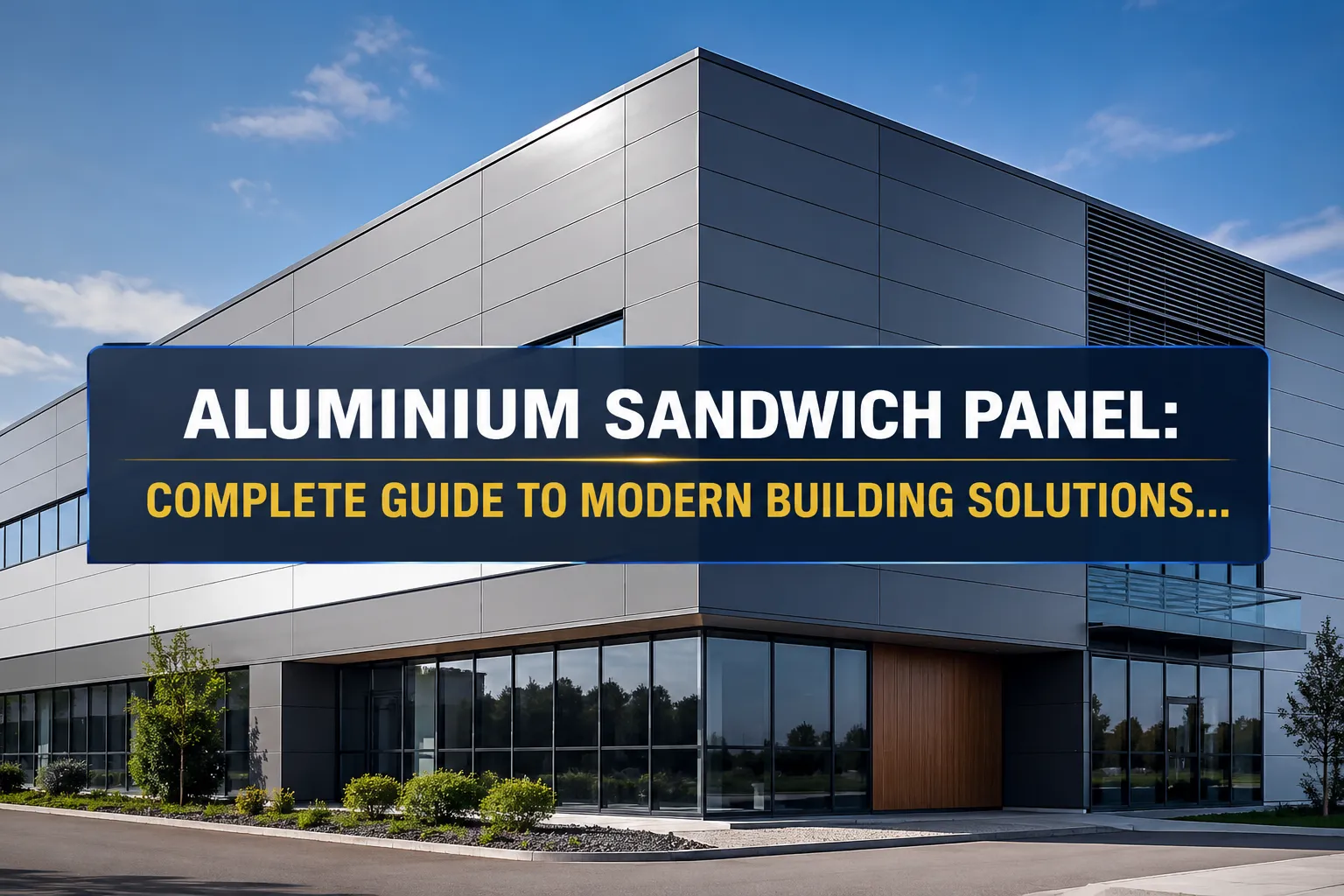
An aluminium sandwich panel is a composite building material consisting of two thin aluminium sheets bonded to a lightweight insulating core (typically polyurethane, EPS, or rockwool). These panels provide excellent thermal insulation, structural strength, and weather resistance for commercial and industrial construction projects. They're widely used for roofing, wall cladding, and cold storage applications due to their superior insulation properties and quick installation process.
Key Takeaways
- Aluminium sandwich panels combine two metal sheets with an insulating core for maximum thermal performance
- Available with different core materials including polyurethane (PU), expanded polystyrene (EPS), and rockwool for varying applications
- Typical thickness ranges from 50mm to 200mm depending on insulation requirements and structural needs
- Cost ranges from $15-45 per square meter in Bangladesh depending on thickness, core material, and specifications
- Fire ratings vary by core material, with rockwool cores offering the highest fire resistance (A1 classification)
- Installation requires proper sealing and fastening to prevent thermal bridging and water infiltration
- Lifespan typically exceeds 25-30 years with minimal maintenance when properly installed
- Weight is significantly lighter than traditional construction materials, reducing structural load requirements
- R-values range from 3.5 to 8.0 depending on thickness and core material type
What Is an Aluminium Sandwich Panel
An aluminium sandwich panel is a prefabricated composite building element that consists of two thin aluminium face sheets permanently bonded to a lightweight insulating core material. The core typically comprises polyurethane foam, expanded polystyrene (EPS), or mineral wool (rockwool), creating a structural panel that delivers both insulation and weather protection in a single component.
The panel construction follows a sandwich principle where the outer aluminium skins provide structural rigidity, weather resistance, and aesthetic appeal, while the core material delivers thermal insulation and additional structural support. This design creates a high strength-to-weight ratio that makes these panels ideal for large-span construction applications.
Common applications include:
- Industrial building roofing and wall systems
- Cold storage and refrigeration facilities
- Commercial warehouse construction
- Agricultural buildings and poultry farms
- Clean room and pharmaceutical facilities
The aluminium faces are typically 0.5mm to 0.7mm thick and feature protective coatings such as polyester or PVDF finishes that resist corrosion, UV degradation, and color fading. Standard panel widths range from 950mm to 1200mm, with lengths up to 12 meters depending on transportation and handling constraints.
How Are Aluminium Sandwich Panels Made
Aluminium sandwich panels are manufactured through a continuous lamination process that bonds the core material between two pre-coated aluminium sheets under controlled temperature and pressure conditions. The production begins with unwinding pre-painted aluminium coils that have been treated with protective coatings and primers for durability.
The core material is either injected as liquid foam (for PU cores) or placed as pre-formed sheets (for EPS or rockwool cores) between the aluminium faces. For polyurethane cores, the chemical reaction occurs within the panel assembly, creating strong adhesion to the metal faces while expanding to fill the cavity completely.
Manufacturing steps include:
- Surface preparation – Aluminium sheets receive adhesion-promoting treatments
- Core application – Insulating material is applied or injected between face sheets
- Pressing and curing – Panels pass through heated presses to cure adhesives and foam
- Cooling and cutting – Finished panels are cooled and cut to specified dimensions
- Quality control – Testing for adhesion strength, thermal performance, and dimensional accuracy
The continuous production line maintains consistent thickness tolerances of ±1mm and ensures uniform core density throughout the panel. Advanced manufacturers use computer-controlled systems to monitor temperature, pressure, and line speed for consistent quality across production runs.
Quality standards typically follow international certifications including CE marking for European markets and local building codes for regional compliance. Fire rated sandwich panels require additional testing and certification for their specific fire performance ratings.
Aluminium Sandwich Panel vs Fiberglass: Which Is Better
Aluminium sandwich panels outperform fiberglass panels in durability, fire resistance, and thermal performance, making them the preferred choice for most commercial and industrial applications. While fiberglass panels cost 20-30% less initially, aluminium panels provide superior long-term value through reduced maintenance and longer service life.
Aluminium sandwich panel advantages:
- Fire resistance – Non-combustible aluminium faces with fire-rated core options
- Durability – 25-30 year lifespan vs 15-20 years for fiberglass
- Weather resistance – No UV degradation or fiber bloom issues
- Thermal performance – Better insulation values and reduced thermal bridging
- Structural strength – Higher load-bearing capacity for roofing applications
Fiberglass panel advantages:
- Lower initial cost – 20-30% less expensive upfront
- Light transmission – Available in translucent options for natural lighting
- Flexibility – Better impact resistance in some applications
Choose aluminium sandwich panels for permanent structures, cold storage facilities, or applications requiring fire ratings. Fiberglass panels work better for temporary buildings, agricultural applications where natural light is needed, or projects with very tight budgets where the shorter lifespan is acceptable.
The total cost of ownership typically favors aluminium panels due to lower maintenance requirements and longer replacement cycles. For specialized applications like clean room construction, aluminium panels are often the only viable option due to hygiene and contamination control requirements.
Aluminium Sandwich Panel Cost Per Square Meter
Aluminium sandwich panel costs in Bangladesh range from $15-45 per square meter depending on thickness, core material, and surface finish specifications. Basic 50mm EPS core panels start around $15-20 per square meter, while premium 150mm rockwool panels with PVDF coatings can reach $35-45 per square meter.
Cost breakdown by core type:
- EPS core panels – $15-25 per square meter (most economical option)
- PU core panels – $20-35 per square meter (best thermal performance)
- Rockwool core panels – $25-45 per square meter (highest fire rating)
Panel thickness significantly impacts pricing, with costs increasing approximately $3-5 per square meter for each 25mm thickness increase. Surface finish options add $2-8 per square meter, with basic polyester coatings being most affordable and PVDF finishes commanding premium prices.
Additional cost factors include:
- Minimum order quantities – Smaller orders incur 10-20% price premiums
- Custom colors – Non-standard colors add $2-4 per square meter
- Transportation – Delivery costs vary by location and order size
- Installation – Professional installation adds $5-12 per square meter
For accurate pricing on specific projects, consult sandwich panel suppliers in Bangladesh who can provide detailed quotations based on exact specifications and quantities. Bulk orders for large projects often qualify for significant volume discounts.
Where to Buy Aluminium Sandwich Panels
Purchase aluminium sandwich panels from established manufacturers and authorized distributors who provide quality certifications, technical support, and warranty coverage. In Bangladesh, several reputable suppliers offer comprehensive product ranges with local manufacturing capabilities and international quality standards.
Key supplier selection criteria:
- Manufacturing certifications – ISO 9001, CE marking, or local building code approvals
- Product testing – Thermal performance, fire rating, and structural load testing
- Technical support – Installation guidance and engineering assistance
- Warranty coverage – Minimum 10-15 year material warranties
- Local presence – Nearby facilities for support and faster delivery
Leading suppliers typically maintain large inventory stocks of standard specifications while offering custom manufacturing for specific project requirements. Look for suppliers who provide complete project solutions including design assistance, material takeoffs, and installation services.
Recommended procurement approach:
- Request samples – Evaluate actual product quality and finishes
- Verify certifications – Confirm fire ratings and thermal performance data
- Compare warranties – Review coverage terms and claim procedures
- Check references – Contact previous customers for performance feedback
- Evaluate logistics – Assess delivery capabilities and lead times
For specialized applications, work with suppliers who have experience in your specific industry. Poultry farm applications require different specifications than warehouse construction, and experienced suppliers can recommend optimal solutions for each use case.
Aluminium Sandwich Panel Installation Problems
Common aluminium sandwich panel installation problems include improper sealing, thermal bridging, and inadequate fastening that can lead to water infiltration, condensation issues, and structural failures. These problems are typically preventable through proper planning, quality materials, and experienced installation crews.
Most frequent installation issues:
- Water infiltration – Inadequate sealing at joints and penetrations
- Thermal bridging – Metal fasteners creating heat transfer paths
- Panel alignment – Uneven surfaces causing gaps and poor aesthetics
- Fastener failure – Incorrect fastener types or spacing causing panel detachment
- Condensation – Vapor barrier problems leading to moisture accumulation
Prevention strategies:
- Proper surface preparation – Ensure substrate is level, clean, and structurally sound
- Quality sealants – Use compatible weatherproof sealants at all joints
- Thermal break fasteners – Install insulated fasteners to prevent thermal bridging
- Vapor barriers – Install continuous vapor barriers on warm side of assembly
- Professional installation – Use experienced crews familiar with panel systems
Weather conditions during installation significantly impact success rates. Avoid installation during rain, high winds, or extreme temperatures that can affect sealant performance and panel handling safety.
For critical applications like cold room installations, consider hiring certified installation teams who specialize in insulated panel systems. The additional cost is typically justified by reduced callback rates and warranty claims.
Do Aluminium Sandwich Panels Need Maintenance
Aluminium sandwich panels require minimal maintenance when properly installed, typically needing only periodic cleaning and sealant inspection every 2-3 years. The pre-finished aluminium surfaces resist corrosion, fading, and weathering, making them one of the lowest-maintenance building envelope systems available.
Routine maintenance tasks:
- Annual cleaning – Wash panels with mild detergent to remove dirt and pollutants
- Sealant inspection – Check joint sealants every 2-3 years for cracking or separation
- Fastener checks – Verify fastener tightness and condition annually
- Drainage clearing – Keep gutters and drainage systems clear of debris
- Panel inspection – Look for dents, scratches, or coating damage
Most maintenance can be performed by building maintenance staff without specialized training. Sealant replacement is the most common maintenance requirement, typically needed every 10-15 years depending on exposure conditions and sealant quality.
Signs requiring immediate attention:
- Water stains on interior surfaces indicating leaks
- Loose or missing fasteners
- Damaged panel edges or corners
- Blocked drainage systems causing water accumulation
The low maintenance requirements make aluminium sandwich panels particularly attractive for warehouse applications and industrial facilities where minimizing ongoing costs is crucial for operational efficiency.
Aluminium Sandwich Panel Fire Rating
Aluminium sandwich panel fire ratings depend primarily on the core material, with rockwool cores achieving the highest ratings (A1 non-combustible) while EPS cores typically rate as B or C class materials. The aluminium face sheets are non-combustible but the overall panel rating is determined by the core material's fire performance.
Fire rating classifications:
- A1 rating – Rockwool core panels (non-combustible, highest safety level)
- A2 rating – Some mineral fiber cores with limited combustible content
- B rating – Fire-retardant EPS cores with flame spread resistance
- C rating – Standard EPS cores meeting basic fire requirements
For critical applications like hospitals, schools, or high-rise buildings, A1-rated rockwool panels are often mandatory per building codes. These panels resist ignition, don't contribute fuel to fires, and maintain structural integrity longer during fire exposure.
Fire safety considerations:
- Building code compliance – Verify local fire rating requirements
- Escape route protection – Higher ratings required for egress paths
- Compartmentalization – Fire-rated panels help contain fire spread
- Insurance requirements – Some insurers mandate specific fire ratings
The fire performance also depends on proper installation with fire-rated sealants and accessories. Standard construction sealants may not maintain fire ratings even when used with fire-rated panels.
For projects requiring fire certification, work with suppliers who provide complete fire-rated systems including panels, fasteners, and sealants. Fire rated sandwich panel systems require comprehensive testing and documentation for building code approval.
Aluminium Sandwich Panels for Roofing vs Walls
Aluminium sandwich panels for roofing applications typically feature enhanced structural profiles, improved drainage design, and higher load ratings compared to wall panels. Roof panels must support snow loads, wind uplift forces, and thermal expansion while maintaining weathertight performance across large spans.
Roofing panel specifications:
- Thicker gauge faces – 0.6-0.7mm aluminium for structural strength
- Enhanced profiles – Deeper ribs for increased load capacity
- Improved drainage – Sloped panel design and integrated guttering
- Thermal movement – Expansion joints and flexible connections
- Higher insulation – Typically 100-200mm thickness for energy efficiency
Wall panel characteristics:
- Standard gauge faces – 0.5-0.6mm aluminium sufficient for wind loads
- Aesthetic profiles – Flat or lightly ribbed surfaces for appearance
- Vertical orientation – Designed for gravity loads and wind pressure
- Standard thickness – Often 50-100mm depending on climate requirements
Installation methods differ significantly between applications. Roof panel installation requires careful attention to slope, drainage, and thermal movement, while wall panels focus on vertical alignment and weather sealing.
Choose roof-specific panels for any overhead application, even if wall panels appear similar. The structural requirements and weather exposure are significantly different, and using inappropriate panels can lead to structural failure or water infiltration problems.
Aluminium Sandwich Panel Weight Specifications
Aluminium sandwich panels typically weigh 8-25 kg per square meter depending on thickness and core material density, making them significantly lighter than traditional construction materials like concrete block or brick veneer systems. This reduced weight allows for lighter structural framing and foundation requirements.
Weight by panel type:
- 50mm EPS core – 8-12 kg/m² (lightest option)
- 75mm PU core – 12-16 kg/m²
- 100mm rockwool core – 18-25 kg/m² (heaviest but fire-rated)
- 150mm PU core – 16-22 kg/m²
The aluminium faces contribute approximately 2.7 kg/m² per 0.5mm thickness, while core materials vary significantly in density. EPS cores are lightest at 15-25 kg/m³, polyurethane cores range 35-45 kg/m³, and rockwool cores are heaviest at 100-150 kg/m³.
Structural advantages of light weight:
- Reduced foundation loads – Lower structural requirements
- Faster installation – Easier manual handling and crane operations
- Seismic performance – Lower building mass reduces earthquake forces
- Transportation efficiency – More panels per truck load
For structural calculations, use manufacturer-provided load tables that account for panel orientation, span length, and support conditions. The composite action of face sheets and core creates higher strength-to-weight ratios than individual material properties suggest.
Weight considerations are particularly important for retrofit applications where existing structures may have limited load capacity for additional cladding systems.
Are Aluminium Sandwich Panels Waterproof
Aluminium sandwich panels are inherently water-resistant due to their non-porous aluminium faces, but achieving complete waterproof performance requires proper installation with quality sealants and weatherstripping at all joints and penetrations. The panels themselves don't absorb water, but water infiltration can occur through improperly sealed connections.
Waterproofing depends on:
- Joint sealing – Structural glazing sealants at panel edges
- Fastener sealing – Gaskets and washers at all penetrations
- Overlap design – Proper panel overlap to shed water effectively
- Drainage provisions – Gutters and weep holes to handle any moisture
- Vapor barriers – Interior barriers to prevent condensation issues
The aluminium faces provide excellent moisture resistance, but the core materials vary in their moisture sensitivity. Polyurethane and EPS cores are closed-cell materials that resist water absorption, while some rockwool cores may absorb moisture if exposed.
Critical waterproofing details:
- Horizontal joints – Use stepped overlaps with sealant backing
- Vertical joints – Install continuous sealant beads with proper tooling
- Roof penetrations – Flash all penetrations with compatible materials
- Base connections – Provide drainage and moisture barriers at foundations
For applications requiring absolute moisture control like cold storage facilities, specify panels with integral vapor barriers and use specialized installation techniques to ensure continuous moisture protection.
Aluminium Sandwich Panels for Commercial Buildings
Aluminium sandwich panels excel in commercial building applications due to their speed of installation, energy efficiency, and low maintenance requirements that reduce total building lifecycle costs. They're particularly well-suited for warehouses, distribution centers, manufacturing facilities, and retail buildings where large clear spans and thermal performance are priorities.
Commercial building advantages:
- Fast construction – Reduce building schedule by 30-50% vs traditional methods
- Energy efficiency – Continuous insulation reduces heating and cooling costs
- Design flexibility – Available in multiple colors and profiles for architectural appeal
- Code compliance – Meet commercial energy codes with proper thickness selection
- Low maintenance – Minimal ongoing costs for building operations
Typical commercial applications:
- Distribution warehouses – Large span roofing with minimal structural support
- Manufacturing plants – Durable walls resistant to industrial environments
- Retail buildings – Attractive facades with integrated signage capabilities
- Office buildings – Energy-efficient envelope systems for LEED certification
- Agricultural facilities – Climate-controlled environments for livestock and storage
Panel selection for commercial buildings should consider local energy codes, which often mandate minimum R-values for different climate zones. Energy efficient sandwich panels help buildings achieve energy code compliance and qualify for utility rebates or tax incentives.
The speed of installation is particularly valuable for commercial projects where early occupancy translates directly to revenue generation and return on investment.
How Long Do Aluminium Sandwich Panels Last
Aluminium sandwich panels typically last 25-35 years with proper installation and minimal maintenance, making them one of the most durable building envelope systems available. The pre-finished aluminium faces resist corrosion, UV degradation, and weathering that commonly affect other cladding materials within 10-15 years.
Lifespan factors:
- Coating quality – PVDF finishes last longer than polyester coatings
- Environmental exposure – Coastal or industrial environments may reduce lifespan
- Installation quality – Proper sealing and fastening prevents premature failure
- Maintenance level – Regular cleaning and sealant replacement extends life
- Core material – Polyurethane and rockwool cores are more durable than EPS
Expected service life by component:
- Aluminium faces – 30-40 years with quality coatings
- Core insulation – 25-30 years for closed-cell materials
- Sealants – 10-15 years requiring periodic replacement
- Fasteners – 25-35 years with proper corrosion protection
The longest-lasting installations use high-quality panels with PVDF coatings, stainless steel or coated fasteners, and structural glazing sealants designed for 20+ year service life. These premium systems justify their higher initial cost through extended service intervals.
End-of-life indicators:
- Coating chalking or significant fading
- Sealant cracking or adhesion loss
- Fastener corrosion or loosening
- Panel deformation or damage
For maximum lifespan, follow manufacturer maintenance recommendations and address minor issues promptly before they develop into major problems requiring panel replacement.
Aluminium Sandwich Panel Thermal Insulation R-Value
Aluminium sandwich panel R-values range from 3.5 to 8.0 (m²·K/W) depending on thickness and core material, with polyurethane cores providing the highest insulation performance per unit thickness. These R-values represent the thermal resistance of the complete panel assembly including face sheets and core material.
R-values by core type and thickness:
| Core Material | 50mm | 75mm | 100mm | 150mm |
|---|---|---|---|---|
| EPS Core | 1.4 | 2.1 | 2.8 | 4.2 |
| PU Core | 2.2 | 3.3 | 4.4 | 6.6 |
| Rockwool Core | 1.2 | 1.8 | 2.4 | 3.6 |
Factors affecting thermal performance:
- Thermal bridging – Metal fasteners can reduce effective R-value by 10-20%
- Air leakage – Poor sealing reduces insulation effectiveness
- Installation quality – Gaps and compression affect performance
- Aging effects – Some foam cores may lose R-value over time
For energy code compliance, verify that selected panels meet minimum R-value requirements for your climate zone and building type. Thermal insulation sandwich panels with higher R-values reduce energy costs and may qualify for utility incentives or green building credits.
The continuous insulation provided by sandwich panels eliminates thermal bridging common in framed construction, making the effective thermal performance often superior to traditional insulation methods even with similar R-values.
Frequently Asked Questions
What is the standard thickness for aluminium sandwich panels?
Standard thicknesses range from 50mm to 200mm in 25mm increments. Most commercial applications use 75-100mm thickness for walls and 100-150mm for roofing to meet energy code requirements.
Can aluminium sandwich panels be used for load-bearing walls?
No, aluminium sandwich panels are non-structural cladding systems that require a separate structural frame. They provide weather protection and insulation but cannot support building loads independently.
How do you cut aluminium sandwich panels on site?
Use fine-tooth circular saw blades or specialized panel cutting tools. Avoid cutting that exposes core material to weather, and seal any field cuts with appropriate sealants to maintain weather resistance.
What colors are available for aluminium sandwich panels?
Standard colors include white, beige, gray, and metallic finishes. Custom colors are available with minimum order quantities, typically adding 2-4 weeks to delivery schedules and $2-4 per square meter to cost.
Do aluminium sandwich panels require special fasteners?
Yes, use self-drilling screws with EPDM washers designed for metal panel systems. Fastener length should penetrate structural support by minimum 25mm for adequate holding power.
Can you walk on aluminium sandwich roof panels?
Walking on panels is possible but requires care to avoid damage. Use walkway pads or temporary planking to distribute loads, and avoid walking near unsupported panel edges or during hot weather when panels expand.
How do you prevent condensation in aluminium sandwich panels?
Install continuous vapor barriers on the warm side of the assembly and ensure adequate ventilation. Proper sealing prevents warm, moist air from reaching cold surfaces where condensation occurs.
What is the maximum span for aluminium sandwich panels?
Maximum spans depend on panel thickness, load requirements, and deflection limits. Typical roof spans range from 4-8 meters, while wall panels can span 3-6 meters between supports.
Are aluminium sandwich panels recyclable?
The aluminium faces are fully recyclable, but core materials vary in recyclability. EPS and PU cores have limited recycling options, while rockwool cores can often be recycled into new insulation products.
How do you repair damaged aluminium sandwich panels?
Small dents can often be repaired with body filler and touch-up paint. Larger damage typically requires panel replacement, as structural repairs may compromise thermal performance and weather sealing.
What building codes apply to aluminium sandwich panels?
Panels must meet local building codes for fire rating, thermal performance, and structural requirements. Common standards include ASTM, EN, and local energy codes that specify minimum R-values.
Can aluminium sandwich panels be installed in winter?
Installation is possible in cold weather but requires special considerations for sealant application and thermal expansion. Most sealants require minimum temperatures of 5-10°C for proper curing and adhesion.
Conclusion
Aluminium sandwich panels represent a proven, cost-effective solution for modern commercial and industrial construction projects requiring superior thermal performance, durability, and speed of installation. With proper core material selection, these panels can meet diverse requirements from basic warehouse construction to specialized applications like cold storage and clean rooms.
The key to successful aluminium sandwich panel projects lies in selecting appropriate specifications for your specific application, working with experienced suppliers who provide technical support, and ensuring professional installation that maintains the panels' thermal and weather performance capabilities.
For your next building project, evaluate aluminium sandwich panels against traditional construction methods by considering total lifecycle costs including energy savings, maintenance requirements, and long-term durability. The initial investment in quality panels and professional installation typically provides excellent returns through reduced operating costs and extended service life.
Ready to specify aluminium sandwich panels for your project? Start by consulting with established sandwich panel manufacturers who can provide detailed technical specifications, cost estimates, and installation support for your specific requirements.
SEO Meta Title: Aluminium Sandwich Panel Guide: Types, Costs & Installation 2026