Last updated: July 31, 2026

Quick Answer: Rock wool sandwich panel for wall insulation consists of mineral wool core sandwiched between two metal facings, providing superior fire resistance (up to 4 hours), thermal performance (R-values 4-8 per inch), and soundproofing capabilities. These panels offer faster installation than traditional insulation methods while delivering excellent moisture resistance and structural integrity for both commercial and residential applications.
Key Takeaways
- Rock wool sandwich panels combine mineral fiber insulation with metal facings for superior thermal and acoustic performance
- Fire resistance ratings reach up to 4 hours, making them ideal for commercial and industrial buildings
- Installation costs range from $8-15 per square foot including labor, competitive with traditional wall systems
- R-values typically range from 4-8 per inch thickness, outperforming many conventional insulation materials
- Panels resist moisture, mold, and pest infiltration while maintaining structural integrity for 50+ years
- Sound transmission class (STC) ratings of 45-65 make them excellent for noise control applications
- Available in thicknesses from 2-8 inches with various facing materials and finishes
- Best suited for commercial buildings, warehouses, and high-performance residential construction
What Is a Rock Wool Sandwich Panel and How Does It Work
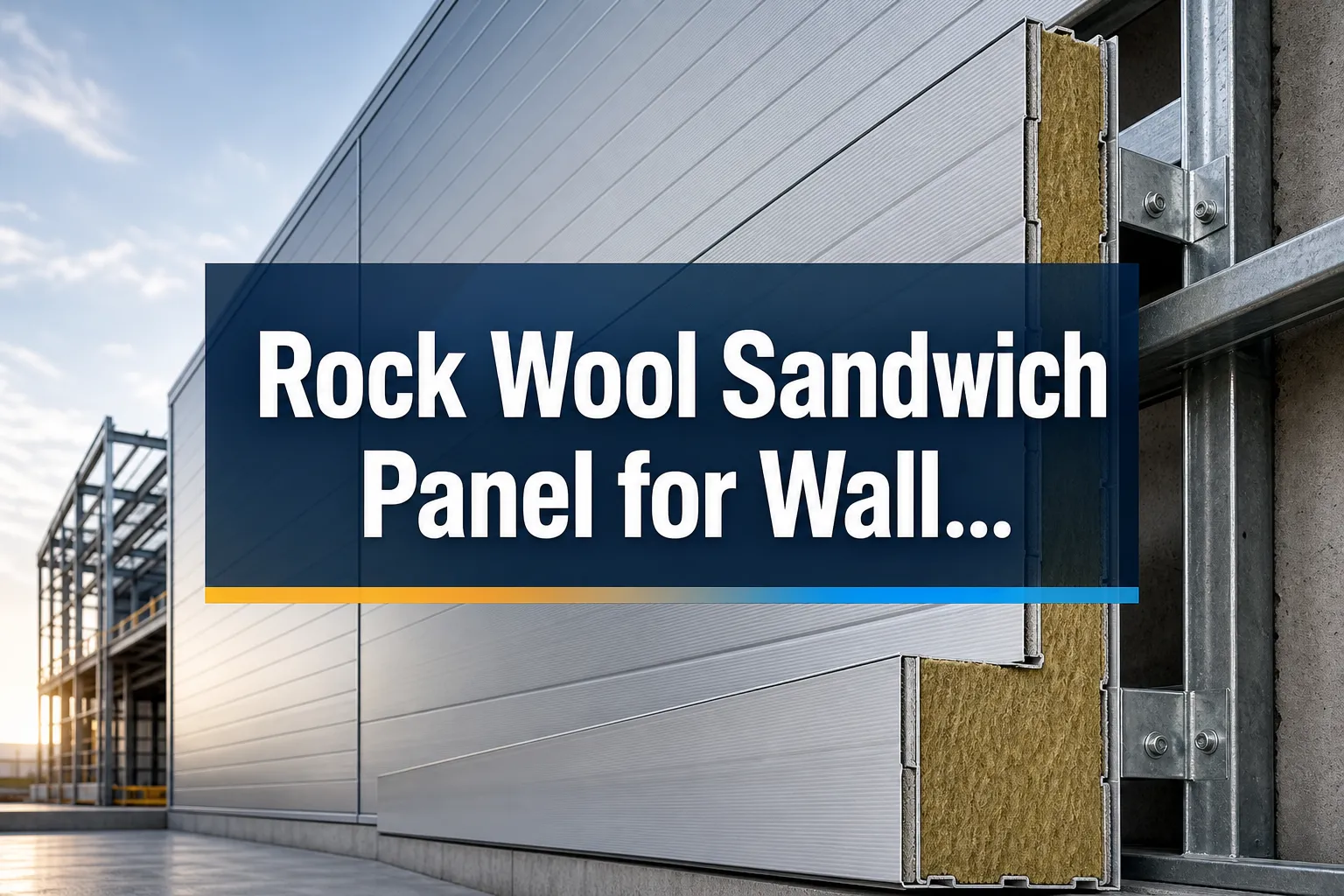
A rock wool sandwich panel for wall insulation is a composite building material featuring a mineral wool core bonded between two rigid facings, typically made of steel, aluminum, or fiber cement. The mineral wool core, manufactured from basalt rock and recycled steel slag heated to over 2900°F, creates a dense fibrous matrix that traps air and provides exceptional thermal resistance.
The panel works through multiple insulation mechanisms. The rock wool core provides thermal resistance through trapped air pockets within its fibrous structure. The metal facings create a continuous barrier that eliminates thermal bridging common in traditional framed walls. This combination delivers consistent R-values across the entire wall surface without gaps or compression issues.
Key components include:
- Core material: Mineral wool density ranging from 2-10 pounds per cubic foot
- Facings: 22-26 gauge steel or aluminum with protective coatings
- Edge sealing: Interlocking joints or gasket systems for airtight installation
- Vapor barriers: Optional integrated moisture control layers
The panels function as both structural and insulation elements, transferring loads while maintaining thermal performance. Unlike traditional insulation that requires separate structural framing, these panels can span between structural supports, reducing material costs and installation time.
For comprehensive information about rockwool sandwich panel applications in Bangladesh, including local availability and specifications.
Rock Wool Sandwich Panel vs Fiberglass Insulation Comparison
Rock wool sandwich panels significantly outperform fiberglass insulation in fire resistance, moisture tolerance, and long-term performance. While fiberglass melts at 1050°F, rock wool maintains its structure up to 2150°F, providing crucial fire protection for commercial buildings.
Performance comparison:
| Factor | Rock Wool Sandwich Panel | Fiberglass Insulation |
|---|---|---|
| Fire resistance | Up to 4 hours rated | 15-30 minutes typical |
| R-value per inch | 4.0-4.3 | 3.2-3.8 |
| Moisture resistance | Excellent, <1% absorption | Poor, loses R-value when wet |
| Installation speed | 3-5x faster | Standard cavity installation |
| Lifespan | 50+ years | 15-25 years |
| Sound control | STC 45-65 | STC 35-45 |
Choose rock wool sandwich panels if:
- Fire safety is critical (commercial, industrial buildings)
- Moisture exposure is likely (coastal, humid climates)
- Fast installation is required
- Long-term performance justifies higher upfront costs
Choose fiberglass if:
- Budget constraints are primary concern
- Standard residential construction with adequate vapor barriers
- Fire ratings below 1 hour are acceptable
Rock wool panels eliminate common fiberglass problems including settling, moisture damage, and thermal bridging. However, they require 40-60% higher initial investment, making cost-benefit analysis essential for each project.
Rock Wool Sandwich Panel Cost Per Square Foot
Rock wool sandwich panel costs range from $8-15 per square foot installed, depending on thickness, facing materials, and project complexity. Material costs typically account for 60-70% of total expenses, with labor representing the remainder.
Cost breakdown by thickness:
- 2-3 inch panels: $6-9 per sq ft material, $2-3 labor
- 4-5 inch panels: $8-12 per sq ft material, $2-4 labor
- 6-8 inch panels: $12-18 per sq ft material, $3-5 labor
Factors affecting pricing:
- Panel thickness: Each additional inch adds $1.50-2.50 per sq ft
- Facing materials: Aluminum costs 20-30% more than steel
- Custom colors/finishes: Premium coatings add $0.50-1.50 per sq ft
- Project size: Orders over 10,000 sq ft receive 10-15% volume discounts
- Installation complexity: Multi-story or irregular walls increase labor 25-50%
Regional cost variations:
- Urban markets: 15-25% premium due to higher labor costs
- Rural areas: Potential shipping surcharges of $0.50-1.00 per sq ft
- Coastal regions: Corrosion-resistant coatings add $1-2 per sq ft
Compare total project costs including reduced structural requirements and faster installation schedules. Many projects achieve 20-30% overall savings despite higher material costs through reduced labor time and simplified construction details.
For detailed rockwool panel pricing in Bangladesh, including current market rates and supplier options.
How to Install Rock Wool Sandwich Panels on Exterior Walls
Installing rock wool sandwich panels requires proper structural support, weather sealing, and systematic panel placement to ensure optimal performance. Most installations can be completed 3-5 times faster than traditional insulation methods with proper planning and equipment.
Pre-installation requirements:
- Structural verification: Confirm wall framing can support 3-5 psf panel weight plus wind loads
- Moisture barrier: Install continuous air/vapor barrier behind panel mounting system
- Flashing details: Complete all penetration and transition flashings before panel installation
- Panel delivery: Schedule delivery to minimize on-site storage and handling damage
Step-by-step installation process:
Step 1: Install mounting system
- Mount horizontal or vertical rail systems to structural framing
- Maintain 16-24 inch spacing based on panel specifications
- Verify level and plumb alignment within 1/4 inch tolerance
Step 2: Begin panel installation
- Start at building corners with full panels when possible
- Apply structural sealant to panel edges and mounting points
- Secure panels with appropriate fasteners (typically #12 screws at 12-16 inch centers)
Step 3: Seal joints and penetrations
- Install gaskets or sealant at all panel joints
- Flash all penetrations with compatible materials
- Verify continuous air barrier integrity
Common installation mistakes to avoid:
- Inadequate fastening: Under-fastening leads to panel movement and seal failure
- Thermal bridging: Direct metal-to-metal contact reduces insulation effectiveness
- Moisture infiltration: Incomplete sealing allows water entry and performance degradation
- Panel damage: Improper handling creates dents that compromise weather sealing
Professional installation typically requires 2-3 workers and can complete 500-800 sq ft per day depending on building complexity.
Rock Wool Sandwich Panel Fire Rating and Safety Specs
Rock wool sandwich panels achieve fire resistance ratings up to 4 hours when properly specified and installed, making them suitable for the most demanding commercial and industrial applications. The mineral wool core maintains structural integrity at temperatures exceeding 2000°F, while metal facings provide additional fire barrier protection.
Standard fire ratings:
- 1-hour rating: 3-4 inch panels with standard steel facings
- 2-hour rating: 5-6 inch panels with enhanced joint sealing
- 3-hour rating: 6-7 inch panels with fire-rated facings
- 4-hour rating: 8+ inch panels with specialized construction details
Safety specifications:
- Flame spread index: Class A (0-25) per ASTM E84
- Smoke development: Less than 50, meeting strict building codes
- Toxicity: Non-combustible mineral content produces minimal toxic gases
- Structural integrity: Maintains load-bearing capacity throughout fire exposure
Testing standards compliance:
- ASTM E119: Standard fire resistance testing
- UL 263: Fire resistance assemblies
- NFPA 285: Multi-story building facade testing
- International Building Code (IBC) acceptance
The panels' fire performance stems from the mineral wool's inorganic composition. Unlike organic insulation materials that burn or melt, rock wool actually strengthens when exposed to high temperatures, creating an effective fire barrier that protects structural elements.
Critical installation requirements for fire ratings:
- Proper joint sealing with fire-rated sealants
- Compatible fastener specifications and spacing
- Continuous installation without gaps or voids
- Integration with building fire-stopping systems
For comprehensive rockwool sandwich panel fire safety information, including testing data and code compliance details.
Best Rock Wool Sandwich Panel Brands and Manufacturers
Leading rock wool sandwich panel manufacturers focus on consistent quality, comprehensive testing, and technical support to ensure optimal performance in demanding applications. Brand selection should prioritize fire testing certifications, warranty coverage, and local technical support availability.
Top-tier manufacturers:
Kingspan Insulation
- Comprehensive fire ratings up to 4 hours
- Advanced facing materials including architectural finishes
- Extensive technical documentation and support
- 15-20 year material warranties
Metecno
- European-engineered panel systems
- High-density mineral wool cores (8-10 pcf)
- Specialized industrial and cleanroom applications
- Strong quality control and testing protocols
MBCI (Metal Building Components)
- North American manufacturing and distribution
- Competitive pricing for large projects
- Standard and custom panel configurations
- Established contractor network
Regional manufacturers:
Many markets feature regional manufacturers offering competitive pricing and faster delivery. Evaluate based on:
- Testing certifications: Verify independent fire and thermal testing
- Quality systems: ISO 9001 or equivalent manufacturing standards
- Technical support: Local engineering and installation assistance
- Warranty terms: Material and performance guarantee coverage
Selection criteria:
- Fire rating requirements: Match manufacturer certifications to project needs
- Delivery logistics: Consider shipping costs and lead times
- Technical support: Evaluate design assistance and problem-solving capabilities
- Cost competitiveness: Balance price with quality and service factors
Avoid manufacturers with:
- Limited or outdated testing documentation
- Inconsistent quality control processes
- Poor technical support responsiveness
- Warranty limitations or exclusions
Choose manufacturers with proven track records in similar applications and strong local support networks for optimal project outcomes.
Rock Wool Sandwich Panel Soundproofing Effectiveness
Rock wool sandwich panels deliver exceptional acoustic performance with Sound Transmission Class (STC) ratings of 45-65, making them highly effective for noise control in commercial, industrial, and residential applications. The dense mineral fiber core absorbs sound energy while the metal facings provide additional sound barrier properties.
Acoustic performance characteristics:
- STC ratings: 45-50 for 3-4 inch panels, 55-65 for 6+ inch panels
- Noise Reduction Coefficient (NRC): 0.85-0.95 for sound absorption
- Frequency response: Excellent performance across 125-4000 Hz range
- Impact sound: Minimal transmission through solid panel construction
Sound control mechanisms:
The mineral wool core functions as both sound absorber and barrier. The fibrous structure dissipates sound energy through friction, while the panel's mass blocks sound transmission. Proper installation with sealed joints prevents sound flanking paths that compromise performance.
Applications by noise level:
- Light commercial (STC 45-50): Offices, retail spaces, schools
- Industrial (STC 50-55): Manufacturing facilities, equipment rooms
- Critical acoustics (STC 55-65): Recording studios, hospitals, airports
Installation factors affecting performance:
- Joint sealing: Gaps reduce effectiveness by 50% or more
- Mounting system: Resilient connections minimize vibration transfer
- Panel thickness: Each additional inch improves STC rating by 3-5 points
- Facing materials: Heavier facings provide better sound blocking
Common acoustic mistakes:
- Incomplete joint sealing allows sound leakage
- Rigid mounting transfers vibrations to structure
- Inadequate panel thickness for noise requirements
- Flanking paths through adjacent building elements
For detailed information about rockwool panel acoustic properties, including testing data and design guidelines.
Can You Use Rock Wool Sandwich Panels in Wet Areas
Rock wool sandwich panels perform excellently in wet areas due to the mineral wool's hydrophobic properties and moisture-resistant facings, making them suitable for coastal buildings, food processing facilities, and humid climates. However, proper design details and installation techniques are essential for long-term performance.
Moisture resistance characteristics:
- Water absorption: Less than 1% by volume per ASTM C1104
- Vapor permeability: Low permeance reduces moisture migration
- Mold resistance: Inorganic mineral content prevents biological growth
- Corrosion protection: Coated metal facings resist moisture damage
Suitable wet area applications:
- Coastal construction: Salt air and high humidity environments
- Food processing: Washdown areas and refrigerated spaces
- Swimming pools: High humidity and chemical exposure
- Exterior walls: Rain exposure with proper drainage design
Critical design requirements:
- Vapor barrier placement: Install continuous barrier on warm side of insulation
- Drainage systems: Provide weep holes and ventilation gaps
- Sealant selection: Use moisture-compatible sealants at all joints
- Facing protection: Specify enhanced coatings for severe exposures
Installation considerations:
- Joint sealing: Critical for preventing water infiltration
- Flashing integration: Coordinate with building envelope systems
- Ventilation: Provide air circulation to prevent condensation
- Inspection access: Plan for periodic maintenance and inspection
Avoid in these conditions:
- Direct water immersion or standing water contact
- Areas with inadequate drainage or ventilation
- Applications requiring frequent pressure washing
- Environments with aggressive chemical exposure
Performance monitoring:
Regular inspection of joint seals, flashings, and drainage systems ensures continued moisture protection. Address any water infiltration immediately to prevent damage to adjacent building components.
Rock Wool Sandwich Panel R-Value and Thermal Performance
Rock wool sandwich panels deliver R-values of 4.0-4.3 per inch of thickness, providing superior thermal performance compared to many traditional insulation materials. The continuous insulation design eliminates thermal bridging common in framed wall systems, resulting in effective R-values that match or exceed theoretical calculations.
Thermal performance specifications:
- R-value per inch: 4.0-4.3 depending on density
- Thermal conductivity: 0.23-0.29 BTU·in/hr·ft²·°F
- Temperature stability: Performance maintained from -40°F to 180°F
- Aging factor: Less than 2% R-value loss over 25 years
Panel thickness and R-values:
- 2 inch panels: R-8 to R-8.6
- 3 inch panels: R-12 to R-12.9
- 4 inch panels: R-16 to R-17.2
- 6 inch panels: R-24 to R-25.8
- 8 inch panels: R-32 to R-34.4
Thermal bridging elimination:
Traditional framed walls lose 15-30% of theoretical R-value through thermal bridging at studs and structural elements. Rock wool sandwich panels maintain consistent thermal performance across the entire wall surface, delivering effective R-values equal to or exceeding calculated values.
Energy performance benefits:
- Heating cost reduction: 25-40% compared to traditional insulation
- Cooling efficiency: Consistent thermal barrier reduces HVAC loads
- Peak demand: Lower electrical demand during extreme weather
- Building envelope: Simplified design with predictable performance
Climate zone applications:
- Cold climates (Zones 6-8): 6-8 inch panels for optimal performance
- Mixed climates (Zones 4-5): 4-6 inch panels meet code requirements
- Hot climates (Zones 1-3): 2-4 inch panels provide adequate thermal control
Performance verification:
Thermal imaging and energy modeling confirm that properly installed rock wool sandwich panels deliver consistent thermal performance without the hot spots and cold spots common in traditional wall systems.
For comprehensive information about thermal insulation sandwich panels, including performance data and design guidelines.
Rock Wool Sandwich Panel Installation Mistakes to Avoid
Common installation errors can significantly compromise rock wool sandwich panel performance, leading to moisture infiltration, thermal bridging, and reduced fire ratings. Understanding these mistakes helps ensure successful project outcomes and long-term building performance.
Critical installation mistakes:
1. Inadequate structural support
- Problem: Undersized or improperly spaced structural members
- Consequence: Panel deflection, joint failure, and water infiltration
- Solution: Verify structural calculations and follow manufacturer specifications
2. Poor joint sealing
- Problem: Gaps or incomplete sealant application at panel joints
- Consequence: Air leakage, moisture infiltration, and acoustic performance loss
- Solution: Use compatible sealants and verify continuous seal integrity
3. Thermal bridging through fasteners
- Problem: Direct metal-to-metal contact through insulation layer
- Consequence: 15-25% reduction in thermal performance
- Solution: Use thermal break washers or isolated fastening systems
4. Improper panel handling
- Problem: Denting, scratching, or damaging panels during installation
- Consequence: Compromised weather sealing and aesthetic issues
- Solution: Train crews in proper lifting and handling techniques
5. Incorrect fastener selection
- Problem: Wrong fastener type, length, or spacing
- Consequence: Inadequate attachment and potential panel failure
- Solution: Follow manufacturer fastener schedules exactly
Quality control checklist:
- Verify panel alignment within 1/4 inch tolerance
- Confirm continuous sealant beads at all joints
- Check fastener penetration and spacing
- Inspect for panel damage before acceptance
- Test joint integrity with water or air pressure
Weather protection during installation:
- Cover work areas during precipitation
- Allow panels to dry completely before sealing
- Avoid installation in high winds (over 25 mph)
- Protect stored panels from moisture and damage
Professional installation training and quality control procedures prevent most common mistakes and ensure optimal panel performance throughout the building's service life.
Are Rock Wool Sandwich Panels Better for Commercial or Residential Use
Rock wool sandwich panels excel in commercial and industrial applications where fire safety, durability, and performance justify higher costs, while residential use depends on specific performance requirements and budget considerations. The panels' strengths align best with commercial building needs and code requirements.
Commercial advantages:
- Fire safety compliance: Meet stringent commercial fire codes
- Installation speed: Reduce construction schedules significantly
- Long-term durability: 50+ year lifespan matches commercial building expectations
- Energy efficiency: Consistent thermal performance reduces operating costs
- Low maintenance: Minimal upkeep requirements over building lifetime
Ideal commercial applications:
- Warehouses and distribution centers: Large wall areas benefit from fast installation
- Manufacturing facilities: Fire resistance and durability handle industrial conditions
- Office buildings: Acoustic and thermal performance enhance occupant comfort
- Healthcare facilities: Fire safety and cleanability meet strict requirements
- Cold storage: Superior moisture resistance and thermal performance
Residential considerations:
Rock wool sandwich panels can work for residential applications but face several challenges:
- Higher costs: 40-60% premium over traditional insulation methods
- Aesthetic limitations: Industrial appearance may not suit residential design
- Code requirements: Residential fire ratings typically don't require panel capabilities
- Installation complexity: May require specialized contractors
Best residential applications:
- High-performance homes: Net-zero or passive house construction
- Coastal properties: Superior moisture resistance in harsh environments
- Home workshops: Fire resistance for spaces with fire hazards
- Noise control: Homes near airports, highways, or industrial areas
Decision factors:
Choose rock wool sandwich panels when:
- Fire safety requirements exceed standard residential codes
- Energy performance goals justify higher investment
- Moisture exposure creates risks for traditional insulation
- Fast construction schedules provide value
For most residential projects, traditional insulation methods provide adequate performance at lower costs, making rock wool sandwich panels a specialized solution for specific requirements.
Rock Wool Sandwich Panel Moisture Barrier Requirements
Rock wool sandwich panels require carefully designed moisture management systems to prevent condensation and water infiltration while maintaining thermal and structural performance. Proper vapor barrier placement and drainage details are critical for long-term success in all climate zones.
Moisture control principles:
- Vapor drive direction: Install vapor barriers on the warm side of insulation
- Condensation prevention: Maintain dew point above panel surface temperatures
- Drainage provision: Allow moisture escape through ventilation or weep systems
- Air sealing: Prevent moisture-laden air infiltration through joints
Climate-specific requirements:
Cold climates (Zones 6-8):
- Interior vapor barrier required to prevent outward moisture drive
- Continuous 6-mil polyethylene or equivalent vapor retarder
- Seal all penetrations and joints in vapor barrier system
- Consider smart vapor barriers for seasonal moisture management
Mixed climates (Zones 4-5):
- Vapor barrier placement depends on seasonal conditions
- Smart vapor barriers adapt to changing moisture conditions
- Focus on air sealing rather than vapor control
- Provide drainage for both inward and outward moisture drive
Hot humid climates (Zones 1-3):
- Exterior vapor barrier may be required for air-conditioned buildings
- Interior vapor barriers can trap moisture and cause problems
- Emphasize drainage and ventilation over vapor control
- Consider permeable interior finishes
Installation details:
- Vapor barrier continuity: Overlap joints 6 inches minimum with sealed seams
- Penetration sealing: Use appropriate gaskets and sealants at all openings
- Drainage gaps: Provide 1/4 inch minimum gaps for moisture escape
- Inspection access: Plan for periodic inspection and maintenance
Common moisture problems:
- Interstitial condensation: Occurs when vapor barriers are improperly located
- Joint leakage: Allows moisture infiltration and reduces performance
- Thermal bridging: Creates cold spots where condensation occurs
- Inadequate drainage: Traps moisture within wall assembly
Professional moisture analysis and climate-appropriate design prevent most moisture-related problems and ensure long-term panel performance.
How Long Do Rock Wool Sandwich Panels Last
Rock wool sandwich panels typically last 50+ years with minimal maintenance when properly installed and specified for their environment. The inorganic mineral wool core does not degrade over time, while quality metal facings resist corrosion and weathering throughout the building's service life.
Longevity factors:
- Core material: Mineral wool maintains properties indefinitely under normal conditions
- Facing durability: Coated steel or aluminum resists corrosion for 30-50 years
- Joint integrity: Proper sealants maintain weather sealing for 20-25 years
- Structural stability: Panels maintain load-bearing capacity throughout service life
Performance over time:
- Years 0-10: Minimal degradation with proper installation
- Years 10-25: Joint sealants may require inspection and renewal
- Years 25-40: Facing coatings may show weathering in severe exposures
- Years 40+: Panels continue performing with periodic maintenance
Maintenance requirements:
- Annual inspection: Check joint seals and flashing integrity
- 5-year maintenance: Clean panels and touch up minor coating damage
- 15-20 year service: Replace sealants and gaskets as needed
- 25-30 year service: Evaluate facing condition and recoat if necessary
Factors affecting lifespan:
- Climate exposure: Coastal and industrial environments reduce facing life
- Installation quality: Proper installation extends service life significantly
- Building maintenance: Regular upkeep prevents minor issues from becoming major problems
- Panel specification: Higher-grade coatings and facings last longer
End-of-life considerations:
Rock wool sandwich panels are highly recyclable. The steel facings have scrap value, while the mineral wool core can be reprocessed into new insulation products. This sustainability factor adds value throughout the building lifecycle.
Warranty coverage:
Most manufacturers provide 15-20 year material warranties covering defects and premature failure. Performance warranties may extend to 25-30 years for thermal and structural properties under normal service conditions.
Proper specification and installation typically result in panel lifespans exceeding the building's economic life, making them an excellent long-term investment for commercial and industrial applications.
Rock Wool Sandwich Panel Environmental Impact and Sustainability
Rock wool sandwich panels offer significant environmental benefits through energy efficiency, recyclable materials, and long service life, making them an excellent choice for sustainable building design. The manufacturing process uses recycled content while the panels contribute to building energy performance throughout their lifecycle.
Sustainability advantages:
- Recycled content: 70-80% recycled steel slag and basalt in mineral wool core
- Energy efficiency: Superior thermal performance reduces building energy consumption
- Durability: 50+ year lifespan minimizes replacement and waste
- Recyclability: Both steel facings and mineral wool core are fully recyclable
Environmental performance:
- Embodied carbon: Lower than many alternative wall systems due to efficient manufacturing
- Operational carbon: Significant reductions through improved building energy performance
- Waste reduction: Minimal construction waste compared to traditional insulation methods
- Indoor air quality: Non-toxic, non-combustible materials improve occupant health
Green building certifications:
Rock wool sandwich panels contribute to multiple green building rating systems:
- LEED points: Energy performance, recycled content, and regional materials
- BREEAM credits: Thermal performance and material lifecycle assessment
- Green Globes: Energy efficiency and sustainable materials
- Living Building Challenge: Red List compliant materials
Manufacturing sustainability:
- Energy recovery: Production facilities use waste heat for energy generation
- Water conservation: Closed-loop water systems minimize consumption
- Emission control: Advanced filtration systems reduce environmental impact
- Transportation efficiency: Regional manufacturing reduces shipping distances
Lifecycle assessment benefits:
Studies show rock wool sandwich panels typically achieve carbon payback within 1-2 years through energy savings, then continue providing environmental benefits throughout their service life. The combination of recycled content, energy efficiency, and recyclability creates positive environmental impact.
End-of-life management:
- Steel facings: 100% recyclable with high scrap value
- Mineral wool core: Reprocessable into new insulation products
- Sealants and gaskets: Separable for appropriate disposal or recycling
- Zero landfill potential: All panel components have recycling pathways
For information about energy efficient sandwich panels and their contribution to sustainable construction practices.
Frequently Asked Questions
What thickness of rock wool sandwich panel do I need for my wall?
Wall thickness depends on climate zone and performance requirements. Cold climates typically need 6-8 inch panels for optimal energy performance, while mixed climates can use 4-6 inch panels. Consult local energy codes and consider whole-building energy modeling for specific recommendations.
Can rock wool sandwich panels be painted or finished?
Yes, most panels accept paint and coatings designed for metal substrates. Clean the surface thoroughly and use appropriate primers for the facing material. Many manufacturers offer factory-applied finishes that provide better durability than field-applied coatings.
How do rock wool sandwich panels handle thermal expansion?
Panels accommodate thermal movement through proper joint design and sealant selection. Use structural sealants rated for expected movement, typically ±25% joint width. Provide expansion joints every 100-150 feet in long wall runs to prevent stress concentration.
Are rock wool sandwich panels suitable for seismic areas?
Yes, when properly designed and detailed for seismic loads. The panels' flexibility and connection systems can accommodate building movement during earthquakes. Consult structural engineers familiar with seismic design requirements for specific applications.
What fasteners should I use for rock wool sandwich panels?
Use manufacturer-specified fasteners, typically #12 or #14 self-drilling screws with EPDM washers. Fastener length should penetrate structural members by minimum 3/4 inch. Stainless steel fasteners are recommended for corrosive environments.
Can I install rock wool sandwich panels myself?
While possible for small projects, professional installation is recommended for optimal performance. Proper installation requires specialized tools, knowledge of building codes, and experience with weather sealing techniques. Poor installation can void warranties and compromise performance.
How do I cut rock wool sandwich panels on site?
Use circular saws with fine-tooth blades or specialized panel cutting tools. Cut from the finished side to minimize edge damage. Seal all cut edges with appropriate sealants to maintain moisture resistance and fire ratings.
What building codes apply to rock wool sandwich panels?
Panels must comply with International Building Code (IBC) requirements for fire resistance, structural performance, and energy efficiency. Local amendments may have additional requirements. Verify code compliance with building officials before specification.
Do rock wool sandwich panels require special structural considerations?
Panels add 3-5 psf to wall loads and may require upgraded structural design compared to traditional insulation. Consider panel weight, wind loads, and seismic forces in structural calculations. Coordinate with structural engineers during design development.
How do I maintain rock wool sandwich panels?
Annual inspection of joints and sealants is recommended. Clean panels with mild detergent and water as needed. Replace sealants every 15-20 years or when cracking occurs. Address any damage immediately to prevent water infiltration.
Can rock wool sandwich panels be used with other insulation types?
Yes, panels can be combined with continuous exterior insulation or interior insulation systems. Ensure proper vapor barrier placement and avoid thermal bridging between different insulation types. Professional design review is recommended for hybrid systems.
What warranty coverage is available for rock wool sandwich panels?
Most manufacturers provide 15-20 year material warranties covering manufacturing defects. Some offer performance warranties for thermal and fire resistance properties. Review warranty terms carefully and ensure proper installation to maintain coverage.
Conclusion
Rock wool sandwich panel for wall insulation represents a premium building solution that delivers exceptional fire safety, thermal performance, and durability for commercial and industrial applications. With fire resistance ratings up to 4 hours, R-values of 4.0-4.3 per inch, and service lives exceeding 50 years, these panels justify their higher initial costs through superior long-term performance and reduced maintenance requirements.
The key to successful rock wool sandwich panel projects lies in proper specification, professional installation, and appropriate moisture management. While costs range from $8-15 per square foot installed, the combination of energy savings, fire protection, and durability often provides positive return on investment for commercial buildings and high-performance residential construction.
Next steps for your project:
- Evaluate requirements: Assess fire ratings, thermal performance, and acoustic needs
- Compare costs: Calculate total project costs including reduced structural and labor requirements
- Select manufacturer: Choose suppliers with proven testing and local technical support
- Plan installation: Engage experienced contractors familiar with panel systems
- Design moisture management: Develop climate-appropriate vapor barrier and drainage details
For projects requiring superior fire safety, consistent thermal performance, and long-term durability, rock wool sandwich panels provide an excellent solution that meets the most demanding building requirements while contributing to sustainable construction practices.
SEO Meta Title: Rock Wool Sandwich Panel Wall Insulation Guide 2026 | Complete