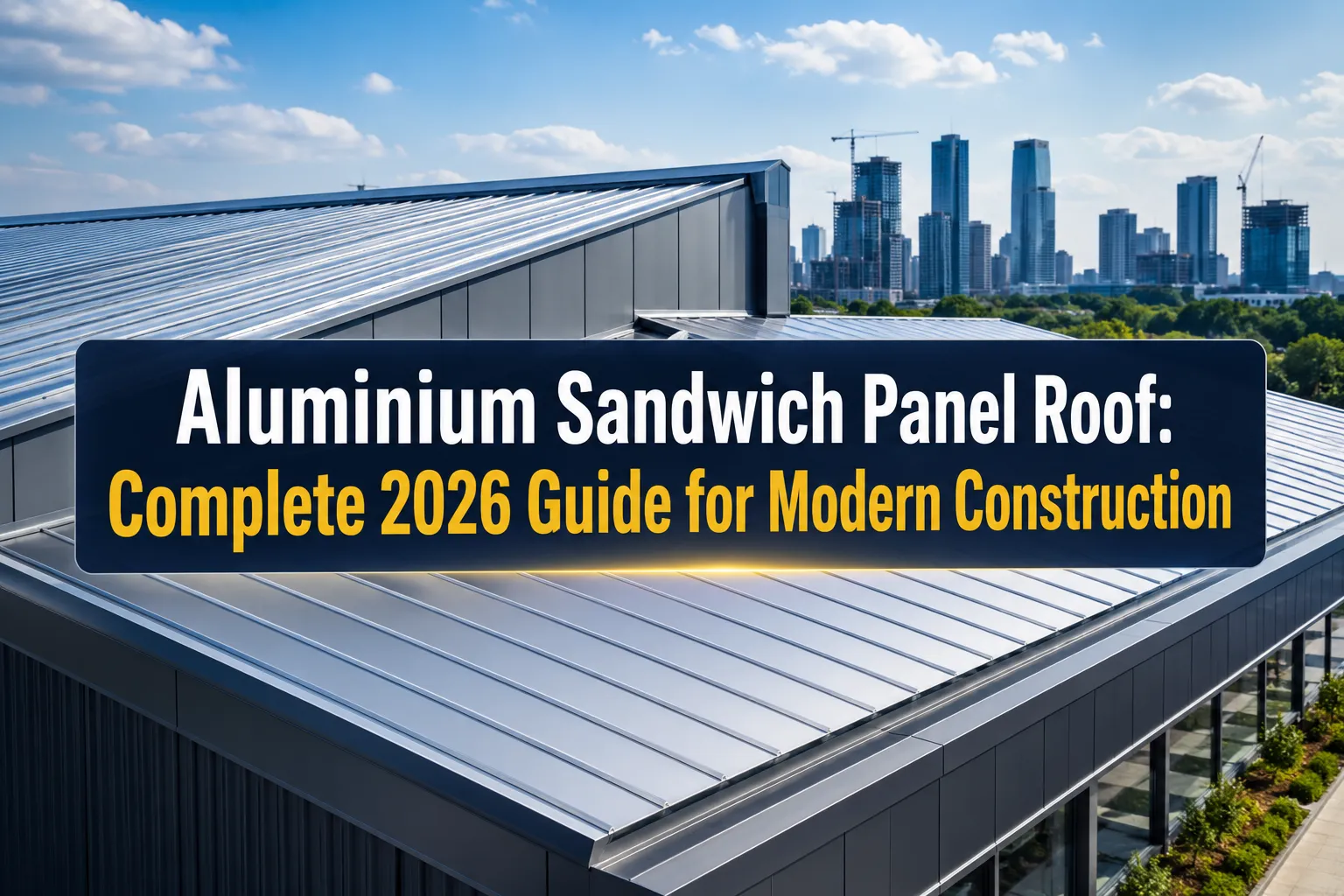
Last updated: July 31, 2026

Quick Answer
An aluminium sandwich panel roof consists of two thin aluminium sheets bonded to an insulating core material (typically polyurethane, EPS, or rockwool), creating a lightweight yet strong roofing system with excellent thermal performance. These panels offer superior insulation, faster installation, and lower maintenance compared to traditional roofing materials, making them ideal for commercial, industrial, and increasingly residential applications.
Key Takeaways
- Aluminium sandwich panels combine structural strength with exceptional thermal insulation in a single lightweight system
- Installation costs range from $8-15 per square foot, with potential energy savings offsetting higher upfront investment
- Typical lifespan exceeds 25-30 years with minimal maintenance requirements
- R-values range from R-10 to R-30 depending on core material and thickness
- Can be installed over existing roofing in many cases, reducing demolition costs
- Modern panels address historical noise concerns through improved core materials and installation techniques
- Weight is 60-70% lighter than traditional concrete or tile roofing systems
- Leading manufacturers offer 15-25 year warranties covering both materials and thermal performance
- Best suited for commercial buildings, warehouses, and modern residential construction
- Professional installation is essential for proper sealing and long-term performance
What Is an Aluminium Sandwich Panel Roof and How Does It Work
An aluminium sandwich panel roof is a composite building material consisting of two thin aluminium face sheets permanently bonded to an insulating foam or mineral wool core. The aluminium faces provide weather protection and structural integrity, while the core delivers thermal insulation and additional strength through its sandwich construction principle.
The system works by creating a continuous thermal barrier across the roof surface. The outer aluminium sheet reflects solar radiation and resists weather penetration, while the insulating core prevents heat transfer between interior and exterior environments. The inner aluminium sheet provides a clean, finished ceiling surface and vapor barrier protection.
Key structural advantages include:
- Composite action increases load-bearing capacity beyond individual components
- Continuous insulation eliminates thermal bridging common in traditional framing
- Factory-controlled bonding ensures consistent performance across all panels
- Interlocking joint systems create weatherproof seals between adjacent panels
Choose aluminium sandwich panels when you need superior thermal performance, faster installation, or reduced structural loading compared to conventional roofing systems. Avoid this option for complex roof geometries with numerous penetrations or when local building codes specifically require traditional materials.
For detailed information about sandwich panel roof installation procedures, professional contractors follow specific protocols to ensure proper sealing and performance.
Aluminium Sandwich Panel Roof vs Metal Roofing: Which Is Better
Aluminium sandwich panels outperform traditional metal roofing in thermal efficiency and installation speed, while conventional metal roofing offers lower upfront costs and simpler repairs. The choice depends on your priorities for energy performance, installation timeline, and long-term operating costs.
Thermal Performance Comparison:
- Sandwich panels: R-10 to R-30 depending on core thickness
- Metal roofing with added insulation: R-6 to R-19 typical
- Sandwich panels eliminate thermal bridging through continuous insulation
- Metal roofing requires separate insulation installation, creating potential gaps
Installation and Cost Factors:
- Sandwich panels install 40-60% faster due to integrated insulation
- Metal roofing requires additional steps for insulation and vapor barriers
- Sandwich panel labor costs are lower despite higher material costs
- Metal roofing offers easier field cutting and modification
Structural Considerations:
- Sandwich panels provide superior load distribution across spans
- Metal roofing requires more extensive structural support systems
- Panel systems reduce total roof weight by 60-70% compared to metal plus insulation
- Conventional metal allows easier access for maintenance and repairs
Choose sandwich panels for new construction prioritizing energy efficiency and fast installation. Select traditional metal roofing for retrofit projects, complex geometries, or when minimizing upfront investment is critical.
Understanding thermal performance differences between panel types helps optimize your roofing decision based on climate conditions and building requirements.
How Much Does an Aluminium Sandwich Panel Roof Cost to Install
Aluminium sandwich panel roof installation typically costs $8-15 per square foot installed, including materials and labor. This represents a 20-40% premium over conventional metal roofing but often provides net savings through reduced structural requirements and faster installation.
Cost Breakdown by Component:
- Panel materials: $4-8 per square foot
- Installation labor: $3-5 per square foot
- Fasteners and accessories: $1-2 per square foot
- Structural modifications (if needed): $2-4 per square foot
Factors Affecting Total Project Cost:
- Panel thickness and core material significantly impact pricing
- Roof complexity and accessibility affect labor requirements
- Regional labor rates vary by 30-50% across different markets
- Project size creates economies of scale for larger installations
Hidden Cost Savings:
- Reduced structural steel requirements save $2-6 per square foot
- Faster installation reduces labor duration by 40-60%
- Integrated insulation eliminates separate insulation contractor costs
- Lower HVAC equipment sizing reduces mechanical system costs
Financing Considerations:
- Energy efficiency incentives may offset 10-20% of installation costs
- Improved building performance increases property values
- Lower operating costs provide 3-7 year payback periods in most climates
Compare multiple quotes from certified installers, as installation quality significantly affects long-term performance and warranty coverage. For current market pricing in your region, consult our comprehensive sandwich panel pricing guide.
Aluminium Sandwich Panel Roof Lifespan: How Long Does It Last
Quality aluminium sandwich panel roofs last 25-35 years with proper installation and minimal maintenance, often outlasting traditional roofing materials. The aluminium faces resist corrosion and UV degradation, while modern core materials maintain insulating properties throughout the system's lifespan.
Lifespan Factors by Component:
- Aluminium face sheets: 30-50 years before significant degradation
- Polyurethane cores: 25-30 years maintaining 90% of original R-value
- Rockwool cores: 40+ years with minimal thermal performance loss
- Joint sealants and fasteners: 15-25 years requiring periodic maintenance
Performance Over Time:
- First 10 years: Minimal maintenance beyond annual inspections
- Years 10-20: Occasional sealant touch-ups and fastener adjustments
- Years 20-30: Potential panel replacement in high-stress areas
- Beyond 30 years: Systematic replacement typically becomes cost-effective
Factors Extending Lifespan:
- Professional installation with proper slope and drainage
- Regular inspection and maintenance of joints and penetrations
- Quality core materials resist moisture absorption and degradation
- Protective coatings on aluminium faces prevent premature weathering
Common Failure Modes:
- Joint seal deterioration allows water infiltration (preventable with maintenance)
- Fastener loosening from thermal cycling (addressable during inspections)
- Impact damage from severe weather or falling debris (repairable)
- Core moisture absorption in poorly sealed systems (preventable)
Choose panels with proven track records and comprehensive warranties. Manufacturers with 15-25 year warranties demonstrate confidence in long-term performance. Regular maintenance extends lifespan significantly beyond minimum expectations.
Can You Install Aluminium Sandwich Panel Roof Over Existing Roof
Yes, aluminium sandwich panels can often be installed over existing roofing systems, provided the existing structure can support the additional load and proper ventilation is maintained. This approach reduces demolition costs and project timeline while improving overall thermal performance.
Structural Requirements:
- Existing roof structure must support additional 2-4 pounds per square foot
- Structural engineer evaluation recommended for buildings over 20 years old
- Roof slope must provide adequate drainage (minimum 1/4 inch per foot)
- Existing roof surface should be relatively smooth and structurally sound
Installation Process Over Existing Roofs:
- Install furring strips or subframe system over existing surface
- Create ventilation channels to prevent moisture accumulation
- Apply vapor barrier if existing roof lacks proper moisture protection
- Install panels according to manufacturer specifications with proper overlap
Best Existing Roof Conditions:
- Metal roofing in good condition with minimal rust or damage
- Low-slope commercial roofing with sound structural deck
- Asphalt shingles on residential applications (with structural verification)
- Concrete or tile roofs requiring structural reinforcement assessment
When Removal Is Necessary:
- Existing roof shows signs of structural damage or deterioration
- Multiple layers of roofing already present exceed code limitations
- Moisture damage or mold present in existing system
- Building codes require complete roof replacement
Professional assessment determines feasibility and optimal installation approach. Many projects benefit from partial removal in problem areas while retaining sound portions of existing roofing.
For specific installation techniques and requirements, reference our detailed sandwich panel installation service guide.
Aluminium Sandwich Panel Roof Leaking Problems: How to Fix
Aluminium sandwich panel roof leaks typically occur at joints, penetrations, or fastener locations rather than through the panels themselves. Most leaks are preventable through proper installation and addressable through targeted repairs without full system replacement.
Common Leak Sources and Solutions:
Panel Joint Failures:
- Cause: Sealant deterioration or improper overlap installation
- Solution: Clean joints thoroughly and apply structural sealant rated for thermal movement
- Prevention: Use manufacturer-specified sealants and maintain proper overlap dimensions
Fastener Penetrations:
- Cause: Gasket compression loss or fastener loosening from thermal cycling
- Solution: Replace gaskets and retighten fasteners to specified torque
- Prevention: Use high-quality EPDM gaskets and schedule regular inspections
Roof Penetrations:
- Cause: Inadequate flashing or sealant failure around vents, equipment, or skylights
- Solution: Install proper counterflashing and use compatible sealant materials
- Prevention: Design penetrations with adequate clearance and proper drainage
End Lap Sealing:
- Cause: Insufficient sealant application or thermal movement exceeding design
- Solution: Remove old sealant completely and reapply with proper bead configuration
- Prevention: Follow manufacturer specifications for sealant type and application method
Repair Process Steps:
- Identify leak source through systematic water testing
- Clean affected area and remove deteriorated materials
- Apply primer if required by sealant manufacturer
- Install new sealant or flashing using proper techniques
- Test repair thoroughly before considering work complete
When to Call Professionals:
- Multiple leak locations suggest systematic installation issues
- Structural damage accompanies water infiltration
- Warranty coverage requires manufacturer-approved repair methods
- Complex penetrations require specialized flashing techniques
Regular maintenance prevents most leak issues. Schedule annual inspections focusing on joints, fasteners, and penetrations to identify problems before water infiltration occurs.
Best Aluminium Sandwich Panel Roof Brands and Manufacturers
Leading aluminium sandwich panel manufacturers combine proven track records, comprehensive warranties, and consistent product quality to deliver reliable roofing systems. Top-tier brands invest in research, testing, and manufacturing processes that ensure long-term performance.
Global Market Leaders:
Kingspan: Industry pioneer with 40+ years of sandwich panel innovation
- Strengths: Superior core bonding technology, comprehensive testing protocols
- Product range: Multiple core options with R-values up to R-30
- Warranty: 25-year thermal performance and weather seal coverage
Metecno: Italian manufacturer with global presence and premium positioning
- Strengths: Architectural aesthetics, custom color matching, precision manufacturing
- Product range: Specialized profiles for complex architectural applications
- Warranty: 20-year comprehensive coverage with proven claims support
TATA Steel (Colorcoat): Major steel producer with integrated panel manufacturing
- Strengths: Vertical integration ensures consistent material quality
- Product range: Focus on commercial and industrial applications
- Warranty: 15-year standard coverage with extended options available
Regional Quality Manufacturers:
- Often provide better local support and competitive pricing
- May offer custom solutions for specific regional requirements
- Typically maintain quality certifications and testing protocols
- Consider transportation costs and delivery timelines in selection
Manufacturer Selection Criteria:
- Proven track record with projects in similar climates
- Comprehensive warranty coverage including thermal performance
- Local technical support and installation training programs
- Third-party testing verification of published performance data
- Financial stability ensuring long-term warranty support
Quality Indicators:
- ISO 9001 manufacturing certification
- Published test results for thermal, structural, and fire performance
- Detailed installation manuals and technical support
- Network of certified installers with ongoing training
Choose manufacturers with strong local presence and proven performance in your specific climate conditions. For guidance on selecting quality manufacturers, consult our comprehensive manufacturer selection guide.
Is Aluminium Sandwich Panel Roof Good for Residential Homes
Aluminium sandwich panel roofs work excellently for modern residential construction, particularly contemporary and industrial-style homes where clean lines and energy efficiency are priorities. However, they may not suit traditional architectural styles or neighborhoods with strict aesthetic requirements.
Residential Advantages:
- Superior energy efficiency reduces heating and cooling costs by 20-40%
- Faster installation minimizes construction timeline and weather exposure
- Lightweight construction reduces foundation and structural requirements
- Low maintenance requirements compared to traditional residential roofing
- Fire-resistant properties enhance home safety and insurance ratings
Aesthetic Considerations:
- Modern, industrial appearance suits contemporary architectural styles
- Limited profile options may not match traditional home designs
- Color selection typically more restricted than residential shingles
- Smooth surfaces create clean, minimalist appearance
Residential Applications Where Panels Excel:
- Modern farmhouse and industrial-style homes
- Net-zero and high-performance building projects
- Homes in extreme climates requiring superior insulation
- Accessory buildings, workshops, and detached garages
- Coastal areas requiring corrosion-resistant materials
Potential Residential Limitations:
- Homeowner association restrictions on commercial-appearing materials
- Higher upfront costs may not align with residential budgets
- Limited contractor availability for residential installations
- Noise concerns during heavy rain (though modern cores minimize this)
- Repair complexity may exceed typical homeowner capabilities
Code and Permit Considerations:
- Most residential codes allow sandwich panels with proper engineering
- Fire ratings typically meet or exceed residential requirements
- Wind uplift resistance often superior to traditional residential materials
- Energy code compliance simplified through continuous insulation
Consider sandwich panels for residential projects prioritizing energy performance, modern aesthetics, and long-term durability. Traditional materials may better suit homes requiring specific architectural character or operating within strict budget constraints.
Aluminium Sandwich Panel Roof Insulation R-Value Benefits
Aluminium sandwich panel roofs deliver exceptional thermal performance with R-values ranging from R-10 to R-30, significantly outperforming traditional roofing systems through continuous insulation that eliminates thermal bridging. This superior thermal performance translates directly into reduced energy costs and improved interior comfort.
R-Value by Core Material and Thickness:
Polyurethane (PU) Cores:
- 2-inch thickness: R-14 to R-16
- 3-inch thickness: R-20 to R-24
- 4-inch thickness: R-26 to R-30
- Highest R-value per inch among common core materials
Expanded Polystyrene (EPS) Cores:
- 2-inch thickness: R-8 to R-10
- 4-inch thickness: R-16 to R-20
- 6-inch thickness: R-24 to R-30
- Cost-effective option with good long-term stability
Rockwool/Mineral Fiber Cores:
- 2-inch thickness: R-6 to R-8
- 4-inch thickness: R-12 to R-16
- Superior fire resistance and acoustic properties
- Maintains R-value in high-temperature applications
Thermal Bridge Elimination:
- Continuous insulation across entire roof surface
- No thermal bridging through structural members
- Consistent performance eliminates hot and cold spots
- Vapor barrier integration prevents condensation issues
Energy Performance Benefits:
- 30-50% reduction in heating and cooling loads compared to traditional roofing
- Improved HVAC equipment efficiency through reduced load variations
- Lower peak demand charges in commercial applications
- Enhanced comfort through elimination of radiant heat gain/loss
Climate-Specific Advantages:
- Hot climates: Reflective surfaces and continuous insulation reduce cooling loads
- Cold climates: Superior R-values minimize heat loss and prevent ice dams
- Mixed climates: Year-round performance optimization for heating and cooling
Choose higher R-value panels in extreme climates or high-performance building applications. The incremental cost of thicker insulation typically pays back through energy savings within 3-7 years depending on local utility rates and climate conditions.
For detailed thermal performance analysis and selection guidance, reference our thermal insulation sandwich panel guide.
Aluminium Sandwich Panel Roof Maintenance: What Do You Need to Do
Aluminium sandwich panel roof maintenance requires minimal effort compared to traditional roofing systems, focusing primarily on joint inspection, fastener checks, and drainage maintenance. A systematic annual maintenance program prevents most issues and extends system lifespan significantly.
Annual Maintenance Checklist:
Visual Inspection (Spring and Fall):
- Examine all panel joints for sealant cracking or separation
- Check fasteners for loosening, corrosion, or gasket deterioration
- Inspect drainage systems for blockages or standing water
- Look for panel damage from weather, debris, or thermal movement
- Document any changes from previous inspections with photos
Joint and Sealant Maintenance:
- Clean joints of debris and organic growth annually
- Replace deteriorated sealant before water infiltration occurs
- Use only manufacturer-approved sealant materials and application methods
- Maintain proper sealant profile and adhesion to panel surfaces
Fastener System Care:
- Retighten fasteners to specified torque annually (typically 15-25 ft-lbs)
- Replace damaged or corroded fasteners immediately
- Check gasket condition and replace compressed or cracked gaskets
- Ensure proper fastener alignment and panel compression
Drainage and Surface Cleaning:
- Clear gutters, downspouts, and roof drains of debris quarterly
- Remove organic growth with mild detergent and soft brushes
- Avoid pressure washing which can damage sealants and coatings
- Maintain proper roof slope and eliminate standing water areas
Professional Maintenance Tasks:
- Comprehensive structural inspection every 5 years
- Thermal imaging to identify insulation defects or moisture intrusion
- Sealant replacement on systematic schedule (typically 10-15 years)
- Major repairs requiring panel replacement or structural modifications
Maintenance Cost Expectations:
- Annual inspection and minor maintenance: $0.10-0.25 per square foot
- Sealant replacement cycle: $1-3 per linear foot every 10-15 years
- Fastener replacement: $2-5 per fastener as needed
- Professional inspection: $500-1500 per building every 5 years
Warning Signs Requiring Immediate Attention:
- Water stains on interior surfaces indicating active leaks
- Loose or missing fasteners creating wind uplift risks
- Panel deformation suggesting structural overload
- Extensive sealant failure across multiple joints
Establish maintenance relationships with qualified contractors familiar with sandwich panel systems. Many manufacturers offer maintenance programs or certified service networks to ensure proper care and warranty compliance.
Aluminium Sandwich Panel Roof Noise: Does It Make Noise in Rain
Modern aluminium sandwich panel roofs produce minimal noise during rain events when properly installed with appropriate core materials, contrary to common misconceptions about metal roofing systems. The insulating core significantly dampens sound transmission compared to single-layer metal roofing.
Sound Performance by Core Material:
Polyurethane Cores:
- Excellent sound dampening properties reduce rain noise by 15-25 decibels
- Dense foam structure absorbs impact energy effectively
- Minimal sound transmission to interior spaces during normal rainfall
- Heavy rain events produce sound levels comparable to conventional roofing
Rockwool/Mineral Fiber Cores:
- Superior acoustic performance with 20-30 decibel noise reduction
- Fibrous structure provides excellent sound absorption
- Best choice for applications requiring maximum noise control
- Maintains acoustic properties throughout system lifespan
EPS Cores:
- Moderate sound dampening with 10-15 decibel reduction
- Lower cost option with acceptable acoustic performance
- May require additional acoustic treatments in noise-sensitive applications
Installation Factors Affecting Noise:
- Proper fastener spacing and tightness prevents panel vibration
- Continuous support eliminates drumming effects from unsupported spans
- Quality sealants prevent air gaps that amplify sound transmission
- Adequate structural support minimizes panel movement and associated noise
Comparison to Other Roofing Materials:
- Sandwich panels: 35-45 decibels during moderate rain
- Asphalt shingles: 40-50 decibels during moderate rain
- Single metal roofing: 50-65 decibels during moderate rain
- Clay tiles: 30-40 decibels during moderate rain
Noise Reduction Strategies:
- Select thicker panels with dense core materials for maximum sound dampening
- Ensure proper installation with continuous structural support
- Add interior acoustic treatments if additional noise control is required
- Consider building orientation and landscaping to minimize wind-driven rain impact
Applications Requiring Special Consideration:
- Residential bedrooms and quiet spaces may benefit from rockwool cores
- Recording studios or sound-sensitive facilities should specify acoustic testing
- Schools and healthcare facilities often require enhanced acoustic performance
- Industrial applications typically find standard panels acoustically acceptable
Modern sandwich panels with quality cores provide acceptable acoustic performance for most applications. Specify enhanced acoustic cores when noise control is a primary design consideration.
Aluminium Sandwich Panel Roof Weight: How Heavy Is It
Aluminium sandwich panel roofs weigh 2-4 pounds per square foot installed, making them 60-70% lighter than traditional roofing systems with equivalent thermal performance. This lightweight construction reduces structural requirements and enables installation over existing buildings without major reinforcement.
Weight Comparison by Panel Specification:
2-inch Thick Panels:
- PU core: 1.8-2.2 lbs/sq ft
- EPS core: 1.5-1.8 lbs/sq ft
- Rockwool core: 2.0-2.5 lbs/sq ft
- Includes standard fasteners and accessories
4-inch Thick Panels:
- PU core: 2.5-3.2 lbs/sq ft
- EPS core: 2.0-2.8 lbs/sq ft
- Rockwool core: 3.0-4.0 lbs/sq ft
- Maximum thickness for most residential applications
Comparative Roofing System Weights:
- Sandwich panels (with insulation): 2-4 lbs/sq ft
- Metal roofing plus batt insulation: 6-10 lbs/sq ft
- Asphalt shingles with insulation: 8-15 lbs/sq ft
- Concrete tiles with insulation: 15-25 lbs/sq ft
- Clay tiles with insulation: 12-20 lbs/sq ft
Structural Load Benefits:
- Reduced dead load enables longer structural spans
- Lower foundation requirements for new construction
- Retrofit applications often require minimal structural reinforcement
- Seismic performance improved through reduced building mass
Weight Distribution Considerations:
- Point loads at fastener locations: 15-25 lbs per fastener
- Uniform distribution across panel surface minimizes stress concentration
- Structural support spacing can be increased compared to heavier systems
- Wind uplift resistance enhanced through lightweight construction and proper fastening
Installation Weight Factors:
- Individual panels manageable by 2-person crews (typically 40-80 lbs per panel)
- Reduced crane requirements for installation
- Lower transportation costs due to weight efficiency
- Faster installation through easier material handling
Engineering Considerations:
- Structural analysis should account for reduced dead loads in design
- Wind uplift calculations benefit from lower self-weight
- Seismic design loads reduced through lighter construction
- Foundation savings often offset higher material costs
The lightweight nature of sandwich panels provides significant structural advantages while maintaining superior performance characteristics. This weight efficiency makes them particularly attractive for retrofit applications and buildings with limited structural capacity.
For specific weight calculations and structural considerations, consult our guide to choosing sandwich panel thickness based on structural requirements.
Aluminium Sandwich Panel Roof vs Traditional Asphalt Shingles: Pros and Cons
Aluminium sandwich panels excel in energy efficiency, longevity, and low maintenance, while asphalt shingles offer lower upfront costs, easier repairs, and broader contractor availability. The optimal choice depends on project priorities, budget constraints, and long-term building performance goals.
Aluminium Sandwich Panel Advantages:
- Energy Performance: R-10 to R-30 continuous insulation vs R-2 to R-4 for shingles alone
- Lifespan: 25-35 years vs 15-25 years for quality asphalt shingles
- Maintenance: Annual inspection vs periodic replacement and repair cycles
- Weather Resistance: Superior performance in extreme weather and high winds
- Fire Safety: Non-combustible materials vs combustible asphalt products
Asphalt Shingle Advantages:
- Initial Cost: $3-8 per sq ft vs $8-15 per sq ft for sandwich panels
- Aesthetic Options: Extensive color and style choices vs limited panel profiles
- Contractor Availability: Widespread installer network vs specialized panel contractors
- Repair Simplicity: Individual shingle replacement vs panel system repairs
- Architectural Compatibility: Traditional appearance suits most residential styles
Long-term Cost Analysis:
- Sandwich Panels: Higher upfront investment with lower operating and maintenance costs
- Asphalt Shingles: Lower initial cost with higher energy and maintenance expenses over time
- Break-even Point: Typically 7-12 years depending on energy costs and climate
- Property Value: Panels may increase value in energy-conscious markets
Performance in Different Applications:
Commercial/Industrial Buildings:
- Sandwich panels preferred for energy efficiency and low maintenance
- Large roof areas benefit from continuous insulation and faster installation
- Professional maintenance capabilities handle specialized panel requirements
Residential Applications:
- Shingles dominate traditional residential markets due to cost and aesthetics
- Panels gaining acceptance in modern, energy-efficient home designs
- Climate extremes may favor panel performance despite higher costs
Climate Considerations:
- Hot Climates: Panels provide superior cooling load reduction
- Cold Climates: Continuous insulation prevents ice dams and heat loss
- High Wind Areas: Panels offer better uplift resistance when properly installed
- Hail-Prone Regions: Both materials perform adequately with proper installation
Decision Framework:
Choose sandwich panels when prioritizing energy efficiency, longevity, and low maintenance over upfront costs. Select asphalt shingles for traditional aesthetics, budget constraints, or when specialized contractors are unavailable.
Aluminium Sandwich Panel Roof Warranty: What's Typically Covered
Quality aluminium sandwich panel roof warranties typically cover 15-25 years for materials and thermal performance, with separate coverage periods for different system components. Understanding warranty terms helps evaluate long-term value and manufacturer confidence in their products.
Standard Warranty Coverage Components:
Panel Materials (15-25 years):
- Aluminium face sheet integrity and corrosion resistance
- Core material thermal performance and structural stability
- Bonding adhesive performance between faces and core
- Manufacturing defects in materials and assembly
Weather Seal Performance (10-20 years):
- Joint sealant effectiveness against water infiltration
- Fastener gasket performance and compression retention
- Panel overlap integrity and weather resistance
- Drainage system component functionality
Thermal Performance (15-25 years):
- Guaranteed R-value retention (typically 90% of original performance)
- Core material stability against settling or degradation
- Continuous insulation effectiveness over warranty period
- Energy performance claims verification
What's Typically Excluded:
- Damage from improper installation or maintenance neglect
- Normal wear from extreme weather events or acts of nature
- Modifications or repairs by non-certified contractors
- Consequential damages from system failure (interior damage, business interruption)
Warranty Claim Process:
- Document issue with photos and detailed descriptions
- Contact manufacturer through authorized dealer or installer
- Allow manufacturer inspection and evaluation of claimed defect
- Follow prescribed repair procedures using approved materials and contractors
Factors Affecting Warranty Validity:
- Professional Installation: Must use manufacturer-certified installers
- Maintenance Compliance: Regular maintenance records required for coverage
- Approved Materials: Only specified fasteners, sealants, and accessories covered
- Building Code Compliance: Installation must meet local building requirements
Extended Warranty Options:
- Some manufacturers offer 30+ year coverage for premium products
- Enhanced coverage may include installation workmanship guarantees
- Maintenance programs can extend warranty periods and coverage scope
- Energy performance guarantees available for high-efficiency applications
Manufacturer Financial Stability:
- Verify manufacturer financial strength to honor long-term warranties
- Consider insurance backing or bonding for warranty obligations
- Established manufacturers with long track records provide greater security
- Local representation ensures accessible warranty service and support
Warranty Transfer Rights:
- Most warranties transfer to subsequent property owners
- Transfer procedures and fees vary by manufacturer
- Documentation requirements for warranty transfer
- Impact on property value and marketability
Review warranty terms carefully before purchase, focusing on coverage duration, exclusions, and claim procedures. Quality manufacturers stand behind their products with comprehensive warranties and responsive service networks.
For additional warranty considerations and manufacturer comparisons, reference our comprehensive sandwich panel warranty guide.
Frequently Asked Questions
How long does it take to install an aluminium sandwich panel roof?
Installation typically takes 2-5 days for residential projects and 1-3 weeks for commercial buildings, depending on roof size and complexity. This is 40-60% faster than traditional roofing systems due to integrated insulation and streamlined installation processes.
Can aluminium sandwich panels be recycled at end of life?
Yes, both aluminium face sheets and most core materials are recyclable. Aluminium has high scrap value and can be recycled indefinitely, while polyurethane and EPS cores can be processed into new foam products or used as fuel in waste-to-energy facilities.
Do sandwich panel roofs require special electrical considerations?
Standard electrical practices apply, but metal surfaces require proper grounding and lightning protection systems. Penetrations for electrical equipment need careful sealing to maintain weather resistance and thermal performance.
What roof slopes work best with aluminium sandwich panels?
Minimum slope of 1/4 inch per foot is required for proper drainage, with 1/2 inch per foot preferred. Maximum slopes are limited only by installation safety and fastener capacity, typically up to 45-degree angles.
Are there fire safety concerns with foam core materials?
Modern cores meet building code fire requirements, with rockwool cores providing the highest fire resistance. Proper installation includes fire stops at panel ends and compliance with local fire safety codes for the specific building type.
How do you cut or modify panels on site?
Panels can be cut with circular saws using fine-tooth blades, but cuts must be sealed immediately to prevent moisture infiltration. Field modifications should be minimized through careful planning and accurate measurements.
What happens if a single panel gets damaged?
Individual panels can be replaced without affecting adjacent panels, though the process requires careful removal of sealants and fasteners. Replacement panels should match original specifications for proper performance.
Do panels work with solar panel installations?
Yes, sandwich panels provide excellent mounting surfaces for solar arrays. The structural strength and flat surfaces simplify solar installation, though penetrations require proper sealing and flashing.
Are there color and finish options available?
Most manufacturers offer 10-20 standard colors with custom colors available for large projects. Finishes include standard polyester, PVDF, and specialty coatings for enhanced durability or specific aesthetic requirements.
How do panels perform in extreme weather conditions?
Properly installed panels resist wind speeds up to 150+ mph, handle temperature extremes from -40°F to 180°F, and provide superior performance in hail, snow loading, and seismic events compared to traditional roofing materials.
Can you walk on sandwich panel roofs for maintenance?
Yes, but proper safety equipment and techniques are required. Panels support normal maintenance loads when weight is distributed properly, though heavy equipment may require temporary load distribution systems.
What building codes apply to sandwich panel installations?
Panels must meet local building codes for structural, fire, and energy requirements. Most panels comply with IBC, IRC, and ASHRAE standards, but local amendments may impose additional requirements or restrictions.
Conclusion
Aluminium sandwich panel roofs represent a significant advancement in roofing technology, combining superior thermal performance, structural efficiency, and long-term durability in a single integrated system. With R-values ranging from R-10 to R-30, lifespans exceeding 25-35 years, and minimal maintenance requirements, these systems deliver compelling value for modern construction projects.
The higher upfront investment of $8-15 per square foot typically pays back through energy savings within 3-7 years, while the lightweight construction reduces structural requirements and enables installation over existing roofing systems. Quality manufacturers back their products with comprehensive 15-25 year warranties, demonstrating confidence in long-term performance.
Key action steps for your project:
- Evaluate your priorities – Choose sandwich panels when energy efficiency, longevity, and low maintenance outweigh higher upfront costs
- Select appropriate specifications – Match core material and thickness to your climate conditions and performance requirements
- Choose quality manufacturers – Focus on proven track records, comprehensive warranties, and local technical support
- Hire certified installers – Professional installation is essential for proper performance and warranty coverage
- Plan for maintenance – Establish annual inspection and maintenance programs to maximize system lifespan
For residential applications, sandwich panels work best with modern architectural styles and energy-efficient building goals. Commercial and industrial projects benefit most from the combination of energy performance, installation speed, and long-term durability these systems provide.
Consider consulting with qualified contractors and manufacturers to evaluate specific project requirements and develop optimal solutions for your roofing needs. The investment in quality materials and professional installation pays dividends through decades of reliable, energy-efficient performance.
SEO Meta Title: Aluminium Sandwich Panel Roof Guide: Costs, Benefits & Installation 2026