Last updated: July 31, 2026

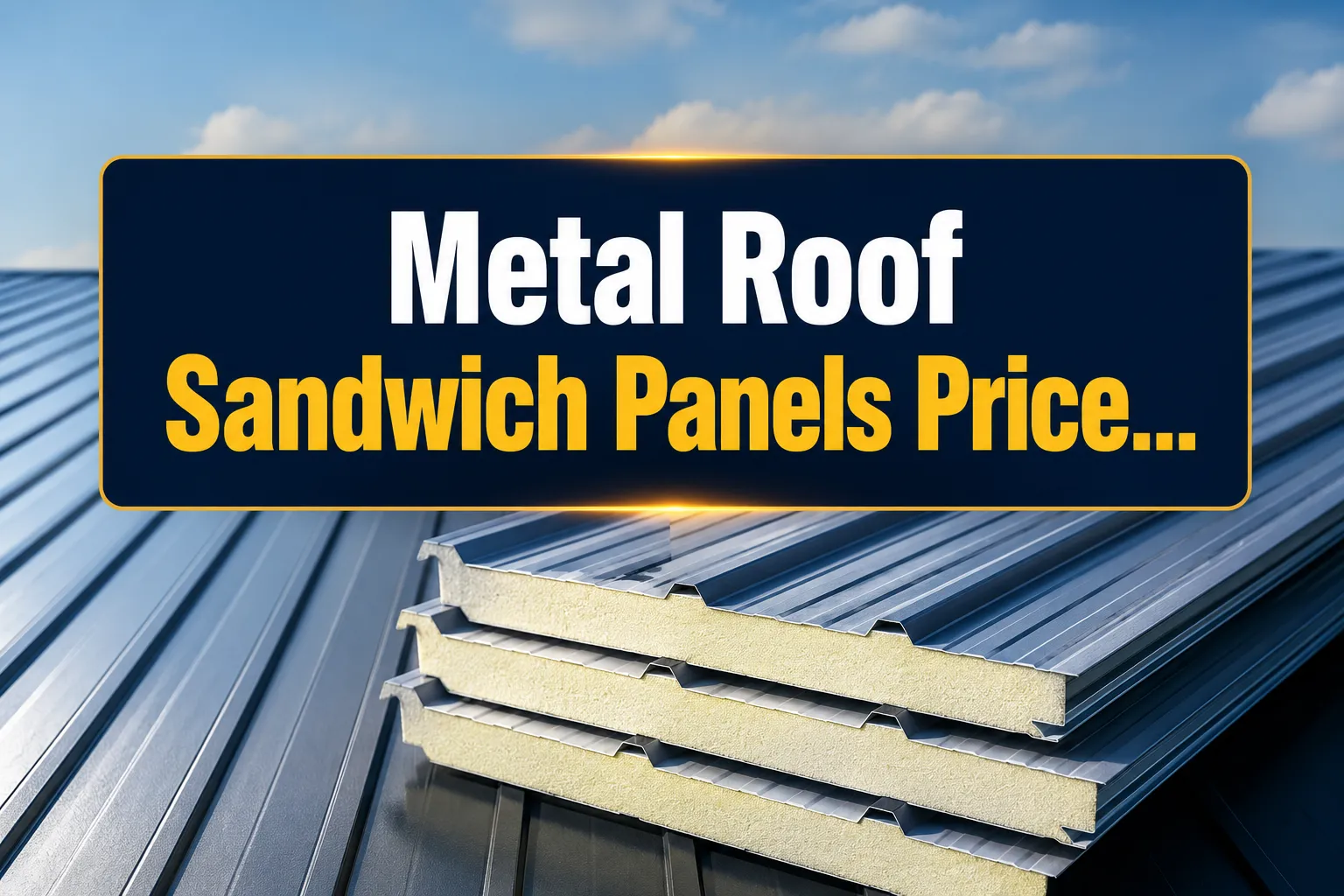
Metal roof sandwich panels typically cost between $8-18 per square foot for materials, with total installed costs ranging from $15-35 per square foot depending on panel thickness, insulation type, and project complexity. Commercial applications generally see lower per-unit costs due to volume purchasing and simplified installation requirements.
Key Takeaways
- Material costs for metal roof sandwich panels range from $8-18 per square foot
- Total installation costs including labor typically run $15-35 per square foot
- Polyurethane (PU) panels cost 20-30% more than EPS panels but offer superior insulation
- Commercial projects achieve 15-25% cost savings compared to residential installations
- Panel thickness significantly impacts price, with 100mm panels costing 40-50% more than 50mm options
- Energy savings of 30-50% can offset higher upfront costs within 5-8 years
- Leading brands like Kingspan and Metecno command 10-15% price premiums
- Fire-rated panels add $2-4 per square foot to base material costs
What Are Metal Roof Sandwich Panels and How Do They Work
Metal roof sandwich panels are composite building materials consisting of two metal sheets bonded to an insulating core material. The outer metal skins provide structural strength and weather protection, while the inner core delivers thermal and acoustic insulation in a single integrated system.
These panels work by creating a continuous insulation barrier that eliminates thermal bridging common in traditional construction methods. The metal skins, typically made from galvanized steel or aluminum, handle structural loads and environmental stresses. The insulation core, usually expanded polystyrene (EPS), polyurethane (PU), or mineral wool, maintains consistent interior temperatures while reducing energy consumption.
Common core materials include:
- EPS (Expanded Polystyrene): Most economical option with good insulation properties
- PU (Polyurethane): Premium insulation with highest R-values per inch
- Mineral wool: Fire-resistant option preferred for industrial applications
- PIR (Polyisocyanurate): High-performance option for extreme temperature conditions
The panels connect via interlocking joints that create weatherproof seals without additional sealants. This design simplifies installation while ensuring consistent performance across the entire roof system.
Metal Roof Sandwich Panels Cost Per Square Foot
Material costs for metal roof sandwich panels vary significantly based on core type, thickness, and panel dimensions. EPS core panels start at $8-12 per square foot, while premium PU core options reach $14-18 per square foot for standard commercial applications.
Detailed cost breakdown by panel type:
- 50mm EPS core: $8-10 per square foot
- 75mm EPS core: $10-12 per square foot
- 100mm EPS core: $12-14 per square foot
- 50mm PU core: $12-15 per square foot
- 75mm PU core: $15-17 per square foot
- 100mm PU core: $16-18 per square foot
- Mineral wool core: $13-16 per square foot
Panel width affects pricing, with wider panels (up to 1200mm) offering better value per square foot compared to narrower options. Custom colors, special coatings, and fire ratings add $1-4 per square foot to base material costs.
Volume purchasing significantly impacts final pricing. Projects over 10,000 square feet typically receive 10-15% discounts, while orders exceeding 50,000 square feet can achieve 20-25% savings from manufacturers.
For accurate project estimates, factor in 5-10% material waste for standard rectangular buildings, or 15-20% waste for complex roof geometries with multiple penetrations and angles.
How Much Does It Cost to Install Metal Roof Sandwich Panels
Professional installation of metal roof sandwich panels costs $7-17 per square foot for labor, bringing total project costs to $15-35 per square foot including materials. Installation complexity, roof slope, and regional labor rates significantly impact final pricing.
Installation cost factors:
- Simple warehouse roof (low slope, minimal penetrations): $7-10 per square foot labor
- Standard commercial building: $10-13 per square foot labor
- Complex residential project: $13-17 per square foot labor
- High-rise or difficult access: Add 25-50% to base labor costs
Additional installation expenses include structural modifications ($2-5 per square foot), crane rental for large projects ($500-1,500 per day), and permit fees ($0.50-2 per square foot). Projects requiring structural reinforcement to handle panel loads see the highest additional costs.
Professional installation typically takes 2-4 days for a 5,000 square foot roof with experienced crews achieving 1,500-2,500 square feet per day under optimal conditions. Weather delays and complex details can extend timelines significantly.
Choose professional installation if:
- Building codes require licensed contractors
- Roof height exceeds 20 feet
- Warranty coverage is essential
- Project involves structural modifications
For guidance on proper installation techniques, see our complete sandwich panel roof installation guide.
Metal Roof Sandwich Panels vs Traditional Metal Roofing Price Comparison
Metal roof sandwich panels cost 40-60% more upfront than traditional metal roofing systems but deliver significant long-term savings through reduced energy costs and simplified construction. A typical commercial project sees $18-25 per square foot for sandwich panels versus $12-18 per square foot for conventional metal roofing plus separate insulation.
Cost comparison breakdown:
- Traditional metal roof + insulation: $12-18 per square foot installed
- Sandwich panels: $18-25 per square foot installed
- Energy savings: 30-50% reduction in heating/cooling costs
- Construction time: 25-40% faster installation with sandwich panels
- Labor savings: Reduced trades coordination and scheduling complexity
The total building cost difference narrows when factoring in eliminated components. Sandwich panels replace separate insulation, vapor barriers, and interior finishing in many applications. This integration saves $3-7 per square foot in additional materials and labor.
Energy performance strongly favors sandwich panels due to continuous insulation without thermal bridging. Buildings with sandwich panel roofs typically achieve 30-50% better thermal performance compared to traditional construction methods, translating to substantial operational savings over the building's lifecycle.
Traditional roofing makes sense when:
- Upfront budget is extremely constrained
- Building has minimal heating/cooling requirements
- Existing structure cannot handle sandwich panel loads
- Local contractors lack sandwich panel installation experience
Best Metal Roof Sandwich Panel Brands and Pricing
Leading sandwich panel manufacturers offer varying price points and performance characteristics, with premium brands commanding 10-20% higher costs for superior quality and warranty coverage. Kingspan, Metecno, and Tata Steel represent the top tier, while regional manufacturers provide competitive alternatives at lower price points.
Premium brand pricing (per square foot):
- Kingspan: $16-22 (excellent warranty, highest quality control)
- Metecno: $15-20 (strong European reputation, wide product range)
- Tata Steel: $14-19 (good value, reliable performance)
- Regional manufacturers: $10-16 (competitive pricing, variable quality)
Brand selection impacts long-term performance and warranty coverage. Premium manufacturers typically offer 15-25 year warranties on panel integrity and thermal performance, while budget options may provide only 5-10 year coverage.
Key brand differentiators:
- Fire rating certifications and testing standards
- Thermal performance consistency across production runs
- Joint design and weatherproofing effectiveness
- Technical support and installation training availability
- Color retention and coating durability
For projects prioritizing lowest initial cost, regional manufacturers often provide adequate performance at 20-30% savings. However, critical applications like cold storage or pharmaceutical facilities justify premium brand selection for reliability and compliance requirements.
Learn more about sandwich panel pricing in Bangladesh for regional market comparisons.
Metal Roof Sandwich Panels for Residential vs Commercial Pricing
Commercial projects typically achieve 15-25% lower per-square-foot costs than residential installations due to larger volumes, simpler building geometries, and streamlined permitting processes. Residential applications face higher complexity and smaller order quantities that increase both material and labor costs.
Residential project costs:
- Material: $12-18 per square foot (smaller quantities, custom colors)
- Installation: $13-20 per square foot (complex details, safety requirements)
- Total: $25-38 per square foot
Commercial project costs:
- Material: $8-15 per square foot (volume discounts, standard specifications)
- Installation: $7-12 per square foot (efficient installation, crane access)
- Total: $15-27 per square foot
Residential projects encounter additional challenges including homeowner association approvals, complex roof geometries, and integration with existing architectural features. These factors increase installation time and require specialized detailing that drives up labor costs.
Commercial applications benefit from standardized specifications, bulk purchasing power, and experienced installation crews familiar with large-scale projects. The simplified approval process and fewer aesthetic constraints further reduce project complexity and costs.
Residential applications work best for:
- Energy-efficient home construction
- Agricultural buildings and workshops
- Pool houses and accessory structures
- Modern architectural designs embracing industrial aesthetics
For residential applications, consider our guide on choosing the right sandwich panel thickness to optimize performance and costs.
Where to Buy Metal Roof Sandwich Panels Online
Online purchasing of metal roof sandwich panels offers competitive pricing and broader product selection, with major suppliers providing direct-to-consumer sales at 10-20% below traditional distributor markups. However, shipping costs and technical support limitations require careful evaluation for project success.
Reputable online suppliers include:
- Manufacturer direct websites: Best pricing for large orders, full technical support
- Building supply e-commerce platforms: Competitive pricing, limited technical guidance
- Regional distributor online portals: Balanced pricing and local support
- International suppliers: Lowest costs but complex logistics and compliance
Online purchasing works best for standard specifications and experienced buyers who understand technical requirements. First-time buyers benefit from local distributor relationships that provide installation guidance and warranty support.
Key online purchasing considerations:
- Shipping costs can add $2-5 per square foot for long distances
- Lead times often extend 2-6 weeks for custom specifications
- Technical support may be limited compared to local distributors
- Returns and warranty claims require careful documentation
For complex projects or first-time installations, combine online pricing research with local distributor consultation to ensure proper product selection and installation support.
Explore our Bangladesh sandwich panel supplier guide for regional purchasing options.
Metal Roof Sandwich Panels Insulation Value and Energy Savings
Metal roof sandwich panels deliver exceptional thermal performance with R-values ranging from R-14 to R-35 depending on core material and thickness, significantly outperforming traditional roofing systems. The continuous insulation design eliminates thermal bridging that reduces effectiveness in conventional construction by 20-40%.
Insulation performance by core type:
- EPS core: R-3.8 to R-4.2 per inch thickness
- PU core: R-6.0 to R-7.0 per inch thickness
- Mineral wool: R-3.5 to R-4.0 per inch thickness
- PIR core: R-6.5 to R-8.0 per inch thickness
Energy savings from sandwich panel roofs typically range from 30-50% compared to traditional metal roofing with batt insulation. Buildings in extreme climates see the highest savings, with payback periods of 5-8 years through reduced heating and cooling costs.
Factors maximizing energy savings:
- Proper panel thickness selection for local climate conditions
- Quality installation eliminating air gaps and thermal bridges
- Integration with high-performance wall systems
- Appropriate building orientation and design
The continuous insulation barrier maintains consistent interior temperatures, reducing HVAC system cycling and extending equipment life. This operational benefit adds value beyond direct energy cost savings.
For detailed thermal performance information, see our thermal performance sandwich panel guide.
How Long Do Metal Roof Sandwich Panels Last
Quality metal roof sandwich panels last 25-40 years with proper installation and maintenance, matching or exceeding traditional roofing system lifespans while maintaining superior thermal performance throughout their service life. The integrated design eliminates many failure points common in multi-component roofing systems.
Lifespan factors:
- Panel quality and manufacturing standards: Premium brands last 30-40 years
- Installation quality: Proper installation extends life by 5-10 years
- Environmental conditions: Coastal and industrial environments reduce lifespan 15-25%
- Maintenance practices: Regular inspection and minor repairs prevent major failures
The metal skins provide excellent durability against weather, UV exposure, and physical damage. Quality coatings maintain appearance and corrosion resistance for 20-30 years before requiring renewal. The insulation core remains stable throughout the panel's life with minimal thermal performance degradation.
Common maintenance requirements:
- Annual inspection of joints and fasteners
- Cleaning of drainage systems and gutters
- Touch-up of scratched or damaged coatings
- Replacement of damaged panels (typically less than 1% annually)
Warranty coverage varies significantly between manufacturers, with premium brands offering 25-year warranties on panel integrity and 15-20 years on thermal performance. Budget options may provide only 10-15 year coverage.
Learn about sandwich panel warranty options in Bangladesh for regional warranty standards.
Metal Roof Sandwich Panels Installation Problems and Solutions
Common installation problems with metal roof sandwich panels include improper joint sealing, inadequate structural support, and thermal expansion issues that can compromise performance and longevity. Most problems stem from inexperienced installation crews or inadequate preparation and planning.
Frequent installation issues:
- Joint sealing failures: Use manufacturer-approved sealants and follow torque specifications
- Panel alignment problems: Establish proper reference lines and use laser levels for large projects
- Thermal expansion gaps: Provide adequate expansion joints every 100-150 feet
- Structural overloading: Verify load calculations before installation begins
Effective solutions:
- Hire experienced contractors with sandwich panel installation history
- Require manufacturer training certification for installation crews
- Conduct thorough structural analysis before project start
- Implement quality control checkpoints throughout installation
Weather conditions significantly impact installation success. Avoid installation during high winds (over 25 mph), rain, or extreme temperatures that affect sealant performance and worker safety.
Prevention strategies:
- Schedule installation during favorable weather windows
- Maintain proper material storage to prevent damage
- Use appropriate lifting equipment for panel sizes and weights
- Follow manufacturer specifications exactly without shortcuts
For detailed installation guidance, consult our sandwich panel installation cost guide covering best practices and common pitfalls.
Are Metal Roof Sandwich Panels Worth the Cost
Metal roof sandwich panels justify their higher upfront cost through energy savings, faster construction, and superior long-term performance for most commercial and industrial applications. The total cost of ownership typically favors sandwich panels over traditional roofing systems when evaluated over 20-25 year periods.
Value proposition analysis:
- Energy savings: 30-50% reduction in heating/cooling costs
- Construction speed: 25-40% faster installation saves labor costs
- Maintenance costs: Lower maintenance requirements reduce lifecycle expenses
- Insurance benefits: Some insurers offer discounts for superior building envelope performance
Sandwich panels make financial sense when:
- Building has significant heating or cooling loads
- Construction timeline is critical
- Long-term ownership is planned (10+ years)
- Energy costs are high in the local market
Traditional roofing may be better if:
- Upfront budget is severely constrained
- Building has minimal climate control requirements
- Resale is planned within 5-7 years
- Local contractors lack sandwich panel experience
The break-even point typically occurs within 6-10 years for most applications, after which the panels provide net positive returns through continued energy savings and reduced maintenance costs.
Metal Roof Sandwich Panels Warranty and Durability
Manufacturer warranties for metal roof sandwich panels range from 10-25 years depending on brand quality and application type, with premium manufacturers offering comprehensive coverage including thermal performance guarantees. Understanding warranty terms is crucial for long-term project success and risk management.
Typical warranty coverage:
- Panel integrity: 15-25 years against delamination and structural failure
- Coating performance: 15-20 years against fading and chalking
- Thermal performance: 10-15 years maintaining specified R-values
- Weather sealing: 10-20 years against water infiltration
Warranty limitations commonly include:
- Damage from improper installation or handling
- Normal wear from extreme environmental conditions
- Modifications or repairs by non-approved contractors
- Failure to follow specified maintenance procedures
Durability testing demonstrates excellent long-term performance under proper conditions. Accelerated aging tests show minimal thermal performance degradation over simulated 30-year periods. The integrated construction eliminates many failure modes common in multi-component systems.
Factors affecting warranty validity:
- Installation by manufacturer-approved contractors
- Use of specified fasteners and sealants
- Compliance with building codes and manufacturer specifications
- Documentation of regular maintenance and inspections
For warranty protection, maintain detailed installation records and follow manufacturer maintenance recommendations throughout the panel's service life.
Metal Roof Sandwich Panels Fire Rating and Building Codes
Fire-rated metal roof sandwich panels meet stringent building code requirements for commercial and industrial applications, with Class A fire ratings available for most core materials when properly specified. Building codes increasingly recognize sandwich panels as acceptable alternatives to traditional roofing systems.
Fire rating classifications:
- Class A: Highest rating, suitable for all building types and occupancies
- Class B: Acceptable for most commercial applications with restrictions
- Class C: Limited applications, primarily agricultural and industrial
Core material fire performance:
- Mineral wool: Inherently non-combustible, easiest code compliance
- PIR foam: Excellent fire resistance with proper facings
- PU foam: Good performance with fire-retardant formulations
- EPS: Requires careful specification for fire-rated applications
Building codes vary significantly by jurisdiction, with some requiring specific testing standards or installation methods. Early consultation with local building officials prevents costly specification changes during project development.
Code compliance considerations:
- Required fire ratings for specific building types and occupancies
- Smoke development and flame spread limitations
- Structural fire resistance requirements
- Emergency egress and firefighter access provisions
For fire-critical applications, see our fire-rated sandwich panel guide covering compliance strategies and product selection.
Metal Roof Sandwich Panels Condensation Issues
Condensation control in metal roof sandwich panels requires proper vapor barrier design and adequate ventilation to prevent moisture-related problems. The continuous insulation design minimizes condensation risk compared to traditional construction, but proper detailing remains essential for problem-free performance.
Condensation occurs when:
- Interior humidity levels exceed design assumptions
- Thermal bridging creates cold spots on interior surfaces
- Vapor barriers are improperly installed or damaged
- Ventilation systems are inadequate for building use
Prevention strategies:
- Install continuous vapor barriers on the warm side of insulation
- Eliminate thermal bridging at structural connections
- Design adequate ventilation for expected moisture loads
- Use appropriate panel thickness for local climate conditions
High-risk applications requiring special attention:
- Swimming pools and recreational facilities
- Food processing and commercial kitchens
- Laundries and manufacturing with process moisture
- Buildings with high occupancy density
Proper design addresses both vapor diffusion and air leakage, with sealed joints preventing moisture-laden air from reaching cold surfaces. Quality installation ensures vapor barrier continuity across the entire roof system.
Warning signs of condensation problems:
- Water stains on interior surfaces
- Mold or mildew growth
- Degraded insulation performance
- Corrosion of metal components
Address condensation issues immediately to prevent structural damage and maintain building performance.
Frequently Asked Questions
How much do metal roof sandwich panels cost per square foot?
Metal roof sandwich panels cost $8-18 per square foot for materials, with total installed costs ranging from $15-35 per square foot depending on panel specifications, project size, and installation complexity.
What is the difference between EPS and PU core sandwich panels?
EPS core panels cost $8-14 per square foot and provide good insulation value, while PU core panels cost $12-18 per square foot but offer 50-75% better thermal performance per inch of thickness.
How long do metal roof sandwich panels last?
Quality metal roof sandwich panels last 25-40 years with proper installation and maintenance, with premium brands offering warranties up to 25 years on panel integrity and thermal performance.
Can I install metal roof sandwich panels myself?
DIY installation is possible for experienced builders, but professional installation is recommended for warranty coverage, code compliance, and optimal performance, especially on commercial projects.
Do metal roof sandwich panels require special structural support?
Sandwich panels typically require similar or slightly higher structural capacity compared to traditional roofing due to their integrated weight, but specific requirements depend on panel specifications and local wind/snow loads.
What building codes apply to metal roof sandwich panels?
Building codes vary by jurisdiction but generally require Class A fire ratings for commercial applications, proper structural design for local loads, and compliance with energy efficiency standards.
How do metal roof sandwich panels compare to traditional roofing for energy efficiency?
Sandwich panels typically provide 30-50% better energy performance than traditional metal roofing with batt insulation due to continuous insulation that eliminates thermal bridging.
What maintenance do metal roof sandwich panels require?
Annual inspection of joints and fasteners, cleaning of drainage systems, and touch-up of damaged coatings are the primary maintenance requirements for sandwich panel roofs.
Are there financing options for metal roof sandwich panel projects?
Many manufacturers and distributors offer financing programs, and the energy savings often qualify projects for green building loans or utility rebate programs.
What warranty coverage is available for metal roof sandwich panels?
Warranty coverage ranges from 10-25 years depending on manufacturer and application, typically covering panel integrity, coating performance, and thermal performance with proper installation and maintenance.
How do I choose the right thickness for metal roof sandwich panels?
Panel thickness selection depends on local climate conditions, energy efficiency goals, and budget constraints, with thicker panels providing better insulation but higher costs.
Can metal roof sandwich panels be used on residential buildings?
Yes, sandwich panels work well for residential applications, though costs are typically 20-40% higher than commercial projects due to smaller quantities and more complex installation requirements.
SEO Meta Title: Metal Roof Sandwich Panels Price Guide 2026 | Complete Cost Analysis