Last updated: July 31, 2026

Quick Answer
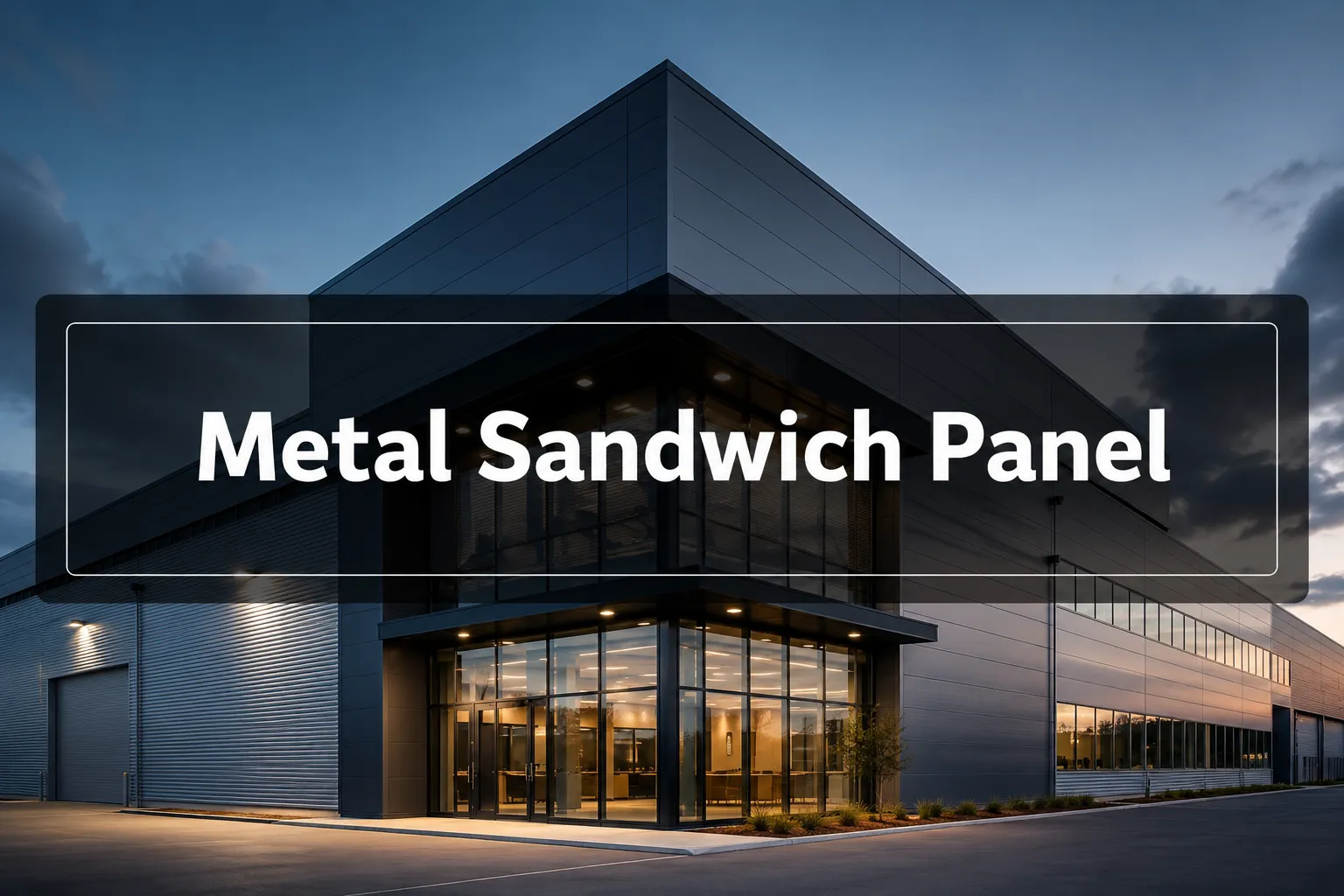
A metal sandwich panel is a three-layer composite building material consisting of two metal facings bonded to an insulating core material like polyurethane foam, expanded polystyrene, or mineral wool. These panels provide structural strength, thermal insulation, and weather protection in a single lightweight component, making them ideal for industrial buildings, cold storage facilities, and commercial construction projects.
Key Takeaways
- Metal sandwich panels combine structural support and insulation in one lightweight system
- Core materials include PU foam, EPS, rockwool, and PIR, each offering different performance characteristics
- Installation is faster than traditional construction methods, reducing labor costs by 30-50%
- Fire ratings range from A1 (non-combustible) to B-s1,d0 depending on core material selection
- Typical thickness options span 50mm to 200mm for walls and 100mm to 250mm for roofing applications
- Condensation control requires proper vapor barriers and thermal bridge management
- Leading manufacturers include Kingspan, Metecno, and Tata Steel with 20-30 year warranties
- Cost ranges from $15-45 per square meter depending on thickness, core type, and specifications
- Common applications include warehouses, cold storage, factories, and agricultural buildings
- Proper installation prevents thermal bridging, air leakage, and moisture infiltration issues
What is a Metal Sandwich Panel and How Does It Work
A metal sandwich panel functions as a composite structural element where two thin metal sheets (typically steel or aluminum) are permanently bonded to a lightweight insulating core under controlled factory conditions. The outer metal facings provide weather resistance and structural rigidity, while the core material delivers thermal insulation and additional structural support through its adhesive bond.
The panel works on the principle of composite action, where the three layers act together as a single structural unit. The metal facings resist bending forces and provide load-bearing capacity, while the core maintains the facings at a fixed distance apart and transfers shear forces between them. This creates a structural efficiency similar to an I-beam but with continuous insulation.
Core materials determine performance characteristics:
- Polyurethane (PU) foam: Best thermal performance (R-6 to R-8 per inch), excellent adhesion
- Expanded Polystyrene (EPS): Cost-effective, good insulation (R-4 per inch), lightweight
- Mineral wool (Rockwool): Superior fire resistance, acoustic properties, non-combustible
- Polyisocyanurate (PIR): High thermal efficiency, good fire performance, stable at temperature extremes
The factory-controlled manufacturing process ensures consistent quality, precise dimensions, and optimal bonding between layers. This eliminates the thermal bridging and air gaps common in field-assembled insulation systems.
Metal Sandwich Panel vs Traditional Insulation Comparison
Metal sandwich panels outperform traditional insulation systems in installation speed, thermal performance consistency, and long-term durability. Traditional methods require separate structural framing, insulation installation, vapor barriers, and exterior cladding as distinct construction phases.
Installation Speed Comparison:
- Metal sandwich panels: 200-400 square meters per day with small crew
- Traditional stick-built: 50-100 square meters per day requiring multiple trades
- Time savings: 60-75% reduction in wall/roof installation time
Thermal Performance Differences:
- Sandwich panels: Continuous insulation with minimal thermal bridging
- Traditional framing: 15-25% thermal bridging through studs and connections
- Energy efficiency: Sandwich panels achieve 20-30% better thermal performance
Labor and Cost Factors:
- Sandwich panels: Single-trade installation, reduced crane time, immediate weather seal
- Traditional: Multiple trades (framers, insulators, roofers, siders), weather delays
- Total project cost: Often comparable despite higher material cost due to labor savings
Structural Considerations:
- Sandwich panels: Self-supporting spans up to 12 meters for walls, 15 meters for roofs
- Traditional: Requires separate structural frame, limiting design flexibility
- Foundation loads: 40-60% lighter than masonry or concrete alternatives
Choose metal sandwich panels for projects prioritizing speed, energy efficiency, and design flexibility. Select traditional methods when local labor costs are very low, complex architectural details are required, or building codes specifically mandate certain construction types.
Metal Sandwich Panel Cost and Pricing
Metal sandwich panel costs in 2026 range from $15-45 per square meter for materials only, with total installed costs typically $35-75 per square meter including labor and accessories. Pricing varies significantly based on core material, thickness, surface finish, and project volume.
Material Cost Breakdown by Core Type:
- EPS core panels: $15-25 per square meter
- PU foam core panels: $25-35 per square meter
- Rockwool core panels: $30-45 per square meter
- PIR core panels: $35-45 per square meter
Thickness Impact on Pricing:
- 50mm thickness: Base price
- 100mm thickness: 40-60% price increase
- 150mm thickness: 80-120% price increase
- 200mm+ thickness: 150-200% price increase
Additional Cost Factors:
- Custom colors or finishes: 10-20% premium
- Fire-rated specifications: 15-30% premium
- Acoustic performance upgrades: 20-40% premium
- Small quantity orders: 25-50% price penalty
Installation Costs:
- Basic installation: $10-15 per square meter
- Complex roof installations: $15-25 per square meter
- Accessories (flashings, trims): $5-12 per linear meter
Volume Pricing Benefits:
- Projects under 500 sqm: Full retail pricing
- 500-2000 sqm: 5-15% discount
- 2000+ sqm: 15-25% discount
For accurate project pricing, request quotes from multiple sandwich panel suppliers in Bangladesh with detailed specifications including thickness, core type, surface finish, and total quantities.
Where to Buy Metal Sandwich Panels
Metal sandwich panels are available through specialized building material suppliers, direct from manufacturers, and construction material distributors. The best purchasing approach depends on project size, technical requirements, and local availability.
Direct from Manufacturers:
- Best pricing for large projects (2000+ square meters)
- Technical support and custom specifications available
- Longer lead times (4-8 weeks) but guaranteed quality
- Warranty coverage directly from producer
Authorized Distributors:
- Faster delivery (1-3 weeks) with local inventory
- Smaller minimum orders accepted
- Installation services often available
- Regional technical support
Construction Material Suppliers:
- Immediate availability for standard sizes and colors
- Higher per-unit pricing but lower total project risk
- Combined ordering with other building materials
- Local relationships for ongoing support
Key Purchasing Considerations:
- Verify fire rating certifications match project requirements
- Confirm warranty terms and local service availability
- Check delivery scheduling and site access requirements
- Validate technical specifications against design requirements
Bangladesh Market Leaders:
For projects in Bangladesh, established sandwich panel manufacturers offer comprehensive product lines with local technical support and competitive pricing structures.
Procurement Timeline:
- Standard products: 2-4 weeks delivery
- Custom specifications: 6-10 weeks delivery
- Large projects: 8-12 weeks with staged delivery options
Always request material certificates, fire test reports, and warranty documentation before finalizing purchases.
Metal Sandwich Panel Installation Problems
Common metal sandwich panel installation problems include thermal bridging, air leakage, condensation issues, and structural connection failures. Most problems stem from inadequate planning, improper handling, or shortcuts during installation.
Thermal Bridging Issues:
- Problem: Metal connections create heat loss paths through insulation
- Solution: Use thermal break materials at all structural connections
- Prevention: Design connections with insulated spacers and gaskets
Air Leakage Problems:
- Problem: Gaps at panel joints allow air infiltration and moisture entry
- Solution: Continuous sealant application and proper gasket installation
- Prevention: Follow manufacturer's joint sealing specifications exactly
Condensation Control Failures:
- Problem: Interior condensation due to vapor barrier discontinuity
- Solution: Continuous vapor barrier with sealed overlaps
- Prevention: Calculate dew point and design appropriate vapor control layers
Structural Connection Errors:
- Problem: Inadequate fastening causing panel movement or failure
- Solution: Use specified fastener types, spacing, and torque values
- Prevention: Structural engineer review of connection details
Panel Damage During Installation:
- Problem: Dents, scratches, or core damage from improper handling
- Solution: Proper lifting equipment and protective measures
- Prevention: Train installation crews on panel handling procedures
Common Installation Mistakes:
- Insufficient overlap at panel joints
- Wrong fastener placement or spacing
- Inadequate flashing at penetrations
- Improper support during installation
Choose experienced installers familiar with sandwich panel systems. For complex projects, consider manufacturer-certified installation teams or comprehensive installation services that include technical oversight.
Metal Sandwich Panel Fire Rating Requirements
Metal sandwich panel fire ratings are classified according to European EN 13501-1 standards or equivalent national codes, with ratings ranging from A1 (non-combustible) to F (highly flammable). Fire rating selection depends on building occupancy, height, and local fire safety regulations.
Fire Rating Classifications:
- A1, A2: Non-combustible materials (mineral wool core)
- B-s1,d0: Limited combustibility with minimal smoke/droplets (PIR core)
- C-s2,d0: Moderate fire resistance (high-quality PU foam)
- D, E, F: Higher combustibility levels (standard EPS, basic PU)
Core Material Fire Performance:
- Rockwool core: A1 rating, melting point above 1000°C
- PIR foam core: Typically B-s1,d0, self-extinguishing properties
- PU foam core: B to D rating depending on formulation
- EPS core: D to F rating, requires fire barriers in many applications
Building Code Requirements:
- High-rise buildings: Often require A1 or A2 rated panels
- Industrial facilities: Minimum B-s1,d0 for most applications
- Agricultural buildings: May accept lower ratings with proper fire separation
- Cold storage: Special requirements due to insulation thickness
Fire Testing Standards:
- EN 13823 (SBI test): Single Burning Item test for building products
- EN ISO 1182: Non-combustibility test for A1/A2 classification
- ASTM E84: Surface burning characteristics (North American standard)
Design Considerations:
- Fire barriers required at specific intervals for lower-rated panels
- Cavity barriers prevent fire spread through panel joints
- Proper detailing around penetrations maintains fire resistance
For projects requiring specific fire ratings, consult fire-rated sandwich panel specialists to ensure compliance with local building codes and insurance requirements.
Best Metal Sandwich Panel Brands
Leading metal sandwich panel manufacturers in 2026 include Kingspan, Metecno, Tata Steel, ArcelorMittal, and Isopan, each offering distinct advantages in quality, technical support, and market coverage. Brand selection should consider local availability, technical requirements, and project-specific needs.
Global Market Leaders:
Kingspan (Ireland):
- Premium positioning with superior thermal performance
- Extensive technical support and design services
- Strong warranty coverage (20-25 years typical)
- Higher pricing but excellent long-term value
Metecno (Italy):
- Comprehensive product range for all applications
- Strong presence in industrial and cold storage markets
- Competitive pricing with good technical support
- Reliable quality control and certification
Tata Steel (Europe):
- Excellent fire-rated options with mineral wool cores
- Strong structural performance capabilities
- Good availability across European and Asian markets
- Competitive pricing for large projects
Regional Strong Performers:
ArcelorMittal Construction:
- Focus on structural applications and heavy-duty panels
- Good technical support for complex projects
- Competitive pricing in bulk quantities
Isopan (Italy):
- Specialized in architectural applications
- Wide range of surface finishes and colors
- Strong in European markets
Selection Criteria:
- Technical performance: Thermal, structural, and fire ratings
- Local support: Installation training, technical assistance, warranty service
- Delivery capability: Lead times, logistics, inventory management
- Certification: Quality standards, fire testing, environmental compliance
Bangladesh Market Considerations:
Local manufacturers and suppliers often provide better value through reduced shipping costs, faster delivery, and local technical support. Research established Bangladesh manufacturers for projects in the region.
Quality Verification:
- Request test certificates for thermal and fire performance
- Verify manufacturing quality certifications (ISO 9001, etc.)
- Check warranty terms and local service availability
- Review project references and case studies
Metal Sandwich Panel Thickness Options
Metal sandwich panel thickness selection depends on structural requirements, thermal performance targets, and building code compliance. Standard thicknesses range from 50mm to 250mm, with specific applications driving optimal thickness choices.
Wall Panel Thickness Options:
- 50mm: Light-duty applications, mild climate zones
- 75mm: Standard commercial and industrial buildings
- 100mm: Enhanced insulation, moderate structural loads
- 120mm: Cold storage perimeter walls, high thermal performance
- 150mm: Heavy structural loads, extreme climate conditions
- 200mm: Specialized applications, maximum insulation
Roof Panel Thickness Options:
- 100mm: Minimum for most structural applications
- 120mm: Standard industrial and commercial roofing
- 150mm: Enhanced thermal performance, longer spans
- 200mm: Cold storage, heavy snow loads
- 250mm: Extreme insulation requirements, specialized facilities
Thickness Selection Factors:
Structural Requirements:
- Span length: Longer spans require greater thickness for structural adequacy
- Load conditions: Snow, wind, and live loads determine minimum thickness
- Deflection limits: Architectural requirements may mandate thicker panels
Thermal Performance:
- Climate zone: Colder climates require thicker insulation
- Energy codes: Building regulations specify minimum R-values
- Operating temperatures: Cold storage requires maximum thickness
Economic Considerations:
- Material cost increases exponentially with thickness
- Energy savings may justify higher initial cost
- Structural savings from longer spans can offset material cost
Application-Specific Guidelines:
- Warehouses: 75-100mm walls, 120-150mm roof
- Cold storage: 150-200mm walls, 200-250mm roof
- Agricultural: 50-75mm walls, 100-120mm roof
- Industrial: 100-120mm walls, 150-200mm roof
For detailed thickness recommendations, consult thermal insulation specialists who can perform energy modeling and structural analysis for specific project conditions.
Metal Sandwich Panel Condensation Issues
Metal sandwich panel condensation occurs when warm, humid air contacts cold surfaces, creating moisture problems that can damage insulation, promote corrosion, and compromise building performance. Proper vapor control and thermal design prevent most condensation issues.
Types of Condensation Problems:
Surface Condensation:
- Cause: Interior surfaces below dew point temperature
- Location: Inner face of panels in high-humidity environments
- Solution: Increase surface temperature or reduce interior humidity
Interstitial Condensation:
- Cause: Vapor penetration into panel core with temperature differential
- Location: Within insulation core or at core-facing interface
- Solution: Proper vapor barrier design and installation
Thermal Bridge Condensation:
- Cause: Metal connections creating cold spots
- Location: Around fasteners, structural connections, panel joints
- Solution: Thermal breaks and insulated connection details
Prevention Strategies:
Vapor Barrier Design:
- Install continuous vapor barrier on warm side of insulation
- Seal all penetrations, joints, and connections
- Use appropriate vapor permeability ratings for climate conditions
Thermal Bridge Control:
- Minimize metal-to-metal connections through insulation
- Use thermal break materials at structural connections
- Design insulated fastener systems
Ventilation and Humidity Control:
- Maintain appropriate interior humidity levels (30-50% RH)
- Provide adequate ventilation in high-moisture areas
- Consider dehumidification in critical applications
Critical Applications:
- Cold storage facilities: Require specialized vapor barrier systems
- Swimming pools: High humidity demands careful vapor control
- Industrial processes: May need customized humidity management
Design Calculations:
- Perform dew point analysis for specific climate conditions
- Calculate vapor transmission rates through panel systems
- Size vapor barriers for worst-case humidity conditions
For complex condensation control requirements, work with specialized cold storage panel suppliers who understand vapor barrier design and installation techniques.
Who Uses Metal Sandwich Panels
Metal sandwich panels serve diverse industries requiring fast construction, energy efficiency, and reliable building performance. Primary users include industrial developers, cold storage operators, agricultural businesses, and commercial builders seeking cost-effective building solutions.
Industrial and Manufacturing:
- Warehouses and distribution centers: Fast construction, large clear spans
- Manufacturing facilities: Clean environments, thermal control
- Automotive plants: Structural efficiency, acoustic performance
- Chemical processing: Corrosion resistance, easy cleaning
Cold Chain and Food Processing:
- Cold storage warehouses: Superior insulation performance
- Food processing plants: Hygienic surfaces, temperature control
- Pharmaceutical storage: Precise environmental control
- Frozen food distribution: Energy efficiency, structural integrity
Agricultural Applications:
- Poultry farms: Climate control, easy cleaning, pest resistance
- Dairy facilities: Hygienic requirements, thermal performance
- Grain storage: Moisture control, structural durability
- Livestock housing: Ventilation control, low maintenance
Commercial and Retail:
- Shopping centers: Large spans, architectural flexibility
- Supermarkets: Energy efficiency, quick construction
- Restaurants: Kitchen ventilation, easy maintenance
- Office buildings: Thermal performance, design versatility
Specialized Applications:
- Clean rooms: Smooth surfaces, contamination control
- Data centers: Thermal management, structural reliability
- Sports facilities: Large spans, acoustic control
- Aircraft hangars: Structural efficiency, weather protection
Selection Drivers by Industry:
- Speed of construction: Retail, industrial projects with tight schedules
- Energy efficiency: Cold storage, climate-controlled environments
- Hygiene requirements: Food processing, pharmaceutical, healthcare
- Structural performance: Large spans, heavy equipment loads
Regional Market Trends:
In Bangladesh and similar developing markets, metal sandwich panels are increasingly popular for factory buildings and warehouse construction due to rapid industrialization and infrastructure development.
Metal Sandwich Panel vs Fiberglass Comparison
Metal sandwich panels outperform fiberglass insulation systems in structural capacity, installation speed, and long-term durability, while fiberglass offers lower initial material costs and greater design flexibility for complex architectural applications.
Structural Performance:
- Metal sandwich panels: Self-supporting spans up to 15 meters
- Fiberglass systems: Require separate structural framing
- Load capacity: Sandwich panels carry both structural and thermal loads
- Deflection control: Better performance under wind and snow loads
Thermal Performance:
- Metal sandwich panels: Continuous insulation, minimal thermal bridging
- Fiberglass batts: 15-25% thermal bridging through framing
- R-value consistency: Sandwich panels maintain rated performance
- Air infiltration: Better air sealing with sandwich panel systems
Installation Comparison:
- Speed: Sandwich panels install 3-5 times faster
- Labor requirements: Single trade vs. multiple specialized trades
- Weather sensitivity: Sandwich panels provide immediate weather protection
- Quality control: Factory-controlled vs. field-dependent quality
Cost Analysis:
- Material cost: Fiberglass 30-50% lower initial cost
- Labor cost: Sandwich panels 40-60% lower installation cost
- Total project cost: Often comparable when including all factors
- Long-term value: Sandwich panels typically offer better ROI
Maintenance and Durability:
- Moisture resistance: Sandwich panels superior in humid conditions
- Settling: No insulation settling with sandwich panels
- Pest resistance: Better protection against rodents and insects
- Service life: 25-30 years vs. 15-20 years for fiberglass
Application Suitability:
- Choose sandwich panels for: Industrial, commercial, agricultural buildings
- Choose fiberglass for: Residential, complex architectural shapes, retrofit projects
- Climate considerations: Sandwich panels better in extreme climates
For industrial applications, metal sandwich panels typically provide better long-term value despite higher initial material costs.
Metal Sandwich Panel Lifespan and Durability
Metal sandwich panels typically achieve 25-30 year service lives with proper installation and maintenance, with some high-quality systems lasting 40+ years in favorable conditions. Durability depends on core material selection, environmental exposure, and maintenance practices.
Expected Service Life by Component:
Metal Facings:
- Galvanized steel: 20-25 years in moderate climates
- Pre-painted steel: 25-30 years with quality coatings
- Aluminum: 30-40 years, excellent corrosion resistance
- Stainless steel: 40+ years in harsh environments
Core Materials:
- PU foam: 25-30 years, stable thermal performance
- EPS: 20-25 years, may degrade in moisture exposure
- Mineral wool: 30-40 years, excellent long-term stability
- PIR: 25-35 years, good thermal stability
Factors Affecting Durability:
Environmental Conditions:
- Coastal environments: Salt air accelerates metal corrosion
- Industrial atmospheres: Chemical exposure may degrade coatings
- UV exposure: Affects coating color and gloss retention
- Temperature cycling: Thermal expansion/contraction stresses
Installation Quality:
- Proper sealing: Prevents moisture infiltration and core damage
- Thermal bridge control: Reduces condensation and corrosion risk
- Fastener selection: Appropriate materials prevent galvanic corrosion
- Flashing details: Critical for long-term weather resistance
Maintenance Requirements:
- Annual inspection: Check sealants, fasteners, and surface condition
- Cleaning: Remove debris and contaminants that trap moisture
- Sealant renewal: Replace weathered sealants every 10-15 years
- Touch-up painting: Address coating damage promptly
Performance Degradation:
- Thermal performance: Minimal degradation over service life
- Structural capacity: Maintains strength with proper maintenance
- Weather resistance: Gradual coating degradation, manageable with maintenance
Warranty Coverage:
- Structural performance: 10-20 years typical
- Thermal performance: 10-15 years
- Weather-tightness: 10-15 years
- Coating performance: 10-25 years depending on system
End-of-Life Considerations:
- Metal facings are fully recyclable
- Some core materials can be recycled or energy recovered
- Proper disposal required for certain foam types
For maximum durability, select appropriate specifications for environmental conditions and establish regular maintenance schedules.
Metal Sandwich Panel Common Installation Mistakes
The most frequent metal sandwich panel installation mistakes include inadequate sealing, improper fastening, thermal bridge creation, and poor handling practices. These errors can compromise structural performance, energy efficiency, and weather resistance.
Sealing and Weather-Tightness Errors:
Inadequate Joint Sealing:
- Mistake: Insufficient or discontinuous sealant application
- Consequence: Air leakage, moisture infiltration, energy loss
- Prevention: Follow manufacturer's sealant specifications and application procedures
Missing Vapor Barriers:
- Mistake: Incomplete or improperly sealed vapor control layers
- Consequence: Interstitial condensation, insulation damage
- Prevention: Continuous vapor barrier with sealed overlaps and penetrations
Fastening Problems:
Wrong Fastener Selection:
- Mistake: Using inappropriate fastener materials or sizes
- Consequence: Structural failure, corrosion, panel movement
- Prevention: Use only manufacturer-specified fasteners and installation patterns
Incorrect Fastener Placement:
- Mistake: Fasteners through panel faces instead of structural connections
- Consequence: Thermal bridging, reduced insulation performance
- Prevention: Fasten through structural members with thermal breaks
Structural Connection Issues:
Thermal Bridge Creation:
- Mistake: Direct metal-to-metal connections through insulation
- Consequence: Heat loss, condensation, energy inefficiency
- Prevention: Use thermal break materials at all structural connections
Inadequate Support During Installation:
- Mistake: Insufficient temporary bracing causing panel distortion
- Consequence: Permanent deformation, poor fit, structural problems
- Prevention: Proper lifting equipment and temporary support systems
Handling and Storage Mistakes:
Panel Damage:
- Mistake: Improper lifting, stacking, or storage causing dents or core damage
- Consequence: Reduced performance, aesthetic problems, potential failure
- Prevention: Follow manufacturer's handling and storage guidelines
Moisture Exposure:
- Mistake: Allowing panels to get wet during storage or installation
- Consequence: Core degradation, adhesion failure, mold growth
- Prevention: Proper weather protection and dry storage conditions
Quality Control Failures:
- Skipping pre-installation planning and layout
- Inadequate coordination between trades
- Insufficient inspection during installation
- Rushing installation without proper procedures
Prevention Strategies:
- Use manufacturer-certified installers
- Provide comprehensive installation training
- Implement quality control checkpoints
- Follow manufacturer's installation manuals exactly
Consider professional installation services for critical projects to ensure proper installation techniques and warranty compliance.
Metal Sandwich Panels for Cold Storage Applications
Metal sandwich panels for cold storage require specialized design considerations including enhanced insulation thickness, vapor barrier systems, and structural capacity for temperature differentials. These applications demand the highest performance standards to maintain temperature control and energy efficiency.
Cold Storage Panel Requirements:
Insulation Performance:
- Thickness: 150-250mm typical for freezer applications
- Core material: PU foam preferred for superior thermal performance
- R-value: R-30 to R-50 depending on temperature requirements
- Thermal bridging: Minimized through specialized connection details
Vapor Control Systems:
- Vapor barriers: Continuous, high-performance materials on warm side
- Permeability: Very low vapor transmission rates required
- Sealing: All joints, penetrations, and connections must be sealed
- Pressure differentials: Design for building pressurization systems
Structural Considerations:
- Temperature differential: Panels must handle extreme temperature gradients
- Thermal movement: Expansion/contraction joint design critical
- Load capacity: Support for refrigeration equipment, racking systems
- Floor-to-wall connections: Special details prevent thermal bridging
Application-Specific Requirements:
Freezer Rooms (-18°C to -25°C):
- 200-250mm panel thickness typical
- Enhanced vapor barrier systems
- Specialized door and penetration details
Cooler Rooms (0°C to 4°C):
- 150-200mm panel thickness
- Standard vapor control adequate
- Focus on energy efficiency optimization
Blast Freezing (-40°C):
- Maximum insulation thickness
- Special core materials for extreme temperatures
- Enhanced structural design for thermal shock
Installation Considerations:
- Continuous installation: Minimize thermal bridges at connections
- Quality control: Critical for vapor barrier continuity
- Testing: Pressure testing and thermal imaging verification
- Commissioning: Proper startup and performance verification
Energy Performance:
- Payback period: 3-7 years through energy savings
- Operating cost reduction: 20-40% vs. traditional construction
- Temperature stability: Better control reduces product loss
Specialized Suppliers:
Work with cold storage panel specialists who understand the unique requirements and can provide complete system solutions including doors, penetrations, and accessories.
Frequently Asked Questions
What is the difference between PU and EPS sandwich panels?
PU (polyurethane) foam offers superior thermal performance with R-6 to R-8 per inch compared to EPS (expanded polystyrene) at R-4 per inch. PU provides better adhesion to metal facings and moisture resistance, while EPS costs 30-40% less and offers adequate performance for less demanding applications.
How long do metal sandwich panels last?
Metal sandwich panels typically last 25-30 years with proper installation and maintenance. High-quality systems with aluminum facings or premium coatings can achieve 40+ year service lives. Core materials like mineral wool offer the longest durability, while proper sealing and maintenance are critical for achieving design life.
Can sandwich panels be used for residential construction?
Yes, metal sandwich panels work well for residential applications including garages, workshops, and modern architectural designs. However, building codes may require additional fire barriers, and the industrial appearance may not suit traditional residential aesthetics. Residential applications often use thinner panels (50-75mm) with architectural finishes.
What fire rating do I need for my building?
Fire rating requirements depend on building height, occupancy type, and local codes. High-rise buildings typically require A1 or A2 non-combustible ratings (mineral wool core), while single-story industrial buildings may accept B-s1,d0 ratings (PIR core). Consult local building officials and fire marshals for specific requirements.
How much weight can sandwich panels support?
Structural capacity varies by panel thickness, span length, and core material. Typical 100mm wall panels can span 6-8 meters with standard wind loads, while 150mm roof panels can span 12-15 meters. Structural engineers should verify capacity for specific load conditions and span requirements.
Do sandwich panels need maintenance?
Sandwich panels require minimal maintenance including annual inspections, sealant renewal every 10-15 years, and prompt repair of coating damage. Regular cleaning removes debris that can trap moisture and cause corrosion. Proper maintenance extends service life and maintains warranty coverage.
Can sandwich panels be recycled?
Metal facings are fully recyclable through standard steel recycling processes. Some core materials like mineral wool can be recycled, while foam cores may be energy recovered or require special disposal. Manufacturers increasingly offer take-back programs for end-of-life panels.
What causes condensation in sandwich panels?
Condensation occurs when warm, humid air contacts cold surfaces or penetrates into the panel core. Prevention requires continuous vapor barriers on the warm side, proper thermal bridge control, and appropriate ventilation. Cold storage applications need specialized vapor control systems.
How are sandwich panels joined together?
Panels connect through interlocking edge profiles with sealant gaskets for weather-tightness. Structural connections use concealed fasteners through thermal breaks to minimize heat loss. Proper joint design and sealing are critical for performance and durability.
Can I cut sandwich panels on site?
Limited field cutting is possible with proper tools and techniques, but extensive cutting should be avoided as it exposes the core material and may compromise fire ratings. Factory cutting provides clean edges and proper sealing. Any field cuts require edge sealing to prevent moisture infiltration.
What thickness do I need for cold storage?
Cold storage applications typically require 150-200mm for cooler rooms (0-4°C) and 200-250mm for freezer rooms (-18 to -25°C). Extreme low-temperature applications may need even thicker panels. Energy modeling can optimize thickness for specific temperature requirements and energy costs.
Are sandwich panels suitable for high wind areas?
Yes, properly designed sandwich panel systems can handle high wind loads including hurricane conditions. Structural capacity depends on panel thickness, fastening patterns, and building geometry. Engineering analysis is required for extreme wind conditions or tall buildings.
Conclusion
Metal sandwich panels represent a proven building technology that combines structural efficiency, thermal performance, and installation speed in a single system. With proper specification, installation, and maintenance, these panels deliver reliable long-term performance for industrial, commercial, and specialized applications.
The key to successful sandwich panel projects lies in understanding the relationship between core materials, thickness requirements, and application-specific needs. Whether building a warehouse, cold storage facility, or manufacturing plant, selecting appropriate specifications and working with experienced suppliers ensures optimal performance and value.
For your next project, evaluate metal sandwich panels against traditional construction methods considering total project costs, construction timeline, and long-term operating expenses. The initial investment in quality panels and professional installation typically pays dividends through reduced energy costs, faster occupancy, and minimal maintenance requirements.
Next Steps:
- Define your project's thermal, structural, and fire rating requirements
- Request quotes from multiple suppliers with detailed specifications
- Verify installer experience and manufacturer certifications
- Plan for proper storage, handling, and installation procedures
- Establish maintenance schedules to maximize panel service life
SEO Meta Title: Metal Sandwich Panel Guide: Types, Costs & Installation Tips 2026