Last updated: July 31, 2026

Quick Answer: A thermal insulation sandwich panel is a three-layer building component consisting of two metal sheets (typically steel or aluminum) with an insulating core material like polyurethane foam, EPS, or rockwool sandwiched between them. These panels provide superior thermal performance, structural strength, and quick installation for commercial and industrial buildings.
Key Takeaways
- Thermal insulation sandwich panels combine structural support and insulation in one prefabricated unit
- Available core materials include polyurethane (PU), expanded polystyrene (EPS), and mineral wool with varying R-values
- Installation is 60-70% faster than traditional insulation methods due to the all-in-one design
- Panels work effectively for walls, roofs, and cold storage applications in commercial buildings
- Fire ratings vary by core material, with rockwool offering the highest fire resistance
- Cost ranges from $15-45 per square meter depending on thickness and core material
- Vapor barriers are typically not needed due to the panel's integrated design
- Common thicknesses range from 50mm to 200mm for different thermal requirements
What Is a Thermal Insulation Sandwich Panel and How Does It Work
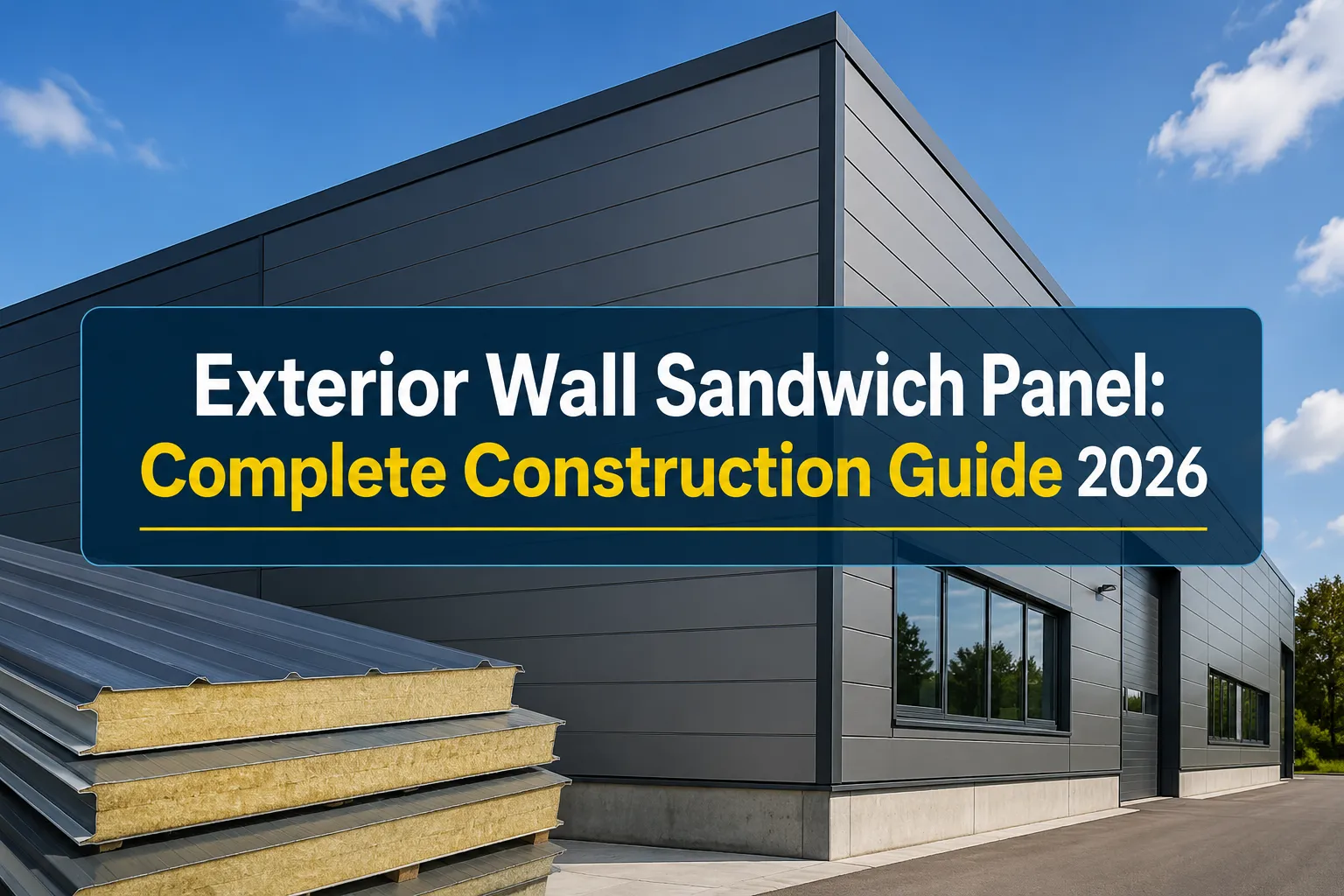
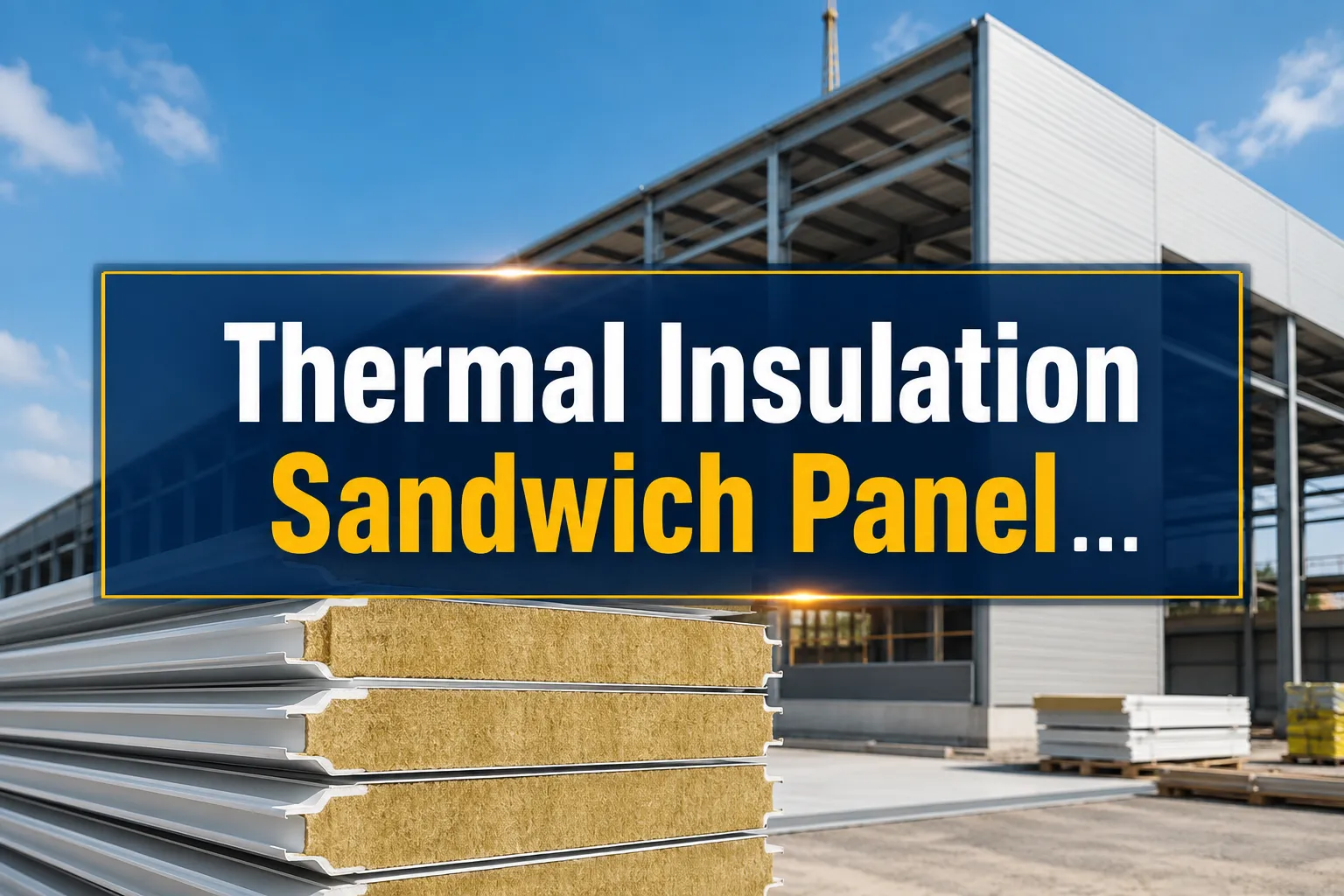
A thermal insulation sandwich panel is a composite building material that combines two outer metal sheets with an insulating core material to create a single, high-performance building component. The panel works by trapping air within the core material while the metal skins provide structural integrity and weather protection.
The outer metal sheets, typically made from galvanized steel or aluminum, serve as the structural element and protective barrier against weather and physical damage. The insulating core material – whether polyurethane foam, expanded polystyrene, or mineral wool – creates a thermal barrier that prevents heat transfer between the interior and exterior environments.
Key working principles include:
- The metal skins transfer structural loads while maintaining panel rigidity
- The insulating core minimizes thermal bridging between interior and exterior surfaces
- Interlocking edges create continuous insulation without gaps
- The composite structure eliminates the need for separate framing in many applications
Choose thermal insulation sandwich panels when you need both structural support and insulation in a single component, particularly for large commercial or industrial buildings where installation speed matters.
Thermal Insulation Sandwich Panel vs Fiberglass Insulation: Which Is Better
Thermal insulation sandwich panels outperform traditional fiberglass insulation in most commercial applications due to their integrated design, superior air sealing, and faster installation. However, fiberglass remains more cost-effective for residential projects with standard framing.
Performance comparison:
| Factor | Sandwich Panels | Fiberglass Insulation |
|---|---|---|
| Installation Speed | 60-70% faster | Standard timing |
| Air Sealing | Excellent | Requires separate vapor barrier |
| Structural Support | Provides load-bearing capacity | Requires separate framing |
| Moisture Resistance | High (closed-cell cores) | Moderate (can absorb moisture) |
| Fire Rating | Varies by core material | Good with proper installation |
| Initial Cost | Higher per sq ft | Lower material cost |
Choose sandwich panels if:
- You're building commercial or industrial structures
- Installation speed is critical
- You need combined structural and thermal performance
- The building requires excellent air sealing
Choose fiberglass if:
- Budget is the primary concern
- You're working on residential construction
- Existing framing is already in place
- Local contractors lack sandwich panel experience
The most common mistake is comparing only material costs without factoring in labor savings and structural benefits that sandwich panels provide.
Thermal Insulation Sandwich Panel Cost and Pricing
Thermal insulation sandwich panel costs range from $15-45 per square meter for materials, with total installed costs typically reaching $25-65 per square meter depending on project size, panel thickness, and core material type.
Price breakdown by core material:
- EPS core panels: $15-25 per square meter
- Polyurethane (PU) core panels: $25-35 per square meter
- Rockwool core panels: $30-45 per square meter
Additional cost factors:
- Panel thickness (50mm-200mm affects price by 15-30%)
- Custom colors or coatings add $2-5 per square meter
- Special fire ratings increase costs by 10-20%
- Minimum order quantities affect unit pricing
- Transportation costs for remote locations
Installation costs typically include:
- Labor: $8-15 per square meter
- Crane rental: $500-1,200 per day
- Fasteners and accessories: $3-6 per square meter
- Site preparation: varies by project
For accurate pricing on your specific project, consider factors like building height, panel complexity, and local labor rates. Large projects (over 1,000 square meters) often receive 10-15% volume discounts from suppliers.
Where to Buy Thermal Insulation Sandwich Panels
Purchase thermal insulation sandwich panels directly from manufacturers for the best pricing and customization options, or through authorized distributors for smaller quantities and faster delivery. Most commercial projects require direct manufacturer relationships for quality control and warranty support.
Primary purchasing channels:
Direct from manufacturers:
- Best pricing for large orders (1,000+ square meters)
- Custom specifications and colors available
- Direct warranty and technical support
- Longer lead times (4-8 weeks typical)
Authorized distributors:
- Smaller minimum orders
- Faster delivery (1-3 weeks)
- Local technical support
- Limited customization options
Online marketplaces:
- Suitable for small projects or samples
- Limited technical support
- Verify seller credentials carefully
For projects in Bangladesh, established sandwich panel manufacturers offer local production and support. When selecting suppliers, verify their certifications, fire testing compliance, and previous project references.
Key supplier evaluation criteria:
- Manufacturing certifications (ISO 9001, fire ratings)
- Project portfolio and references
- Technical support capabilities
- Warranty terms and local service
- Delivery timeline reliability
Avoid suppliers who cannot provide fire test certificates or structural load calculations, as these are essential for building code compliance.
Thermal Insulation Sandwich Panel Installation Problems
Common thermal insulation sandwich panel installation problems include improper panel alignment, inadequate fastening, and poor weather sealing, which can compromise both thermal performance and structural integrity. Most issues stem from inexperienced installation crews or inadequate site preparation.
Most frequent installation problems:
Panel alignment issues:
- Panels not level or plumb due to poor foundation preparation
- Gaps between panels allowing thermal bridging
- Misaligned interlocking edges creating air leaks
Fastening problems:
- Insufficient fastener spacing (should be 300-600mm centers)
- Wrong fastener types for the substrate
- Over-tightening causing panel distortion
- Under-tightening allowing panel movement
Weather sealing failures:
- Missing or improperly applied sealants at joints
- Inadequate flashing around penetrations
- Poor integration with roofing systems
Prevention strategies:
- Use experienced installation crews familiar with sandwich panels
- Ensure proper site surveying and foundation preparation
- Follow manufacturer's installation guidelines precisely
- Conduct quality inspections at each installation phase
- Provide adequate weather protection during installation
The most costly mistake is attempting installation without proper equipment – panels require cranes or lifting equipment for safe and accurate placement. For complex projects, consider hiring specialized installation services to ensure proper execution.
Do Thermal Insulation Sandwich Panels Need Vapor Barrier
Thermal insulation sandwich panels with closed-cell core materials (polyurethane or EPS) typically do not require additional vapor barriers because the core itself acts as a vapor retarder. However, mineral wool core panels may need vapor barriers in high-humidity applications.
Vapor barrier requirements by core type:
Polyurethane (PU) core panels:
- No additional vapor barrier needed
- Closed-cell foam provides vapor resistance
- Permeability rating typically under 1.0 perm
EPS core panels:
- Usually no vapor barrier required
- Some applications may need additional sealing at joints
- Permeability varies by density (0.8-2.0 perms)
Rockwool/Mineral wool core panels:
- Vapor barrier often recommended
- Particularly important in cold storage or high-humidity environments
- Open-cell structure allows moisture transmission
Special considerations:
- Cold storage applications always require vapor barriers regardless of core type
- High-humidity environments (pools, food processing) need enhanced vapor control
- Climate zone affects vapor barrier placement (warm side of insulation)
Consult with the panel manufacturer about specific vapor barrier requirements for your climate and application. The most common error is adding unnecessary vapor barriers to PU or EPS panels, which can trap moisture and cause problems.
Thermal Insulation Sandwich Panel R-Value Comparison
Thermal insulation sandwich panel R-values range from R-7 to R-35 depending on core material and thickness, with polyurethane cores providing the highest thermal resistance per inch. Understanding R-values helps select appropriate panel thickness for your climate zone and energy requirements.
R-values by core material (per inch thickness):
| Core Material | R-Value per Inch | 100mm Panel R-Value | 150mm Panel R-Value |
|---|---|---|---|
| Polyurethane (PU) | R-6.5-7.0 | R-25-28 | R-38-42 |
| EPS (Expanded Polystyrene) | R-3.8-4.2 | R-15-17 | R-22-25 |
| Rockwool/Mineral Wool | R-3.3-3.7 | R-13-15 | R-20-22 |
Climate zone recommendations:
- Hot climates: R-13 to R-19 (75-100mm panels)
- Moderate climates: R-19 to R-25 (100-125mm panels)
- Cold climates: R-25 to R-35 (125-175mm panels)
- Extreme cold/cold storage: R-35+ (175mm+ panels)
Performance factors affecting R-value:
- Metal skin thermal bridging reduces overall panel R-value by 5-10%
- Panel joints and fasteners create thermal bridges
- Installation quality affects real-world thermal performance
- Age and moisture exposure can reduce insulation effectiveness
Choose panel thickness based on your local energy codes and payback calculations rather than just initial cost. Thicker panels cost more upfront but provide long-term energy savings that often justify the investment.
Thermal Insulation Sandwich Panels for Metal Buildings
Thermal insulation sandwich panels are ideal for metal buildings because they provide both the structural skin and insulation system in one component, eliminating thermal bridging common in traditional metal building insulation. This makes them particularly effective for warehouses, factories, and agricultural buildings.
Advantages for metal buildings:
- Eliminates purlins and girts in many applications
- Provides continuous insulation without thermal bridges
- Faster construction compared to built-up systems
- Superior air sealing reduces condensation problems
- Structural capacity allows wider spans
Design considerations:
- Panel orientation affects structural capacity (horizontal vs vertical installation)
- Wind and snow loads determine required panel thickness and support spacing
- Building codes may require additional structural elements for seismic zones
- Expansion joints needed for buildings over 60 meters long
Common applications:
- Factory buildings requiring temperature control
- Warehouses with energy efficiency requirements
- Agricultural buildings needing climate control
- Aircraft hangars and large-span structures
The key advantage over traditional metal building insulation is the elimination of thermal bridging through the structural members. Traditional systems lose 20-30% of their thermal performance due to metal framing, while sandwich panels maintain consistent R-values across the entire building envelope.
For optimal performance, ensure proper integration with the building's structural system and follow manufacturer guidelines for fastening and support requirements.
Are Thermal Insulation Sandwich Panels Fire Rated
Fire ratings for thermal insulation sandwich panels vary significantly by core material, with rockwool cores achieving the highest fire resistance ratings up to 4 hours, while EPS cores typically provide 30-60 minutes of fire resistance. Always verify fire test certificates before specifying panels for your project.
Fire ratings by core material:
Rockwool/Mineral wool cores:
- Fire resistance: Up to 240 minutes (4 hours)
- Non-combustible core material
- Maintains structural integrity during fire exposure
- Suitable for high-risk occupancies
Polyurethane (PU) cores:
- Fire resistance: 30-120 minutes depending on formulation
- Some formulations are self-extinguishing
- May require fire-retardant additives
- Performance varies by manufacturer
EPS cores:
- Fire resistance: 30-60 minutes typical
- Combustible material requires careful specification
- Often treated with fire retardants
- Limited use in high-fire-risk applications
Important fire safety considerations:
- Building codes determine minimum fire rating requirements
- Occupancy type affects required fire resistance
- Fire test standards vary by country (ASTM, BS, EN standards)
- Installation details affect fire performance
- Regular inspection and maintenance preserve fire ratings
For projects requiring specific fire ratings, work with fire-rated sandwich panel specialists who can provide certified test data and compliance documentation. Never assume fire ratings – always request official test certificates from accredited laboratories.
Thermal Insulation Sandwich Panel Thickness Options
Thermal insulation sandwich panel thickness options typically range from 50mm to 200mm, with 100mm and 150mm being the most common choices for commercial applications. Panel thickness affects both thermal performance and structural capacity, requiring careful selection based on building requirements.
Standard thickness options:
- 50mm: Light commercial, moderate climates (R-10 to R-14)
- 75mm: Standard commercial applications (R-15 to R-21)
- 100mm: Most common thickness (R-20 to R-28)
- 150mm: Cold climates, high-performance buildings (R-30 to R-42)
- 200mm: Cold storage, extreme climates (R-40 to R-56)
Thickness selection factors:
- Climate zone and energy code requirements
- Building use and internal temperature requirements
- Structural span requirements
- Budget constraints and payback calculations
- Available panel support spacing
Structural considerations:
- Thicker panels can span longer distances between supports
- Load-bearing capacity increases with panel thickness
- Wind and snow loads may require minimum thicknesses
- Building height affects required structural performance
For guidance on selecting appropriate thickness for your project, consult our complete thickness selection guide. The most common mistake is selecting thickness based only on thermal requirements while ignoring structural needs.
Custom thickness options:
- Some manufacturers offer custom thicknesses
- Minimum order quantities apply for non-standard sizes
- Lead times increase for custom specifications
- Cost premiums of 15-25% for non-standard thicknesses
Thermal Insulation Sandwich Panels vs Spray Foam
Thermal insulation sandwich panels provide better long-term performance and structural benefits compared to spray foam insulation, while spray foam offers superior air sealing for complex geometries and retrofit applications. The choice depends on building type, installation requirements, and performance priorities.
Performance comparison:
Thermal performance:
- Sandwich panels: R-25 to R-35 typical (100-150mm)
- Spray foam: R-20 to R-28 for same thickness
- Both provide excellent air sealing when properly installed
Installation considerations:
- Sandwich panels: Faster installation, requires crane equipment
- Spray foam: Weather-dependent, requires skilled applicators
- Sandwich panels work better for new construction
- Spray foam better for retrofits and irregular shapes
Durability and maintenance:
- Sandwich panels: 25-30 year lifespan, minimal maintenance
- Spray foam: 15-25 year lifespan, may require recoating
- Sandwich panels resist moisture better
- Spray foam can degrade from UV exposure
Cost analysis:
- Sandwich panels: Higher material cost, lower labor cost
- Spray foam: Lower material cost, higher skilled labor cost
- Total installed costs often similar for large projects
Choose sandwich panels when:
- Building new commercial or industrial structures
- Structural capacity is needed from the insulation system
- Long-term durability is priority
- Installation speed matters
Choose spray foam when:
- Retrofitting existing buildings
- Complex geometries require custom fitting
- Highest possible air sealing is critical
- Working with existing structural systems
The key advantage of sandwich panels is their dual function as both structure and insulation, while spray foam excels at sealing irregular spaces and providing custom-fit insulation.
Who Should Use Thermal Insulation Sandwich Panels
Commercial and industrial building owners should use thermal insulation sandwich panels when they need fast construction, superior thermal performance, and structural capacity in a single building component. These panels work best for large, simple geometries where their installation advantages can be fully realized.
Ideal users and applications:
Commercial developers:
- Warehouse and distribution centers
- Manufacturing facilities
- Retail and big-box stores
- Office buildings with large spans
Industrial applications:
- Food processing facilities requiring temperature control
- Cold storage and freezer buildings
- Chemical processing plants
- Data centers needing precise climate control
Agricultural operations:
- Poultry farms requiring climate control
- Dairy facilities with wash-down requirements
- Grain storage buildings
- Livestock housing with ventilation needs
Specialized facilities:
- Clean rooms and pharmaceutical manufacturing
- Aircraft hangars and maintenance facilities
- Sports facilities and gymnasiums
- Cold chain logistics centers
Project characteristics favoring sandwich panels:
- Building areas over 500 square meters
- Simple, rectangular building shapes
- New construction rather than renovation
- Projects requiring fast completion
- Buildings needing both insulation and structural skin
Avoid sandwich panels when:
- Working on small residential projects
- Complex architectural shapes with many angles
- Historic renovation requiring custom fitting
- Extremely tight budgets where initial cost is critical
- Local contractors lack sandwich panel experience
The most successful sandwich panel projects involve experienced contractors, clear specifications, and building designs that maximize the panels' structural and thermal advantages.
Thermal Insulation Sandwich Panel Moisture Damage
Thermal insulation sandwich panel moisture damage typically occurs at panel joints, penetrations, or when vapor barriers are improperly installed, leading to core material degradation and reduced thermal performance. Prevention through proper design and installation is far more cost-effective than remediation.
Common moisture problems:
- Water infiltration through damaged panel joints
- Condensation within panels due to vapor drive
- Ice formation in cold storage applications
- Mold growth in organic core materials
Moisture entry points:
- Damaged or missing sealants at panel joints
- Improperly flashed roof-to-wall transitions
- Penetrations for utilities, doors, and windows
- Foundation-to-wall connections without proper barriers
Prevention strategies:
- Use appropriate vapor barriers for the climate and application
- Ensure proper sealant application and maintenance
- Design adequate drainage and ventilation systems
- Select core materials appropriate for the moisture environment
- Install panels with proper slope for water runoff
Core material moisture sensitivity:
- Polyurethane: Excellent moisture resistance, closed-cell structure
- EPS: Good moisture resistance, some water absorption possible
- Rockwool: Absorbs moisture but maintains insulation properties when dried
Signs of moisture damage:
- Visible staining or discoloration on panel surfaces
- Reduced thermal performance and higher energy costs
- Ice formation or frost patterns
- Musty odors indicating mold growth
- Panel deformation or separation
Remediation approaches:
- Small leaks: Sealant repair and local panel replacement
- Extensive damage: Full panel replacement may be required
- Address root cause (drainage, vapor barriers) before repairs
- Consider upgrading to higher-performance core materials
The most expensive moisture problems occur in cold storage facilities where even small leaks can cause extensive ice formation and system failure.
Thermal Insulation Sandwich Panels: Commercial vs Residential
Thermal insulation sandwich panels excel in commercial applications due to their structural capacity and installation efficiency, while residential use is limited by cost, building codes, and aesthetic considerations. Commercial projects can better justify the higher material costs through labor savings and performance benefits.
Commercial applications advantages:
- Large, simple building shapes maximize installation efficiency
- Structural capacity reduces overall building costs
- Fast installation reduces construction financing costs
- Superior air sealing improves energy performance
- Lower maintenance requirements over building lifetime
Residential application challenges:
- Higher material costs compared to traditional insulation
- Limited contractor experience with residential installation
- Building codes may require additional structural elements
- Aesthetic integration with residential architecture
- Smaller project sizes increase per-unit costs
Performance comparison:
| Factor | Commercial Use | Residential Use |
|---|---|---|
| Cost effectiveness | Excellent | Poor to moderate |
| Installation speed | Major advantage | Moderate advantage |
| Energy performance | Excellent | Good |
| Aesthetic options | Limited but adequate | Limited |
| Code compliance | Straightforward | May require engineering |
Residential applications where panels work well:
- Large custom homes with simple designs
- Accessory buildings (garages, workshops)
- High-performance homes prioritizing energy efficiency
- Rural buildings where aesthetics are less critical
Commercial sweet spot applications:
- Buildings over 2,000 square meters
- Industrial and warehouse facilities
- Buildings requiring climate control
- Projects with tight construction schedules
For residential projects, consider energy-efficient alternatives that may provide better cost-performance ratios for smaller applications.
The key decision factor is whether the project size and complexity can justify the higher material costs through installation savings and performance benefits.
Frequently Asked Questions
How long do thermal insulation sandwich panels last?
Thermal insulation sandwich panels typically last 25-30 years with proper installation and maintenance. The metal skins provide weather protection while quality core materials maintain their insulation properties throughout the panel's service life.
Can thermal insulation sandwich panels be painted or coated?
Yes, sandwich panels can be painted or coated, but use paints specifically designed for metal substrates and the panel's operating temperature range. Factory-applied coatings generally provide better durability than field-applied finishes.
What is the maximum span for thermal insulation sandwich panels?
Maximum spans depend on panel thickness, core material, and load requirements, but typically range from 4-8 meters for wall panels and 6-12 meters for roof panels. Consult manufacturer load tables for specific applications.
Do thermal insulation sandwich panels require special fasteners?
Yes, sandwich panels require specific fasteners designed for the panel thickness and substrate material. Self-drilling screws with sealing washers are common, but fastener selection depends on wind loads and panel specifications.
Can thermal insulation sandwich panels be cut or modified on site?
Limited field cutting is possible with proper tools, but extensive modifications should be avoided as they can compromise structural integrity and thermal performance. Plan panel layouts carefully to minimize field cutting.
Are thermal insulation sandwich panels recyclable?
The metal skins are fully recyclable, while core material recyclability varies. EPS cores can be recycled, polyurethane cores have limited recycling options, and rockwool cores can be reprocessed for other applications.
What building codes apply to thermal insulation sandwich panels?
Sandwich panels must comply with local building codes for structural capacity, fire resistance, and energy performance. Common standards include IBC, ASCE 7 for loads, and ASHRAE 90.1 for energy performance.
How do thermal insulation sandwich panels perform in earthquakes?
Properly designed sandwich panel systems can perform well in seismic zones when engineered for local seismic requirements. The panels' light weight reduces seismic loads compared to heavier wall systems.
Can thermal insulation sandwich panels be used for curved surfaces?
Standard flat panels cannot accommodate curves, but some manufacturers offer curved panels for specific applications. Curved panels require custom fabrication and have higher costs and longer lead times.
What maintenance do thermal insulation sandwich panels require?
Minimal maintenance is required – primarily periodic inspection of sealants and fasteners, cleaning of drainage systems, and repair of any damaged coatings. Annual inspections are recommended for critical applications.
Do thermal insulation sandwich panels provide sound insulation?
Yes, sandwich panels provide moderate sound insulation, with performance varying by core material. Rockwool cores offer the best acoustic performance, while specialized acoustic panels are available for high-noise environments.
Can thermal insulation sandwich panels be used in coastal environments?
Yes, but specify panels with appropriate corrosion-resistant coatings and materials for marine environments. Stainless steel or heavily coated galvanized steel skins are recommended for coastal applications.
Conclusion
Thermal insulation sandwich panels represent a proven solution for commercial and industrial buildings requiring fast construction, superior thermal performance, and structural efficiency. These composite panels eliminate many of the thermal bridging and air sealing problems associated with traditional building methods while providing structural capacity that can reduce overall building costs.
The key to successful sandwich panel projects lies in proper material selection, experienced installation crews, and building designs that maximize the panels' advantages. While initial material costs are higher than traditional insulation systems, the labor savings, energy performance, and long-term durability often provide compelling returns on investment for appropriate applications.
Next steps for your project:
- Evaluate your building requirements against sandwich panel capabilities
- Obtain quotes from multiple qualified manufacturers
- Verify local building code compliance and fire rating requirements
- Select contractors with demonstrated sandwich panel experience
- Plan installation logistics including crane access and weather protection
For complex projects or specific technical requirements, consult with experienced sandwich panel specialists who can provide detailed engineering support and ensure optimal system performance for your application.
SEO Meta Title: Thermal Insulation Sandwich Panel Guide: Types, Costs & Installation